Bridging the Gap Between Photography and Videography: Interview with Kiran Mensah


This interview was written in partnership with Bob Books
Kiran Mensah is an accomplished visual storyteller with experience in both photography and filmmaking. Since graduating in 2013 with a degree in photography, he has been on a remarkable journey.
Kiran’s first documentary photography project with the Evening Standard came about quite unexpectedly after the tragic loss of his stepbrother due to gang violence in Brixton.
This project ended up being the catalyst for his career in the visual arts, and he has since worked on a range of projects, including corporate videos for Citibank, music videos for London artists and rappers and his own feature length documentary Strictly for the Streets.
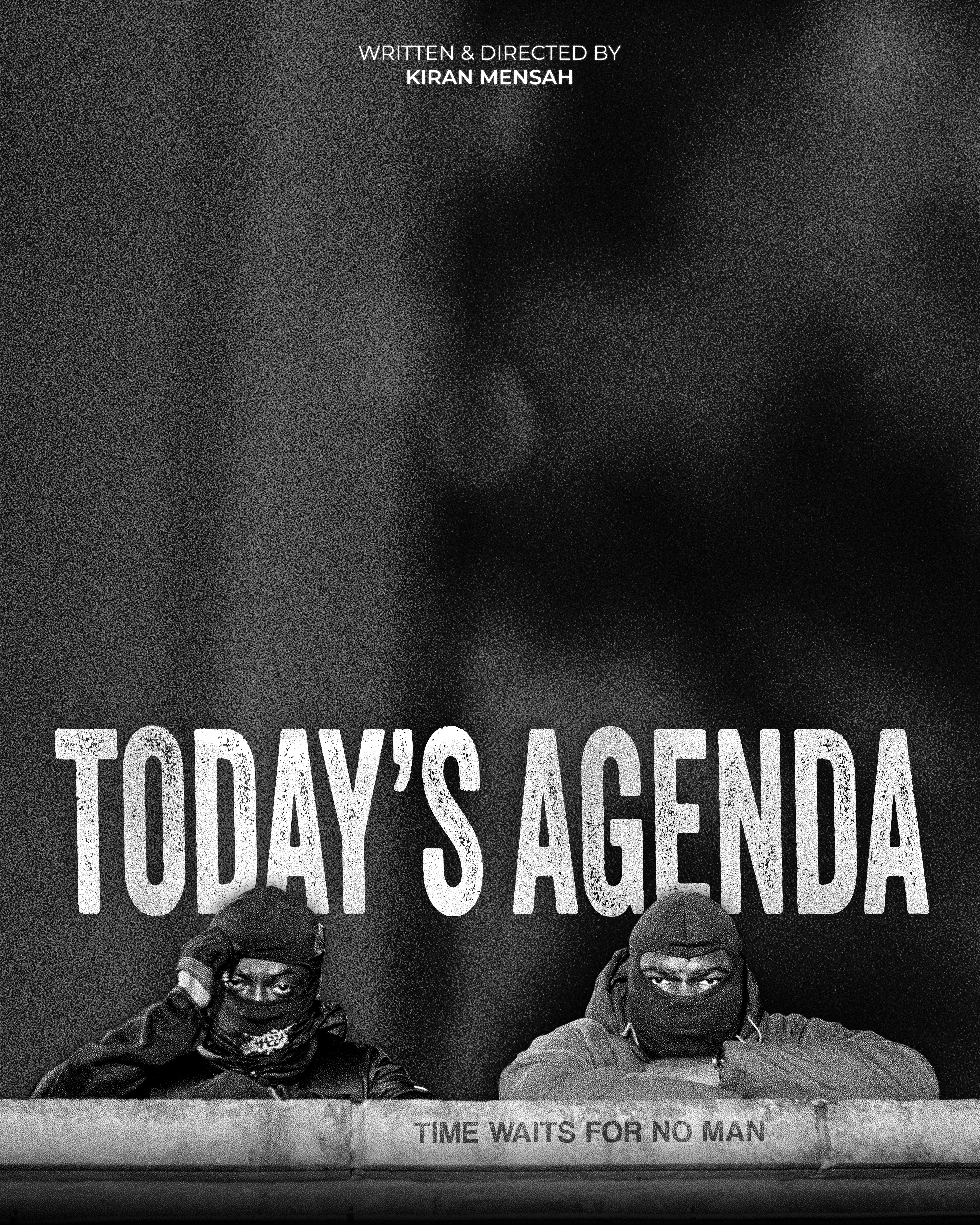
He’s now working on his first short film, Today’s Agenda; a crime thriller that explores themes of fatherhood and the primal instinct to protect one’s family.
‘At its core, the film examines the sacrifices that survival demands,’ explains Kiran. ‘It delves into the illusion of power in a world where violence is currency, the weight of loyalty, and how greed and envy can corrupt even the strongest brotherhood.’
To raise funds for the film, Kiran used Bob Books to create two photo books that capture his experiences in the film and television industry; Films on Film and Today’s Agenda.
We had the opportunity to speak to him about his career so far, where he gets his inspiration, as well his advice for creatives at the start of their career.
Could you tell us a bit more about yourself? Did you always know you wanted to work in photography and videography?
The way I started out in photography is quite funny. I was 15 years old, and a bit lost in school with no idea what I wanted to do. My older sister had just started college and was studying photography, so I thought, ‘Ah, if I do photography, I can just take all of her coursework and use it as my own.’
So that’s how I made that decision, and in a weird way it worked out. If she hadn’t been doing photography, I don’t know what I would have done. I grew up in an area of South London that’s quite gang orientated, so I was getting up to no good and didn't really have a vision for life or even the week ahead of me.
When I told my teachers I wanted to do photography, they steered me towards Media Studies, which turned out to be the best thing that could have happened.
We got to study a lot of films, and while I always liked watching films, I didn't know anything about how they were made. The first film we analysed, Gangs of New York, is still one of my favourites to this day. We went through it frame by frame and analysed everything. It really inspired me visually in terms of creating images.
After this, I studied Photography at Kingston College for two years, followed by three years at Middlesex University. A lot of it was focused on fine art and black-and-white film photography, as well as getting into galleries and exhibitions.
How did you get your start in photography after leaving university?
When I left university, I was a bit lost for a while. I was working in Sainsbury’s, and I couldn't afford to do film photography since I was no longer getting free film or printing in the dark room. I almost felt like I had wasted those five years of studying.
Tragically, around this time, my stepbrother was murdered as a result of gang violence in Angell Town in Brixton. Angell Town was one of the worst estates in London at the time, and that’s where that side of my family lived.
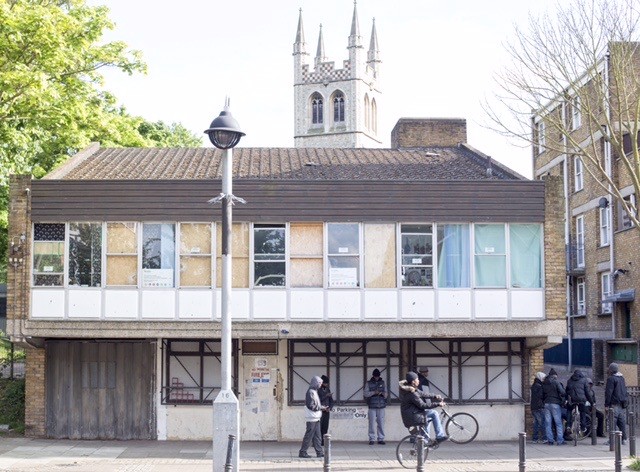
It was my stepbrother’s dream to be a boxer, so my stepmum who is a pastor and does a lot of community work, decided to honour his memory by opening a boxing gym in his name. She called it Dwaynamics and started offering classes and services to steer local kids away from gang-culture and knife crime.
The Evening Standard picked up on all this and wanted to do a story on it. They met with the Dwaynamics team, and since I was taking pictures for my stepmum at the gym, I ended up being in this meeting.
When they found out I was a photographer, they decided to bring me on board. It was presented as an opportunity for me to shadow their photographer, Matt Writtle, although they weren’t really planning to use my pictures.
It wasn’t until I was a bit older that I realised the reason they wanted me on board was to keep their photographer safe. I don’t think they expected my pictures to be as good as they were.
Sadly, while I was working on this project, another person was killed on the estate. The official photographer couldn’t make it to the estate that day, so it ended up being me on my own.
It was a very difficult time, because I knew the person who had been killed and I was left to take pictures of these people in grief, who were like friends and family. I felt lost because I wasn’t used to doing this sort of work, but at the same time, I felt very strongly that I needed to document it.
In the end, because I was the only one with these pictures, they ended up publishing all my pictures from that day.
What was the transition like from photography to videography? How did that come about?
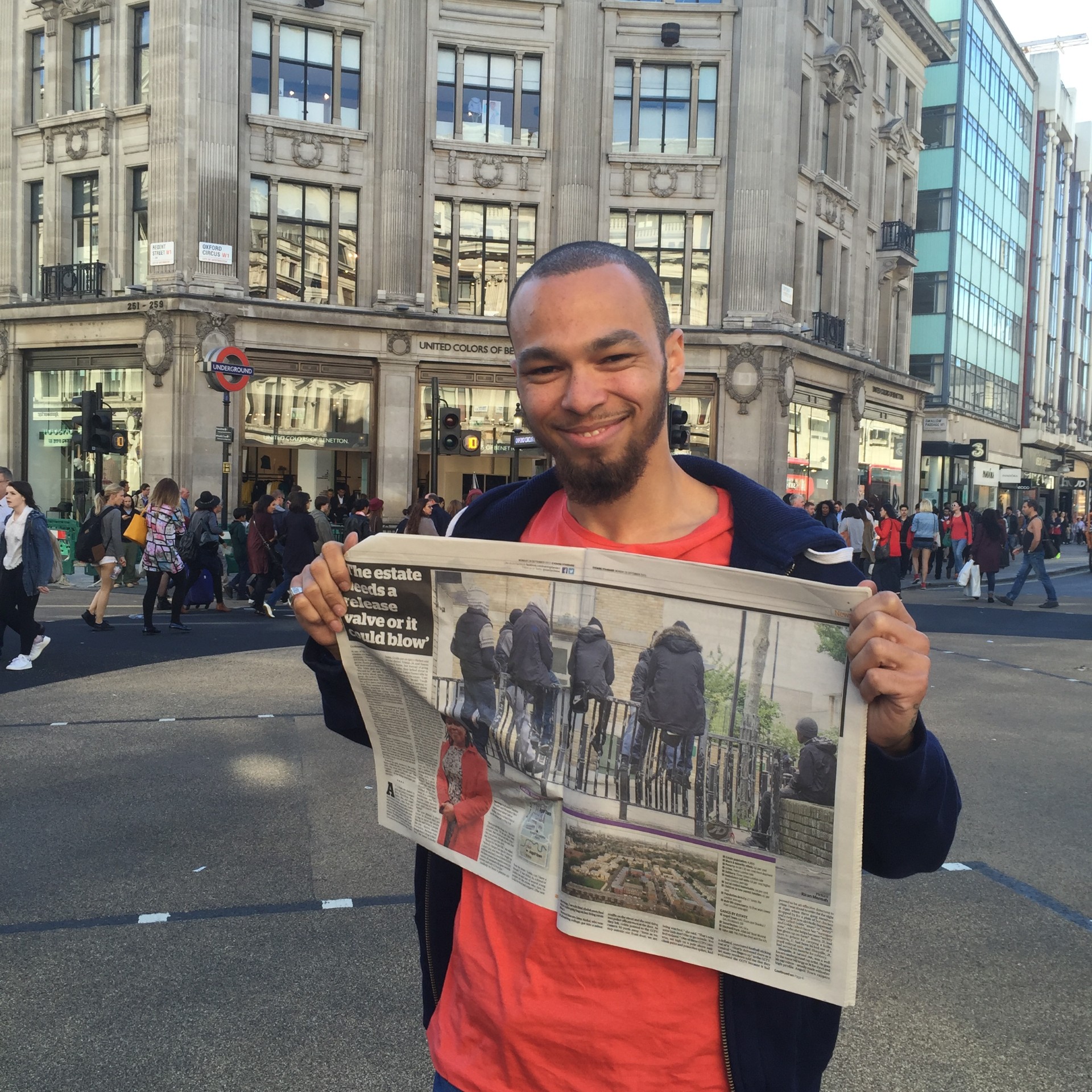
Because of how pivotal I ended up being to the Evening Standard project, they decided to run a piece about me and my background. At this point, Citibank saw my work and reached out to me saying they wanted to host an exhibition of my pictures alongside the main photographer.
We did the exhibition, and I managed to sell all the pictures. After this they approached me and said ‘Look, we don't have a photography department, but we have a video department. Would you be interested in joining us on a mentorship?’
So, I started working in the video department with an amazing lady called Emily. We would basically run around the trading floor interviewing people to get market updates, edit and upload the footage, and then run back to get more. It was crazy, but it was the sort of thing I enjoyed.
After about one year, Citibank opened their own in-house video studio and asked me to run it. I was really surprised, but I was like ‘Look, if you're willing to bear with me and let me make mistakes, I'm 100% in.’ They agreed, and I ended up working there for another five years with some amazing people who taught me so much.
Meanwhile, in my own time, I started a YouTube channel where I was recording music videos. A lot of my friends were already doing music, and I was taking pictures for a well-known artist from Brixton, so I transitioned from pictures to videos quite seamlessly and my channel took off quickly.
But my long-term plan was to get into documentary making, so I eventually stopped my YouTube channel and focused on freelancing.
During my time as a freelancer, I messaged loads of people on Instagram asking about getting onto film sets to learn more. As a result, I was able to gain experience as a camera trainee and 2nd Assistant Camera, before moving into my current job in the video department at University of the Arts London.
What’s your main source of inspiration in both photography and videography?
Film is my main inspiration. I'm a massive cinema geek, and have always loved films, but working with the team at Citibank really opened my eyes to the possibilities.
I just couldn’t believe that some of them had worked on films. It was like, ‘Wait, normal people make these things?’ So, they sort of showed me it was attainable. They also got me heavy into film, because at the time I didn’t know much about art films or French films or amazing films like Clockwork Orange.
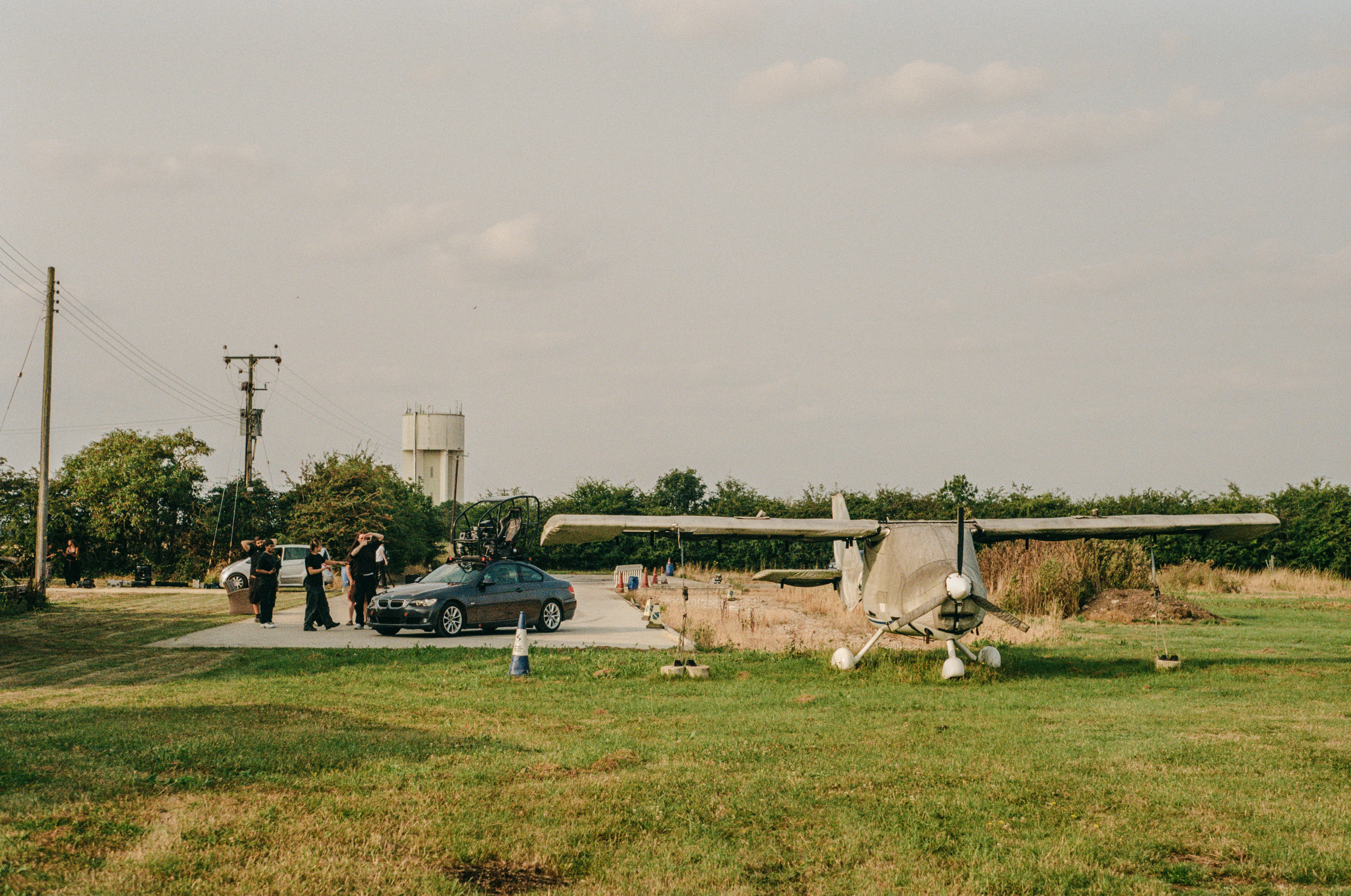
Photography is my first love, though, and the first ten years of my career was photography focused. Even with my photography, though, it’s all related to films. I still take pictures when I work on film sets, so that's where most of my recent pictures are from.
How does your experience as a photographer influence your choices as a videographer?
I'd say I'm good at film because of photography, especially in terms of mastering the art of framing an image and achieving a certain aesthetic.
Studying the fine art side of photography helped me a lot with videography and allowed me to move into filmmaking. Everything I learned from photography; I basically just put it into moving images.
Do you have a preferred way of approaching a shoot, whether it’s a music video, documentary or photo project?
When I first started shooting music videos, I would just turn up and figure it out. These days, when I get asked to do music videos, people want to do treatments and have ten conversations, whereas I'd much rather just turn up and shoot, because it’s what I’m used to doing.
On the other hand, with film and documentary projects, I do a lot more planning and preparation beforehand. With my own film, for example, I prepped for nearly two years before I shot the first scene.
This is partly because I started listening to a podcast by cinematographer Roger Deakins. He says if you can do all your preparation before you get to set, you can basically do it with your eyes closed.
With photography, I mostly just shoot what I want these days, so there's not much preparation involved. If I’m working as a stills photographer on a film set, I’m quite confident in my skills, so I just turn up and take pictures.
How do you stay inspired and continue to develop your style while you work on such a wide variety of projects?
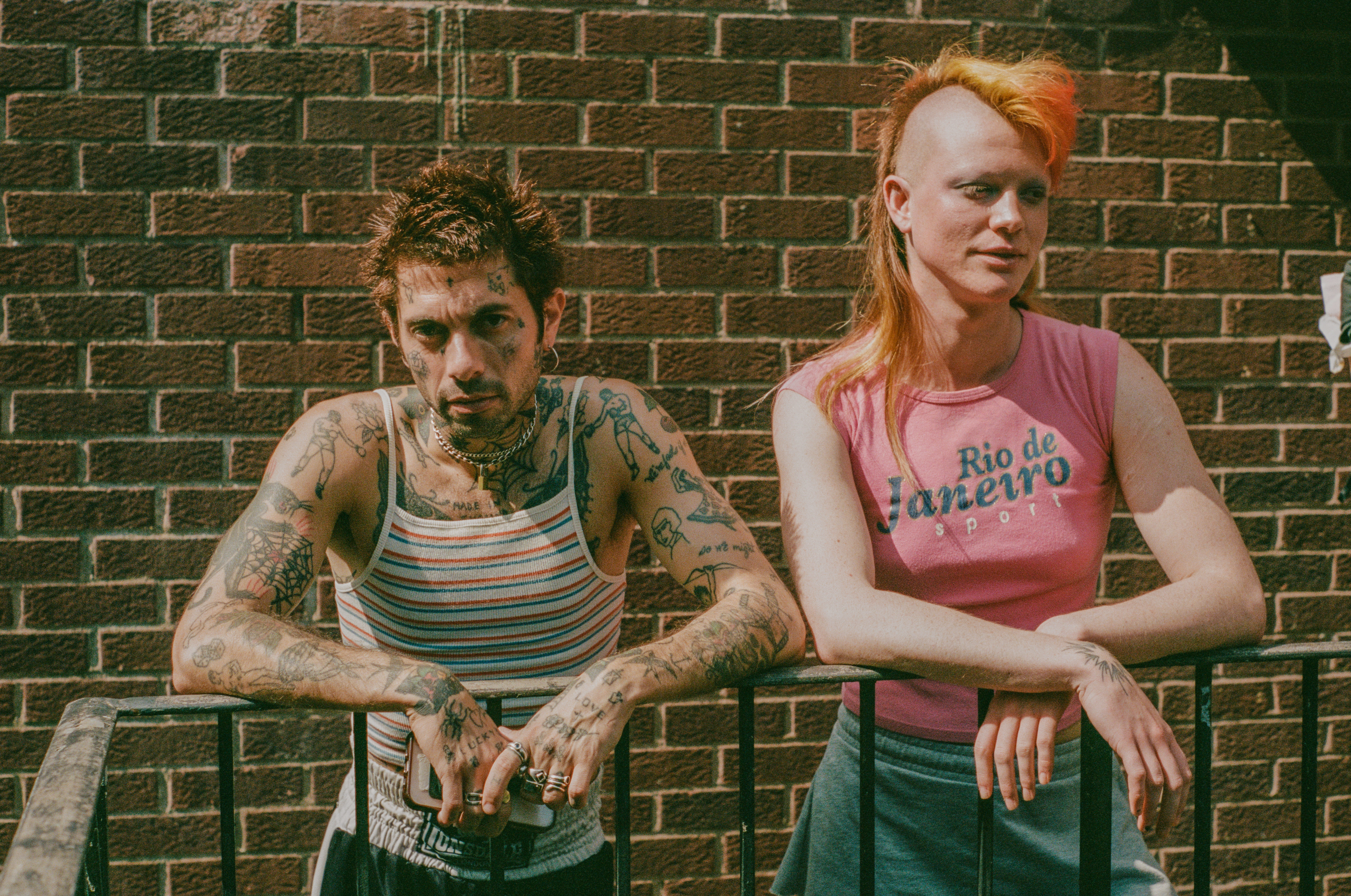
One thing that keeps me inspired is Instagram. I love seeing other people’s work and I follow nearly 5,000 people who are all photographers or people who work in the film industry. Now when I post a question or need help, it’s always creative people responding and giving me feedback, which has helped me so much.
I listen to the Team Deakins podcast, which I find so inspiring. They talk to all kinds of people who work in the industry, from the runners all the way up to the costume designers, producers, sound technicians and directors.
I love watching documentaries and films from every single country whether it’s Brazil, France, China, Japan, Germany, Spain, England or America.
I’ve made a lot of friends through working in photography and on film sets and some of my closest friends are creative people, so just being around creativity keeps me inspired.
One of the Sony World Photography Awards’ strengths is spotlighting powerful, story-driven imagery. In your opinion, what makes an image - still or moving - stand out in storytelling?
You can tell a story just through framing and lighting. Where you position someone in the frame and how you light it can tell the story before anything's set.
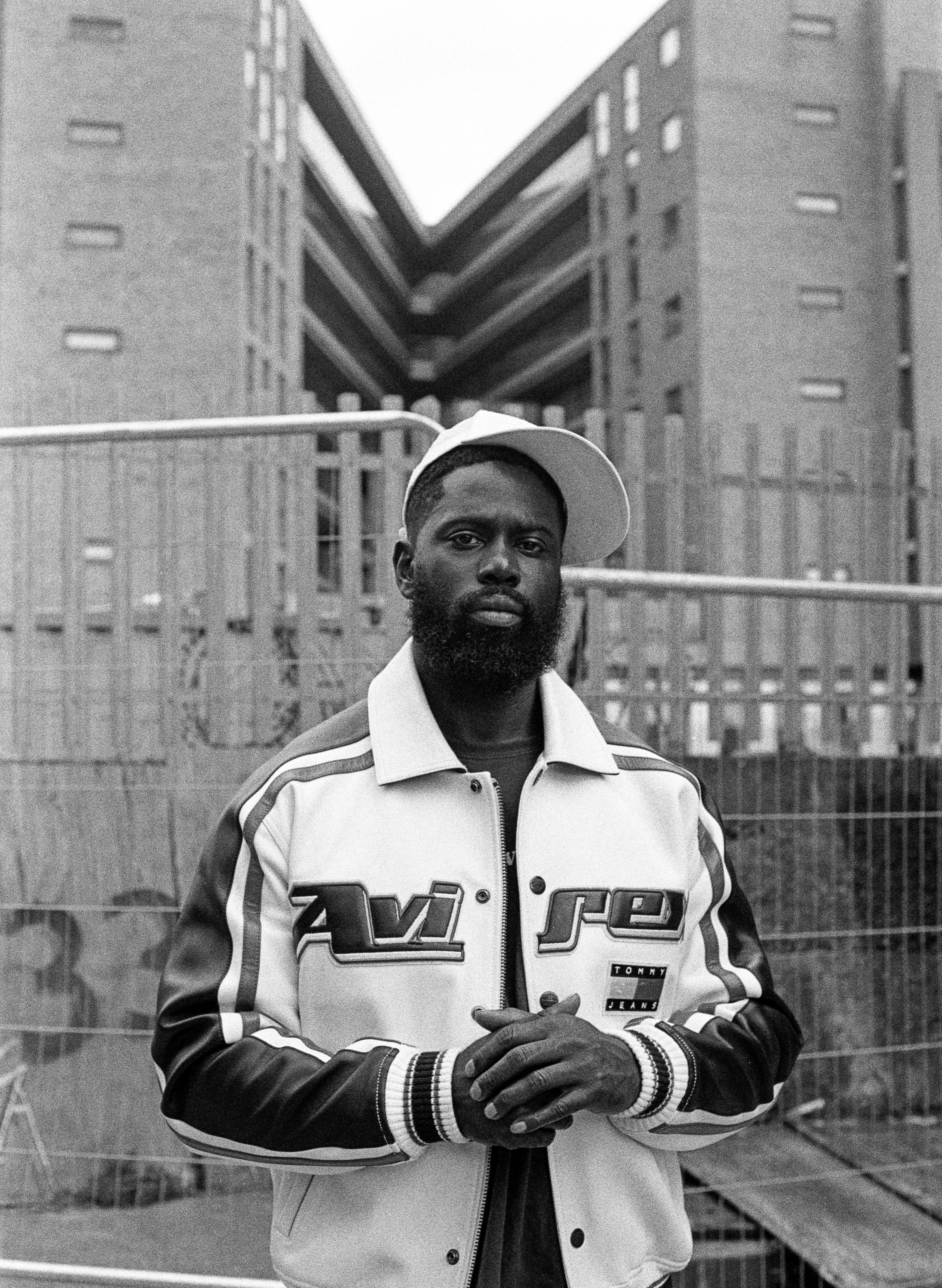
I studied black-and-white photography, and I think it’s a lot harder to take a good black-and-white image. With colour, the image itself might not be as strong, but the colours can sort of distract from that.
For example, if you photograph a hummingbird in colour, it’s easier to get a striking image because of its beautiful colours. But if you want to get a good picture of the same bird in black-and-white, there needs to be a lot more to it in terms of lighting and framing.
What advice would you give to emerging photographers wanting to build a sustainable and fulfilling career?
Networking is so important. My advice would be to surround yourself with people who inspire you. Seeing what other people are doing has broadened my creative vision so much because it shows me what’s possible.
Follow people online who inspire you, watch films by directors you admire or go to exhibitions. I'm a massive exhibition freak. I think I’ve been to every single gallery in London. It keeps me inspired and connected. I try to go to at least one or two exhibitions each month, whether it’s the Sony World Photography Awards, Photo London or the Taylor Wessing Portrait Prize.
I do these things religiously, and I'll go by myself if I need to. I'm not doing it for anyone’s approval. You’ve really got to want it, need it, and live and breathe it.
You’ve also got to be willing to make some sacrifices. I haven't been on holiday in years, because all my money goes towards my projects or equipment. Working on my film and working towards becoming a director is my life. It’s everything to me.
Could you tell us about your photo books Films On Film and Today’s Agenda? How did you hear about Bob Books what was your experience with designing and printing the photo books?
I’m in about 30 different WhatsApp networking groups, so I messaged these groups to find out where people were making their photography books. Bob Books was the one that came up the most, both in terms of pricing and ease of use.
I used the Bob Designer Software, and in terms of the photo book layout, because I studied photography and spent a lot of time laying images out next to each other, I found the process quite easy.
Since these photo books were created as a fundraiser, I tried to do them as cheaply as possible, because I want to sell them to raise money for my film.
Overall, my experience with Bob Books was a breeze. It’s a great option for first timers, and when you order your photo book you can also enter it into the Book of the Month competition, which is a nice incentive.
Do you have any advice for someone who is making their first photo book?
My main piece of advice would be to do your research to see what will work best for your project. It’s very tempting to make all your images full bleed, but it’s more important to have a clear vision and understanding of why you are making the book.
Are you showcasing your work? Are you fundraising? Do you have enough images to make a book? What’s your budget?
I also recommend looking at other photography books before creating your own. There's nothing worse than two images sitting on a page that don't work together. Study the greats and ask yourself some questions. Why did they create the book? Why do the images work together?
Getting feedback is also very useful. For example, when I created my photo book, I screenshotted the pages and sent them to people to get some feedback.
Want to explore Kiran’s work or learn more about his journey? You can visit his website or follow him on Instagram @kiranscamera. To support his creative aspirations and upcoming film, you can purchase his photo books Films on Film and Today’s Agenda from the Bob Bookshop.