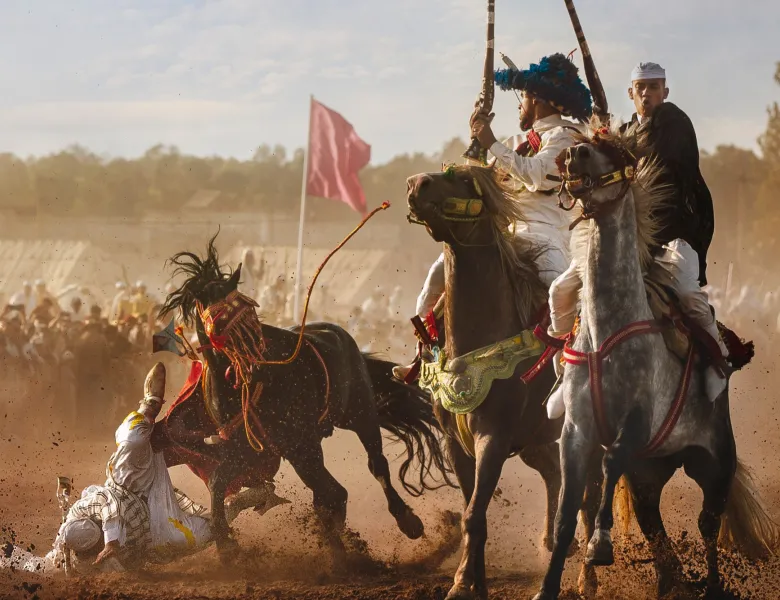
Memories of Dust: Interview with Alex Bex

Can you tell us a bit about yourself? What inspired you to pick up photography?
I was born to a Texan mother and a French father, and I grew up in Austin for a few years before moving to Toulouse. As a teenager in France, I played the drums in a couple of bands. Since I spoke English fluently, I would also end up writing the lyrics of our songs. This led me to experiment with writing for many years. I was especially attracted to free verse poems that were brief and visual. I think this had a significant influence on my interest in photography. It shaped how I could express ideas and emotions through the immediacy of an image.
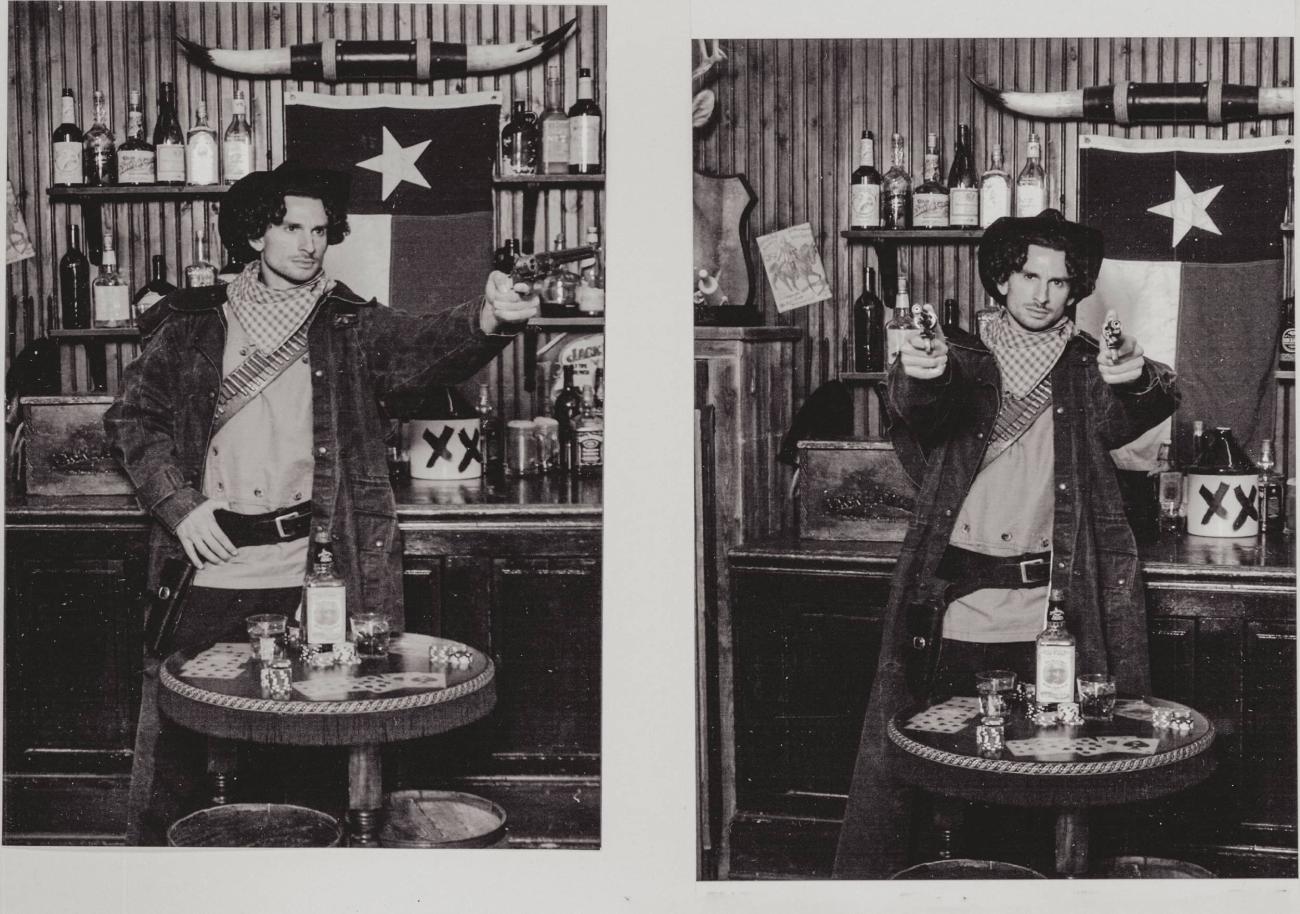
My interest in the medium of photography, however, came from my father. He has been collecting analog cameras and photo books for as long as I can remember, and he was the first person to teach me how to use a camera. Before working as a photographer, I spent most of my twenties in the music industry, managing album releases at a couple of record labels. I was already taking pictures on the side, and over time, I started shooting press photos for some of the artists I met on the job. It all came together quite naturally, and photography became my main occupation.
Image: A Western-themed photograph of Alex Bex
Your series Memories of Dust won 3rd Place in the Sony World Photography Awards 2025 Professional competition’s Documentary Projects category. What motivated you to pursue this project?
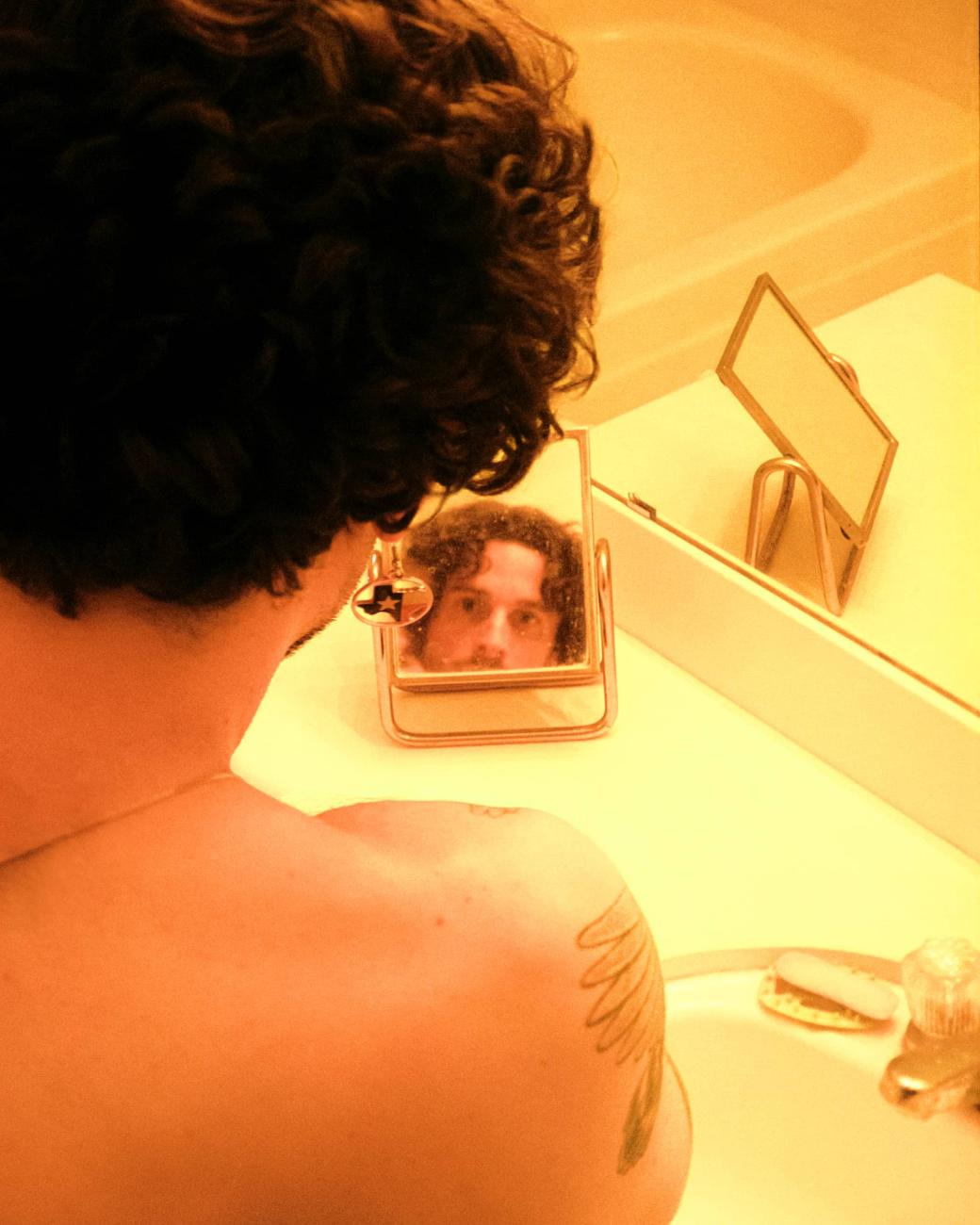
Memories of Dust is a long-term project exploring traditional masculinity in Texas. The project was born from the idea that, in a time of tensions between traditional values and modern questions of identity, it is necessary to revisit classic representations of masculinity. For this, I examine the cowboy figure, an integral part of Texan culture and a symbol of masculinity across the Western world. The opportunity I had to grow up in several cultures and experience different social environments shaped how I think about masculinity. It allowed me to reflect on myself as a man and question the social constructions I was raised with.
Over time, I became especially interested in how visual media has influenced our understanding of gender roles, and the ideas and symbols often used to define and express what is considered hegemonic masculinity. Films like Westerns, or any movie with a strong male lead, had a big impact on me growing up. They helped shape my idea of what a “real” man should be. While those portrayals can be powerful and even inspiring, I also see now how they can be misleading, especially for young boys who look up to these heroes.
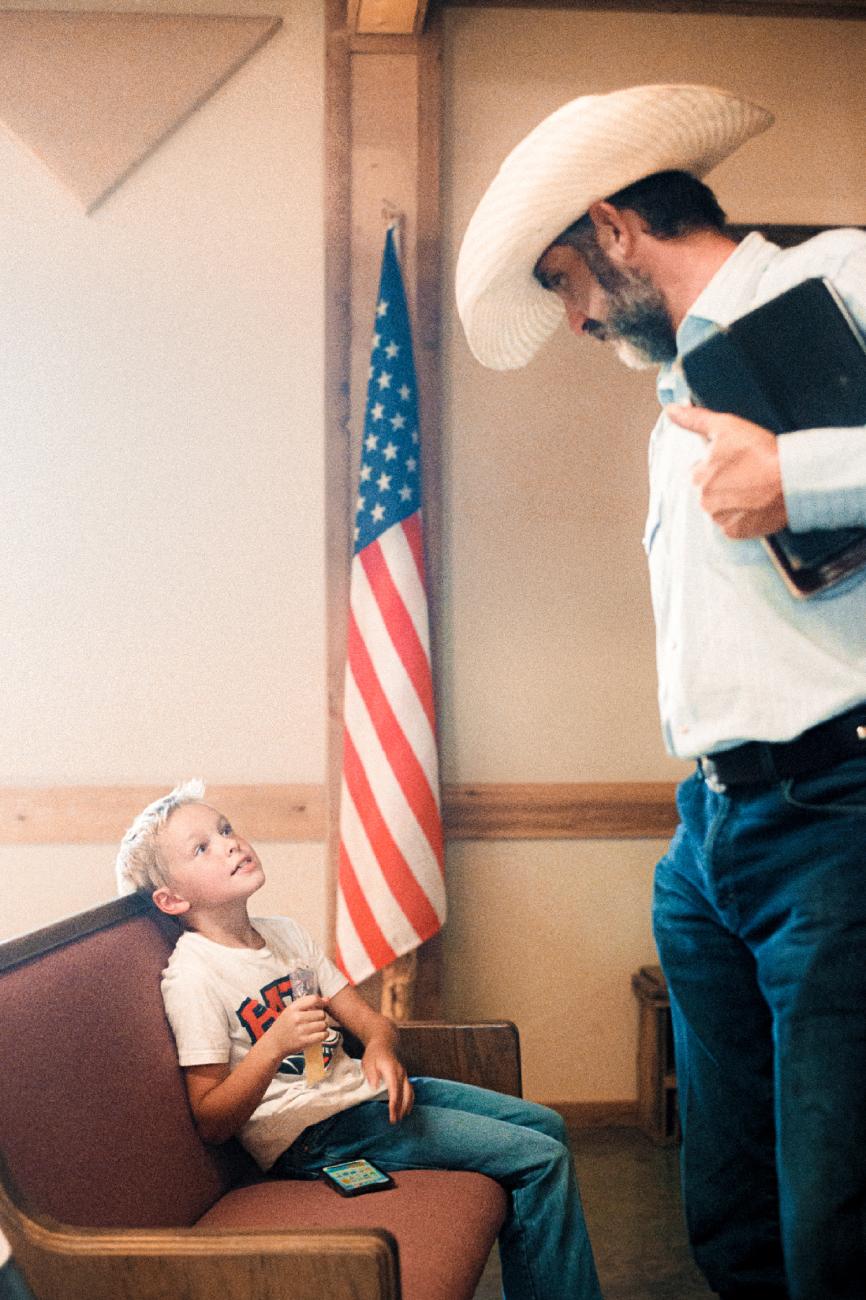
By examining the myth of the cowboy, I want to push the boundaries of a male stereotype and help revisit the narrative of this role model in a more honest way—and ultimately to be part of a broader conversation about the role of masculinity today.
Image: © Alex Bex, France, 3rd Place, Professional competition, Documentary Projects, Sony World Photography Awards 2025
A photograph from your series has also been chosen as the leading signage image for the Sony World Photography Awards 2025 exhibition, which was open at Somerset House, London between 17 April - 5 May. What’s the story behind this vibrant portrait?
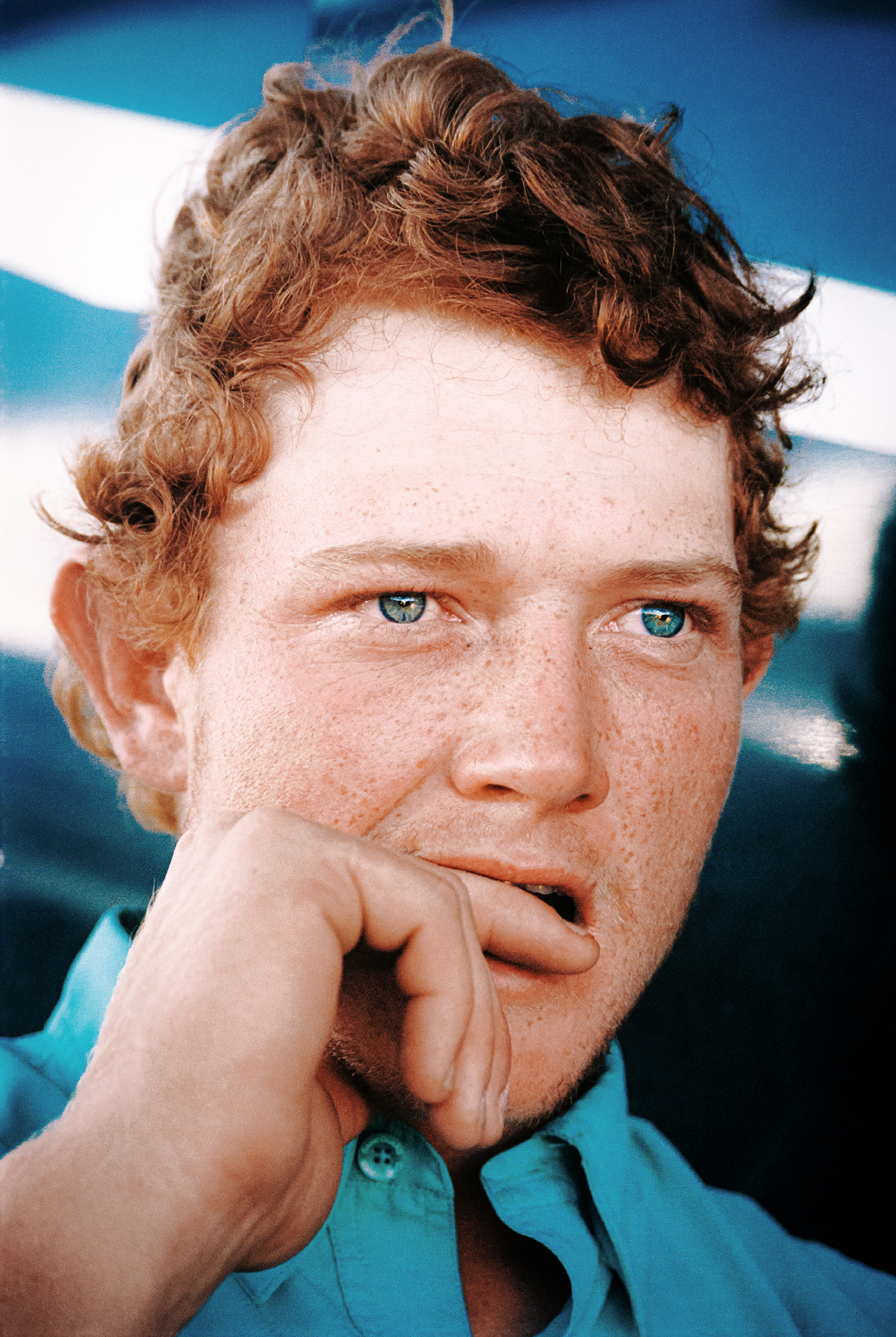 © Alex Bex, France, 3rd Place, Professional competition, Documentary Projects, Sony World Photography Awards 2025
The portrait in question is of a man named Jonathan, whom I met last summer while traveling in Texas, during the World Series of Team Roping in Levelland. At the time, I was staying with a county judge I’d met on a previous trip, who team-ropes on the weekends and had brought me along to the event. We camped out at the rodeo grounds for a few days, living out of his trailer. The afternoon I met Jonathan, he was resting by his truck near the roping arena, waiting for the next round to start. From what I gathered, he makes a modest living training horses and competing in rodeos. He seemed pretty nervous about the whole thing, and honestly, I don’t blame him. The competition is tough, and a lot of people like him here rely on the prize money to make ends meet.
While I observed him during a moment of silence after talking to a friend, I noticed he started biting his finger. It was a small gesture, but it really struck me. I’d probably do something similar if I were anxious before a big performance. Around here, people don’t tend to show their emotions easily. There’s a strong culture of stoicism, and everyone acts like nothing gets to them. So to catch that vulnerable moment felt special to me. I’m interested to know, though, how people understand this portrait without knowing its context. What do they see in his eyes, and how do they interpret that gesture? I like that the image could feel a bit unsettling, leaving the viewer with an ambiguous idea of what Jonathan is expressing.
As a French-Texan photographer based in Berlin, do you feel that your background had an impact on the way you approached the story?
Growing up between Europe and the United States, I was influenced by the distinct cultural perspectives of these two regions. I think this duality has shaped how I reflect visually and critically as a photographer. My understanding of the visual language, traditions, and symbolism of the United States rooted in my American identity, but shaped by the distance of an outsider—is a beneficial tool for my project. Within the ranching community, this perspective allows me, for example, to play with the visual codes and common representations of the cowboy, while exploring the boundaries of this male stereotype. Traveling between Berlin and the ranching community of Texas has been an interesting experience regarding the theme of masculinity. In Berlin, we are exposed to various expressions of masculinity, which I see as one of the city’s qualities.
And by contrast, I realize I tend to follow more traditional patterns of manhood. On the other hand, within the ranching community of Texas, which is usually more conservative, it can sometimes be difficult for me to connect with other men. But masculinity is never one-dimensional, even in that context.
What captivates me are the moments or interactions between men I witness that challenge the stereotype of traditional masculinity. And navigating these two very different environments has helped me, again, better understand the social constructs I grew up with. It’s also taught me to be more understanding of people from different backgrounds, which is something I see positive in an increasingly polarized world.
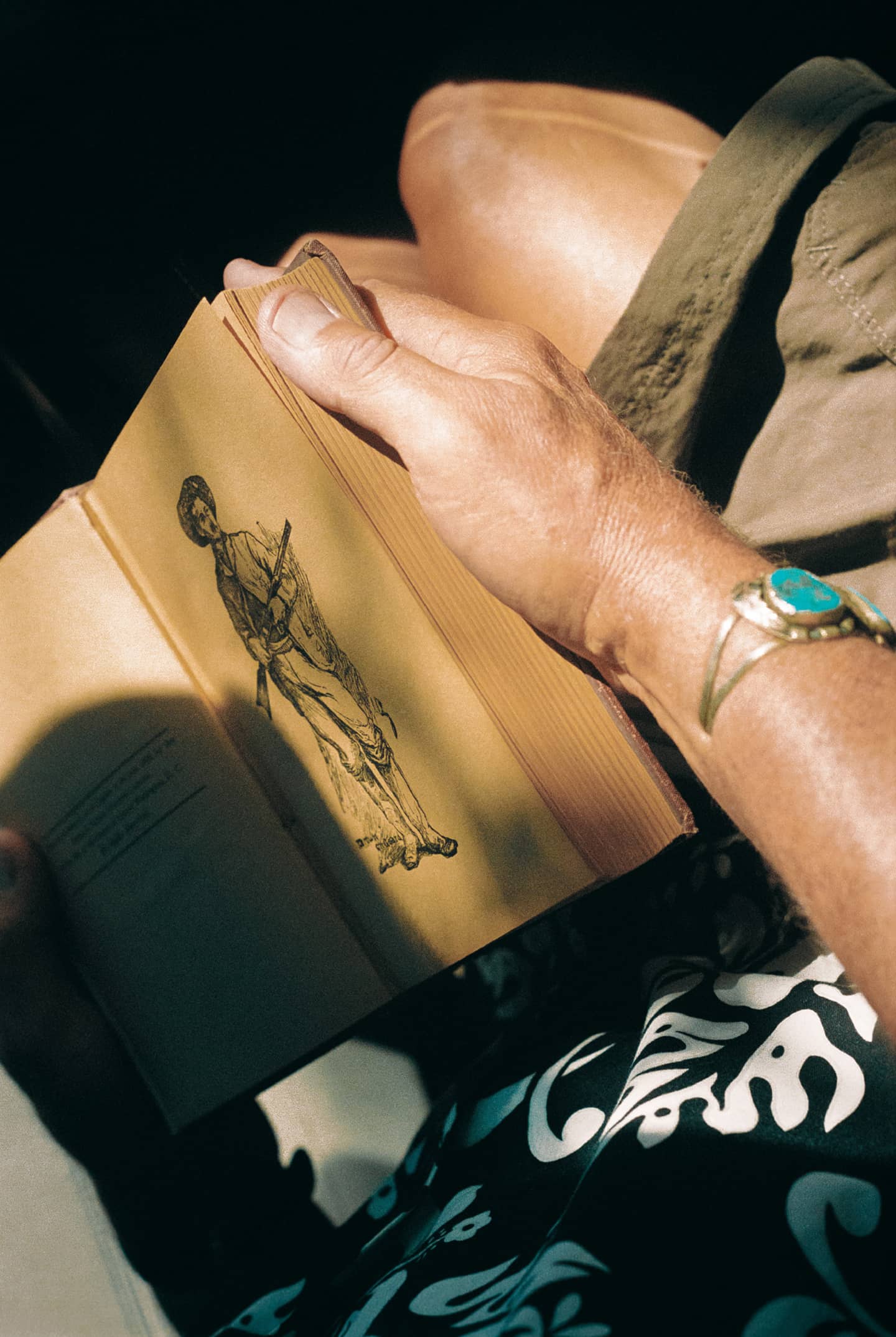
© Alex Bex, France, 3rd Place, Professional competition, Documentary Projects, Sony World Photography Awards 2025
You travelled through Texas, staying at ranches and participating in the daily life of cowboys to capture the project. Are there any favourite memories or stories you learned that stand out to you?
[Trigger warning: suicide, cancer] There are always wild things happening on the ranches and lots of stories to tell. From bucking bulls in the backyard pen, unearthing rattlesnakes with gasoline, and herding cattle at sunset, to hunting hogs with a pack of dogs throughout the night. Though I try to stay an observer as much as possible for the sake of my project, I often end up getting involved in the daily activities of the ranches I stay at. But what touched me the most were the stories they shared with me. A lot of people I’ve met in the ranching community have lived difficult lives. And I feel that it comes through in their appreciation for the harsh work they do. There’s a sort of melancholy inseparable from the job and the vast removed landscape surrounding them. What positively surprises me is how some of these men open up to me. It confirms to me that the type of masculinity in this community is not necessarily as one-sided as it is often portrayed.
One story in particular stuck with me. A rancher I stayed with for a long time told me about his best friend of 40 years, who had taken his own life just a few weeks earlier. He’d been diagnosed with cancer and didn’t want to become a burden to his family. The illness would have hindered the life he knew as a rancher. In his friend's own words, “I’m not helping anybody. I can’t provide for anyone.”
I had to think a lot about that story. It reveals something deeply problematic about the role of masculinity in a more traditional and conservative environment. It’s easier to see here how societal pressure and ingrained expectations for men affect men themselves and also everyone around them.
You used a film camera to capture your series. Was there a reason you chose this particular camera medium? Did you encounter any challenges while on the road?
I like the limitations that come with film photography. The more versions of an image I have of a moment I’m trying to capture, the more likely I am to choose the cleanest one. This is usually what happens when I shoot digital. But I want to stay away from that, because it’s often the imperfections that carry the emotion I’m looking for in an image. In that sense, I think shooting on film allows me to come closer to reality, and that’s what I’m after in my work.
When I’m photographing, I like to keep things limited. I use one specific film stock. I work only with natural light and avoid flash, because I prefer to reproduce my surroundings rather than expose them. It’s challenging, especially since I often shoot in low-light situations, but that’s also closer to how the human eye experiences the world. I don’t use a tripod either, to maintain momentum in these fast-paced ranching environments. It’s a more demanding way of working, but I think it suits me.
Shooting on film also helps me keep a cinematic quality in my images. Something that lets me comment on the visual language used to construct the cowboy myth, while at the same time reshaping its narrative.
Image: © Alex Bex, France, 3rd Place, Professional competition, Documentary Projects, Sony World Photography Awards 2025
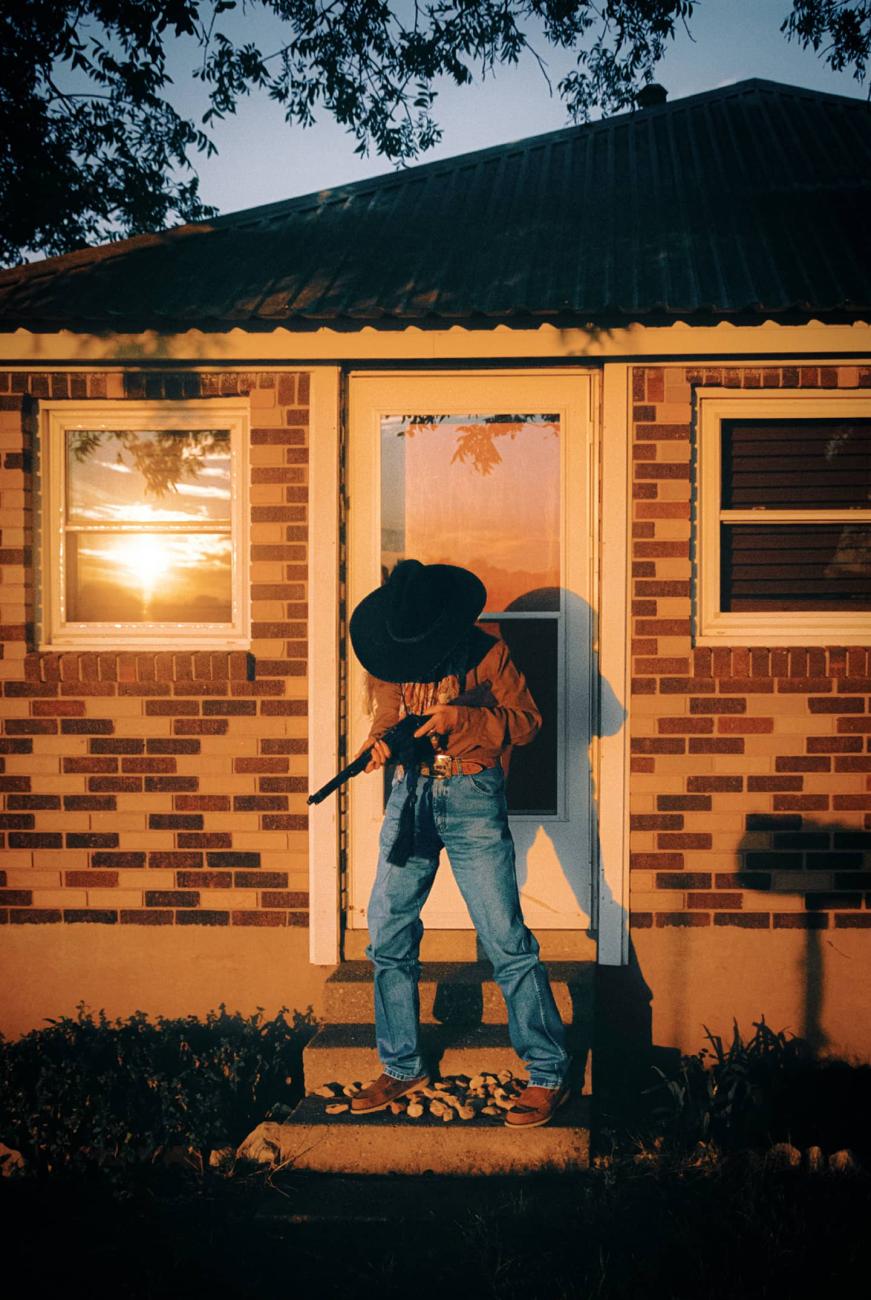
Memories of Dust is an on-going project - what are your plans for its future? Are you working on anything else?
I’m planning to return to Texas a couple more times to create new images and finalize the main selection of my project Memories of Dust. My end goal is to publish a monograph on the project. I believe the photo book is a great way to conclude it, giving it a final form and contributing to the Texan cultural heritage in a lasting way. I also hope to include different mediums in the monograph, such as transcriptions of conversations with ranchers I’ve recorded during my trips, on topics like the myth of the cowboy and masculinity in Texas.
In parallel, I’m starting a photography project about male friendships, inspired by personal life events. This project is set in my hometown of Balma, in the south of France. A sort of non-place caught between the city and the countryside. Continuing my main theme of masculinity, I’m interested in exploring the dynamics of male relationships, which can be very complex and subtle, especially at a younger age. I believe this is a subject that is not represented enough in visual media and is particularly important in the context of the evolving role of masculinity today.
Alex Bex is a French-Texan photographer based in Berlin. His work examines the influence of visual media on traditional representations, particularly subjects such as masculinity and its social construction. Through his projects, he engages with the cultural narratives he was brought up with to study and challenge them.
His series Memories of Dust was awarded 3rd Place in the Professional competition's Documentary Projects category within the Sony World Photography Awards 2025. Bex's work was exhibited at the London exhibition held at Somerset House from 17 April - 5 May.