

Series description
Cities Gone Wild is an exploration of three savvy animals --- black bears, coyotes and raccoons --- that have uniquely equipped to survive and even thrive in the human built landscape while other animals are disappearing. I tracked these animals in cities across America to reveal a more intimate view of how wildlife is adapting to increased urbanization.
Biography
Corey Arnold is a fine art photographer based in Southern Washington. His work examines man’s complicated relationship with animals and nature. Since 2002, he has photo-documented his life and community while working as a commercial fisherman in Alaska. Arnold's photographs have been exhibited in galleries and museums worldwide and published in Harpers, The New Yorker, New York Times, Outside, Men’s Journal and National Geographic. He is represented by Richard Heller Gallery in Santa Monica and Redeye Represents in Los Angeles.
House Bear
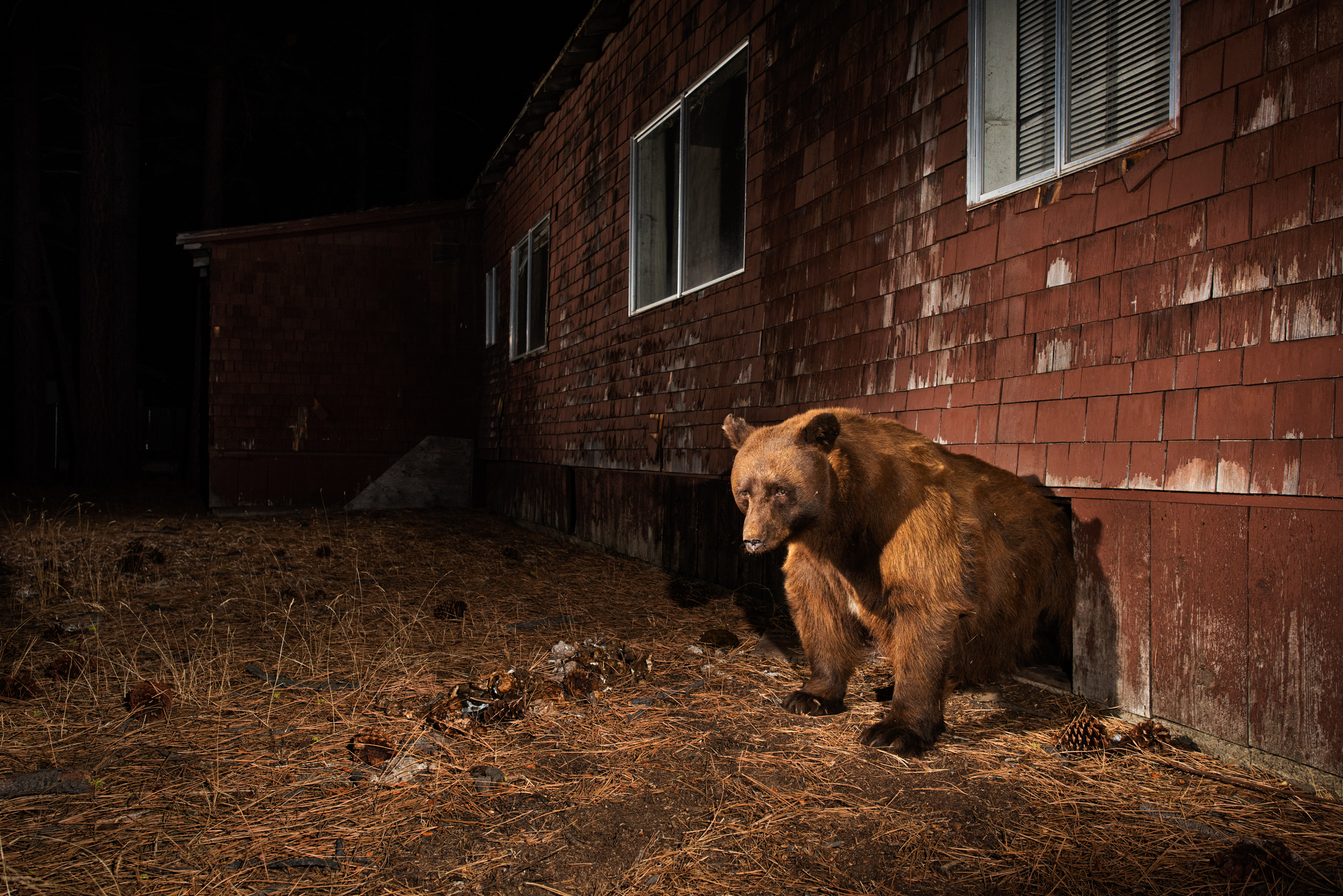
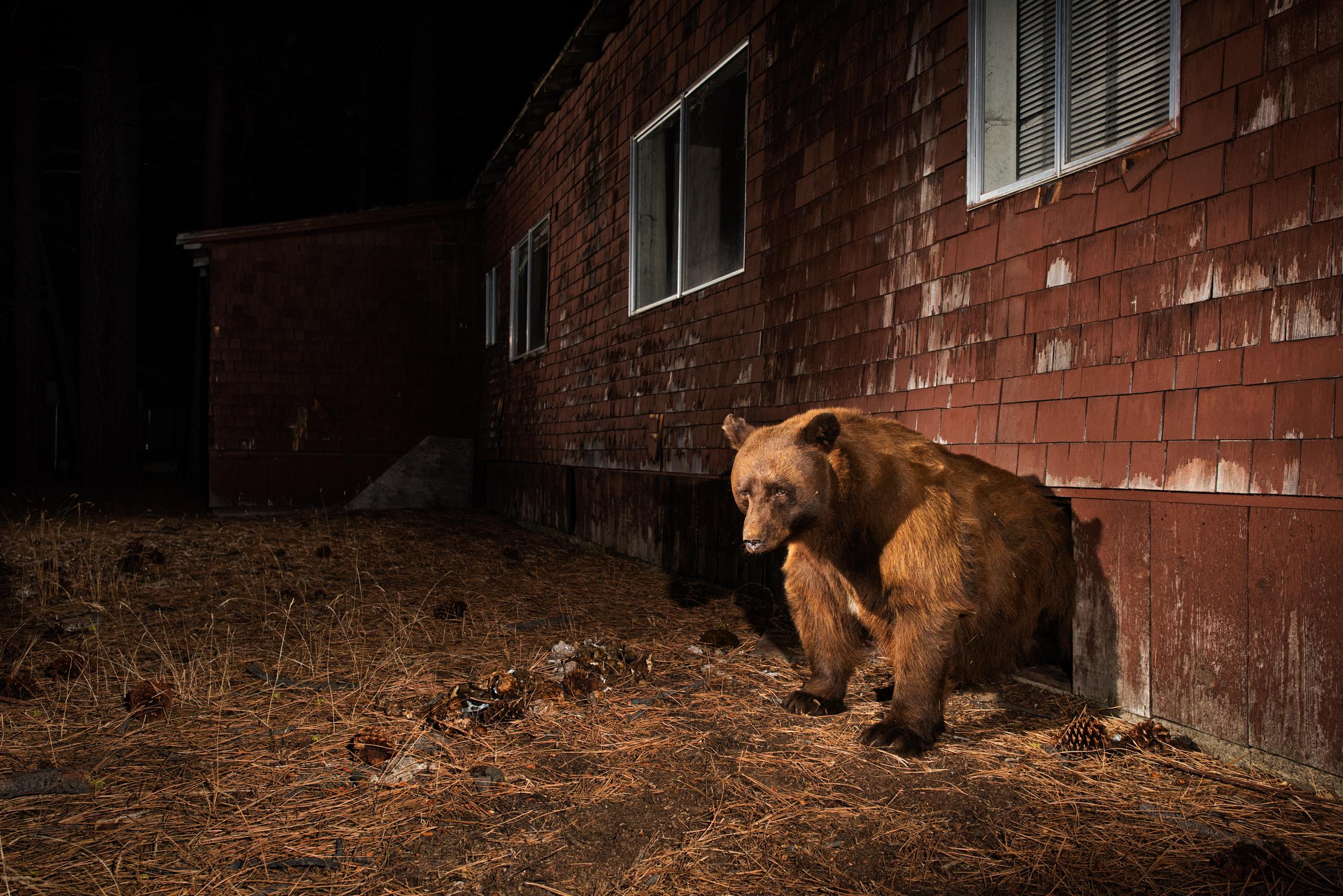
A large brownish black bear emerges from his den in the crawl space of an abandoned house in South Lake Tahoe, California. In this densely populated small town, black bears have grown increasingly bold and numerous, finding a reliable year round food source in unsecured garbage around the city. Reports of bears breaking into homes is on the rise.
© Corey Arnold, United States, 1st Place, Professional competition, Wildlife & Nature, 2023 Sony World Photography Awards
The Squeaky Fan Belt
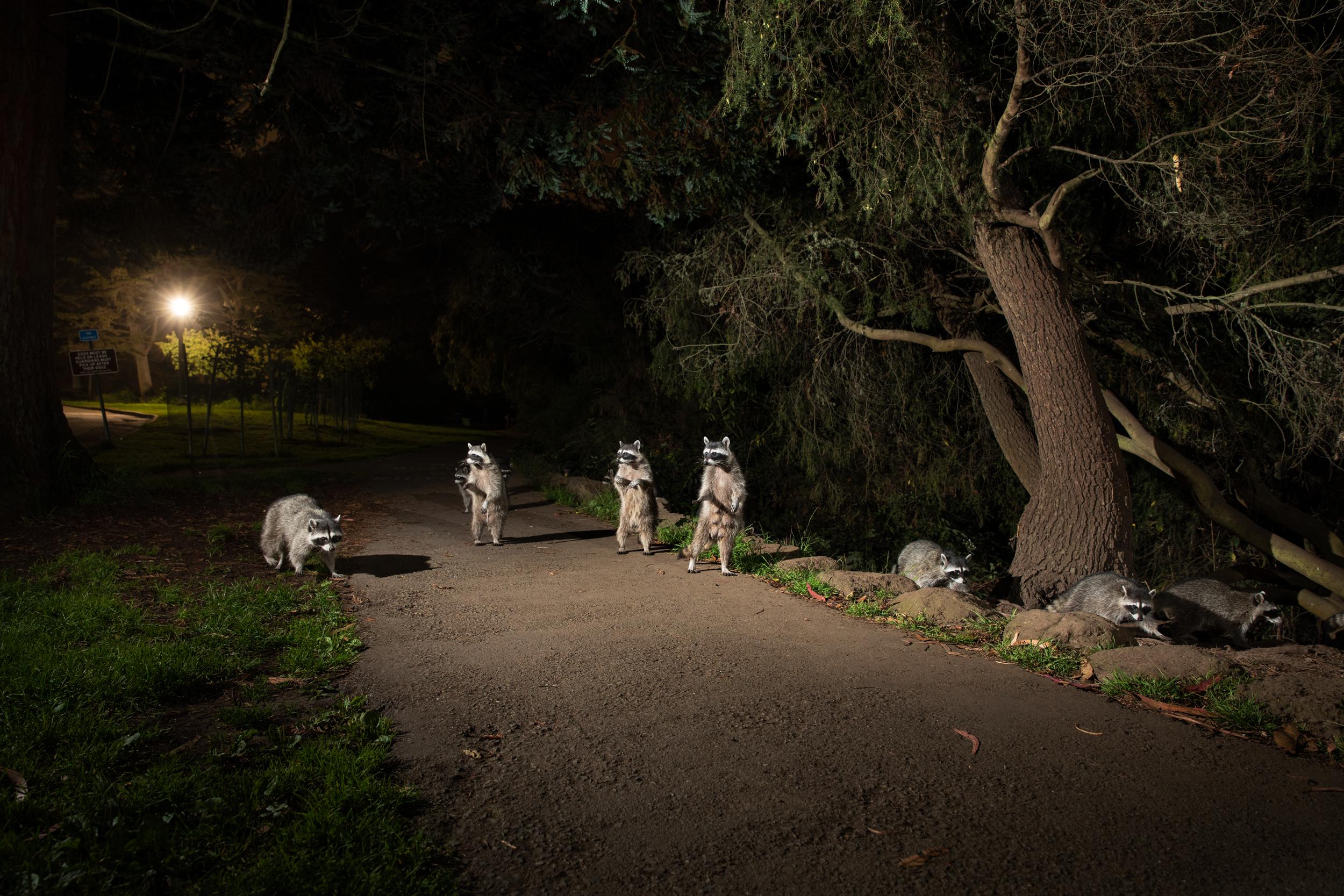
At least twenty raccoons can be found on any given night near this location in Golden Gate Park in San Francisco, California. Such dense raccoon populations are uncommon in the wilderness, but the large amounts of unsecured garbage in most cities across North America have supported populations of raccoons larger than the normal carrying capacity. These raccoons perked up as a car was driving towards them on a nearby road.
© Corey Arnold, United States, 1st Place, Professional competition, Wildlife & Nature, 2023 Sony World Photography Awards
Asheville Cubs
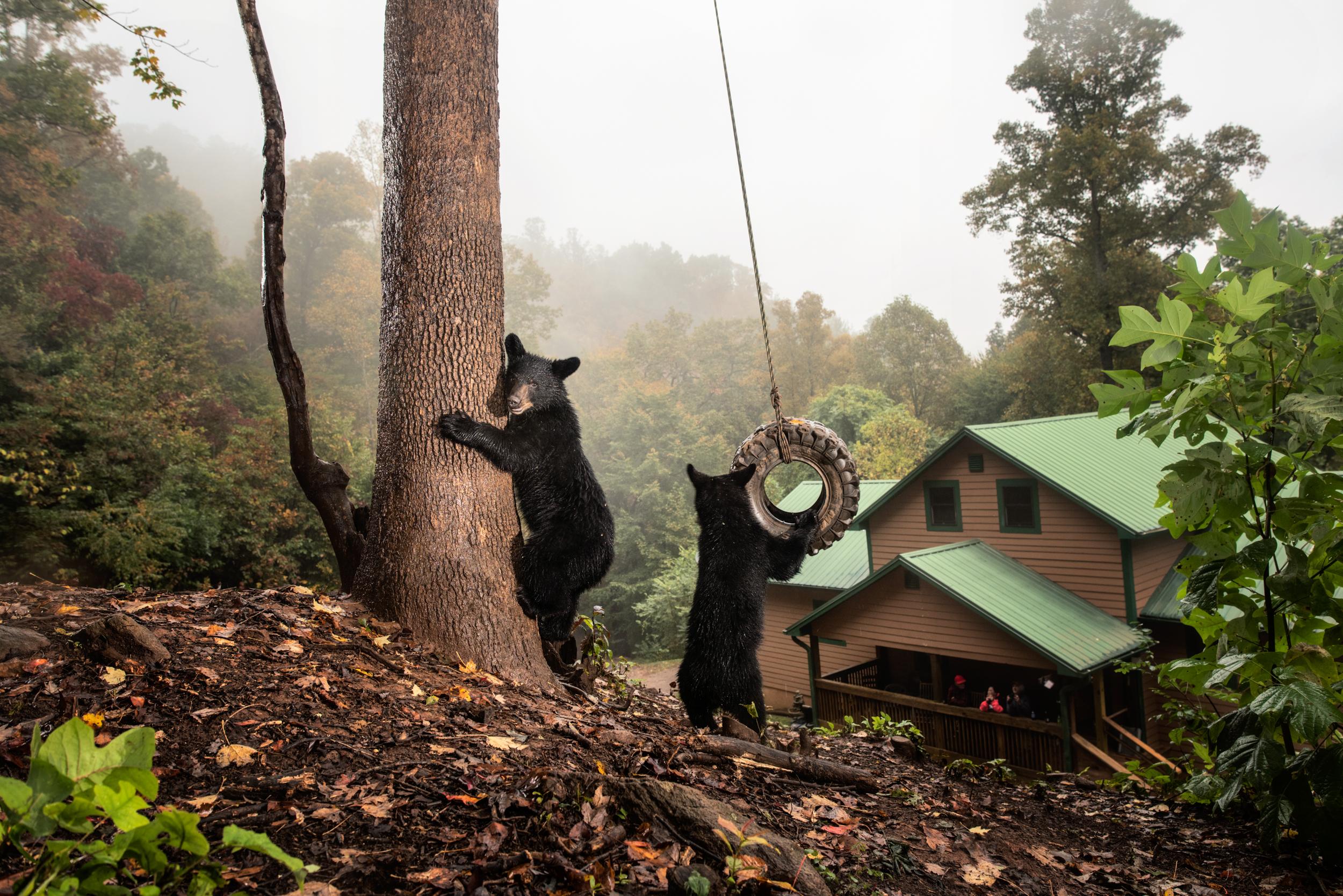
Black bear cubs play on a rope swing set up in the backyard of a home in Asheville, North Carolina. Urban black bears in Asheville are becoming more bold and fearless, resulting in a large influx of bears wandering residential neighbourhoods.
© Corey Arnold, United States, 1st Place, Professional competition, Wildlife & Nature, 2023 Sony World Photography Awards
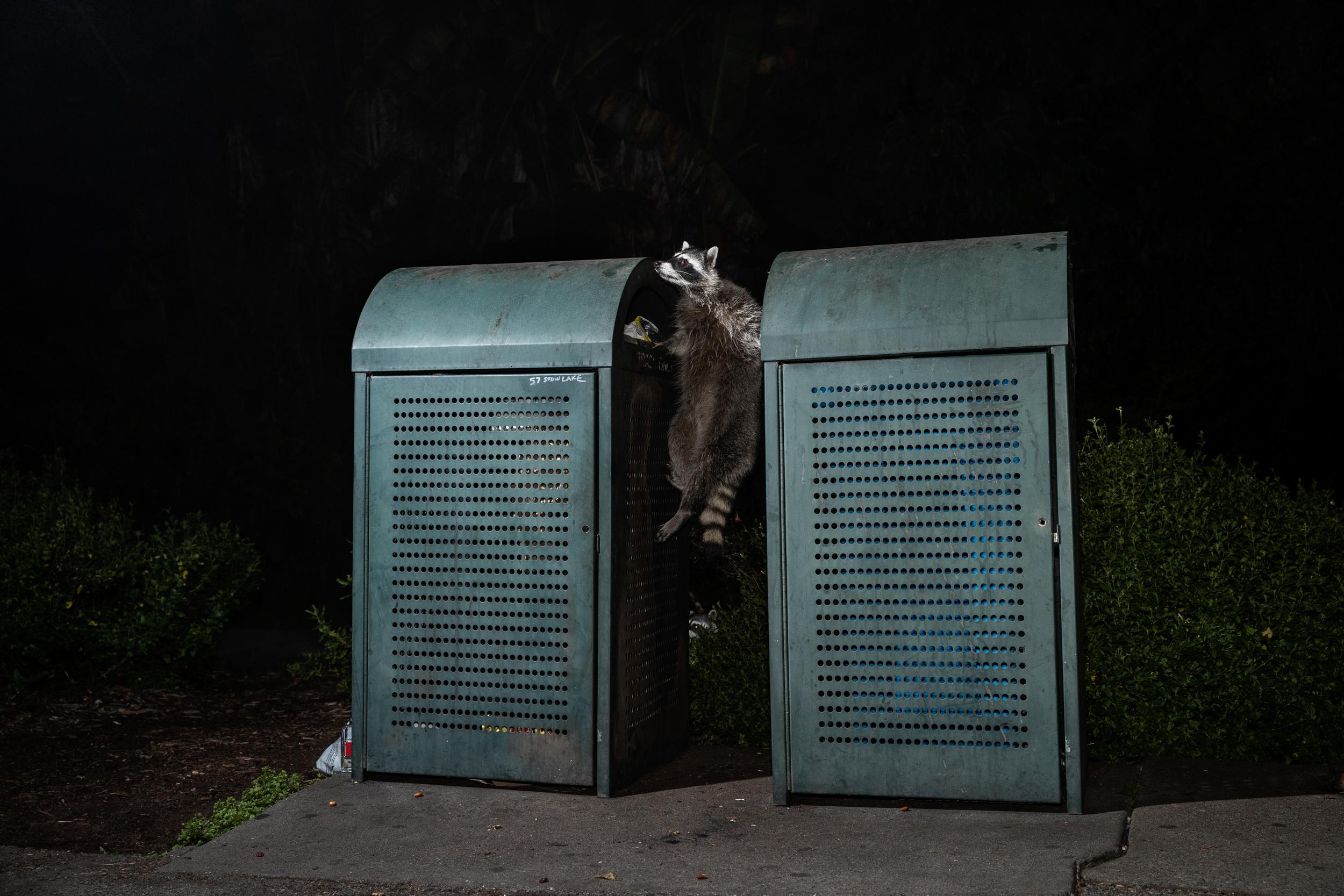
Descending Raccoon
Each night in Golden Gate Park, San Francisco, California, small armies of raccoons raid the garbage cans after the days' human visitors have dispersed. I captured this raccoon suspended between the two cans as it descended.
© Corey Arnold, United States, 1st Place, Professional competition, Wildlife & Nature, 2023 Sony World Photography Awards
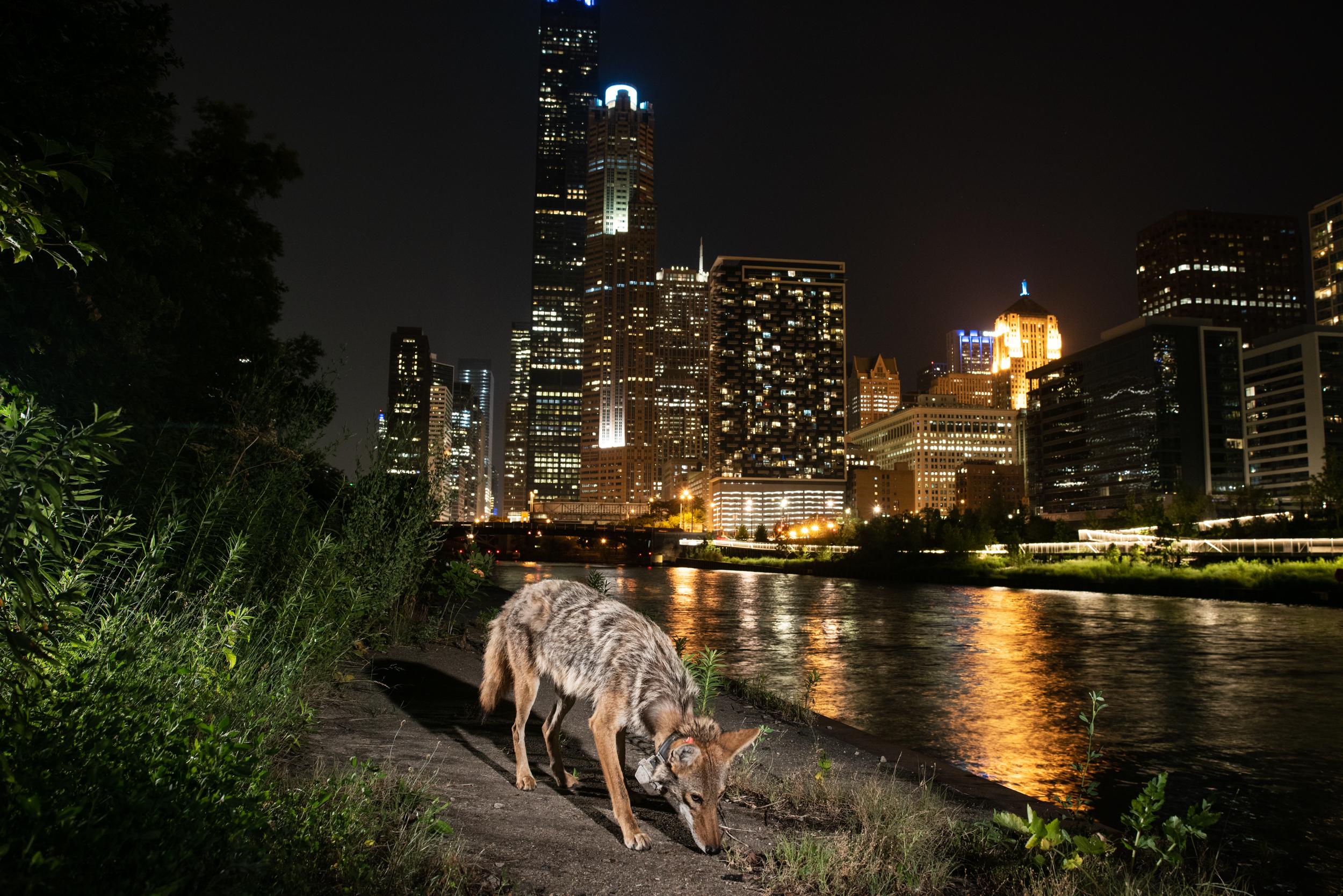
Coyote 1288
This juvenile male coyote had been previously radio collared by members of The Cook County Urban Coyote Project led by Dr. Stanley Gehrt. At around one year old, after leaving his den in a graveyard on the other side of the city to stake out new territory, he was tracked to this location behind the downtown Post Office along the South Branch of the Chicago River (Chicago, Illinois U.S.A).
© Corey Arnold, United States, 1st Place, Professional competition, Wildlife & Nature, 2023 Sony World Photography Awards
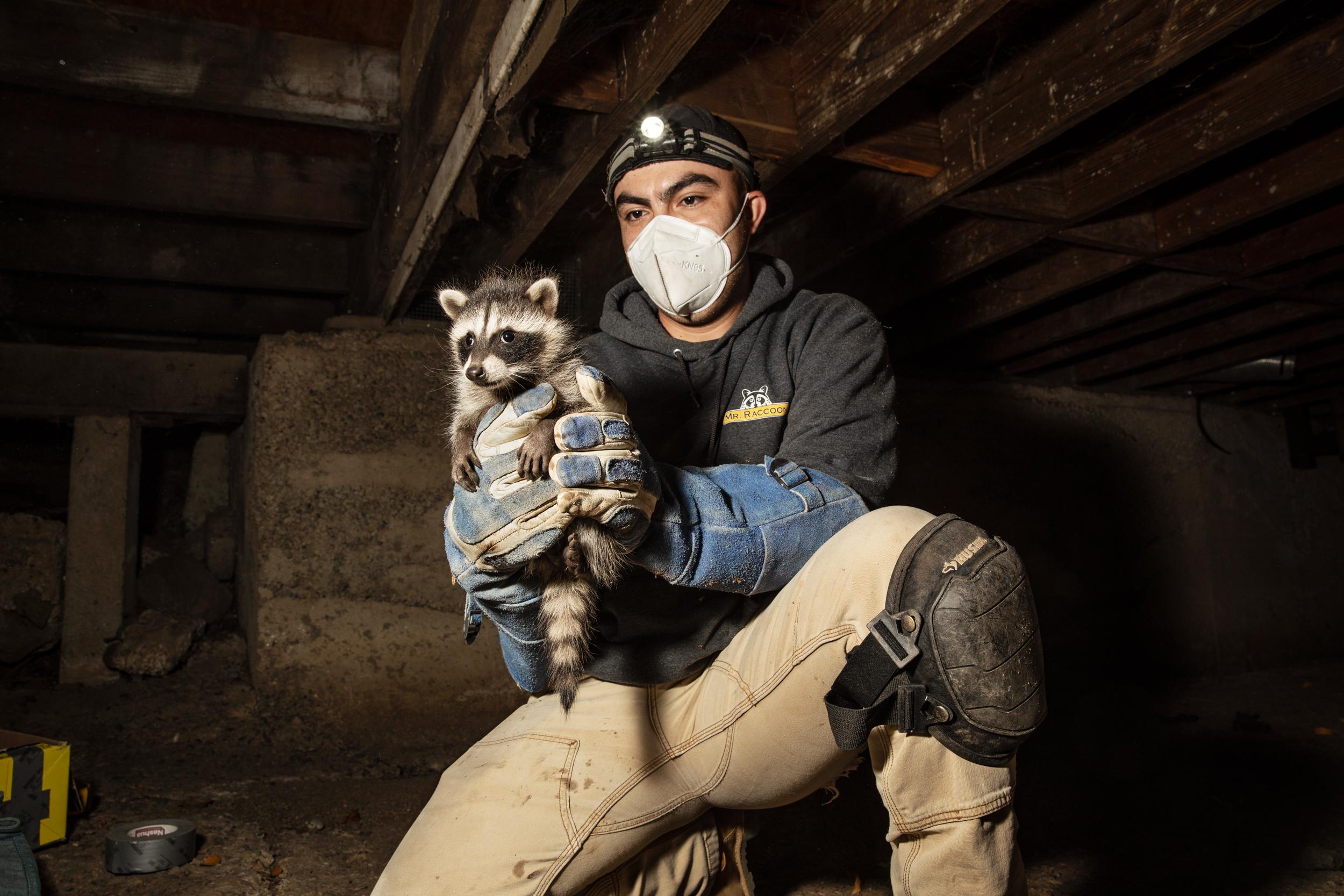
Raccoon Relocation
Erik Misael Flores Serrano holds a raccoon kit extracted from the basement of a home in Woodacre, California. Serrano is an employee with Mr. Raccoon, a no kill wildlife removal service. Once these raccoon kits are removed, they are placed in a box or tote and left outside the residence. The mother would then return and move her kits to a new home the following night. The crawl spaces are then secured with wire mesh to prevent them from moving back in. Urban raccoons in the bay area have shown remarkable skill in surviving the human-built landscape.
© Corey Arnold, United States, 1st Place, Professional competition, Wildlife & Nature, 2023 Sony World Photography Awards
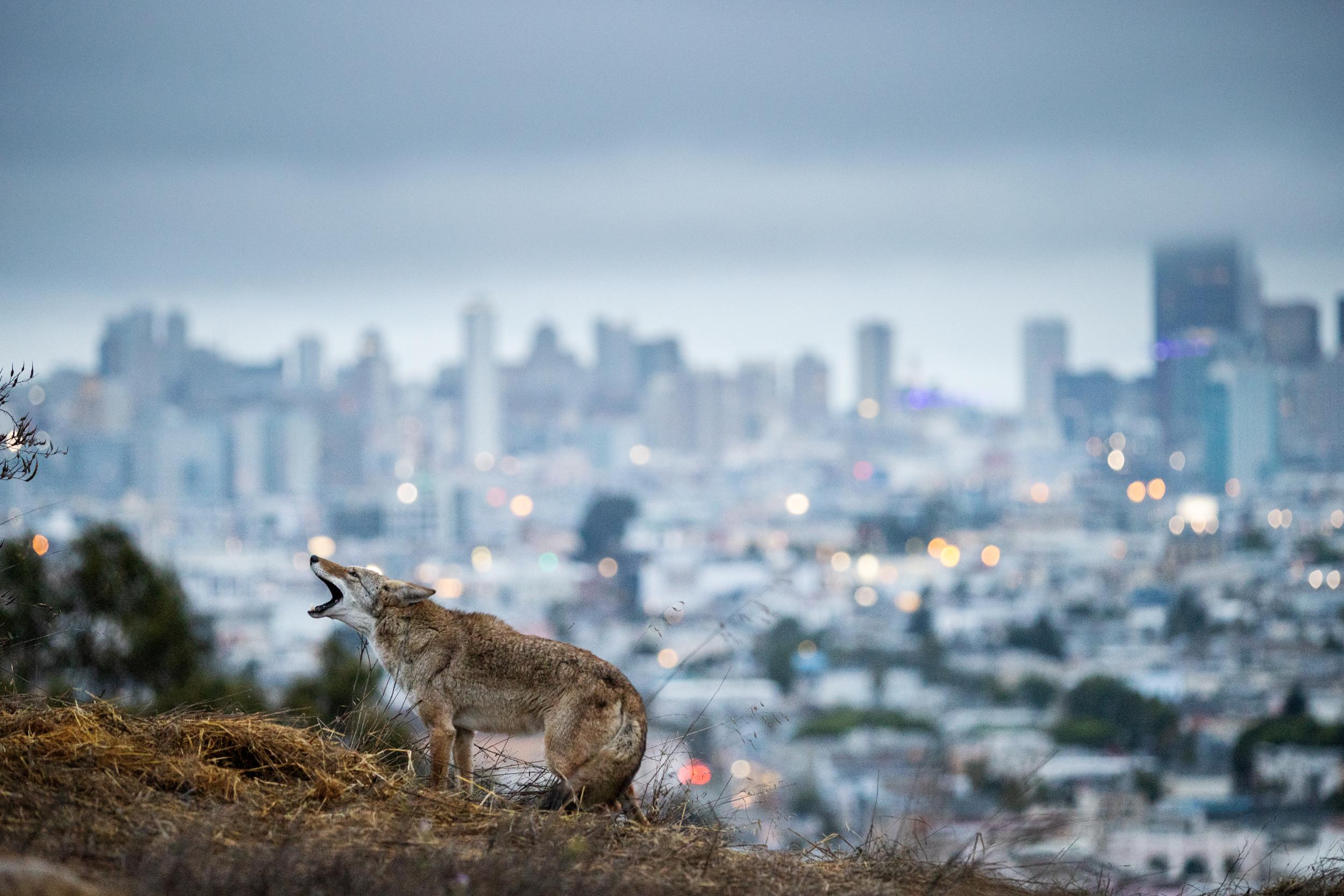
City Howl
A coyote yips aggressively at an off leash dog park in San Francisco, California. This park is surrounded by densely placed residential buildings on all sides and is the unlikely territory for a pack of urban coyotes. Coyotes have become a greater presence in San Francisco, but conflicts with dogs and cats, who occasionally become prey are also increasing.
© Corey Arnold, United States, 1st Place, Professional competition, Wildlife & Nature, 2023 Sony World Photography Awards