


Series description
Kishangarh is situated in the Ajmer district of the Indian state of Rajasthan, 29 kilometres (18 miles) north west of Ajmer and 90 kilometres (55 miles) from Jaipur. Kishangarh’s economy depends primarily on marble trading, and the rock is used widely for its beauty in architecture and sculpture.
However, marble slurry is a big problem. The by-product of processing and polishing marble, the slurry takes up a lot of space and is an environmental hazard, especially after it has dried. The poor air quality, caused by the dust, weakens people’s immune systems, while the minute dust particles lead to respiratory diseases, such as bronchitis, among the local population.
In other countries this might prompt mine owners to close their sites in anticipation of legal action, but here the operators are taking a different, more enterprising course of action, and people from across India and beyond are actually travelling to visit the waste sites.
Biography
Haider Khan is a Director / Photographer from Mumbai India'LANGUR'' Documentary 2024 - Screened at OSCAR Qualifying Tehran International Film Festival.
''BLACK INDIA'' Documentary 2023 - Academy Awards Qualifying.Durban International Film Festival,
SONY World Photo Award Winner 2022 | London
SONY World Photo Award Finalist 2023 | London
SONY World Photo Award 2nd Place 2024 |London

Why Bollywood Love This Toxic Waste Dump in India
Decades of carcinogenic waste from the country’s marble industry has created the illusion of snow-covered plains, which have become an unlikely – and hazardous – tourist attraction. It has even become a popular film location, with Bollywood filmmakers and pop video producers using it as a stand-in for the less accessible snowfields of Kashmir’s Himalayan highlands.
© Haider Khan, India, Shortlist, Professional competition, Environment, 2023 Sony World Photography Awards
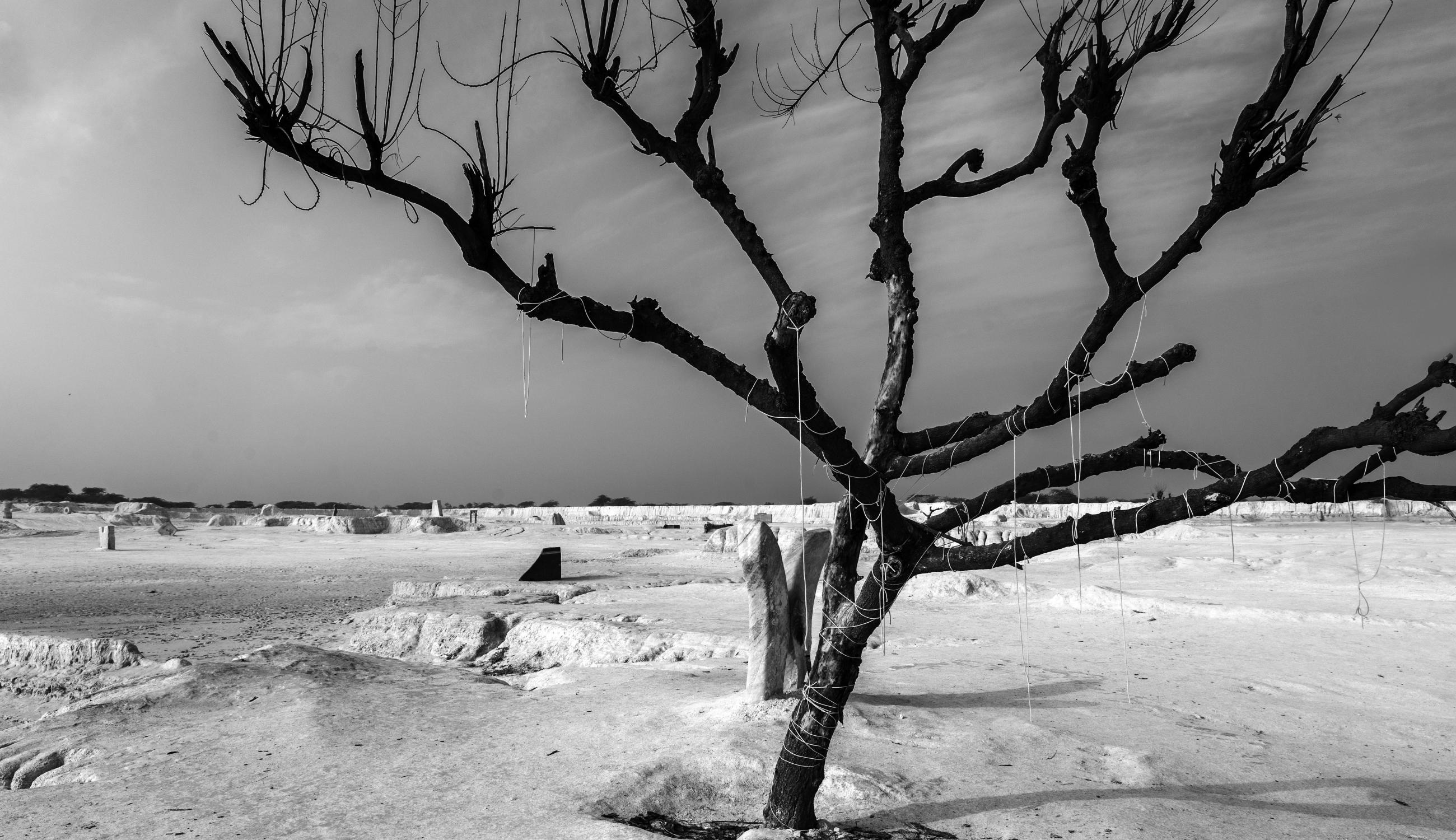
The Drift
The slurry generated during the processing of marble causes a tremendous reduction in the porosity and permeability of the top soil, resulting in water-logging problems on the surface. As the water cannot percolate down, the water level has been adversely affected and is now at a deeper level.
© Haider Khan, India, Shortlist, Professional competition, Environment, 2023 Sony World Photography Awards
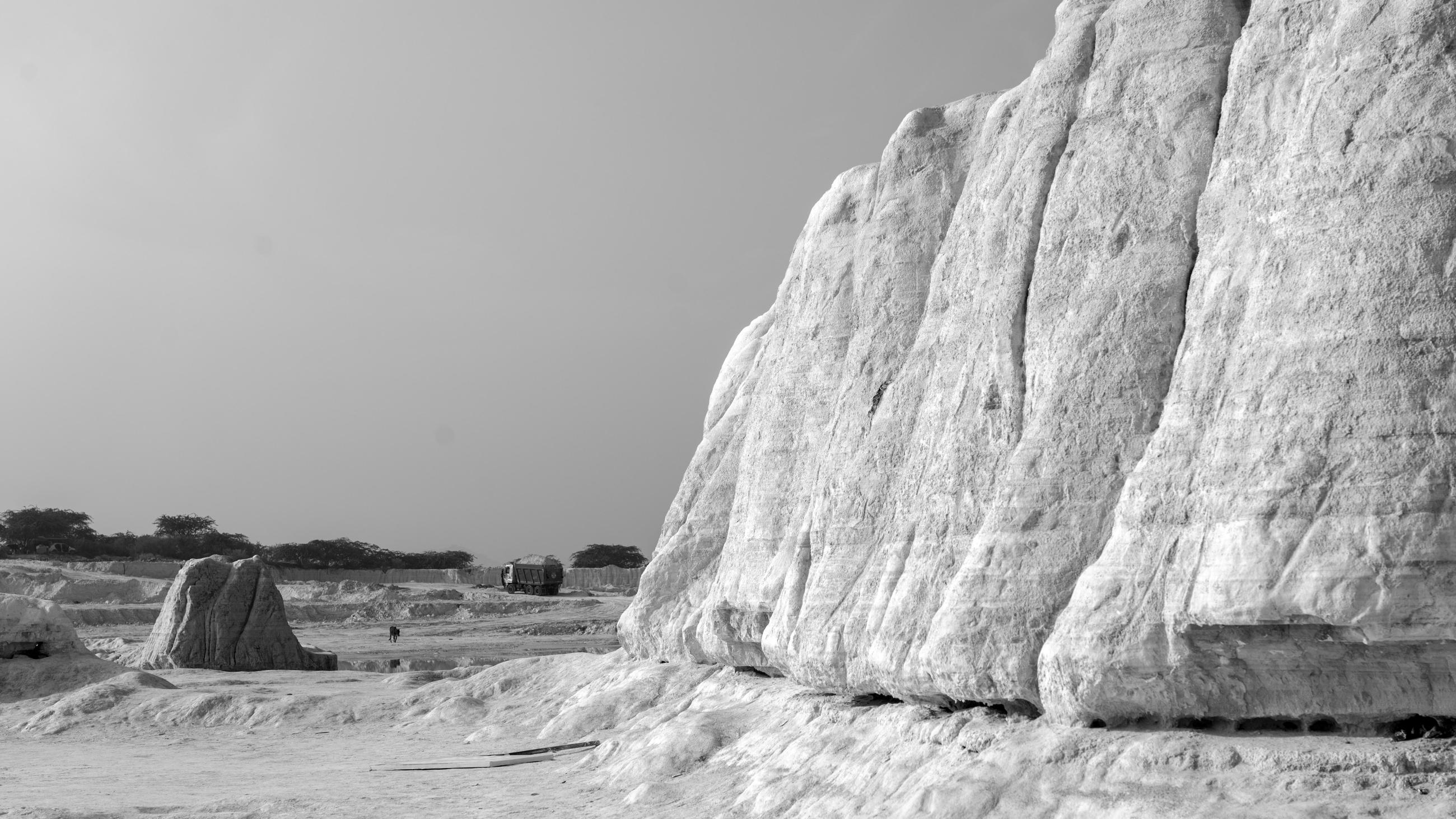
Government Apathy
Faced with the challenge of disposing of the waste marble, Rajasthan State Industrial Development and Investment Corporation (RIICO) and the Kishangarh Marble Association initially decided to store it in one specific area. However, as the pile of waste grew, it took on the shape of the snowy hill, spread over more than 125 acres. During the second phase of this dumping, which was completed in 2009, the local marble association had around 200 tankers dumping the slurry non-stop.
© Haider Khan, India, Shortlist, Professional competition, Environment, 2023 Sony World Photography Awards
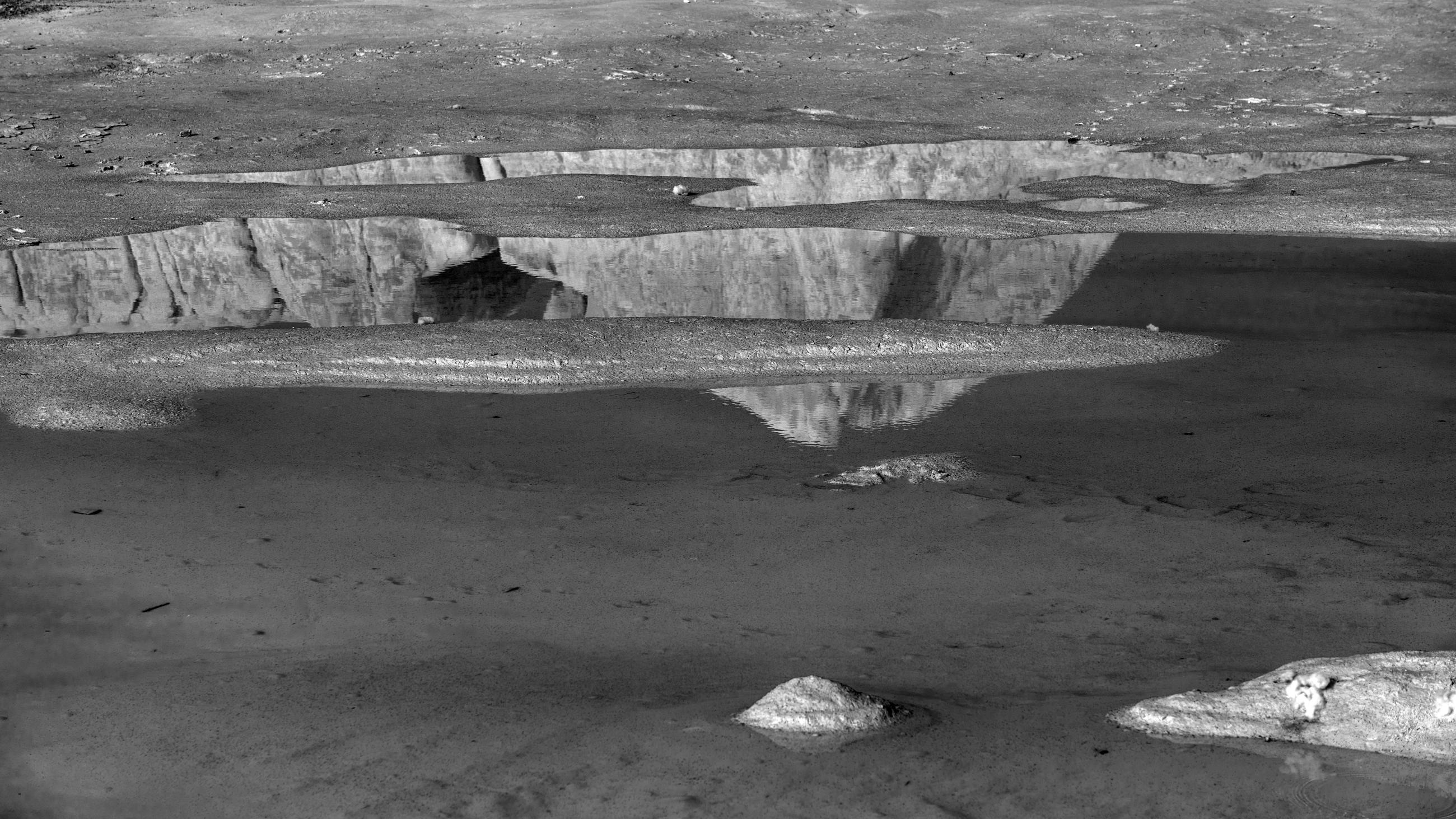
Desi Switzerland
If you stood at the centre of the dumping yard you would see ‘snow’ all around you, dotted with various small ponds containing water that is so crystal clear you can see to the bottom of it. However, while it might look ‘pristine’, marble slurry can contaminate overground water reservoirs when it is dumped along the catchment area of natural rainwater and cause drainage problems, as well as contaminating underground water resources.
© Haider Khan, India, Shortlist, Professional competition, Environment, 2023 Sony World Photography Awards
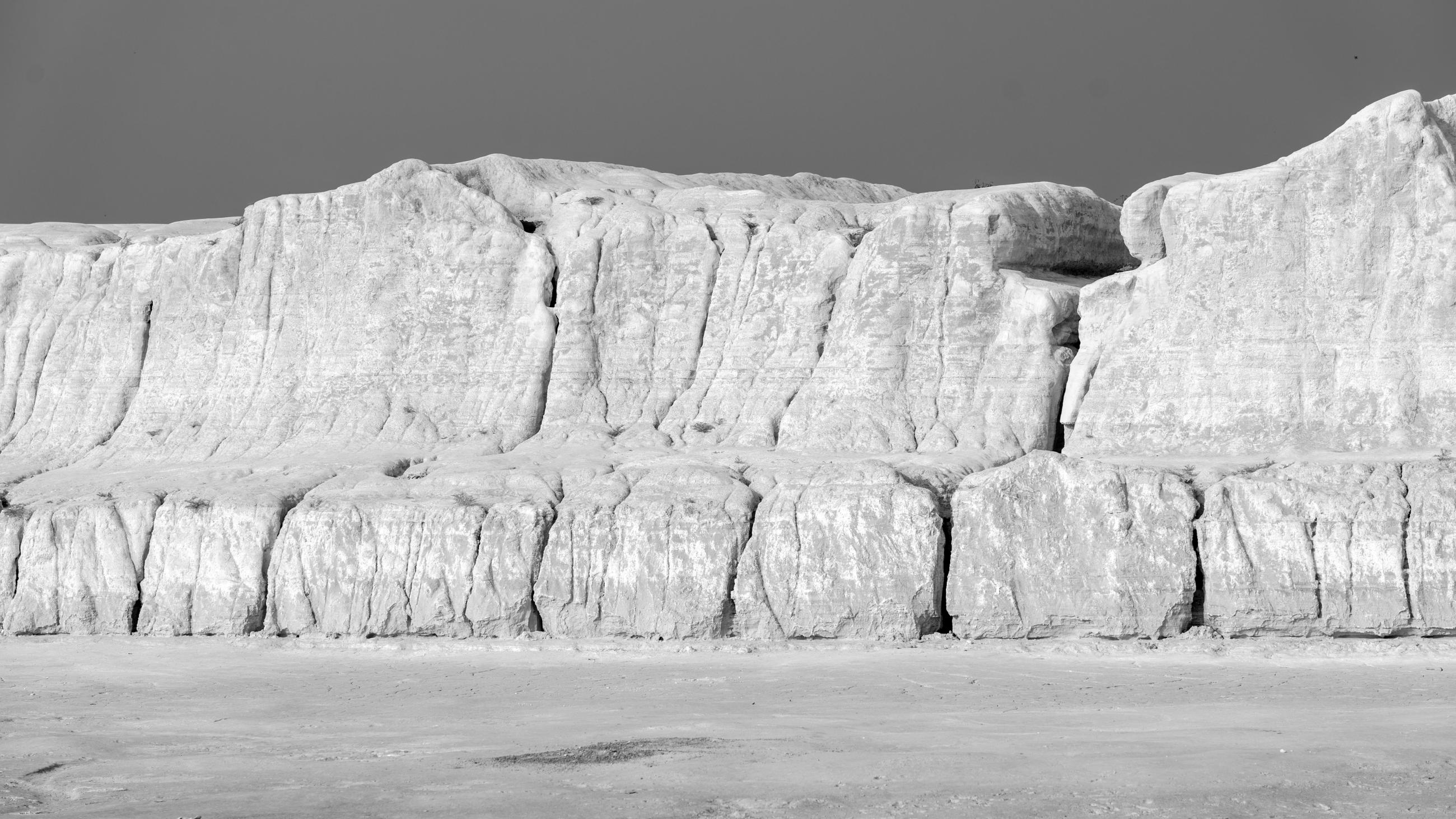
Moonland of Rajasthan
This wonderful white terrain may look like a snow-covered valley in Kashmir or Leh, but it’s a manmade wasteland. Over the years, the area has become a popular setting for filming and photo-shoots, with a beautiful lake that gets its unique colour through chemical reactions.
© Haider Khan, India, Shortlist, Professional competition, Environment, 2023 Sony World Photography Awards
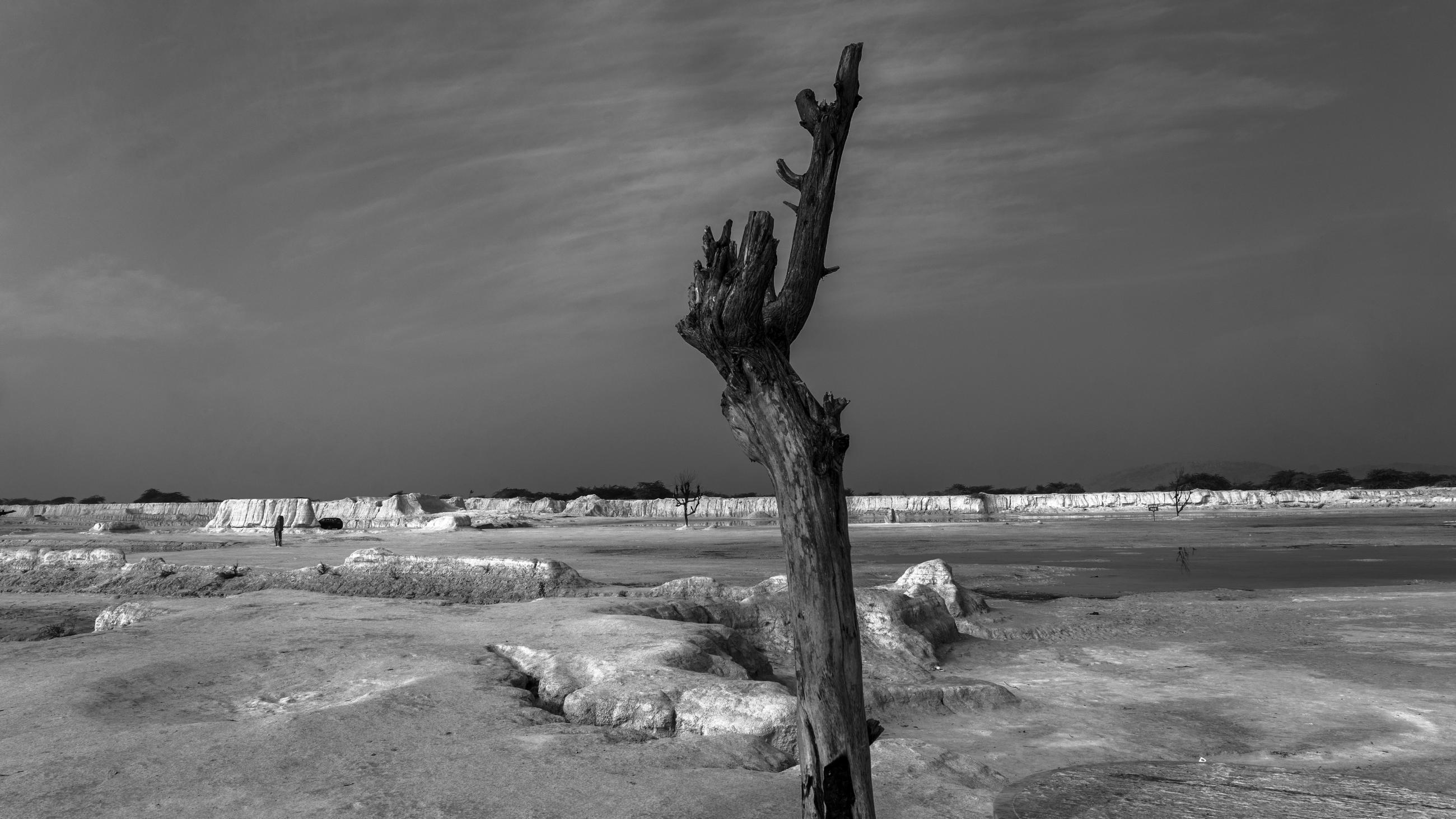
The Lone Ranger
Fine marble dust reduces the fertility of soil by increasing its alkalinity. The percolation rate of rainwater due to the clogging of the pores of the topsoil also increases surface run-off, stopping the groundwater from recharging. Consequently, the dumped waste dries out and the fine marble dust suspended in the air is slowly spread by the wind to surrounding areas, settling on crops and vegetation.
© Haider Khan, India, Shortlist, Professional competition, Environment, 2023 Sony World Photography Awards

The Last Journey
The fine marble dust causes respiratory ailments in nearby residential areas, as well as affecting the flora and fauna. Continuous exposure to marble dust can cause severe respiratory disorders, such as bronchitis, asthma and chronic obstructive pulmonary disease (COPD), although dermal and eye irritation are by far the most common problems. The dust has also become a safety hazard on the highways along which it is dumped, as it creates visibility issues when it is dry and airborne, and makes the roads slippery when it is wet.
© Haider Khan, India, Shortlist, Professional competition, Environment, 2023 Sony World Photography Awards