

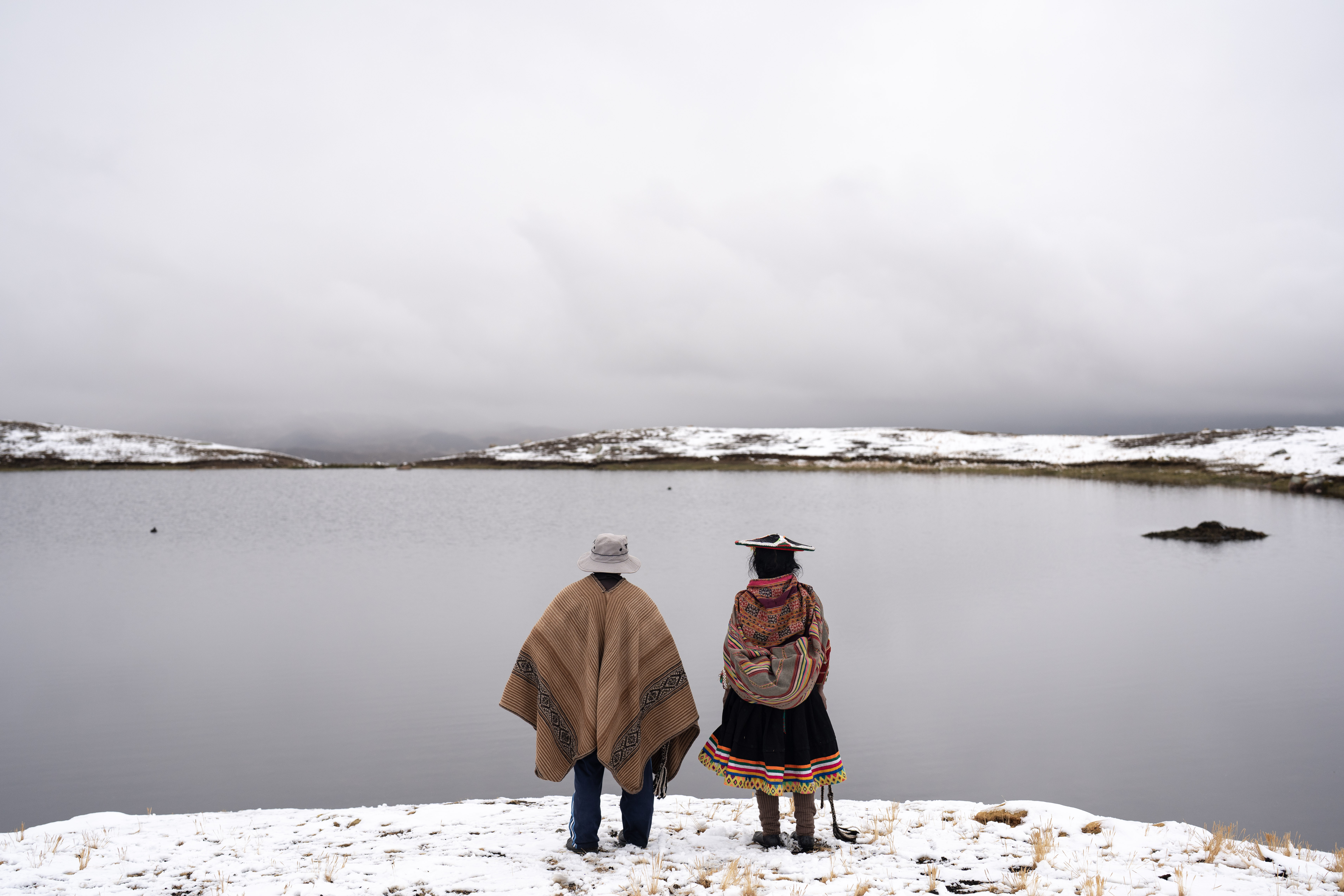
Series description
Ice constitutes the second largest source of freshwater on the planet and 70 percent of the world’s tropical glaciers are found in Peru. Located in Cusco, the Quelccaya Ice Cap is the largest tropical glacier in the world, covering an area equivalent to more than 9,000 soccer fields. However, due to accelerated melting it is receding by 60 metres (195 feet) a year and some studies have determined that it will disappear in the next 30 years if global greenhouse gas emissions are not reduced.
The inhabitants of the Quechua community, who live on the slopes and close to the glacier, are being affected directly by the retreating ice and dedicate their lives to making the population aware of the problem of melting ice as an effect of climate change. They seek to protect their snow-capped mountains through ancestral knowledge and rituals of the Andean worldview, which over time are also disappearing.
The thaw not only threatens the continuity of life in Andean communities, but also puts certain species at risk of extinction, as these areas are inhabited by a range of aquatic and terrestrial species.
Biography
Ángela Ponce is a documentary photographer and photojournalist based in Peru. She focuses on long-term projects that approach Latin American social issues, political conflicts, disability rights and memory. During 2019, she was awarded; 2nd place in POY LATAM category Sports Series; Women Photograph and The Women’s Equality Center grant, among others. In 2017, she won the ICRC Humanitarian Visa d’Or (France).
Currently she is a frequent contributor for The New York Times, Bloomberg and Reuters.
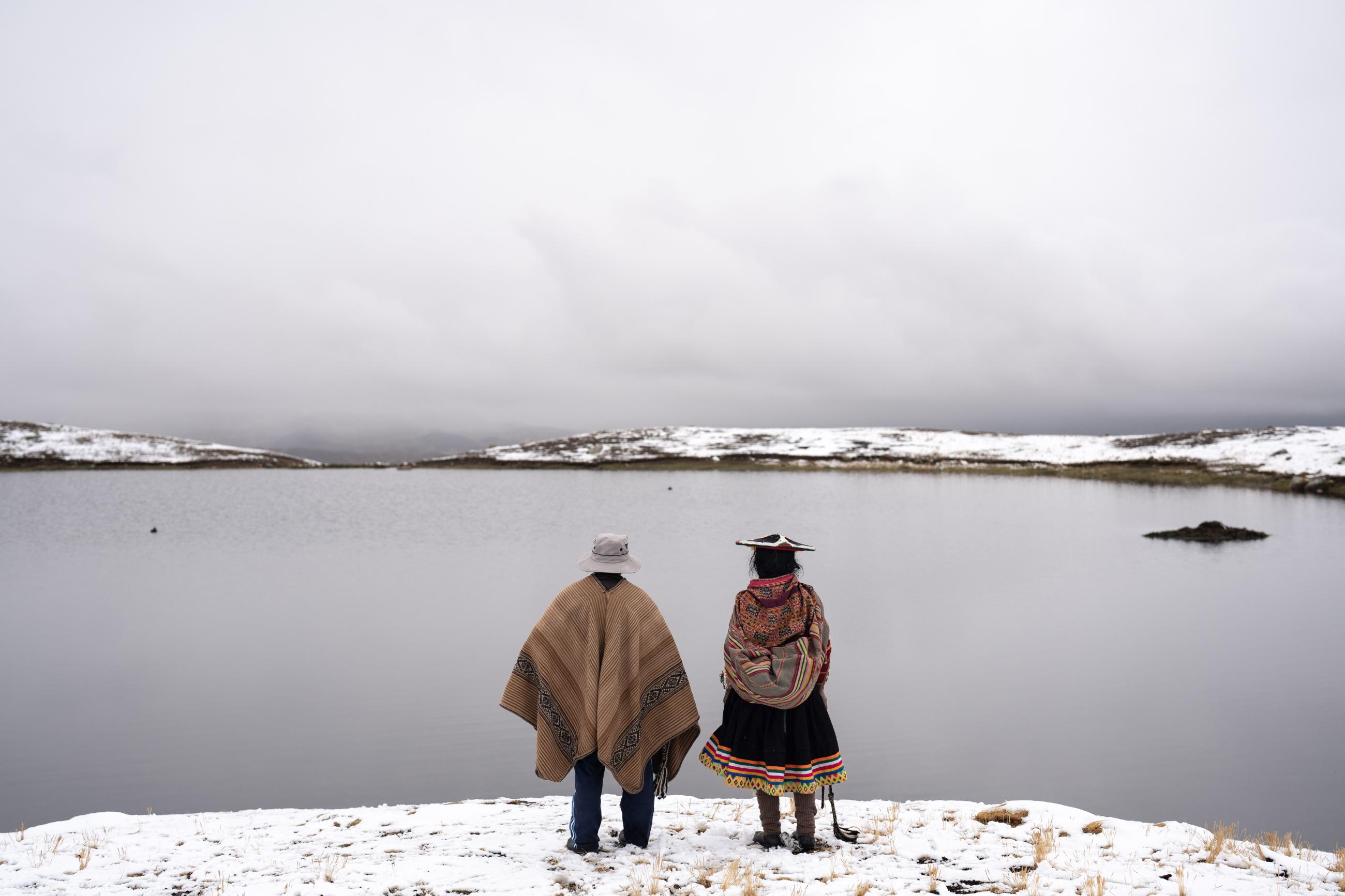
Guardians of the Glaciers 1
The Phinaya community is located 4,830 metres (15,850 feet) above sea level, in Cusco, Peru. It is the highest town near the snow-capped Quelccaya, which is rapidly thawing due to global warming.
© Angela Ponce, Peru, Shortlist, Professional competition, Environment, 2023 Sony World Photography Awards
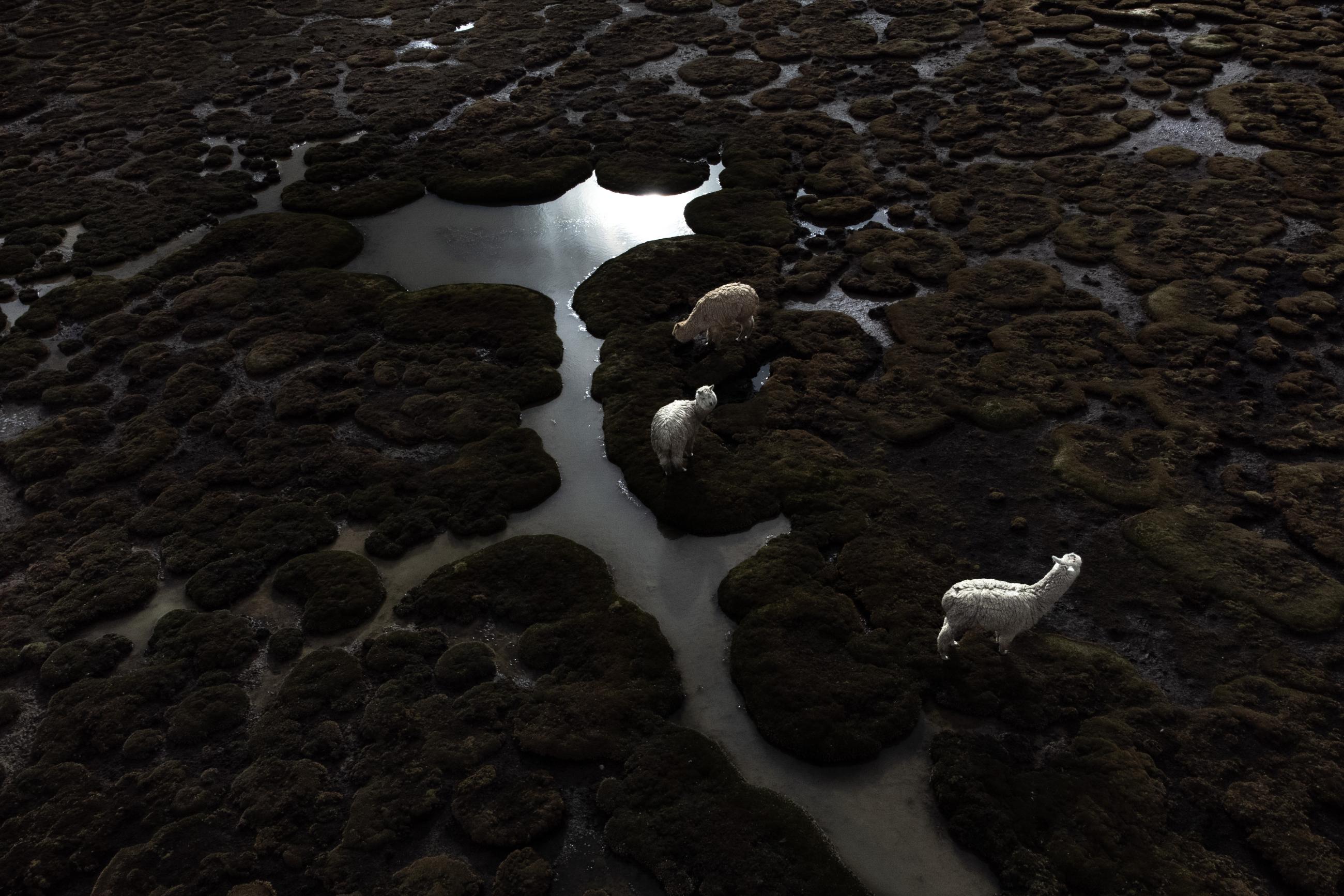
Guardians of the Glaciers 2
Alpacas grazing in wetlands produced by the melting of the snowy Quelccaya Ice Cap.
© Angela Ponce, Peru, Shortlist, Professional competition, Environment, 2023 Sony World Photography Awards
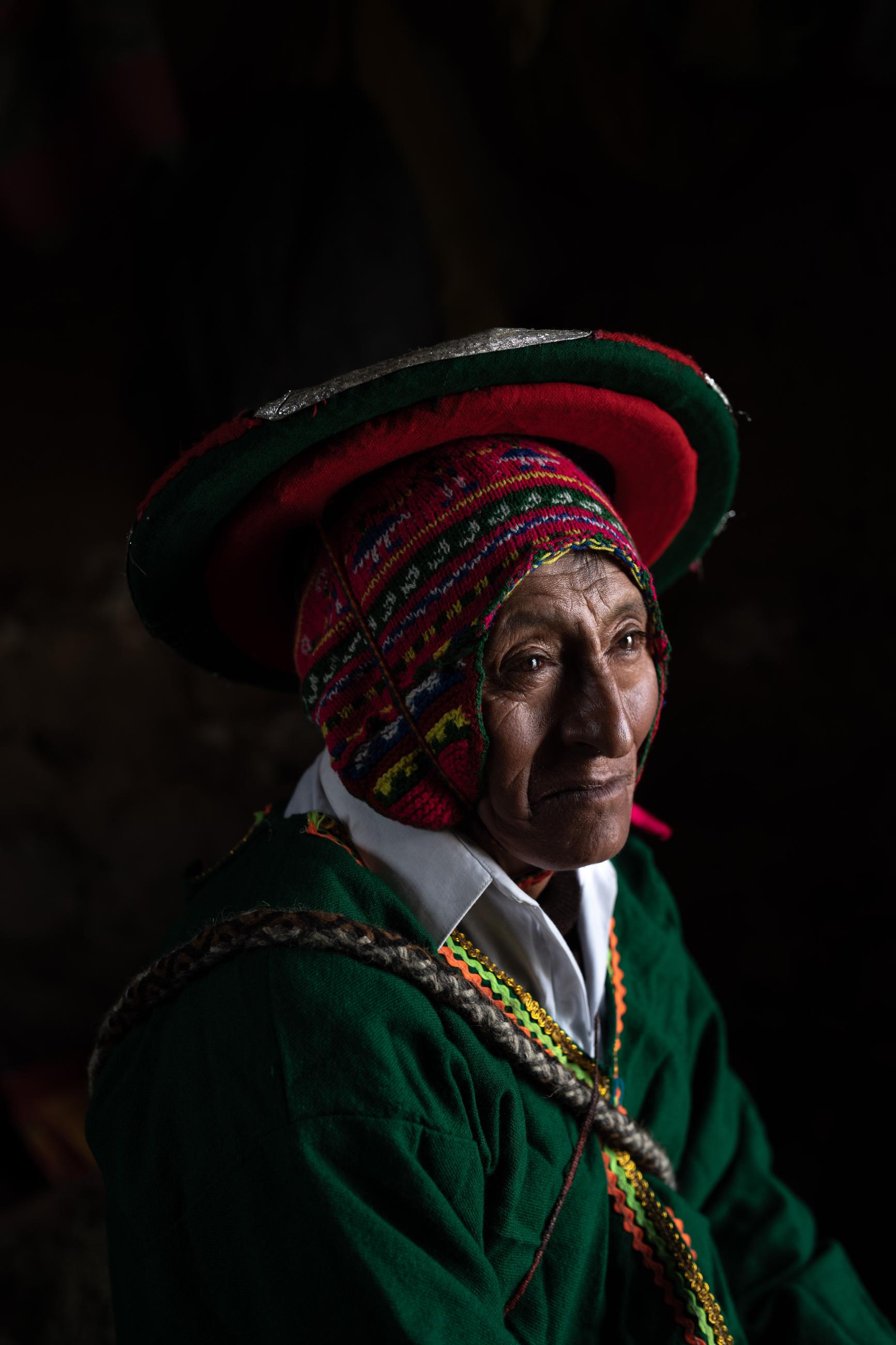
Guardians of the Glaciers 3
‘The cold waves are much harder to bear now, with temperatures getting lower because of climate change. There is almost no rain, there is no water, the animals die, it is worrying in the heights of the Andes’, says one of the community elders, posing for a portrait in his cabin in Cusco, Peru.
© Angela Ponce, Peru, Shortlist, Professional competition, Environment, 2023 Sony World Photography Awards
Guardians of the Glaciers 4
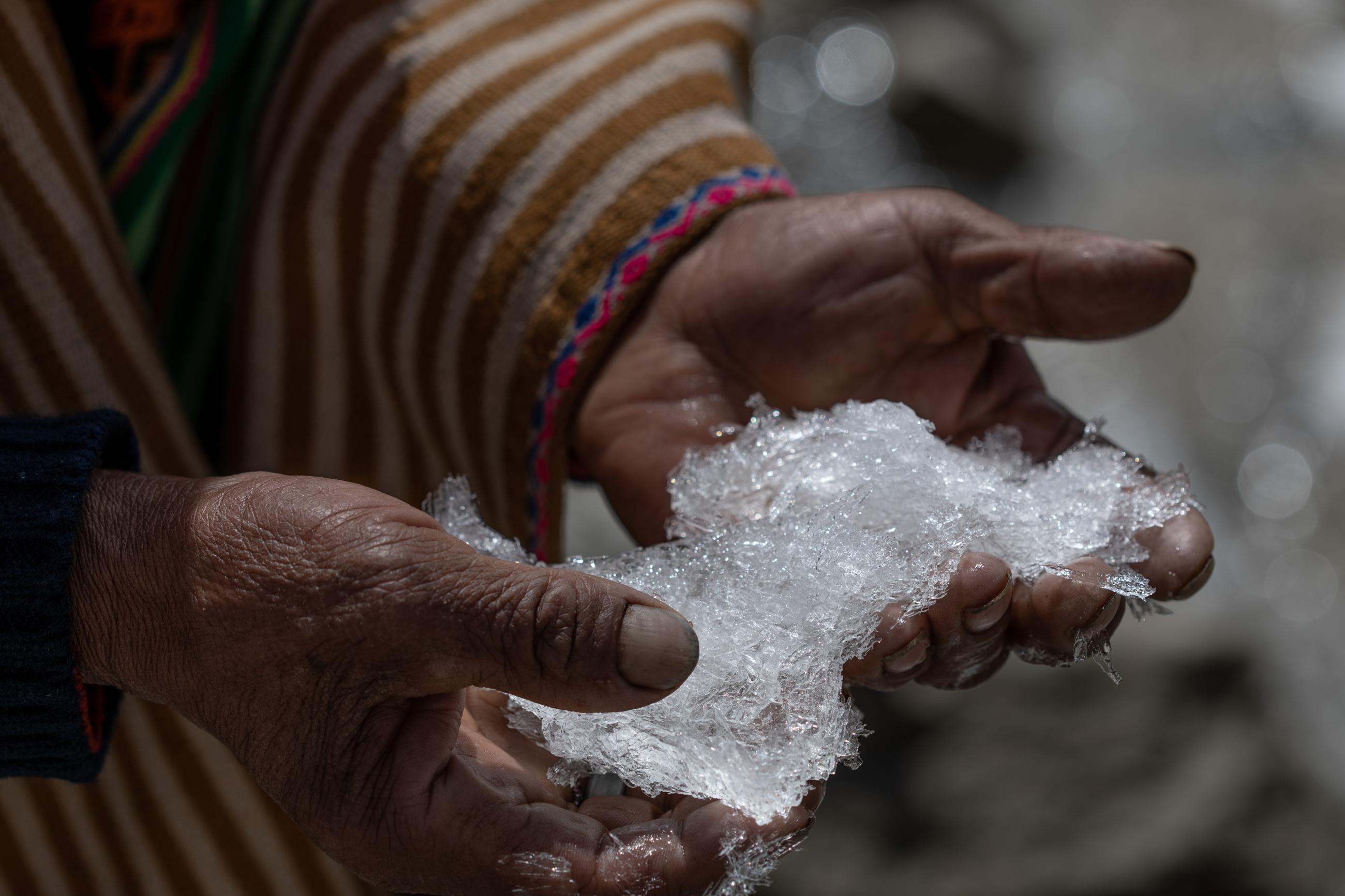
Exaltation holds ice detached from Quelccaya in Cusco, Peru.
© Angela Ponce, Peru, Shortlist, Professional competition, Environment, 2023 Sony World Photography Awards
Guardians of the Glaciers 5
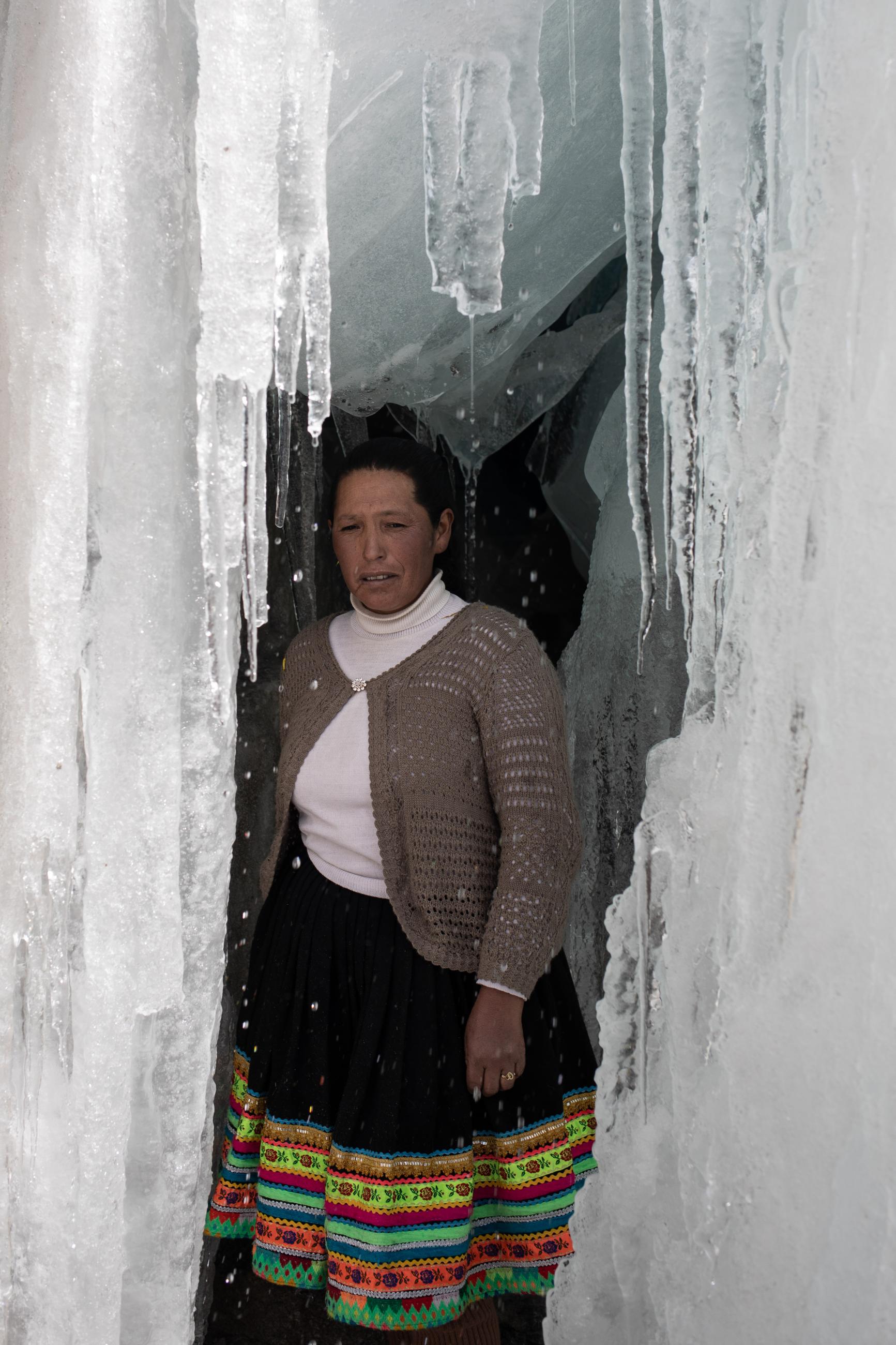
Teresa observes the snowy ice cap, while remembering her father. ‘My dad always made offerings to the snowy mountain. He told me that it would be the end of the world when the snow melted’. For many local people the mountains are sacred and considered gods.
© Angela Ponce, Peru, Shortlist, Professional competition, Environment, 2023 Sony World Photography Awards
Guardians of the Glaciers 7
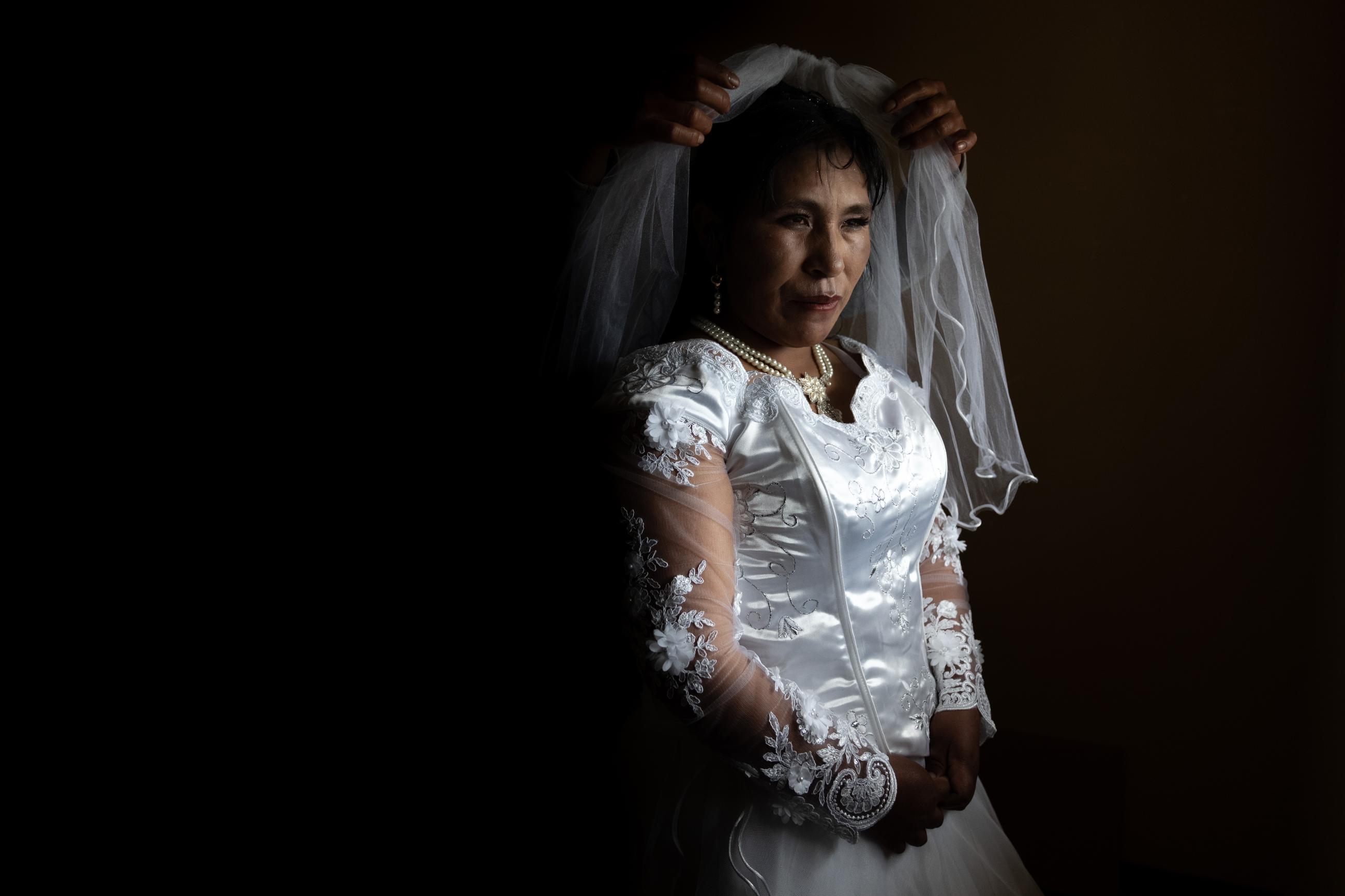
Yolanda works as a park ranger and is in charge of protecting and monitoring the snow. According to a town legend, a homeless old man came asking for food and water at a wedding celebration in the community, but was kicked out because of his appearance. However, one woman helped him and the old man told her: ‘Go upstairs with your animals and don’t look back’. Loud noises followed and snow began to fall, flooding the entire town as punishment and creating the Sibinacocha lagoon, the most important in Cusco.
© Angela Ponce, Peru, Shortlist, Professional competition, Environment, 2023 Sony World Photography Awards
Guardians of the Glaciers 9
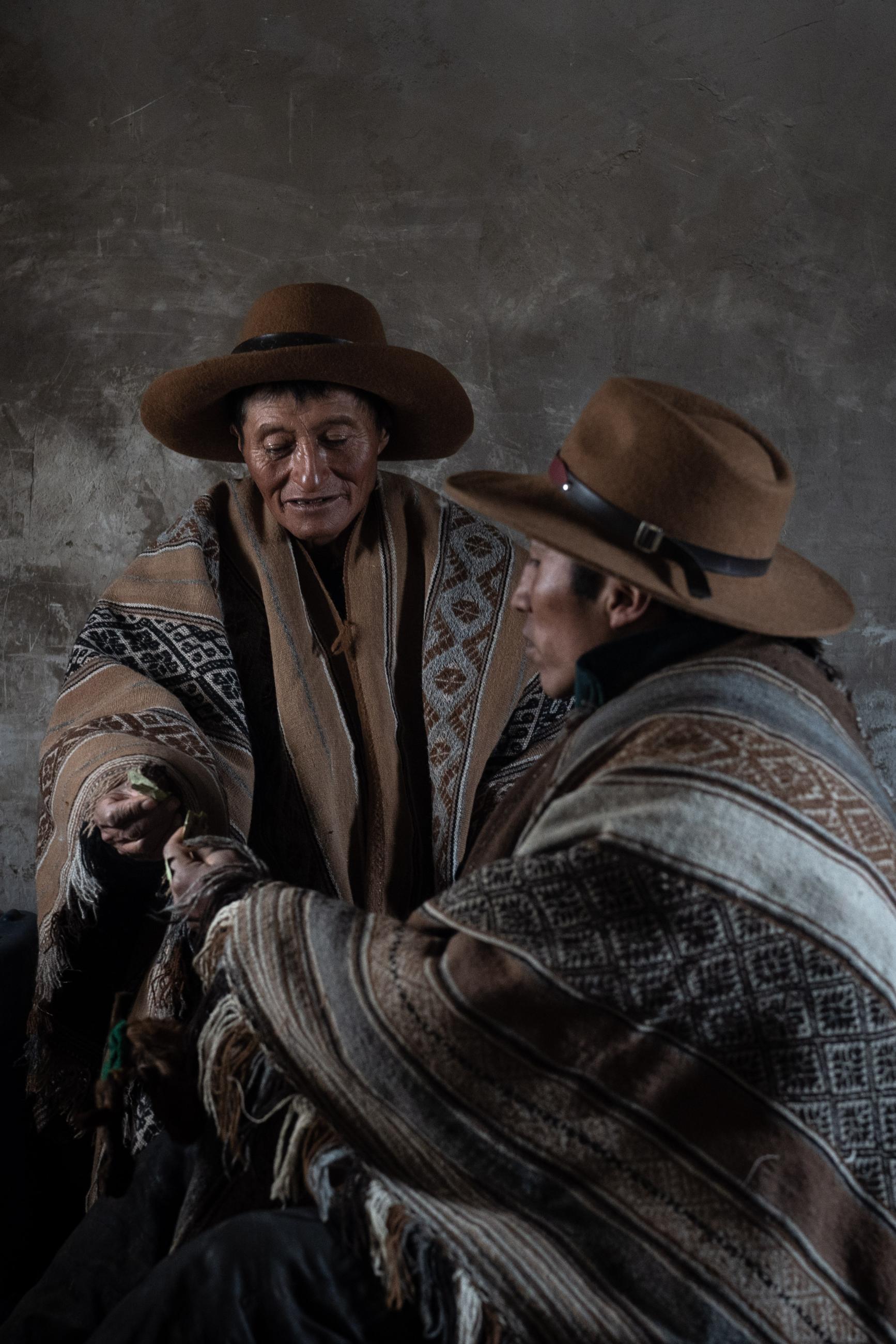
Salomé (left) and Nemesio (right), make an offering with coca leaves as a symbol of respect and in order to balance the damage that man does to the ‘pachamama’ (Mother Earth in the Quechua language).
© Angela Ponce, Peru, Shortlist, Professional competition, Environment, 2023 Sony World Photography Awards
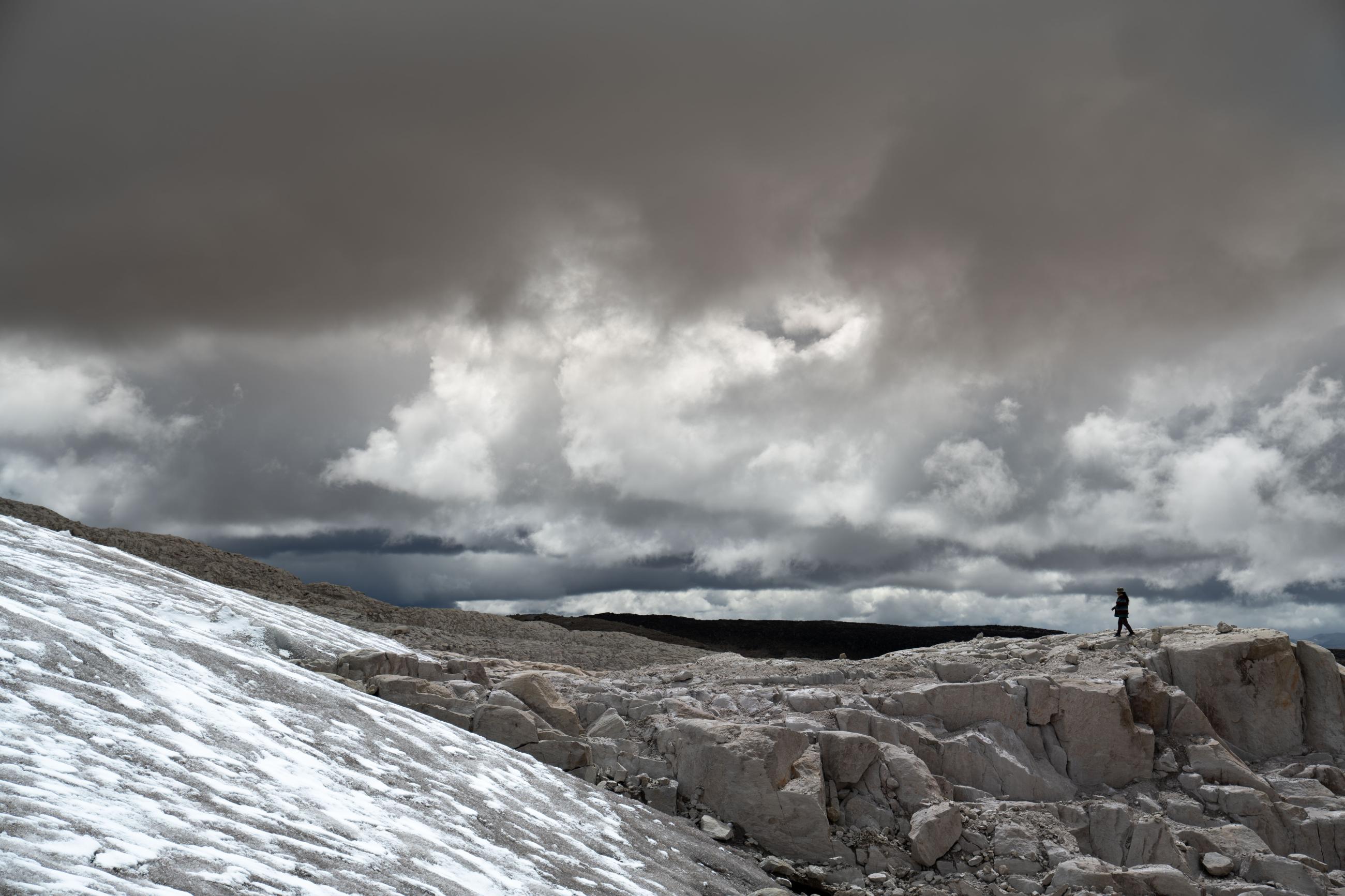
Guardians of the Glaciers 10
‘I remember the peak was huge. It looked beautiful, but now everything is gone. There isn’t much snow left, so what are we going to do when the snow has gone? We will run out of water’. Quelccaya is currently receding at a rate of 60 metres (195 feet) a year, and could disappear in the next 30 years.
© Angela Ponce, Peru, Shortlist, Professional competition, Environment, 2023 Sony World Photography Awards