

Series description
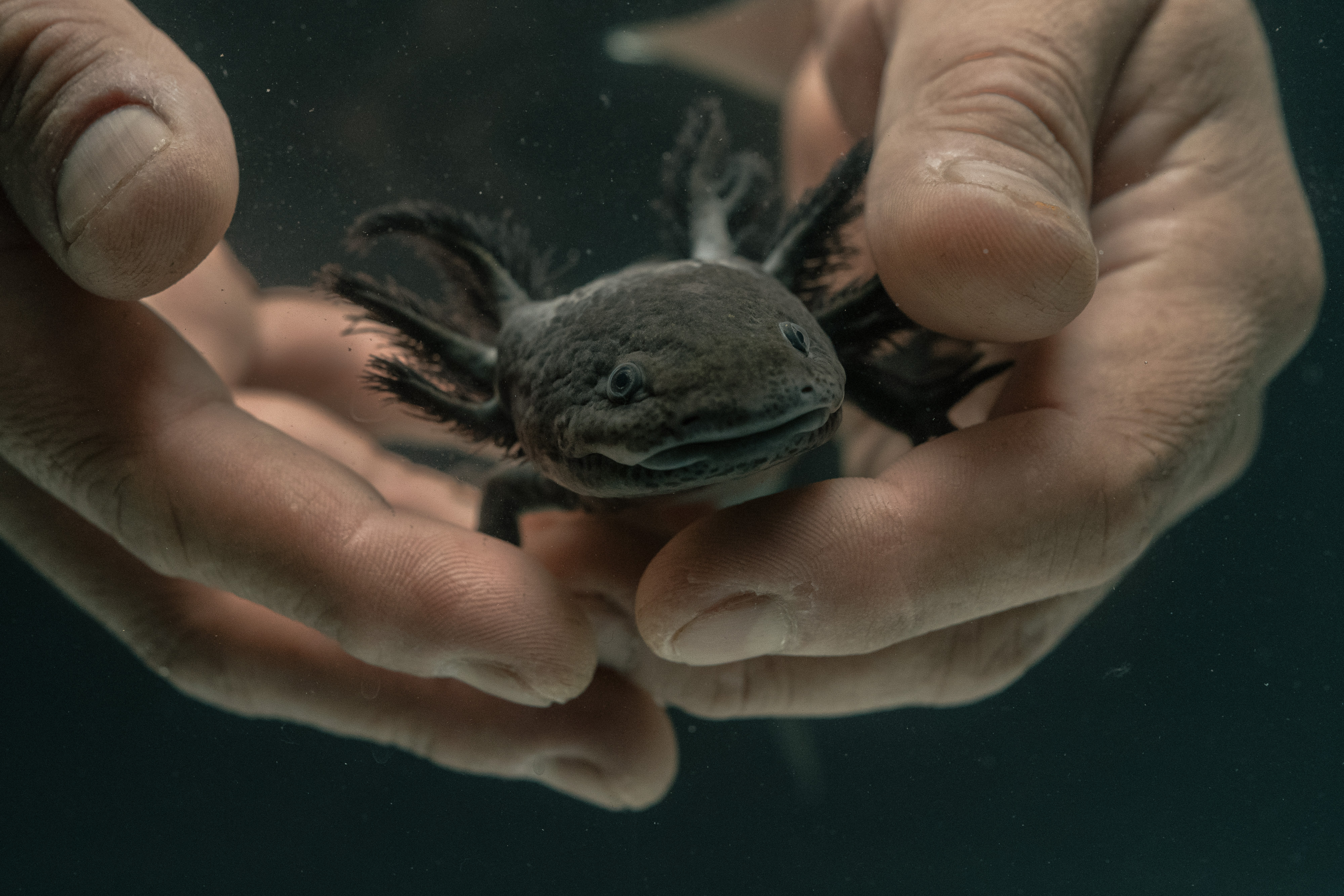
This project dives into the endangered waters of Xochimilco, a semi rural borough south of Mexico City. The farmers who navigate the canals and cultivate the chinampas (man-made agricultural islands) are perhaps the last living trace of the native communities that coexisted with the lakes over which Spaniards built their empire. Now, some of them are collaborating with a team at the local university – Universidad Nacional Autónoma de México (UNAM) – to protect their ecosystem and the unique axolotl. A symbol of resistance, the endemic amphibian was considered an aquatic manifestation of the god Xolotl and became very popular with scientists due to its regenerative qualities. It has been widely collected as an aquarium pet, and although they appear to be surviving in tanks all over the world, wild populations are on the brink of extinction as concrete and pollution continue to expand into their habitat.
Biography
Luis Antonio Rojas is an independent photographer based in Mexico City who works on personal projects and commissions for international publications. Honors include receiving an honorable mention at the XIX Photography Mexico Biennial, being selected for the World Press Photo 6x6 Talent Program, and being awarded in POY Latam in the categories of news, daily life, and photographer of the year. He became a National Geographic Explorer in 2019 and is a member of Panos Pictures and Frontline Freelance MX.
Untitled
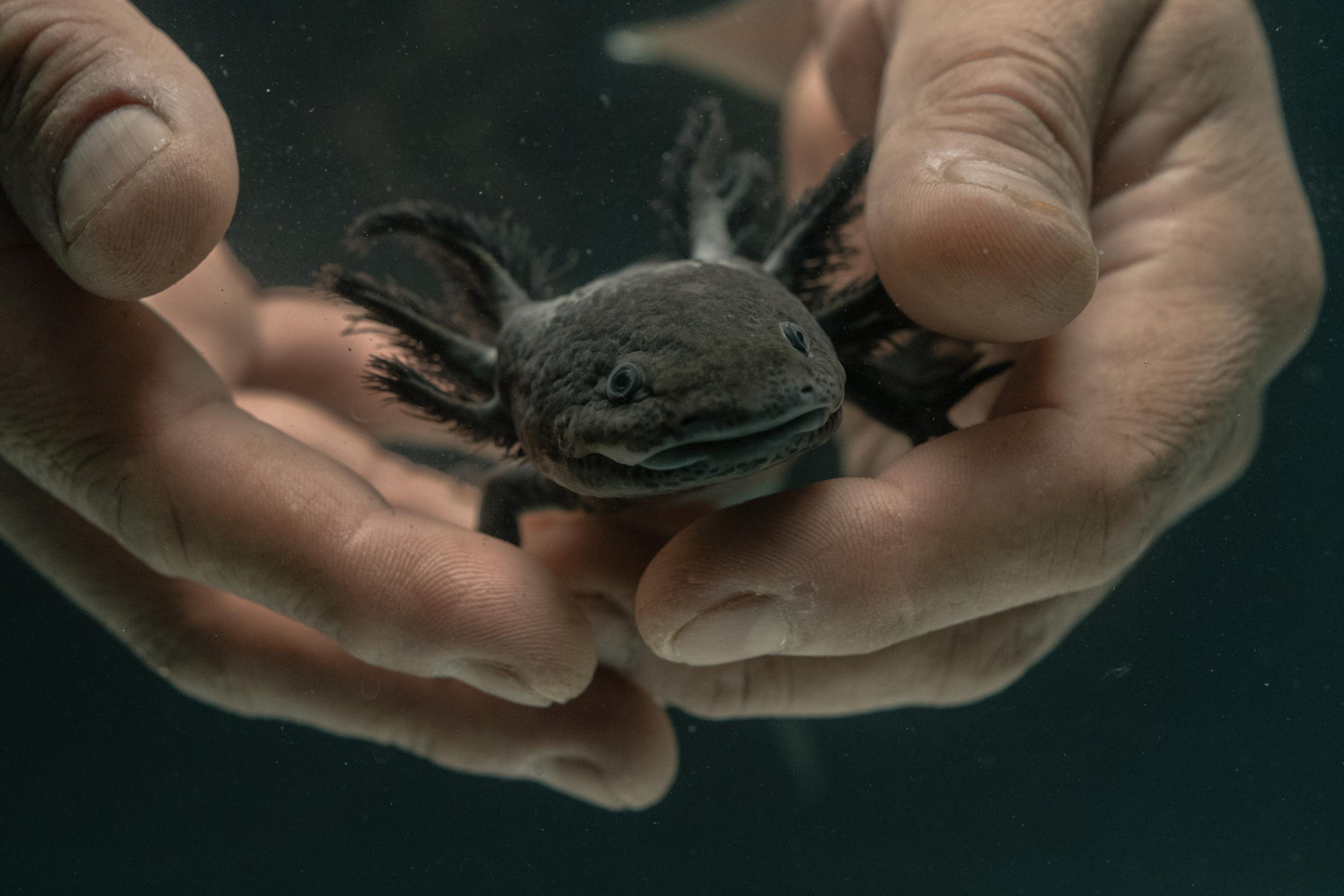
Horacio Mena, coordinator of the axolotl colony, holds an axolotl inside a fish tank at UNAM’s Ecological Restoration Laboratory in Xochimilco, Mexico City. The university has a restoration process that relies on the establishment of axolotl refuges around the chinampas to increase water quality. This change benefits native species, as well as the crops.
© Luis Antonio Rojas, Mexico, Shortlist, Latin America Professional Award, 2024 Sony World Photography Awards
Untitled
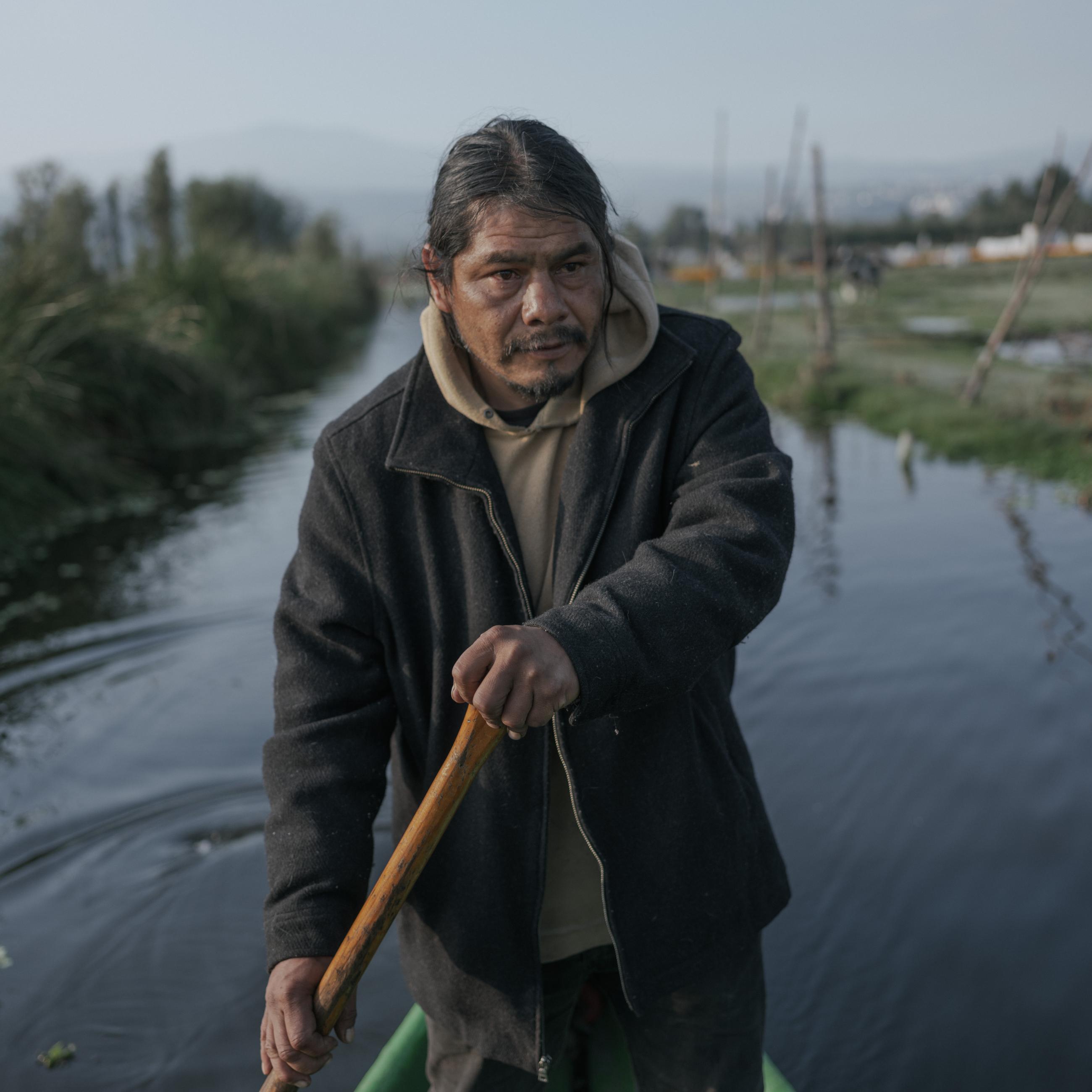
Javier del Valle, a fourth generation chinampero who collaborates with the UNAM's Ecological Restoration Laboratory on protecting the axolotl, rows to his family’s chinampa in Xochimilco early in the morning. Del Valle, a Nahuatl speaker, has grown proud and aware of Nahua traditions and their relevance in the agricultural prehispanic calendar.
© Luis Antonio Rojas, Mexico, Shortlist, Latin America Professional Award, 2024 Sony World Photography Awards
Untitled
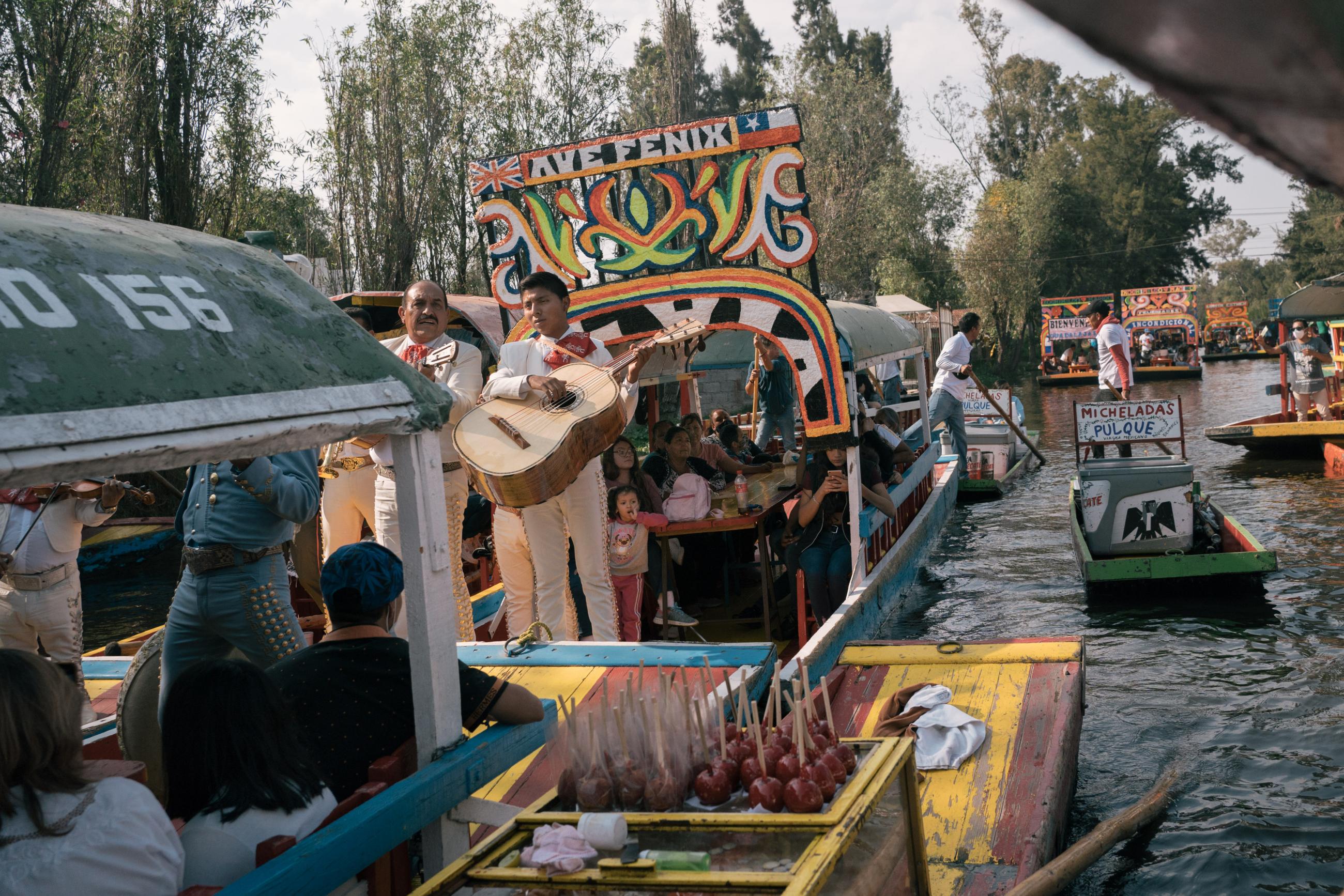
Mariachis play for people on a trajinera. Trajineras are Xochimilco’s main tourist attraction, and can see up to 20 people partying on a colourful boat with food, drink and even live mariachi music.
© Luis Antonio Rojas, Mexico, Shortlist, Latin America Professional Award, 2024 Sony World Photography Awards
Untitled
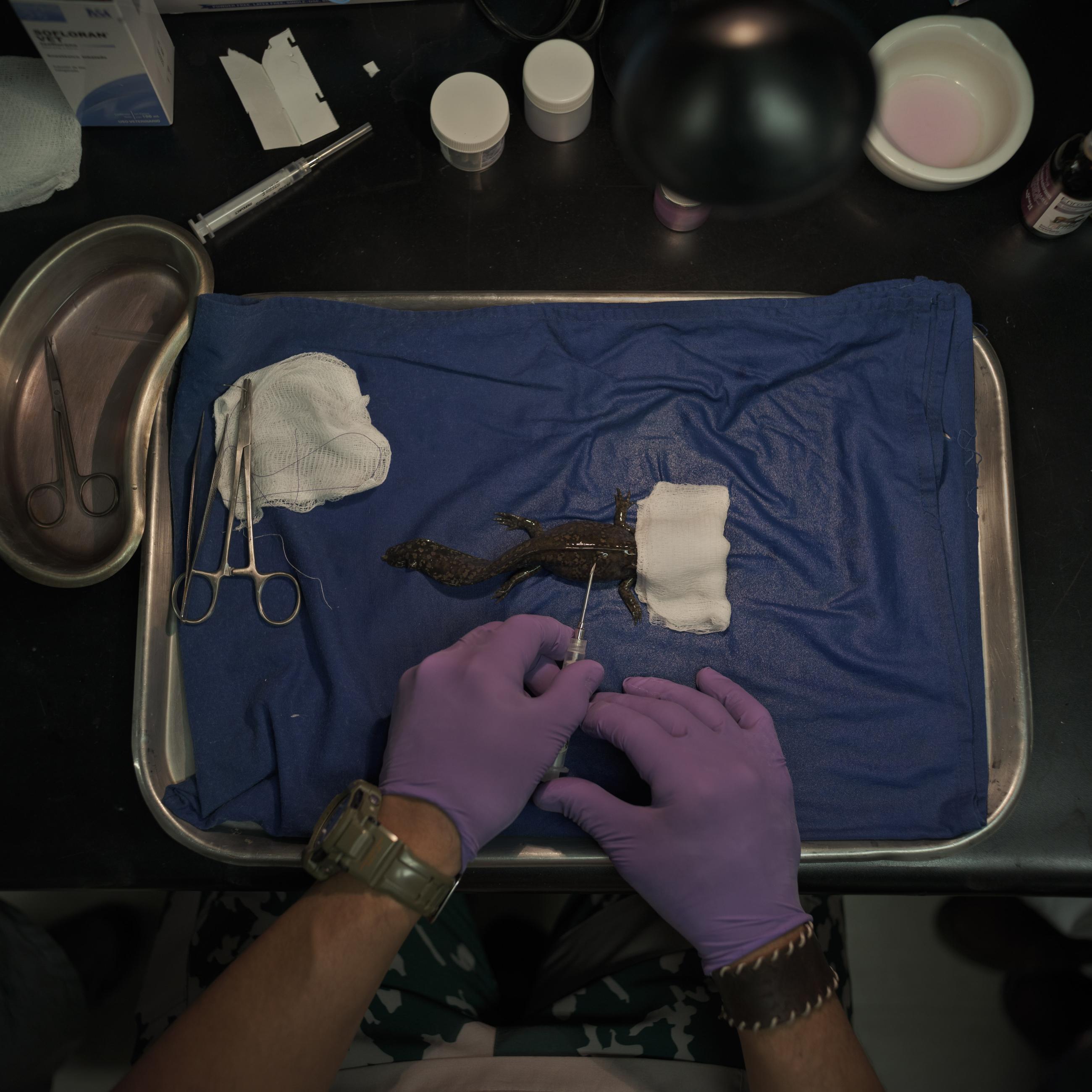
A sedated axolotl rests on a tray while Horacio Mena, coordinator of the axolotl colony at UNAM's Ecological Restoration Laboratory, injects a microchip into its back. The young specimens are monitored every month to evaluate their behaviour and adaptation to shelters.
© Luis Antonio Rojas, Mexico, Shortlist, Latin America Professional Award, 2024 Sony World Photography Awards
Untitled
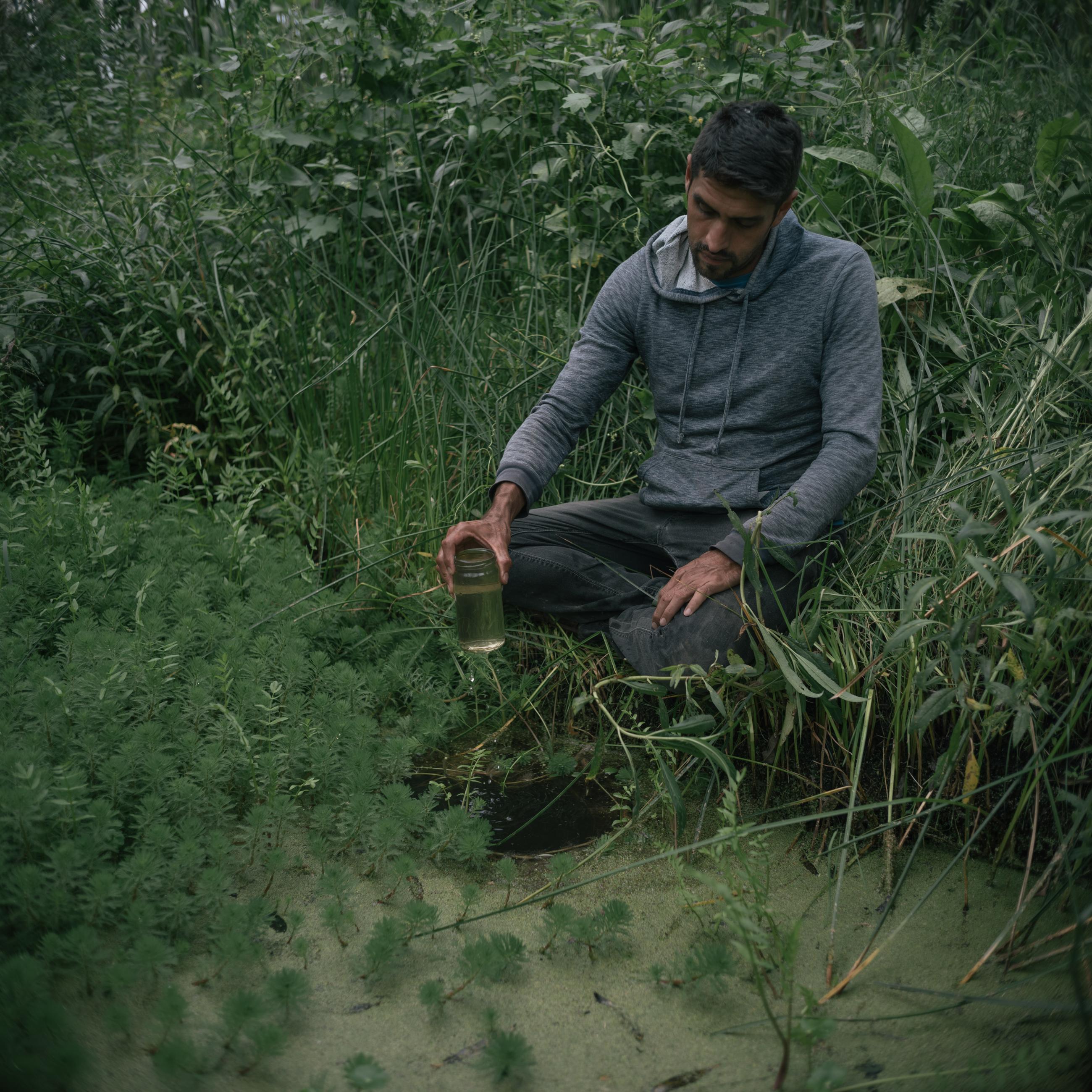
Carlos Sumano, a worker at UNAM's Ecological Restoration Laboratory, fills a glass jar with water from a refuge to analyse its transparency. The axolotls are reintroduced into local canals fitted with biofilters made of volcanic rock and native plants, which keep out pollutants and invasive fish.
© Luis Antonio Rojas, Mexico, Shortlist, Latin America Professional Award, 2024 Sony World Photography Awards
Untitled
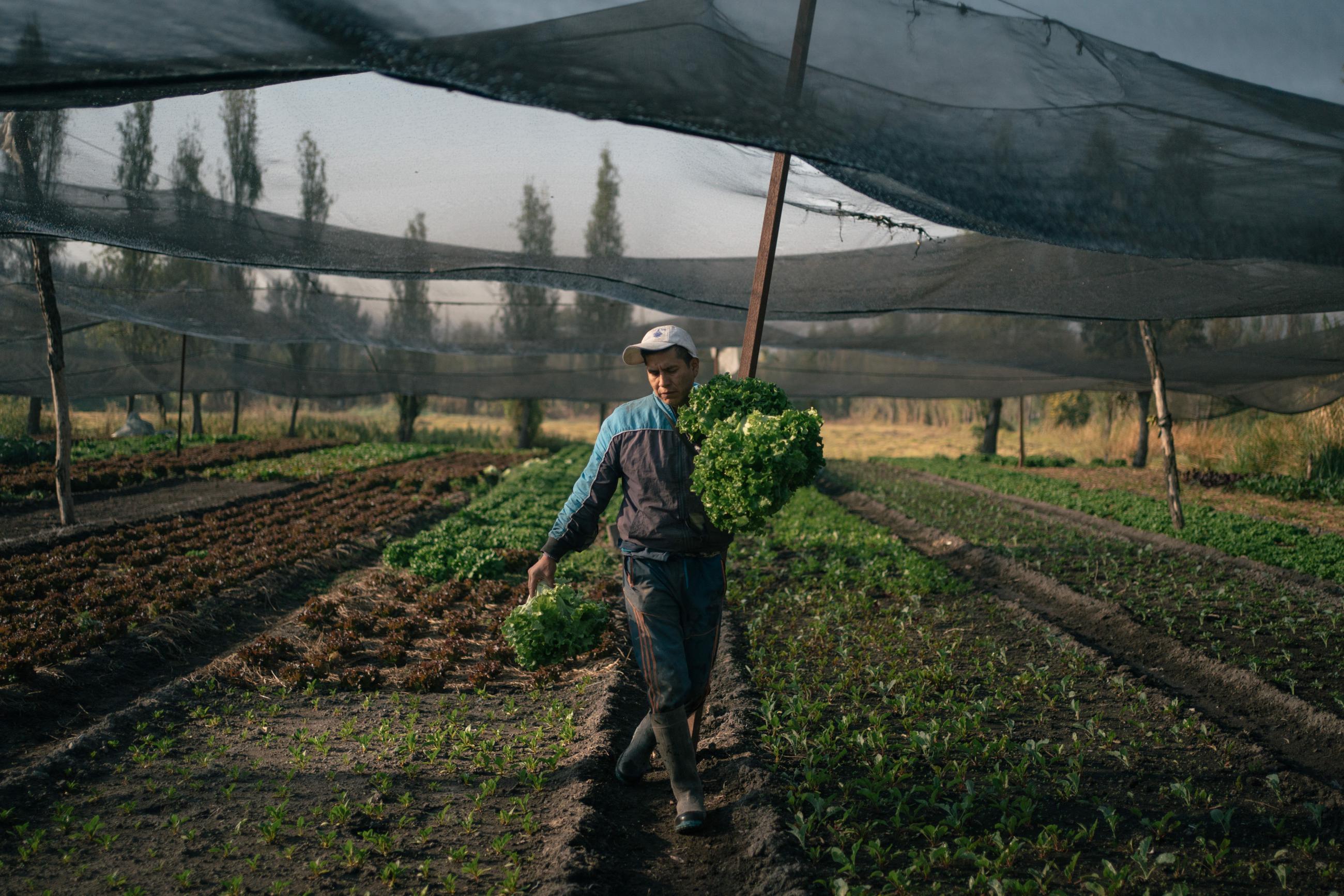
Giovanni Santana, a local agroecological farmer, harvests lettuce in his chinampa in Xochimilco. The UNAM helps farmers use fewer chemicals, adopt natural fertilisers and build rudimentary filters that clean the canals and prevent unwanted fish from entering, all of which helps to protect the axolotl.
© Luis Antonio Rojas, Mexico, Shortlist, Latin America Professional Award, 2024 Sony World Photography Awards
Untitled
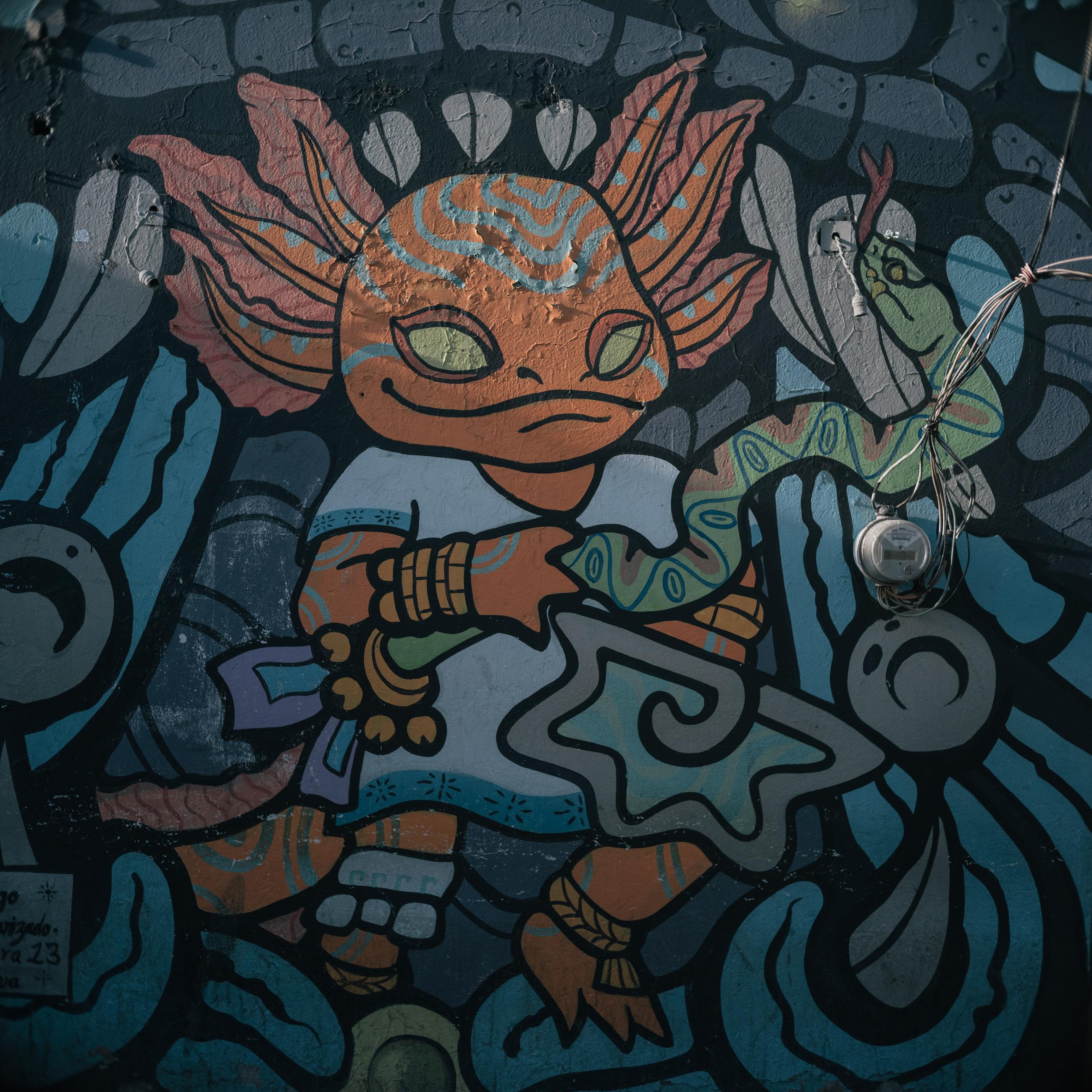
A mural in Xochimilco representing the god Xolotl, transformed as an axolotl. Axolotls were once very common in the landscape and had a deep cultural importance in the native cosmology and diet.
© Luis Antonio Rojas, Mexico, Shortlist, Latin America Professional Award, 2024 Sony World Photography Awards
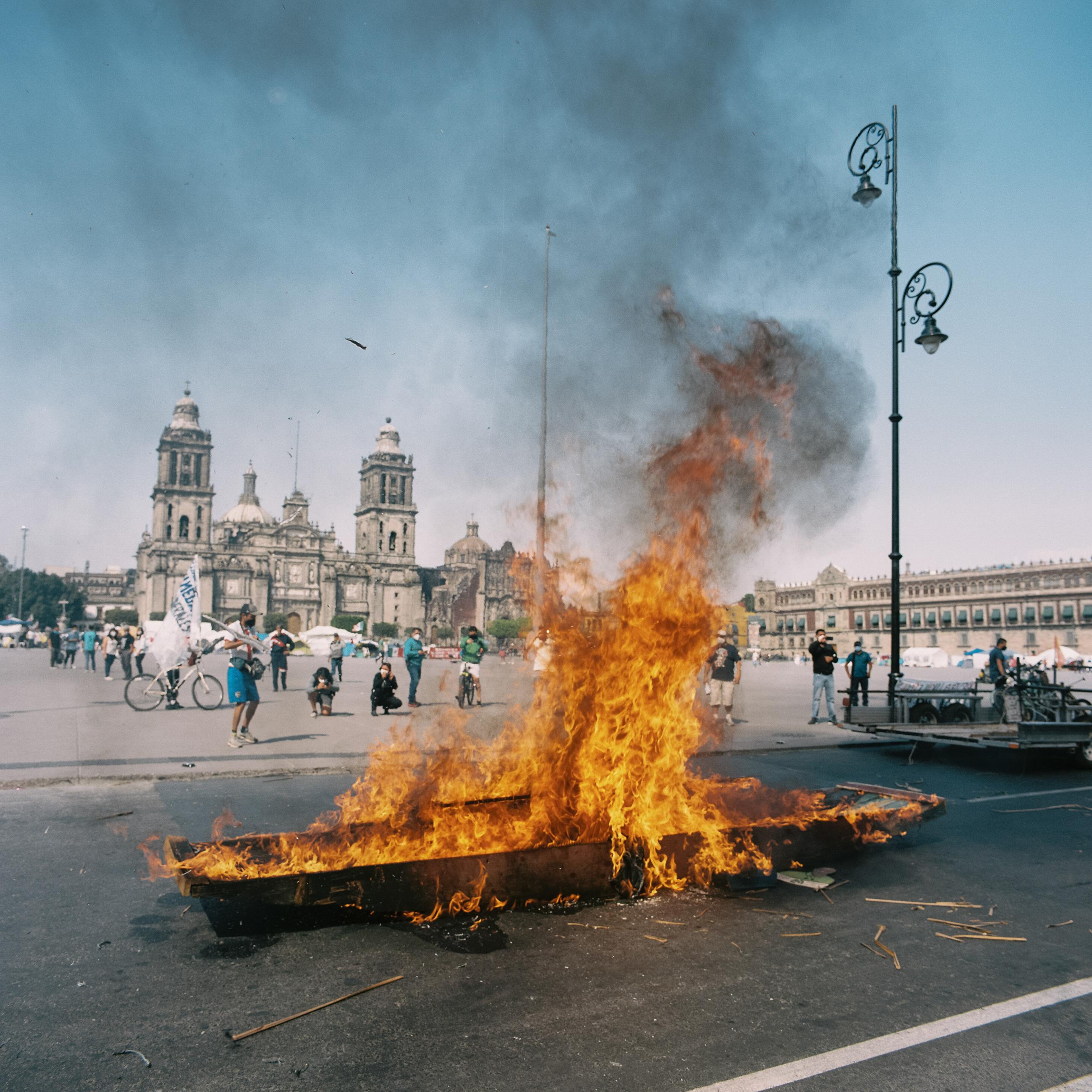
Untitled
A traditional boat used in Xochimilco is burned during a protest in the historical centre of Mexico City. Traditional farming and this unique ecosystem started to change as Mexico City’s lakes started to dry and sewage and chemicals filled the Xochimilco canals.
© Luis Antonio Rojas, Mexico, Shortlist, Latin America Professional Award, 2024 Sony World Photography Awards