

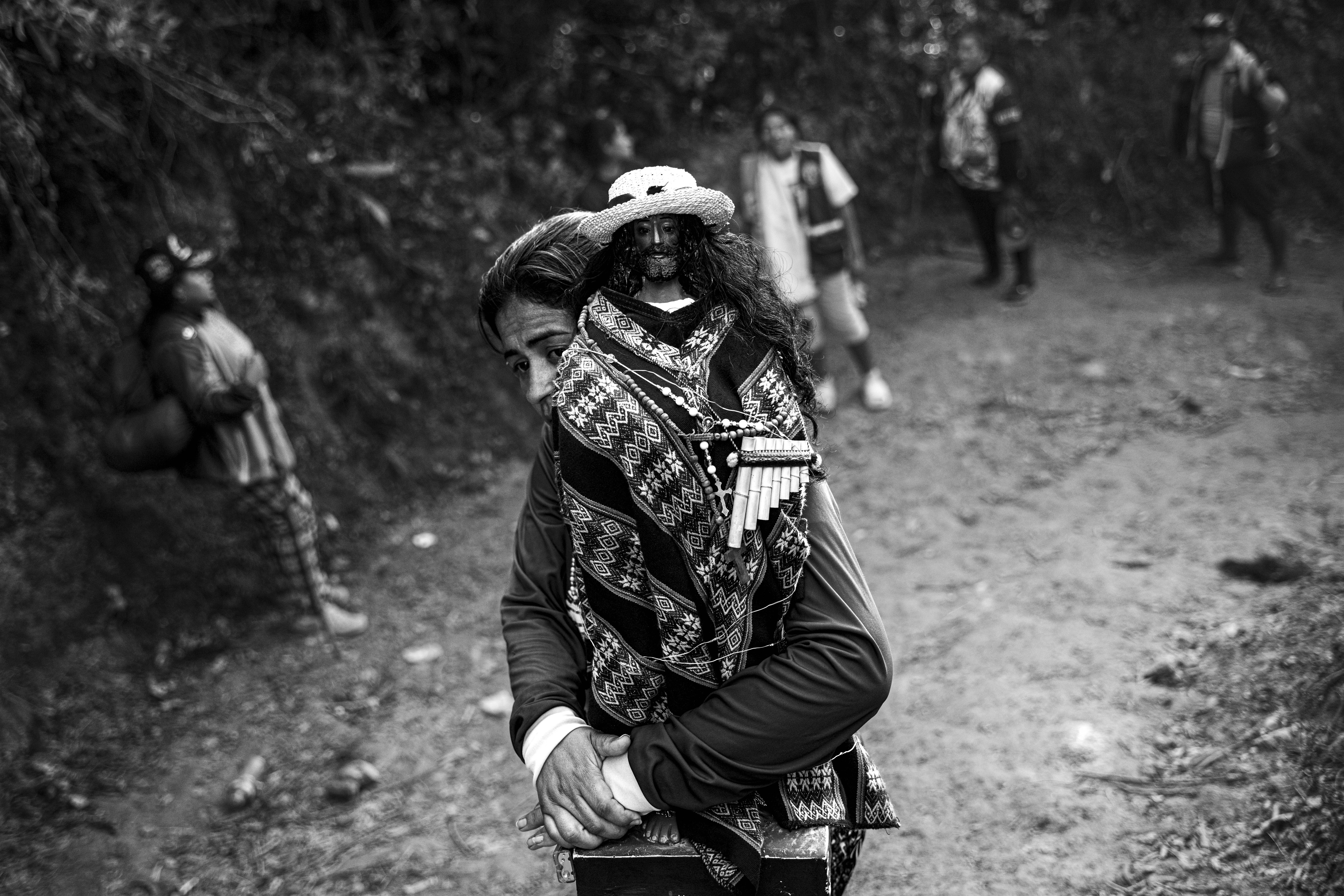
Series description
The Ayabaca pilgrimage is at the heart of deep-rooted Catholic traditions within the South American region. It is the largest pilgrimage in the continent and attracts thousands of faithful, including a specific type of fervent follower: criminals in search of redemption. I joined these pilgrims to explore and capture the performative image of their cathartic rituals, as they travelled to meet the Captive Lord, represented wearing a spiked crown as he is led to his crucifixion. Every year around May, the first pilgrims depart from southern Peru, heading north towards the highlands of Piura – a four-month walk covering more than 2,000 km. For these pilgrims, the body becomes theologically significant in the process of atoning for their sins, as if to wipe the slate clean for another year.
Biography
Ernesto Benavides (1978) is a Peruvian documentary photographer working primarily within South America. He holds a Bachelor of Science in Communication from the University of Lima. Currently works as a staff photographer for the international news agency Agence France-Presse. Among other recognitions he was 2022 World Press Photo Contest South America jury chair. And his photographic series Presidential Vacancy was awarded with 2nd place in the Spot News Stories category of the 2021 World Press Photo Contest.
Untitled
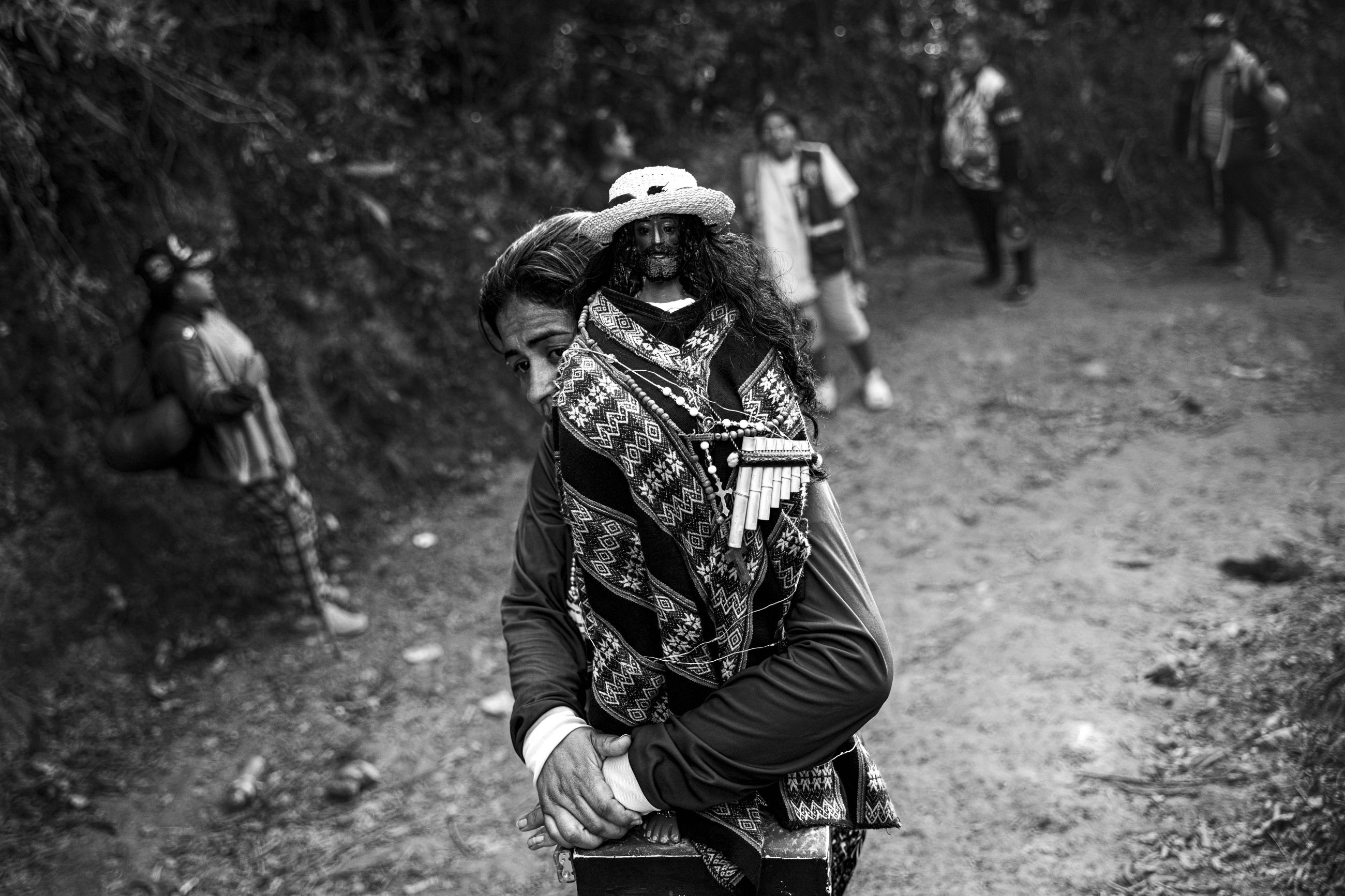
Some pilgrims carry an image of the Captive Lord of Ayabaca during their pilgrimage. This icon is usually kept on an altar inside their home, but they carry it with them so it can be blessed along the way and in the presence of the Captive Lord. She was arriving in Ayabaca after climbing the Devil’s slope.
© Ernesto Benavides, Peru, 1st Place, Latin America Professional Award, Sony World Photography Awards 2024
Untitled
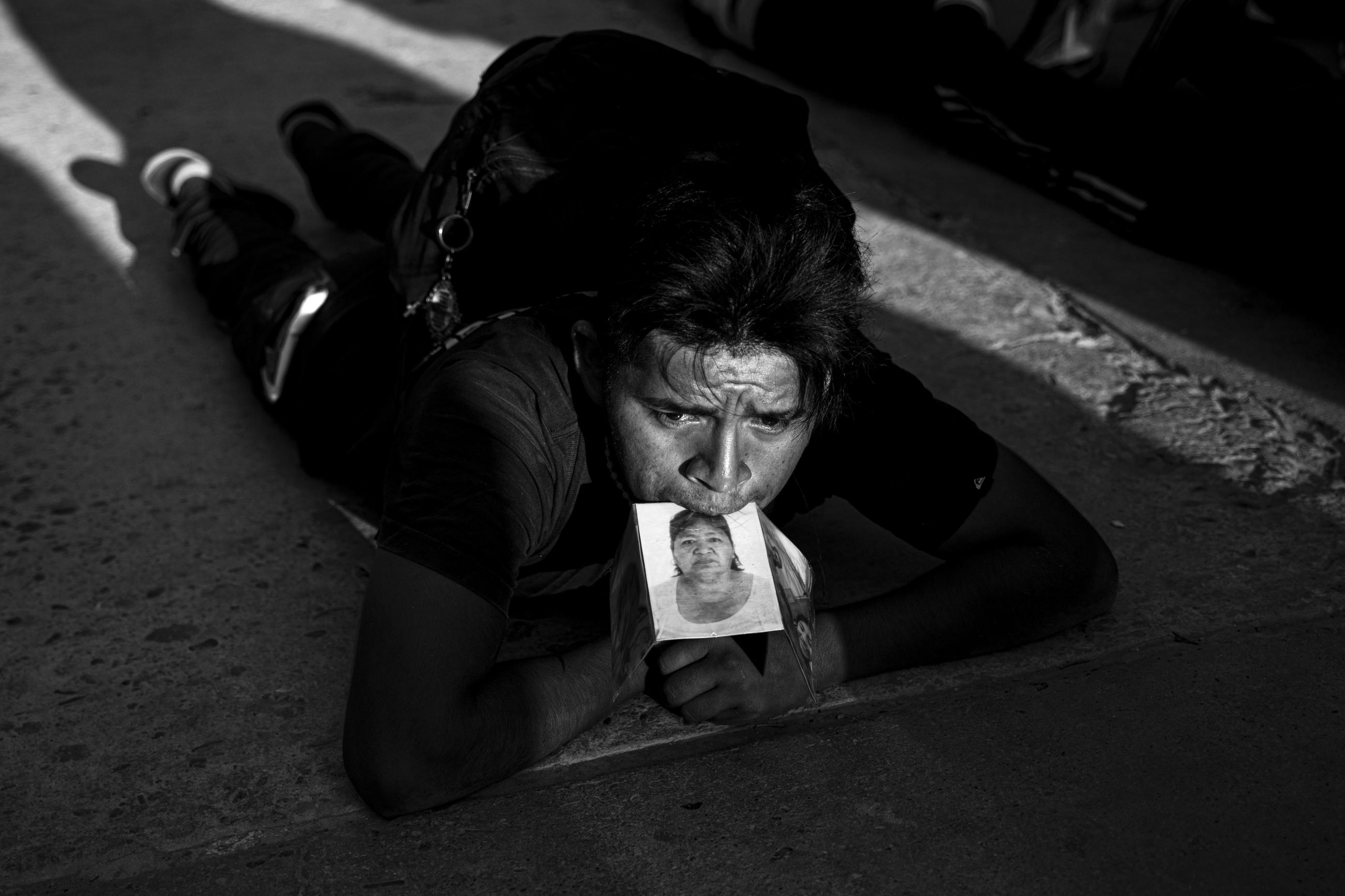
This pilgrim crawls on the ground in an act of penance, holding the image of his sick mother. He will crawl for more than 20 blocks until he reaches the church where he will present the photograph to the Captive Lord of Ayabaca so he can fulfil the ‘miracle’ of healing.
© Ernesto Benavides, Peru, 1st Place, Latin America Professional Award, Sony World Photography Awards 2024
Untitled
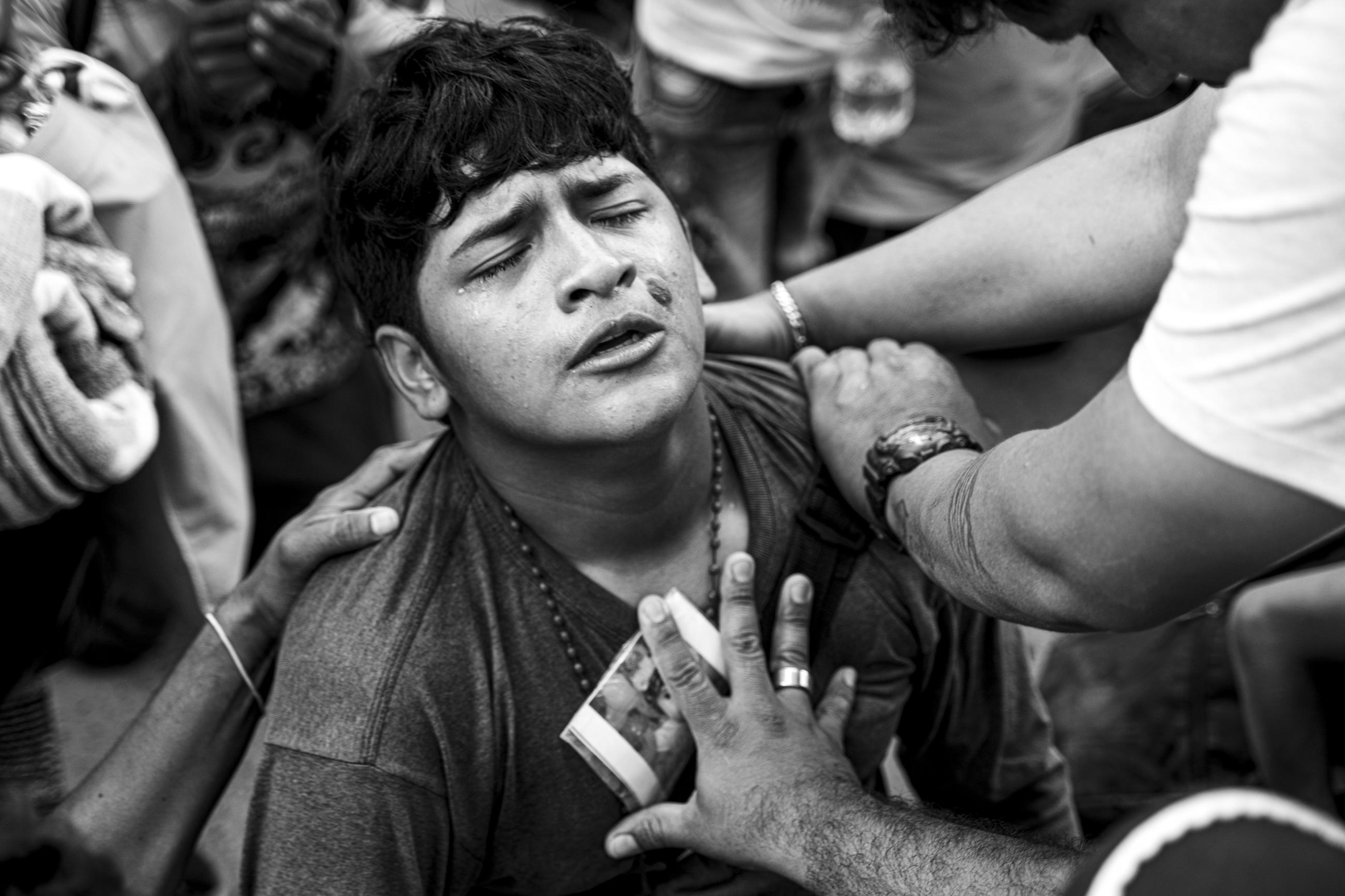
After dragging themselves in penance, many pilgrims enter a state of anguish; their bodies tremble, their wounds bleed and tears flow. This pilgrim in Paita needed help, but his friends and family were there for him.
© Ernesto Benavides, Peru, 1st Place, Latin America Professional Award, Sony World Photography Awards 2024
Untitled
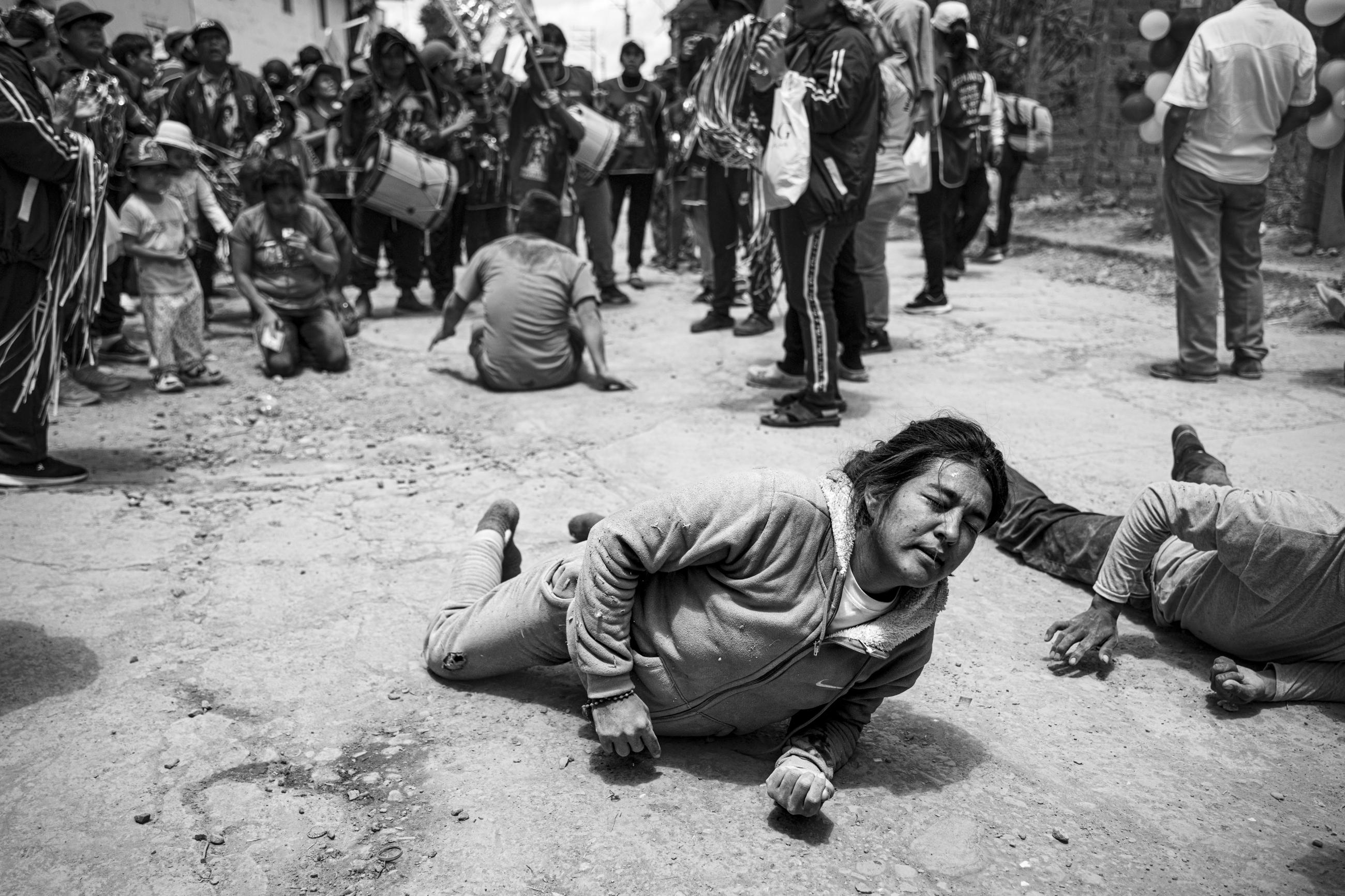
A penitent crawls on the ground on her way to worship the image of the Captive Lord of Ayabaca. Penance is an act of repentance and atonement for sins committed, and she believes that by submitting to forms of physical punishment or deprivation she will purify her soul and reconcile herself with the divine.
© Ernesto Benavides, Peru, 1st Place, Latin America Professional Award, Sony World Photography Awards 2024
Untitled
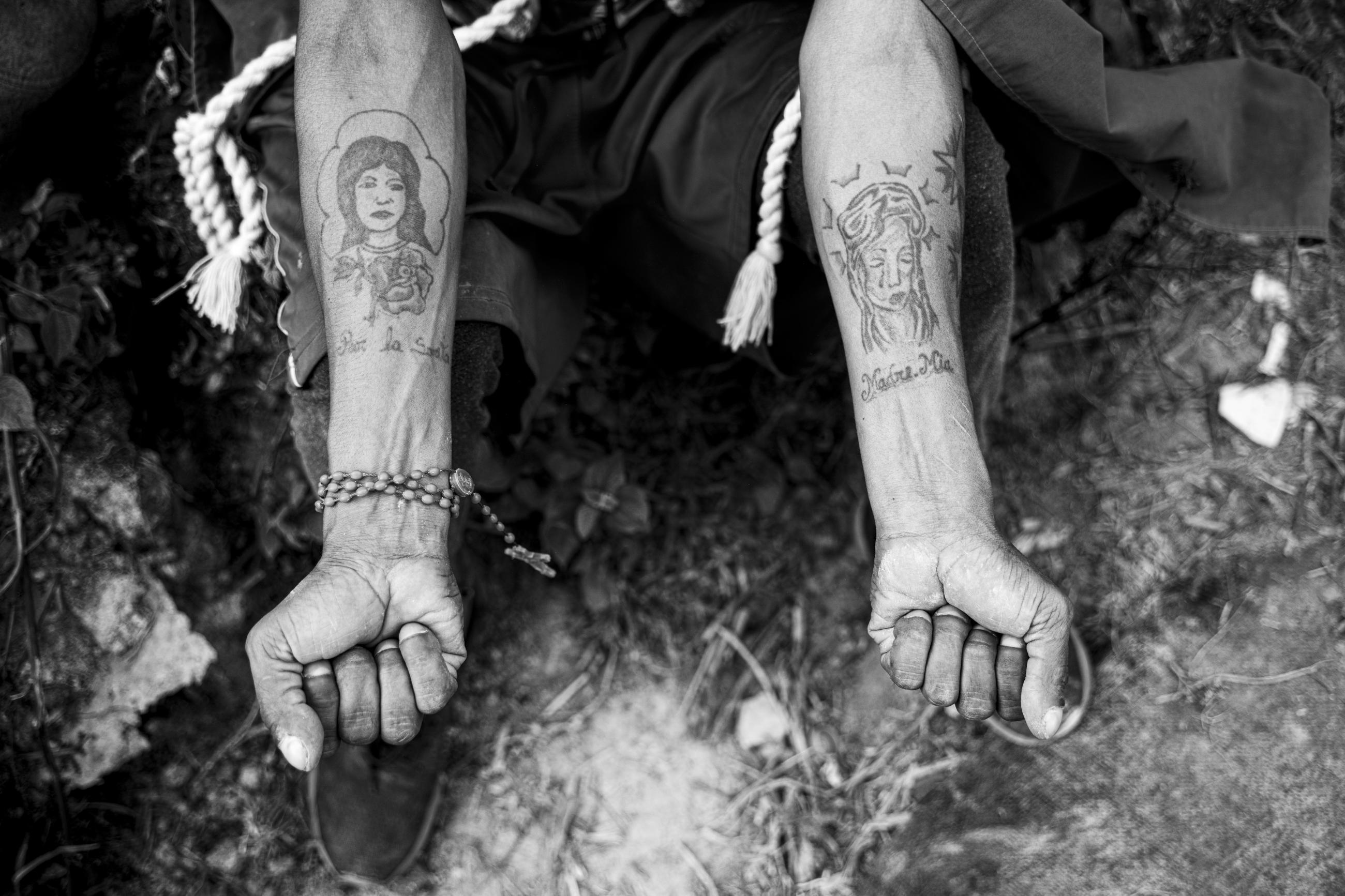
Martin, an ex-inmate looking for redemption, poses for a photograph during the celebration of the Captive Lord of Ayabaca in Ayabaca, Piura, northern Peru.
© Ernesto Benavides, Peru, 1st Place, Latin America Professional Award, Sony World Photography Awards 2024
Untitled
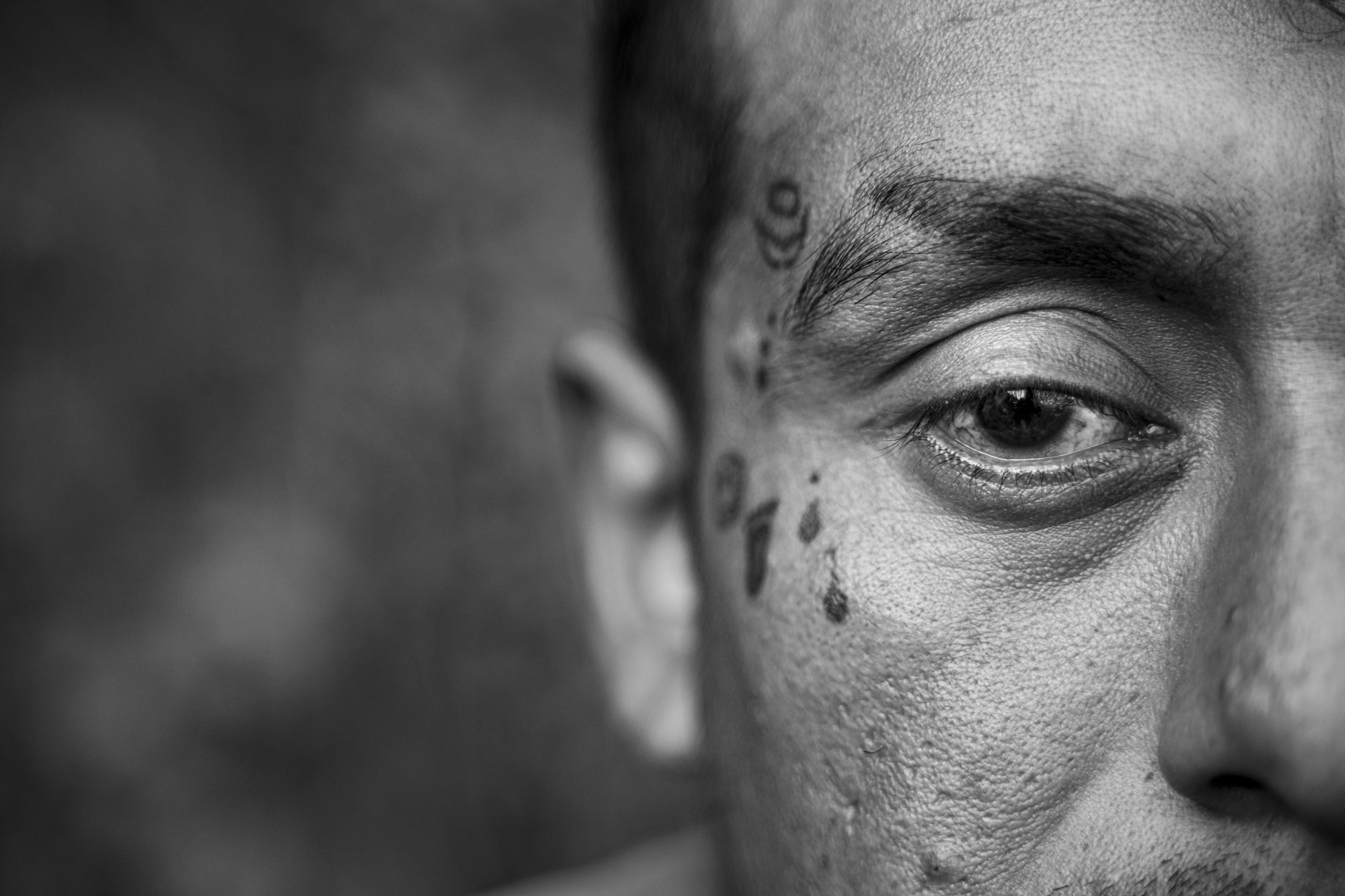
Due to his life as a criminal, Martin begs the Captive Lord of Ayabaca to bless his weapons, but also asks him for the strength that will allow him to stop carrying them in his belt. This man is immersed in a difficult paradox between good and evil; his eyes are empty and his tattoos are testimony to the terrible actions he has committed.
© Ernesto Benavides, Peru, 1st Place, Latin America Professional Award, Sony World Photography Awards 2024
Untitled
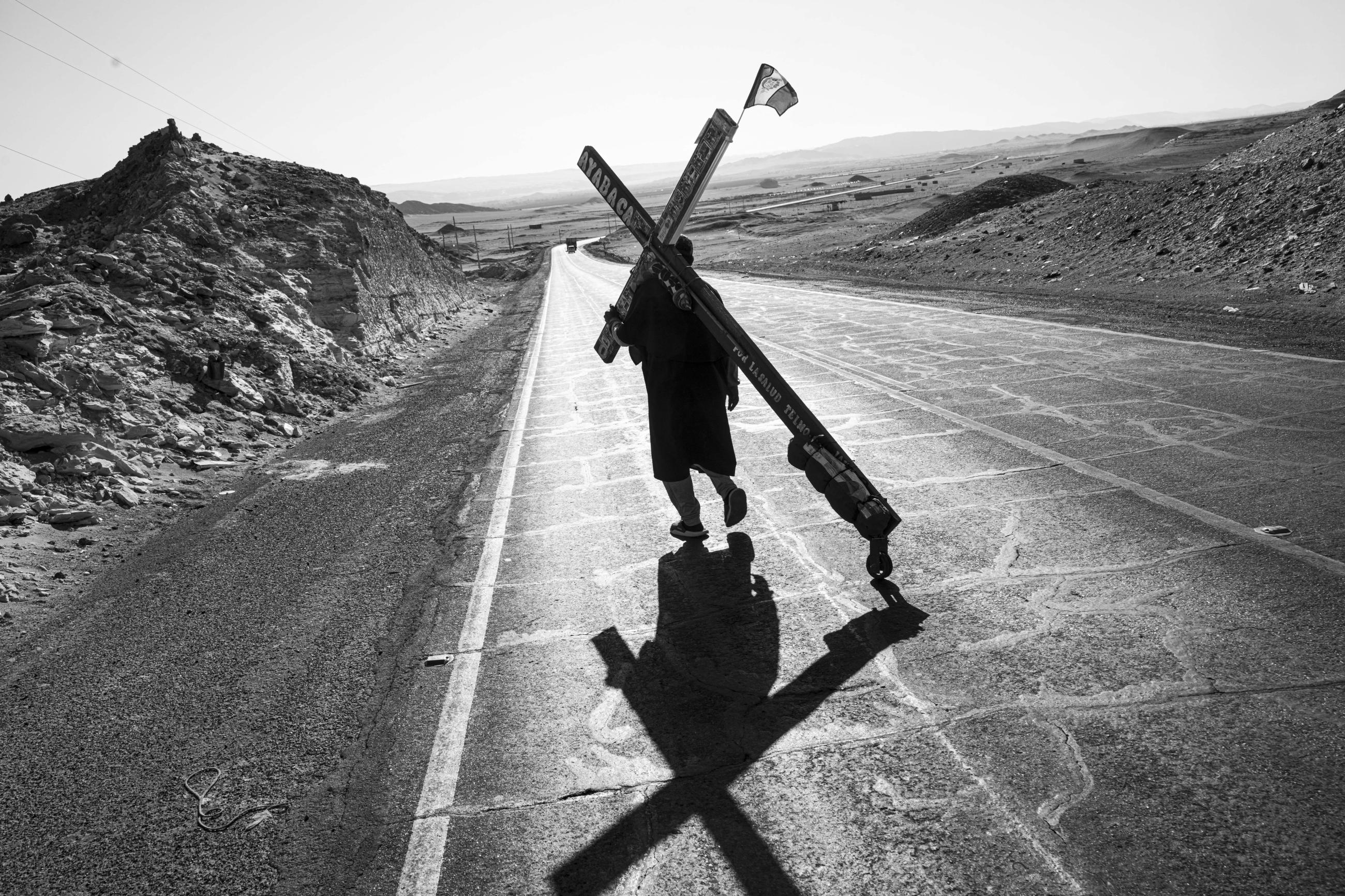
Nil has been on a pilgrimage for the last 12 years, carrying a cross from Arequipa in the south of Peru, to Ayabaca in the north. He has walked more than 2,000 km every year, fulfilling the promise he made to the Captive Lord of Ayabaca.
© Ernesto Benavides, Peru, 1st Place, Latin America Professional Award, Sony World Photography Awards 2024
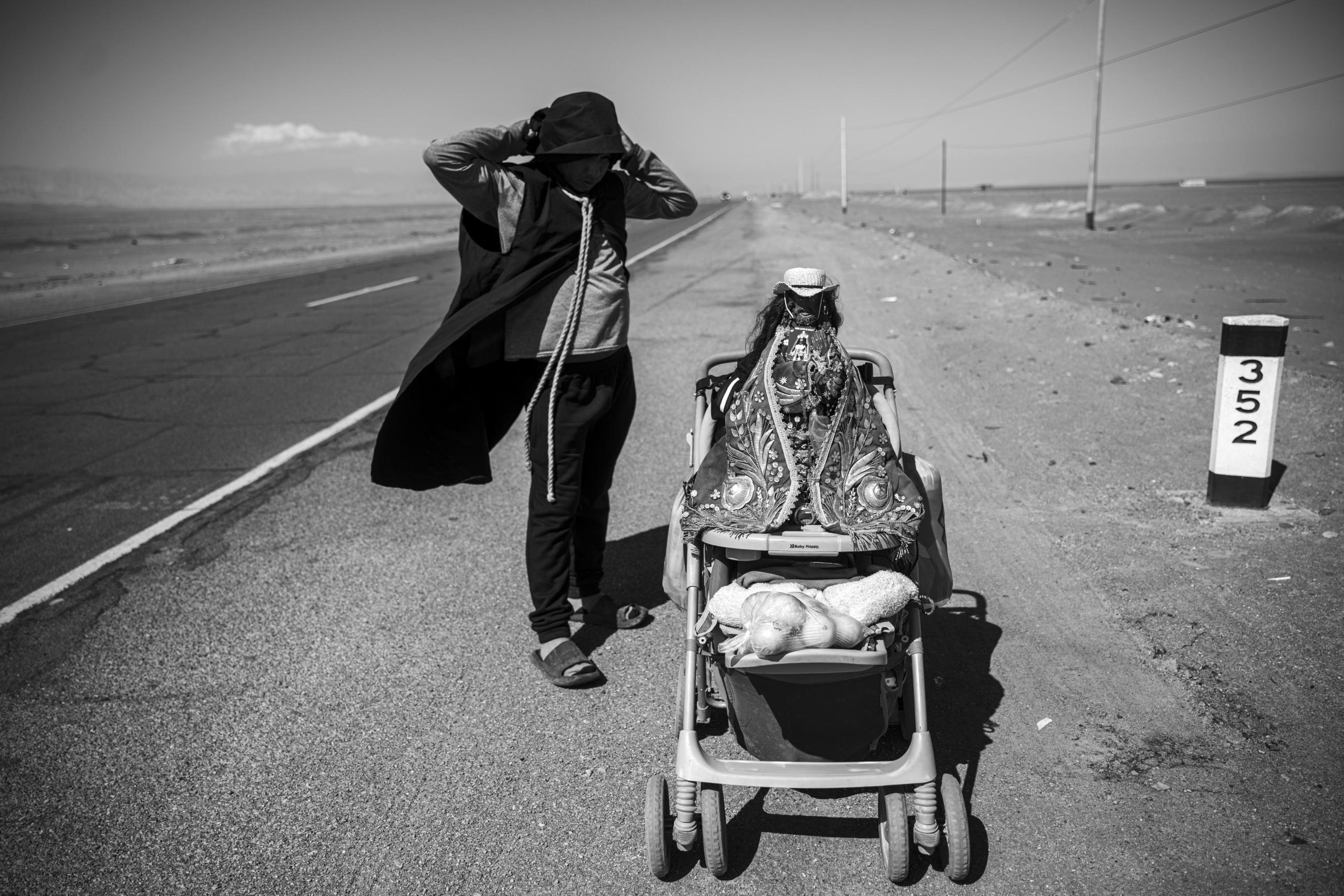
Untitled
Photographed at kilometre 352 of the Pan-American highway, this pilgrim prepares to continue his journey, carrying a miniature statue of the Captive Lord of Ayabaca in a pushchair.
© Ernesto Benavides, Peru, 1st Place, Latin America Professional Award, Sony World Photography Awards 2024