

Series description
Kazakhstan is the largest country in Central Asia and until 1991 it was an important republic within the Soviet Union. This vast area is the birthplace of today’s space travel, and also of the international arms race. In the late 1940s, in utmost secrecy, parts of this steppe were turned into a vast open-air laboratory, which for decades formed the backdrop to the most destructive nuclear tests ever held on the surface of the planet. No care or consideration was given to the population.
This body of work documents both the immense, ravaged landscape and the people who still live among the ruins and have to deal with their deadly history. Some of them come together to scour the land for old pipes and cables, or to find steel in old military installations, their lives marked by poverty and alcoholism.
Biography
Eddo Hartmann, born in The Hague in 1973, studied at the Royal Academy of Arts in The Hague. He is a Dutch photographer with a career that has spanned over 25 years. Hartmann is renowned for capturing striking and thought-provoking images of architecture and urban spaces. Initially, he started his career as a commercial and editorial photographer but later shifted towards long-term documentary projects. One of his most notable works is "Setting The Stage | North Korea," which is a series that documents the intricately designed communist capital of Pyongyang.
In addition to his photographic work, Hartmann is also a lecturer in The Hague, where he teaches technical skills and visual grammar. He is committed to capturing the impact of human activity on the planet and its landscapes. Hartmann's work has been widely exhibited and published in newspapers and magazines around the world, and can be found in private and public collections. Currently based in Amsterdam, where he continues to work as a freelance photographer.
Untitled
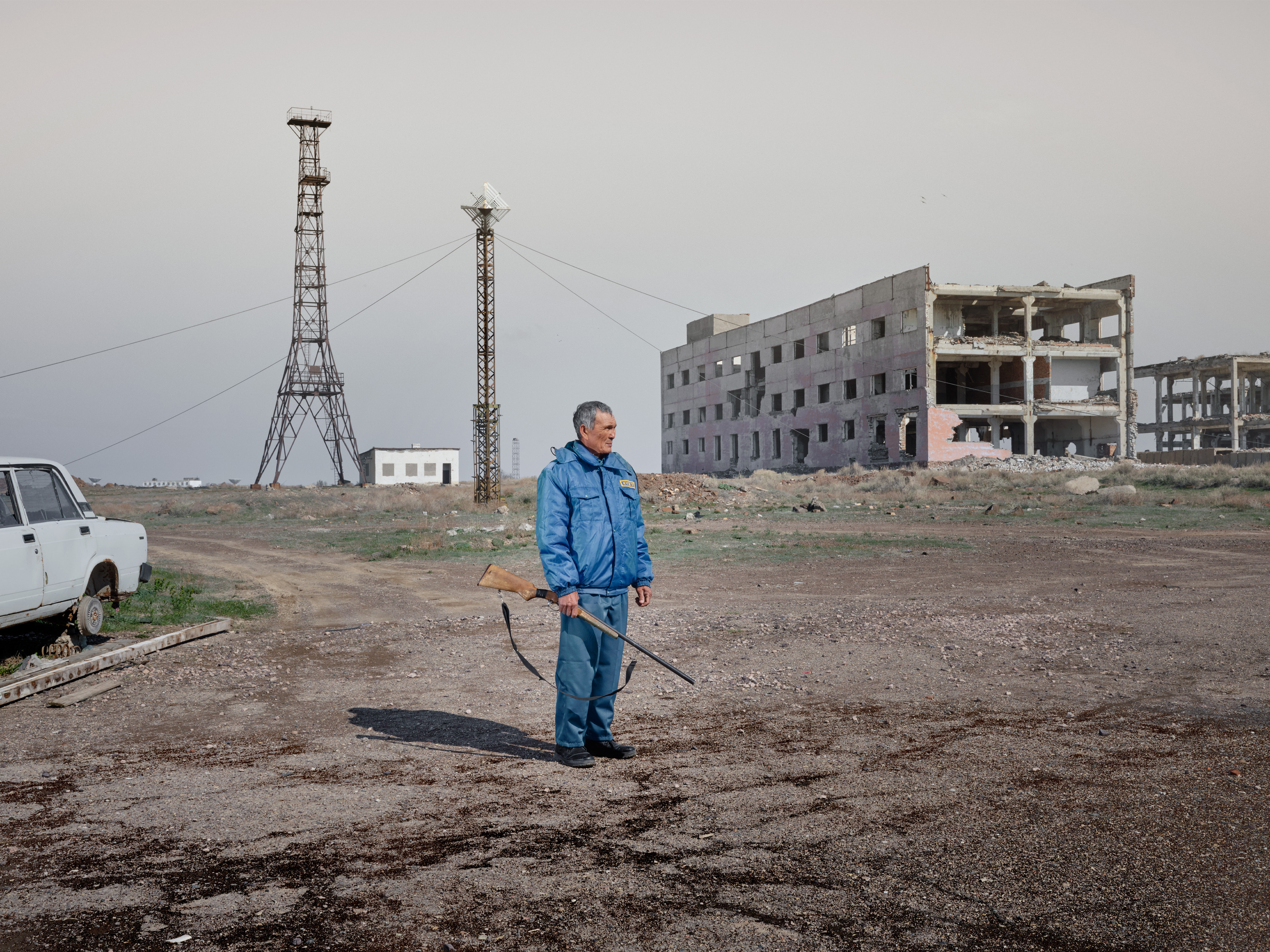
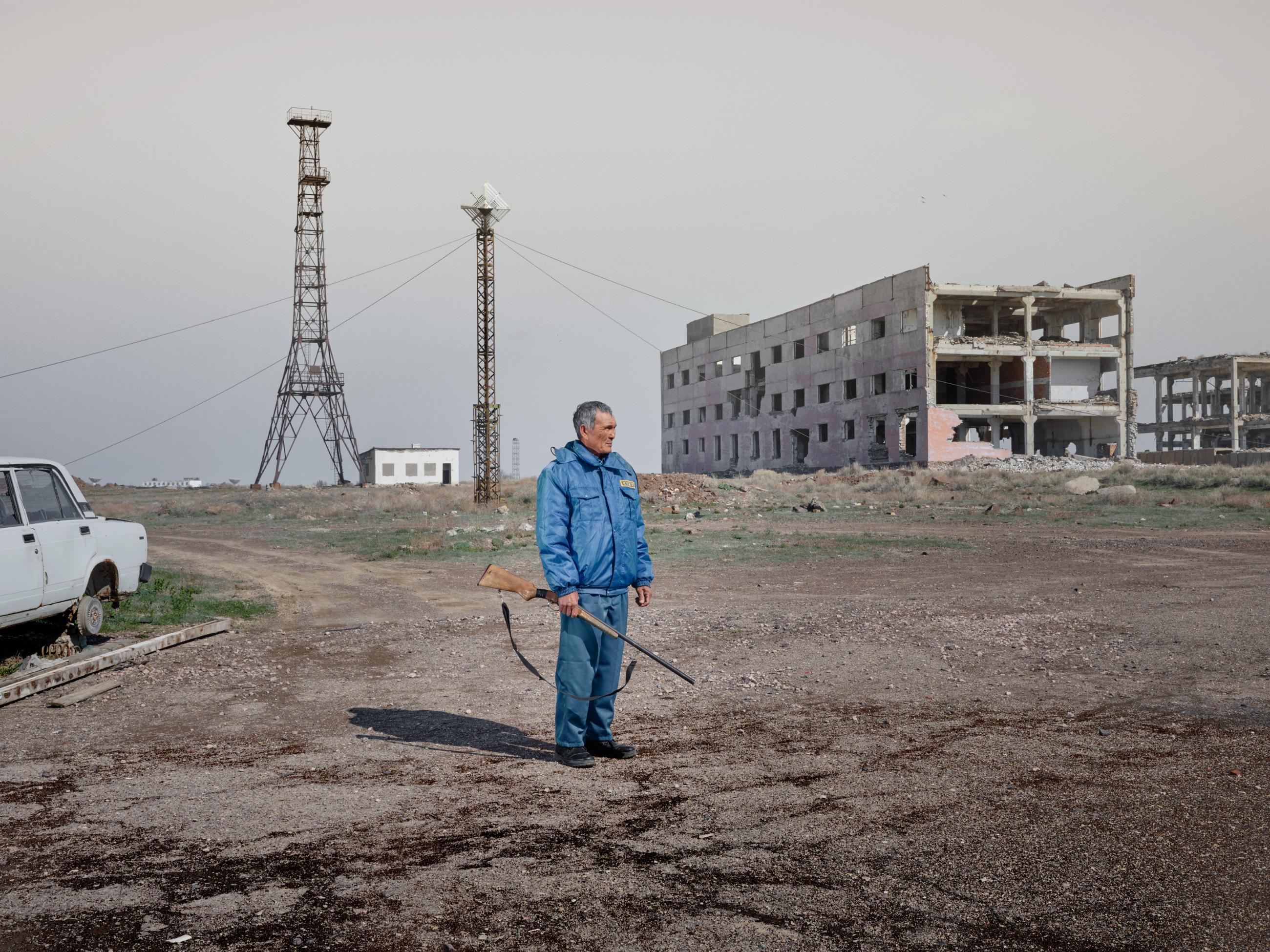
A portrait of Tokhtabek, who was assigned to protect some of the installations at the Sary Shagan missile test range from further destruction by local groups of scavengers. Unfortunately, almost all of the buildings were still dismantled.
© Eddo Hartmann, Netherlands, Shortlist, Professional competition, Documentary Projects, 2024 Sony World Photography Awards
Untitled
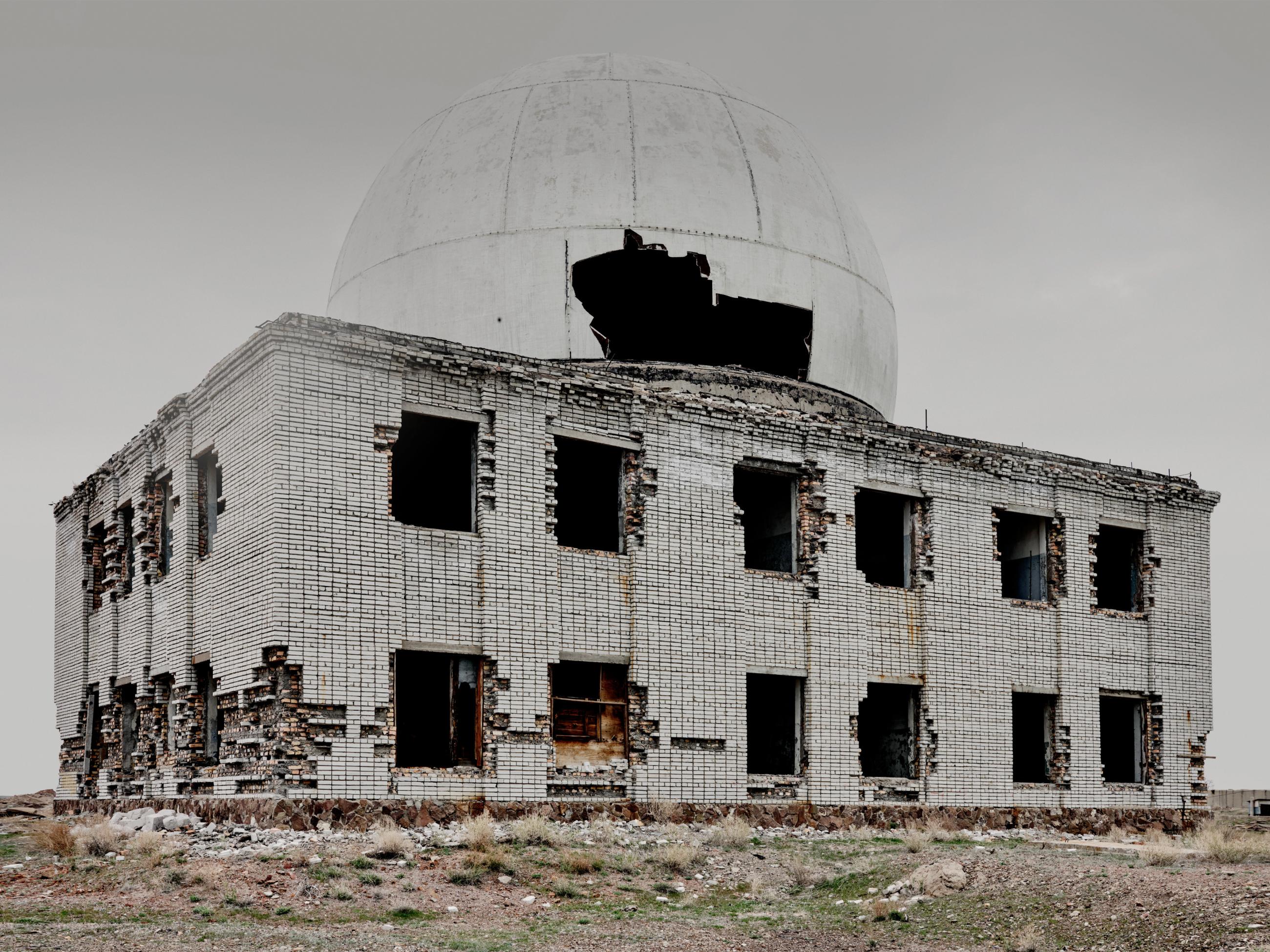
One of the major ‘Edelweiss’ type radar installations in the vicinity of Priozersk. This city was once the central hub for the surrounding military installations: the Sary Shagan missile test range, the Dunay anti-ballistic missile (ABM) radar experiment, the Sary-Ozek missile launch and elimination site, and the Balkhash-9 space surveillance radar station.
© Eddo Hartmann, Netherlands, Shortlist, Professional competition, Documentary Projects, 2024 Sony World Photography Awards
Untitled
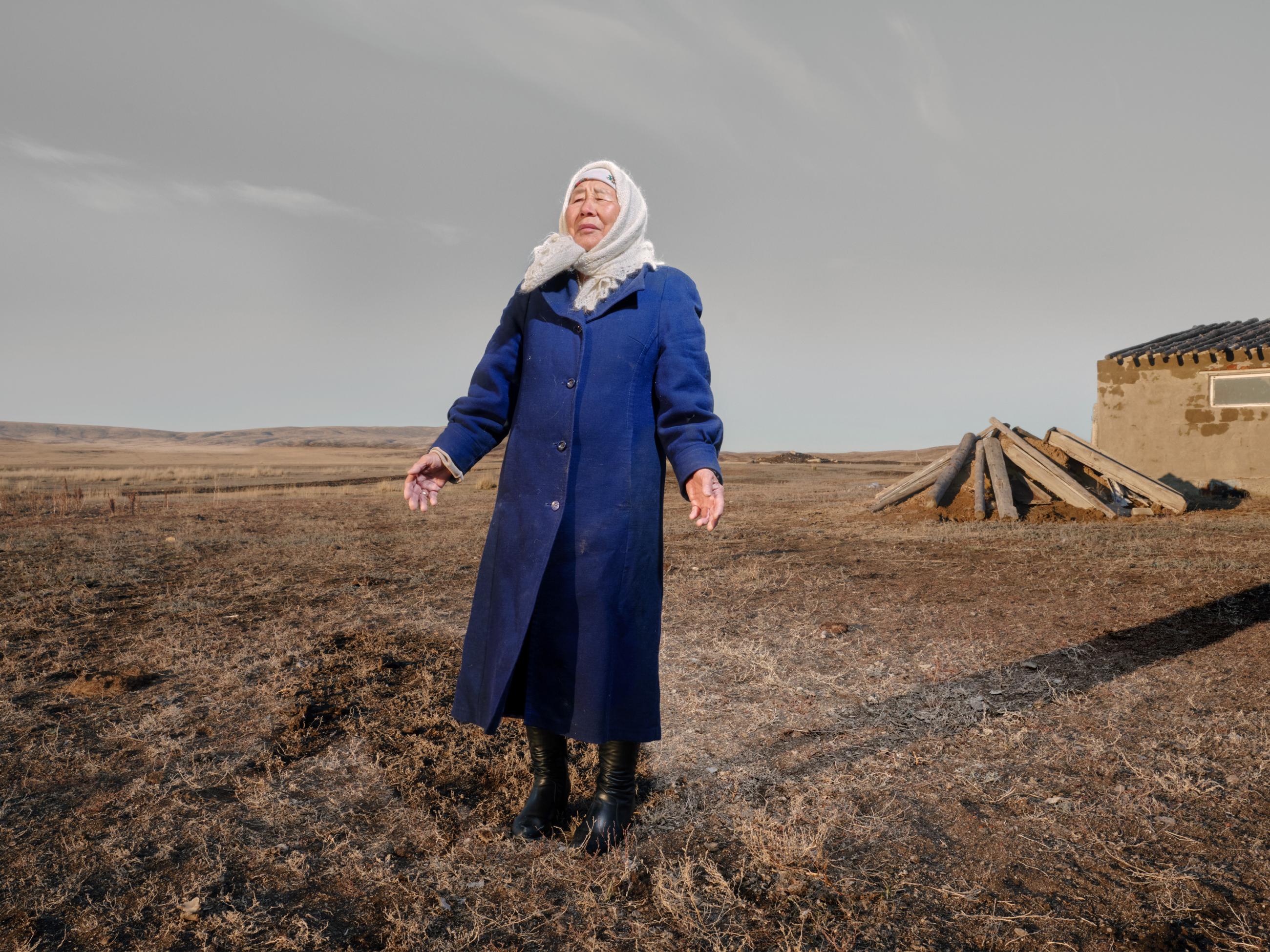
A portrait of Bauyken, who has lived in the village of Kyzyemshek since 1962 and witnessed some of the last atmospheric nuclear explosions rise from the horizon. Just before any test, military officials would come to the village and ask everybody to leave their houses and lay on the ground. She described her pain and agony over the years.
© Eddo Hartmann, Netherlands, Shortlist, Professional competition, Documentary Projects, 2024 Sony World Photography Awards
Untitled
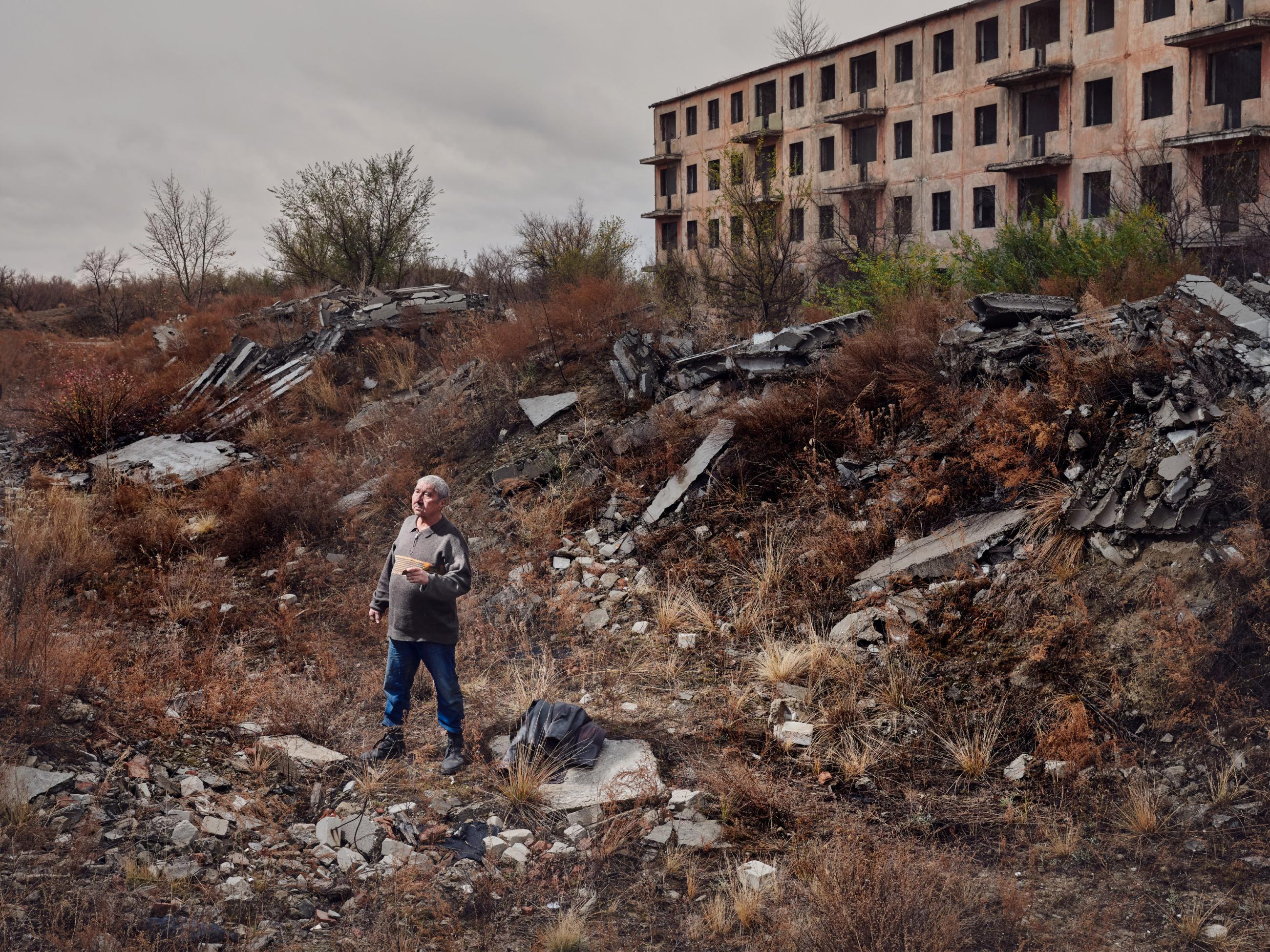
A portrait of Asset, who lives in the ruins of Sary Shagan. This abandoned location is a former closed military city, which was created to house personnel working at the nearby bomber base of the same name. Asset was born in Kurchatov and could not find any work after the collapse of the USSR; he now roams the land looking for scrap metal to sell.
© Eddo Hartmann, Netherlands, Shortlist, Professional competition, Documentary Projects, 2024 Sony World Photography Awards
Untitled
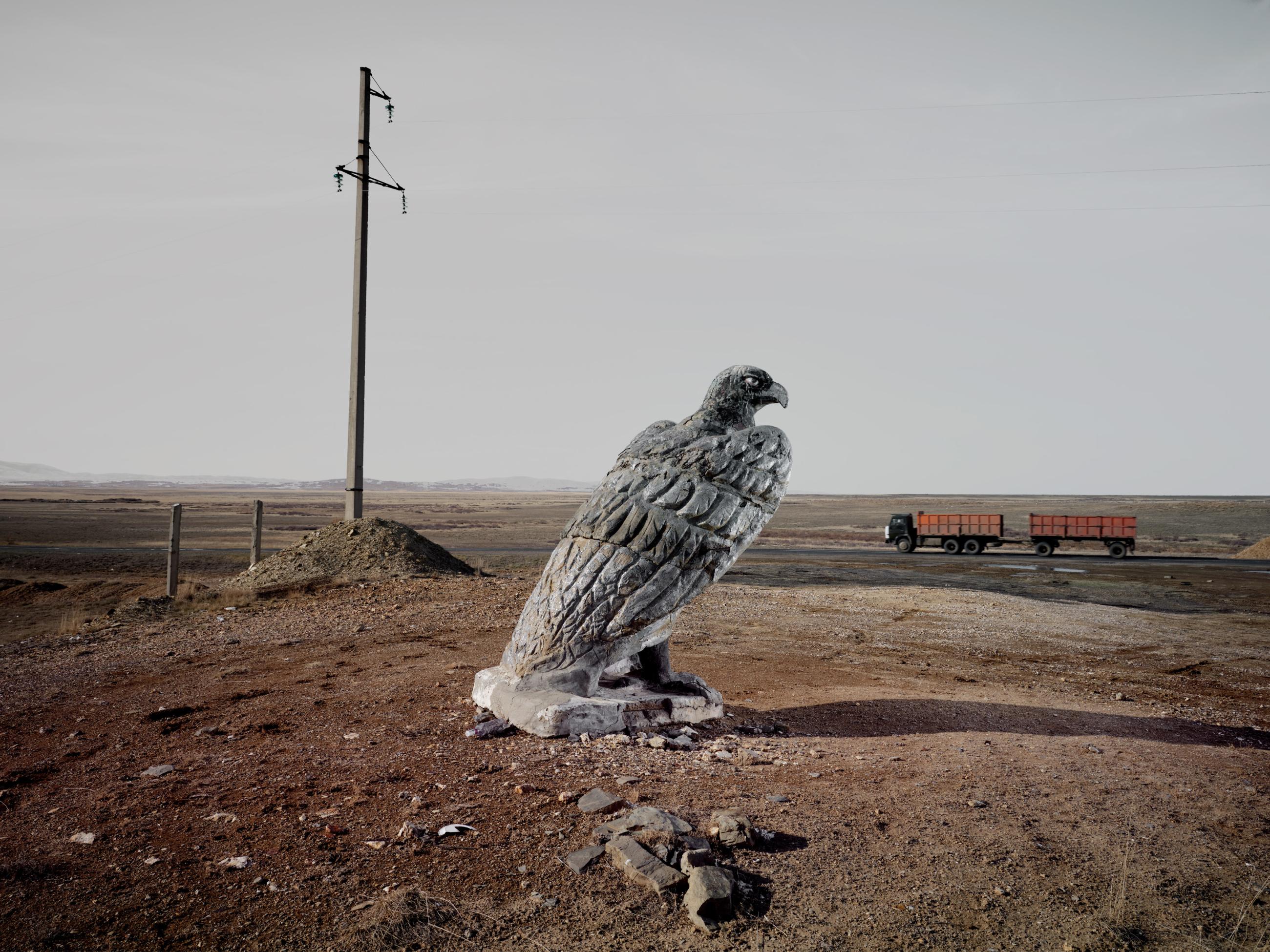
A concrete statue at the side of the road between Semey and Karazhyra. It is probably a decoration that once marked the entrance to the cement factory that was at this site.
© Eddo Hartmann, Netherlands, Shortlist, Professional competition, Documentary Projects, 2024 Sony World Photography Awards
Untitled
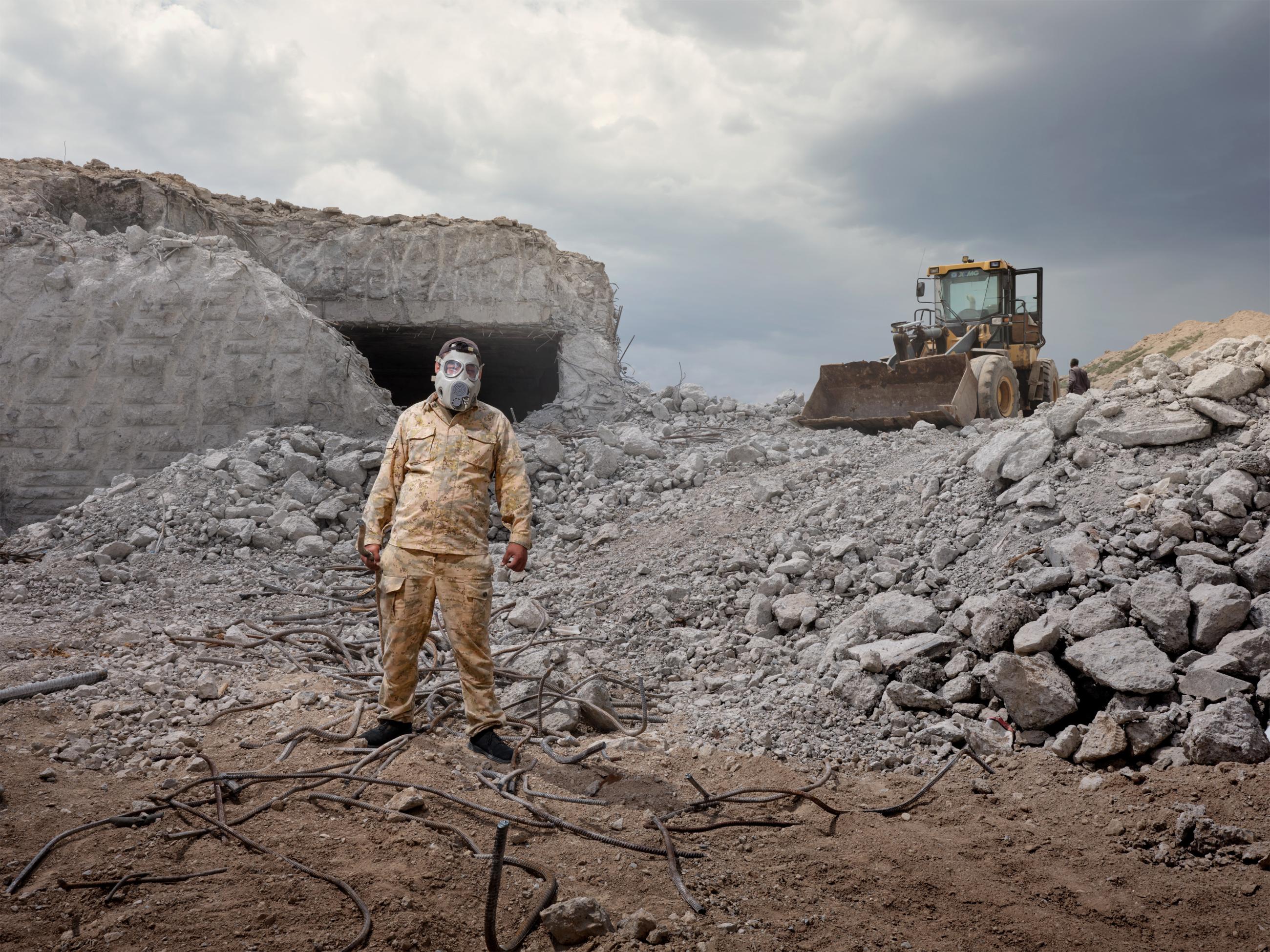
A portrait of Maksat in front of a nuclear control bunker that his group of local scavengers are grinding into small pieces. Collecting scrap metal at former industrial sites has become a source of income for scavengers all over the former Soviet Union, even though the various metals used for wiring and other components are sometimes irradiated.
© Eddo Hartmann, Netherlands, Shortlist, Professional competition, Documentary Projects, 2024 Sony World Photography Awards
Untitled
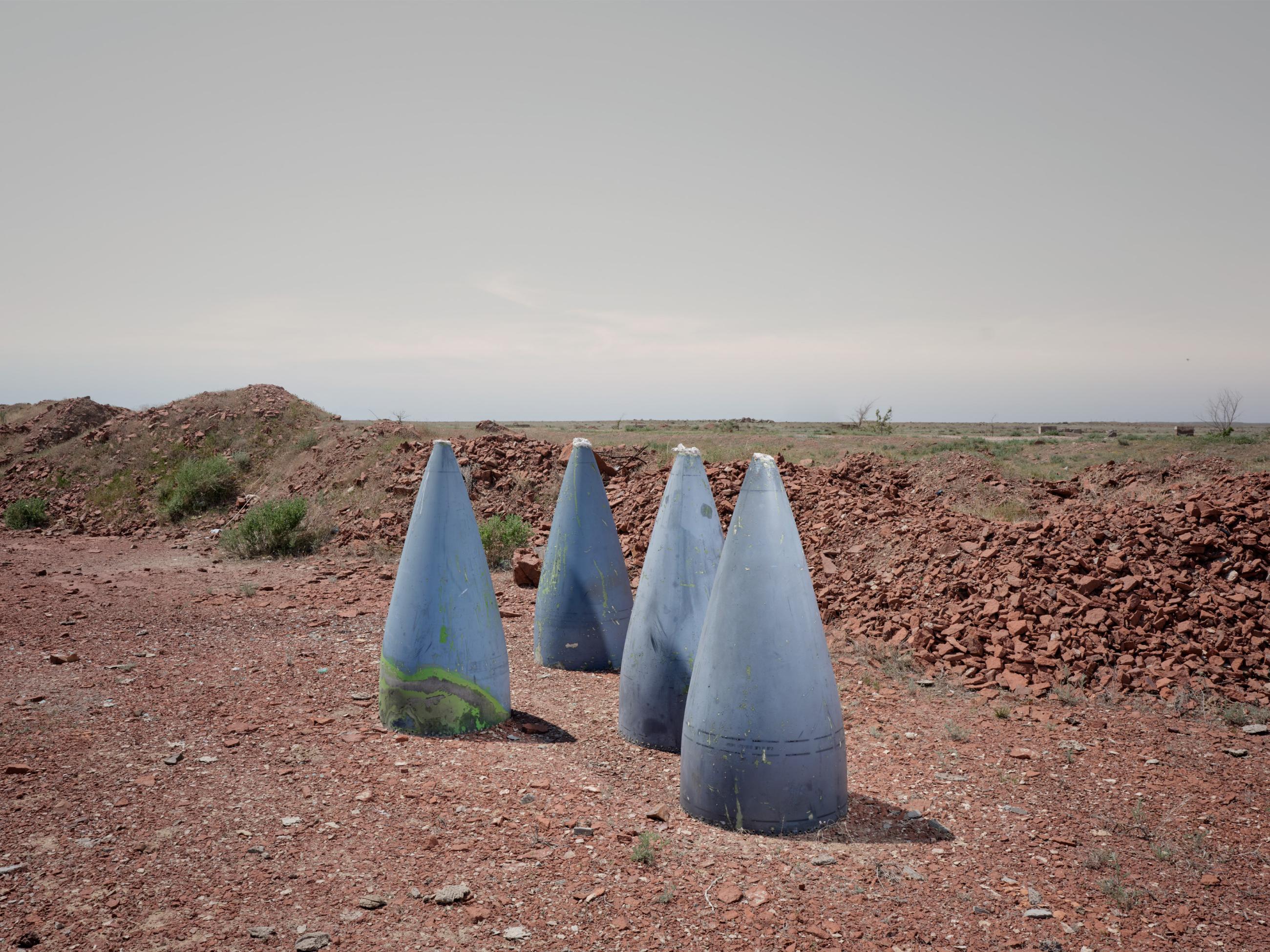
A collection of dummy warheads used for training purposes by the anti-ballistic missile system, close to the city of Priozersk.
© Eddo Hartmann, Netherlands, Shortlist, Professional competition, Documentary Projects, 2024 Sony World Photography Awards
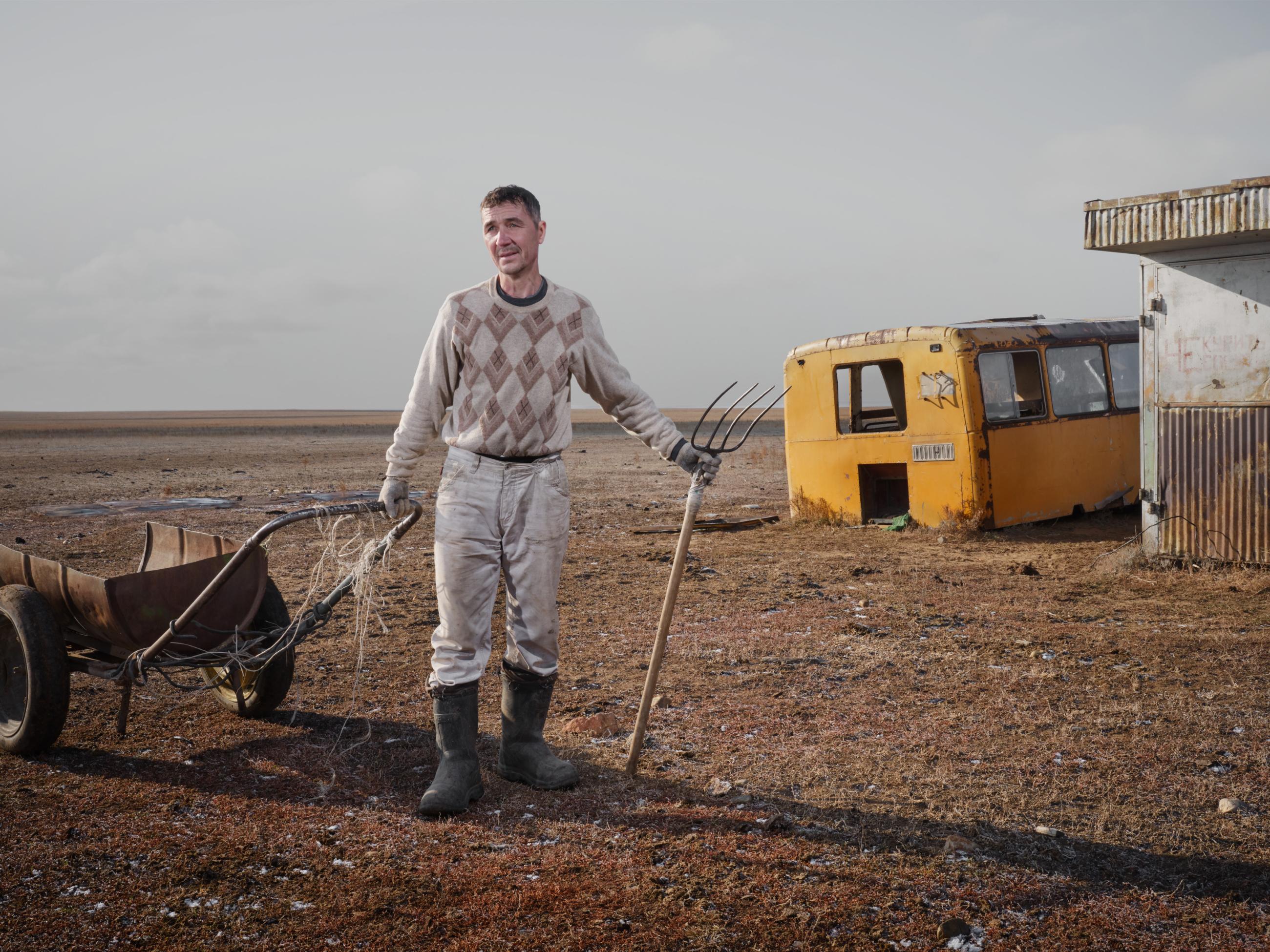
Untitled
A portrait of Zhenya, at his small cattle farm along the road to Zhidebay. He stays here permanently with his family, which can be quite tough, due to the remote location and the harsh climate; in winter the temperature can drop below -40°C.
© Eddo Hartmann, Netherlands, Shortlist, Professional competition, Documentary Projects, 2024 Sony World Photography Awards