

Back to Documentary Projects
Documentary Projects Shortlist
Taking Back the Land That is Ours
Renaud Philippe
Series description
Within Brazil, far from the Amazon, the Retomada da Terra movement aims to reclaim agricultural lands taken from the indigenous Guaraní people. Although this struggle pits them against agribusiness syndicates, coordinated efforts have empowered some Guaraní to reclaim parts of their sacred territory, which once flourished as the Atlantic Forest, but have since been replaced by soy and corn monocultures. The Guaraní’s fight isn’t solely for survival, but encompasses environmental advocacy, an opposition to chemical pesticides and the promotion of reforestation. In a landscape dominated by monoculture fields, where forests once thrived, they emerge as custodians of the land, often paying the ultimate price with their lives.
Biography
Renaud Philippe is an independent documentary photographer based in Quebec, Canada. For nearly 20 years, his work has focused on the long-term consequences, for civilian populations, of armed conflicts and climate disruptions. His work has been exhibited, among other places, at the National Museum of Fine Arts of Quebec, the Bangkok Art and Culture Center in Thailand, and in The Guardian gallery in London. Renaud regularly collaborates with the New York Times, the Globe and Mail, and Bloomberg.
Retomada
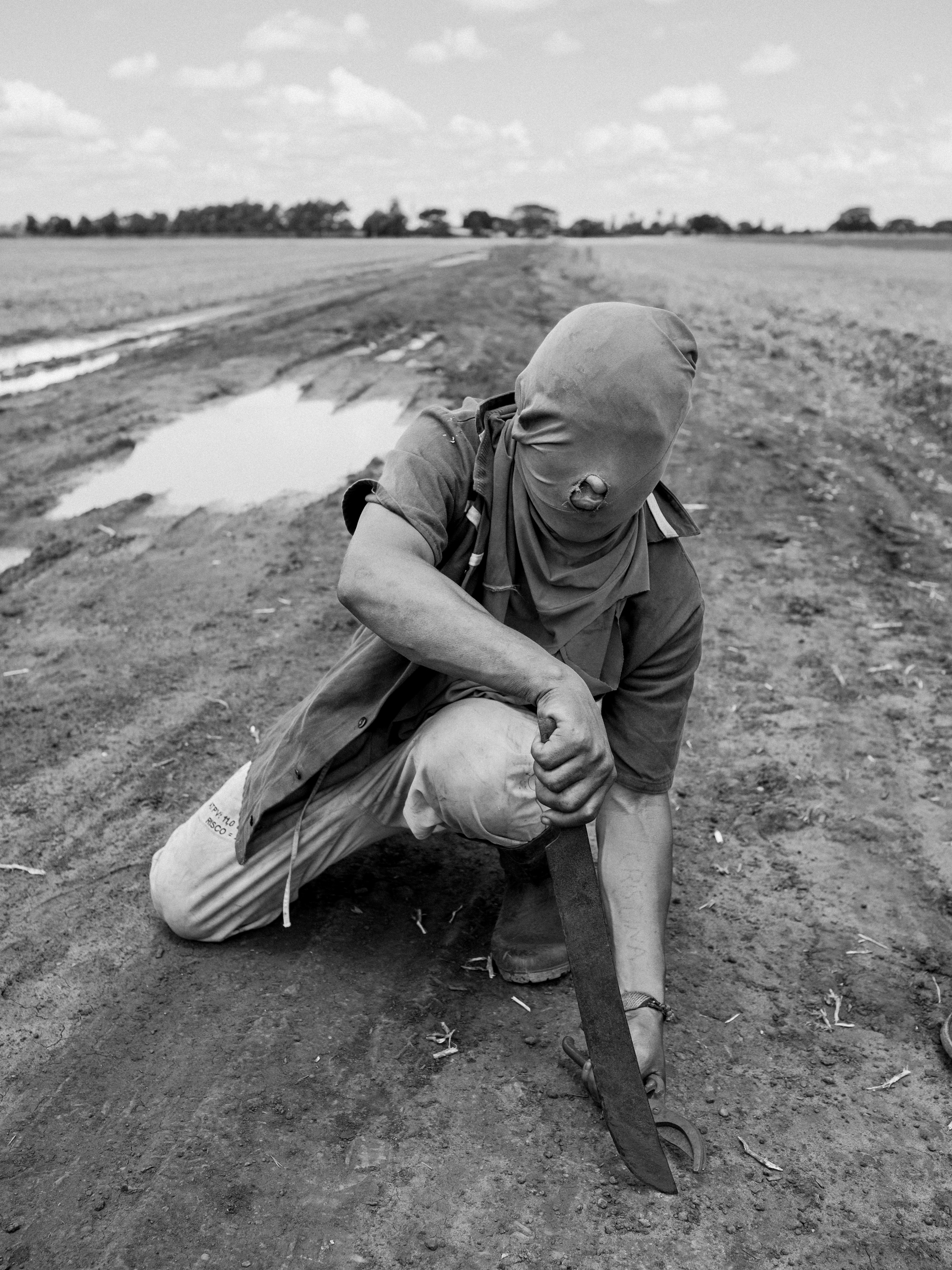
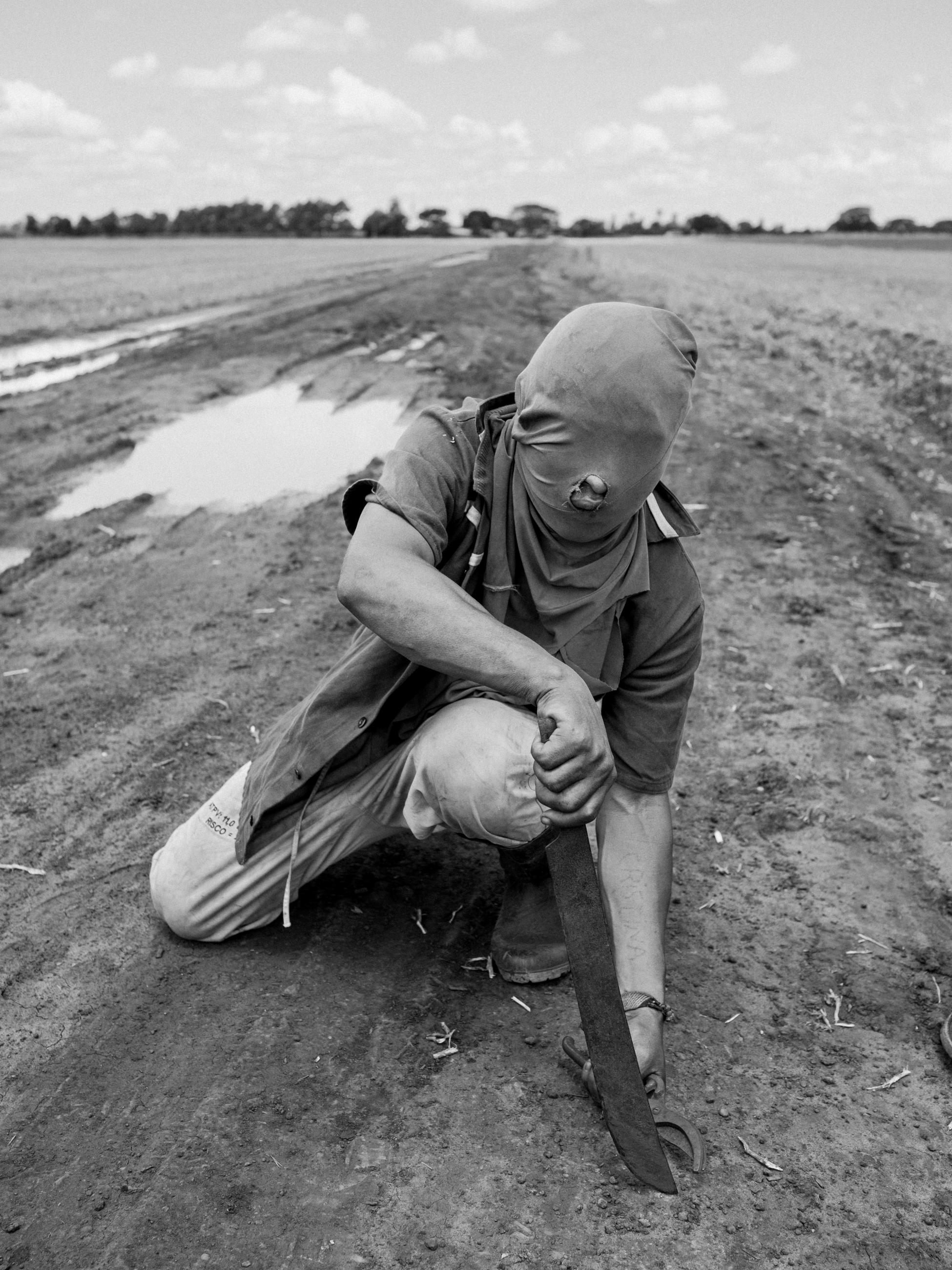
A young Guaraní warrior secures the borders of a new retomada, Laranjeira Nhanderu. On March 3, 2023, in the middle of the night, about 30 indigenous Guaraní-Kaiowás began the peaceful occupation of a farm and a soybean field.
Retomada Laranjeira Nhanderu, Rio Brilhante, Brazil.
© Renaud Philippe, Canada, Shortlist, Professional competition, Documentary Projects, 2024 Sony World Photography Awards
Retomada
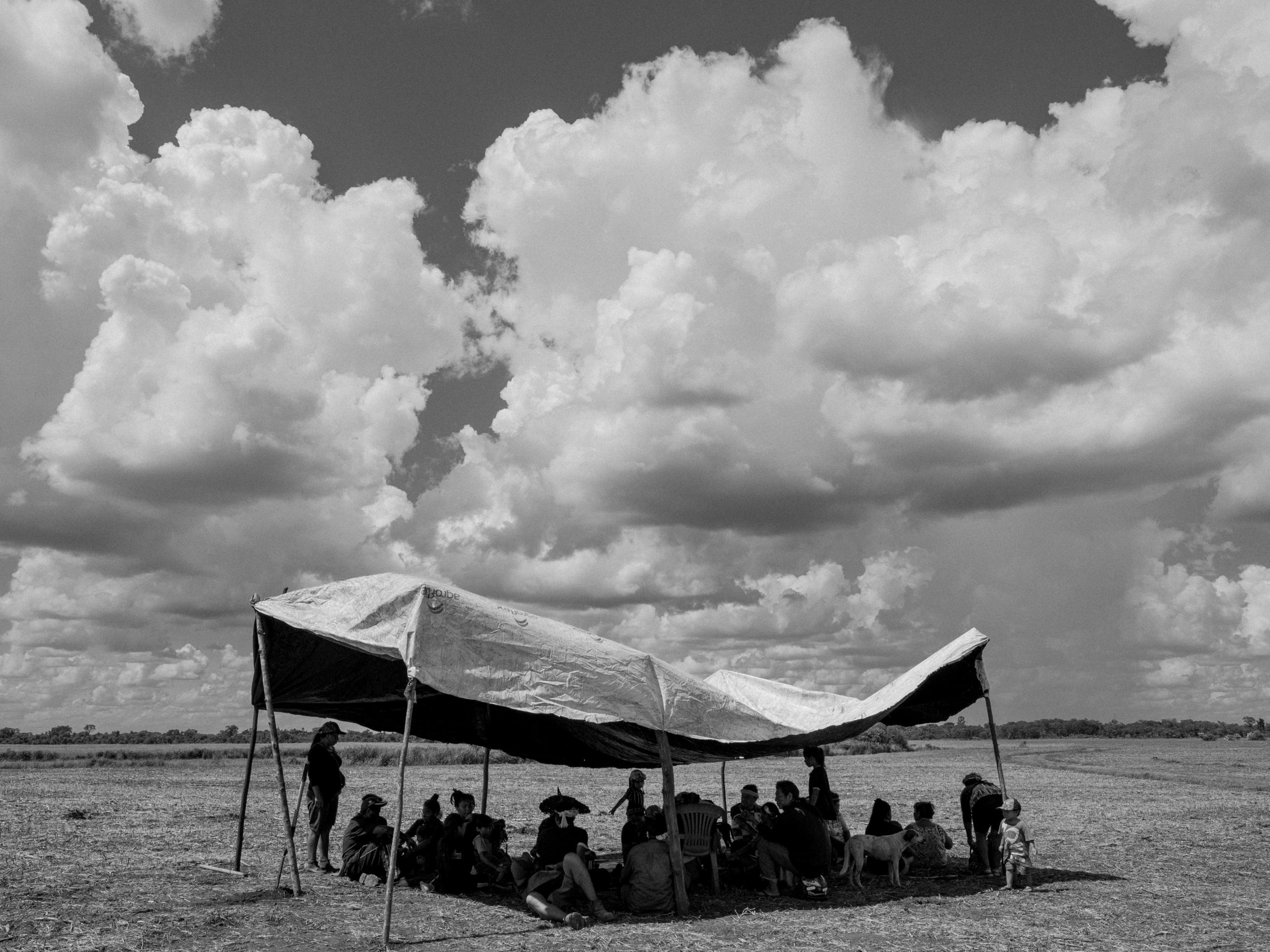
On the second day of the new Retomada Laranjeira Nhanderu, the community taking part in the occupation gathers under the shade of a plastic roof to escape the blazing sun.
Retomada Laranjeira Nhanderu, Rio Brilhante, Brazil.
© Renaud Philippe, Canada, Shortlist, Professional competition, Documentary Projects, 2024 Sony World Photography Awards
Retomada
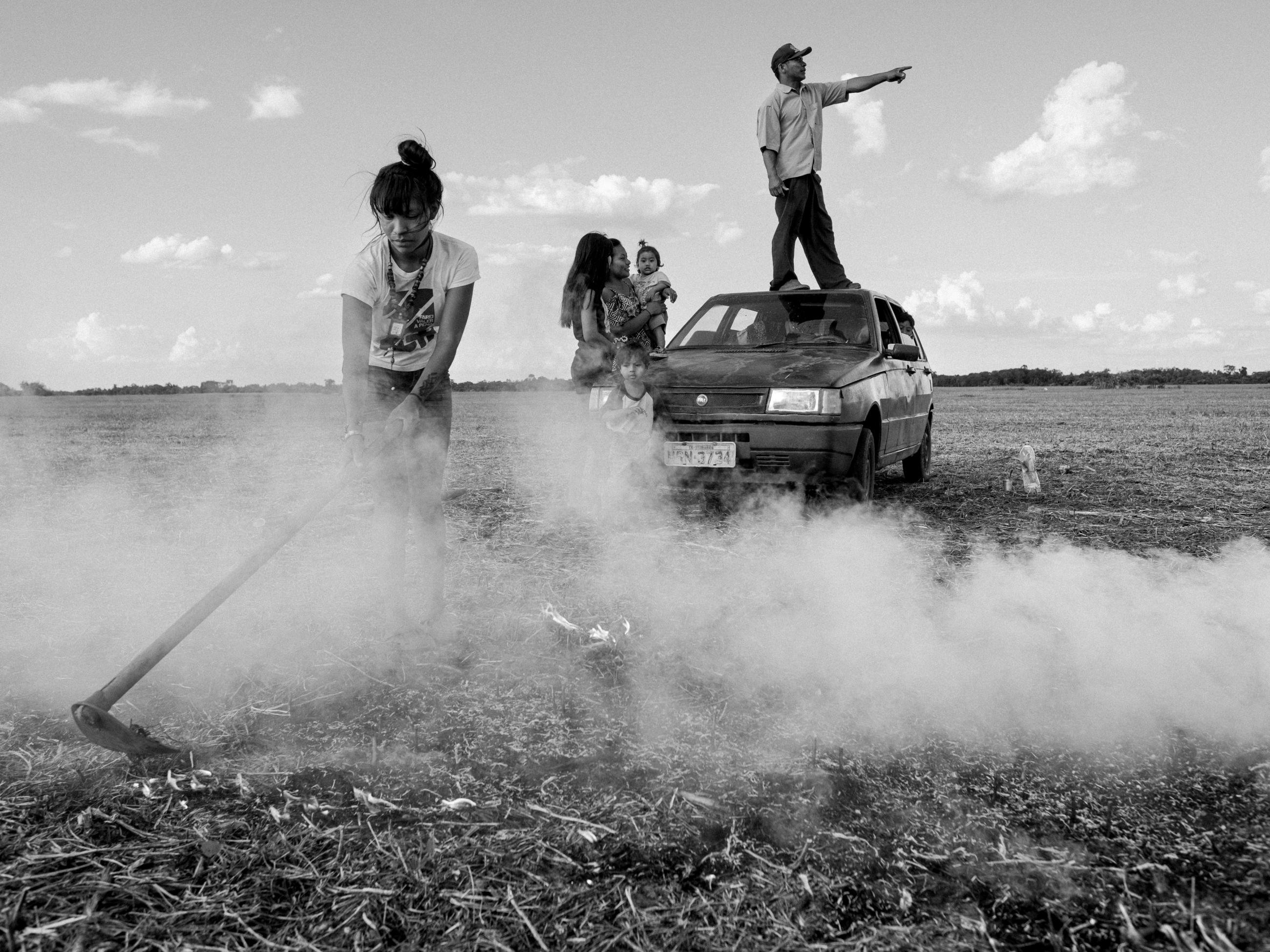
A young woman cleans the soil of a newly reclaimed soya field while a Guaraní-Kaiowá mason gives instructions for the construction of the prayer house, the first and most important building in the new Tekoha (Guaraní village).
Retomada Laranjeira Nhanderu, Rio Brilhante, Brazil.
© Renaud Philippe, Canada, Shortlist, Professional competition, Documentary Projects, 2024 Sony World Photography Awards
Retomada
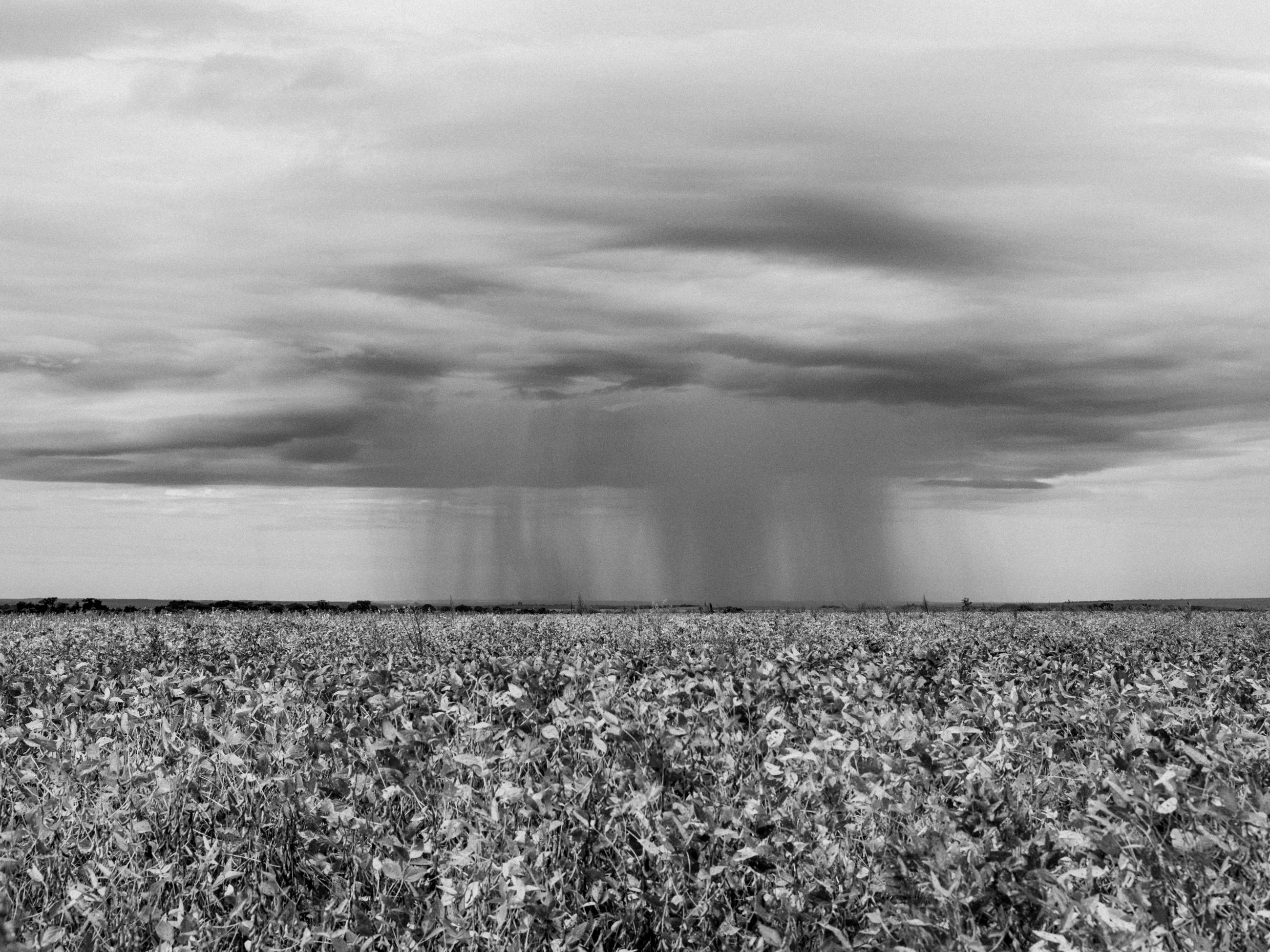
The states of Paraná and Mato Grosso do Sul were built on the ruins of the Atlantic Forest. Only 7.3 per cent of the forest’s original area remains, the rest replaced with fields of soya as far as the eye can see. The pesticides that are used in large quantities on these fields are contaminating the rainwater and groundwater.
Coronel Sapucaia, Brazil.
© Renaud Philippe, Canada, Shortlist, Professional competition, Documentary Projects, 2024 Sony World Photography Awards
Retomada
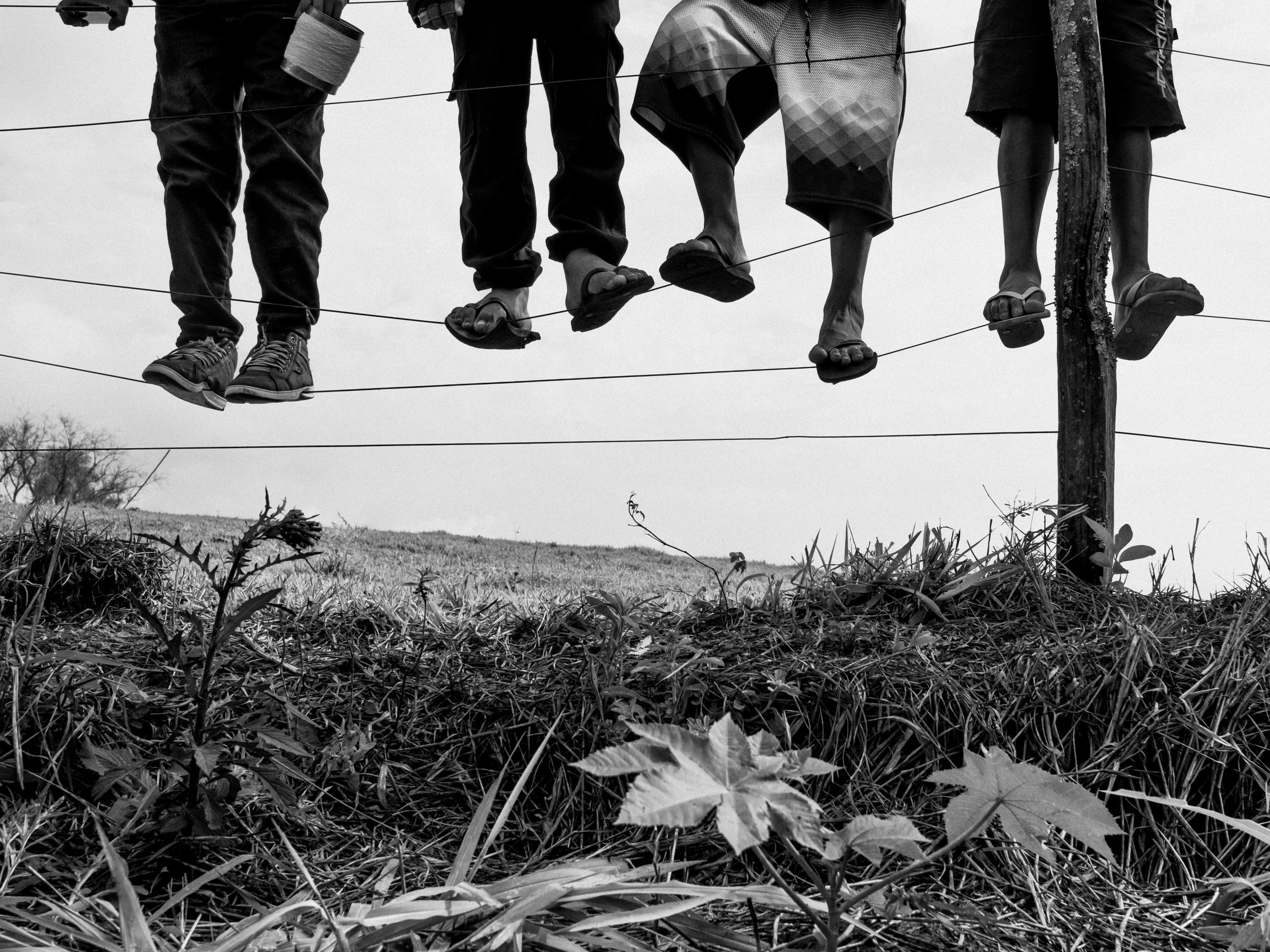
Boys play on the fence that separates the retomada from a cattle farm. There were – and still are – many generations waiting for the retomadas to become indigenous lands, legalised by the government.
Aty Guasu, Guaíra, Brazil.
© Renaud Philippe, Canada, Shortlist, Professional competition, Documentary Projects, 2024 Sony World Photography Awards
Retomada
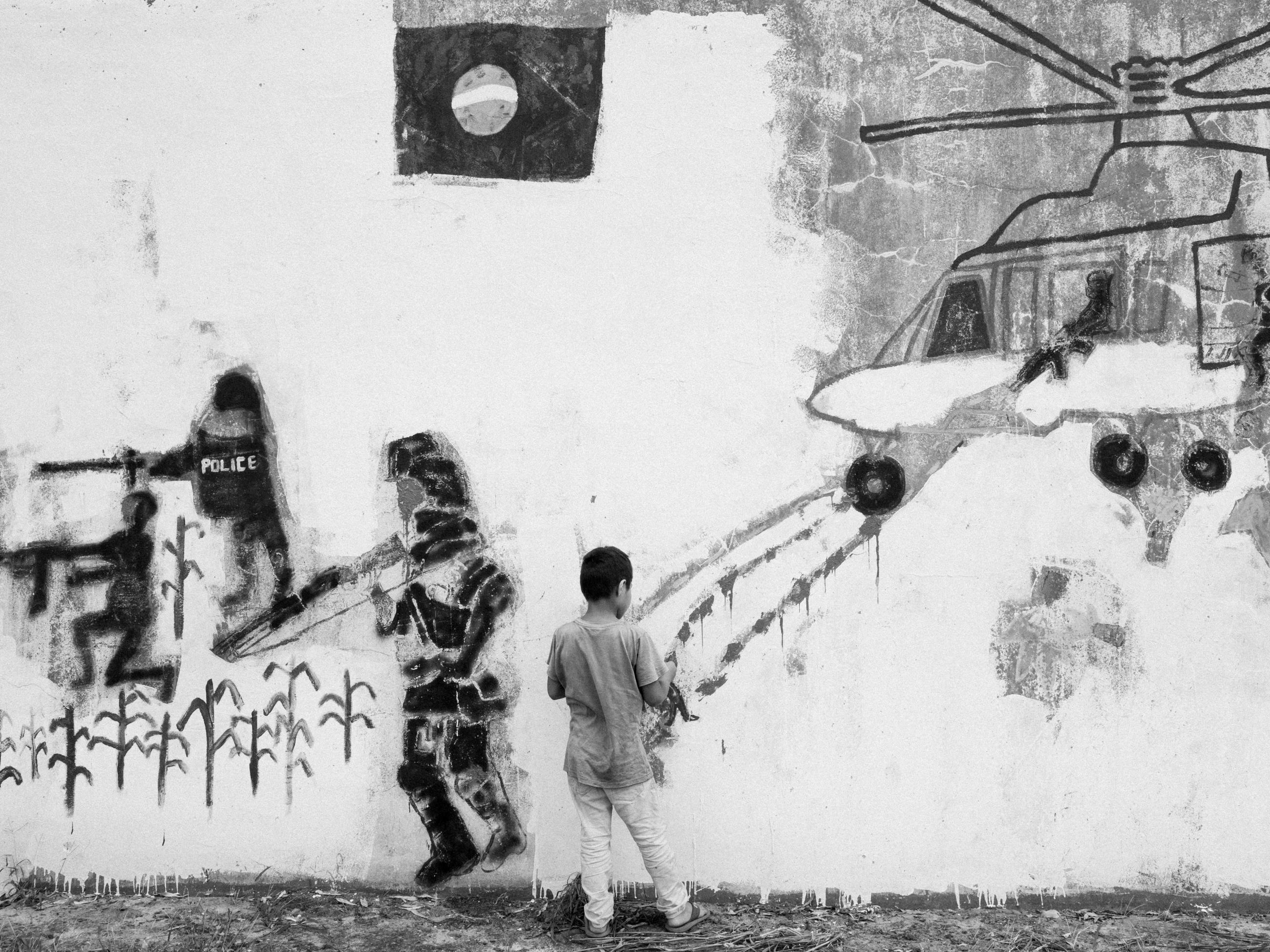
Gelibiel, aged six, stands in front of a mural depicting the Guapoy attack, painted on the wall of a farm building. The attack occurred in June 2022, when a ground and helicopter raid carried out by the local police, along with militias hired by the farmers in the local area, left one person dead and 10 injured, mostly children.
Retomada Guapoy, Brazil.
© Renaud Philippe, Canada, Shortlist, Professional competition, Documentary Projects, 2024 Sony World Photography Awards
Retomada
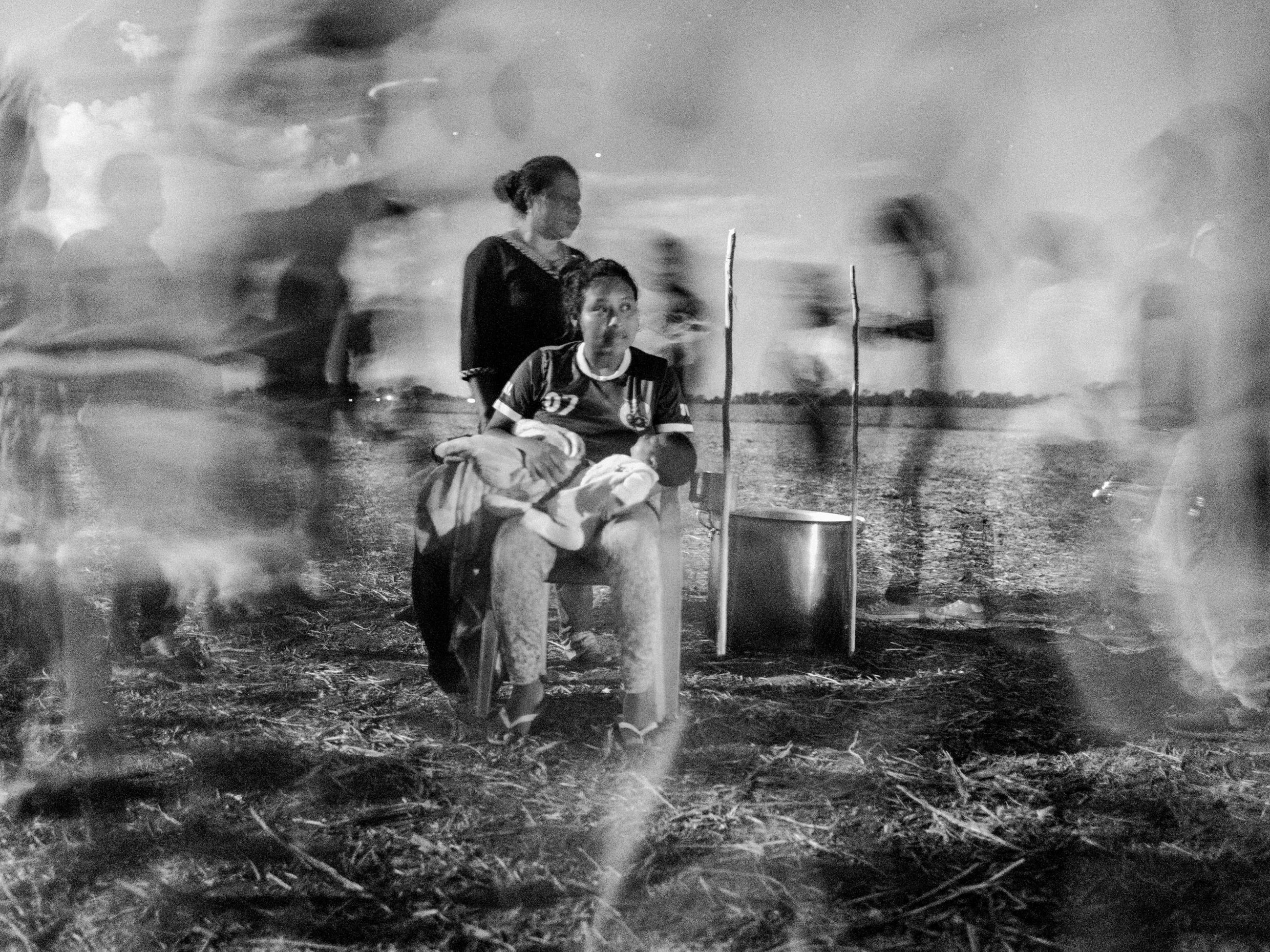
The first baptism ritual at the Laranjeira Nhanderu retomada. Three generations of Guaraní-Kaiowá warriors are at the naming ceremony, as the one-month-old girl receives her Guaraní name: Kunha Poty Rendy, the bright flower girl.
Retomada Laranjeira Nhanderu, Rio Brilhante, Brazil.
© Renaud Philippe, Canada, Shortlist, Professional competition, Documentary Projects, 2024 Sony World Photography Awards
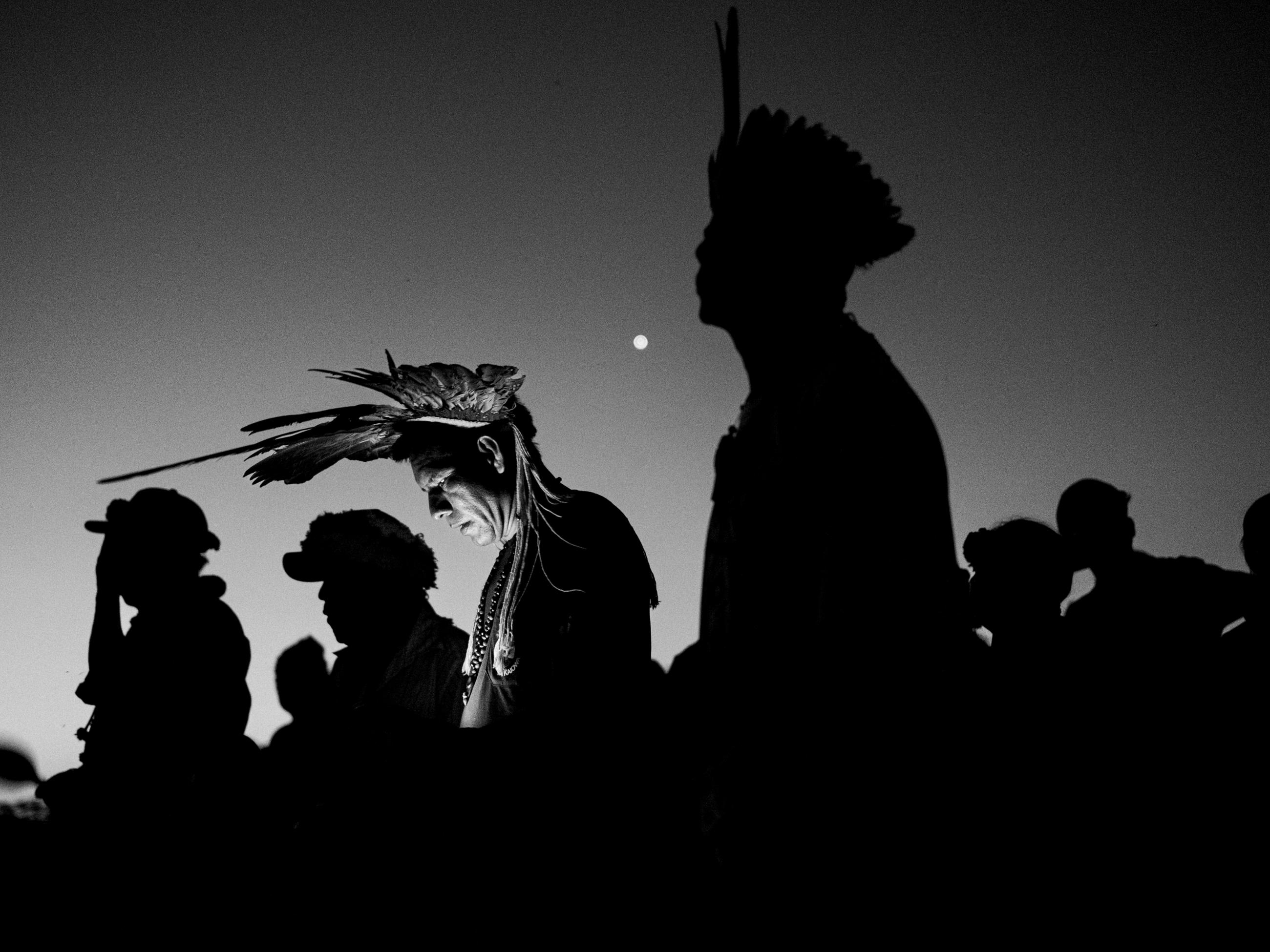
Retomada
Under the light of a full moon, the shamans gather for a protection ritual to ward off armed men, shortly after hearing gunshots nearby. Armed with their maracas and prayer songs, shamans are on the front line in a retomada; they are the spiritual force that supports and guides the collective action.
Retomada Laranjeira Nhanderu, Rio Brilhante, Brazil.
© Renaud Philippe, Canada, Shortlist, Professional competition, Documentary Projects, 2024 Sony World Photography Awards