

Back to 2025
Latin America Professional Award 2025
Reflections of an Invader
Julián Ernesto Espejo Salamanca
Series description
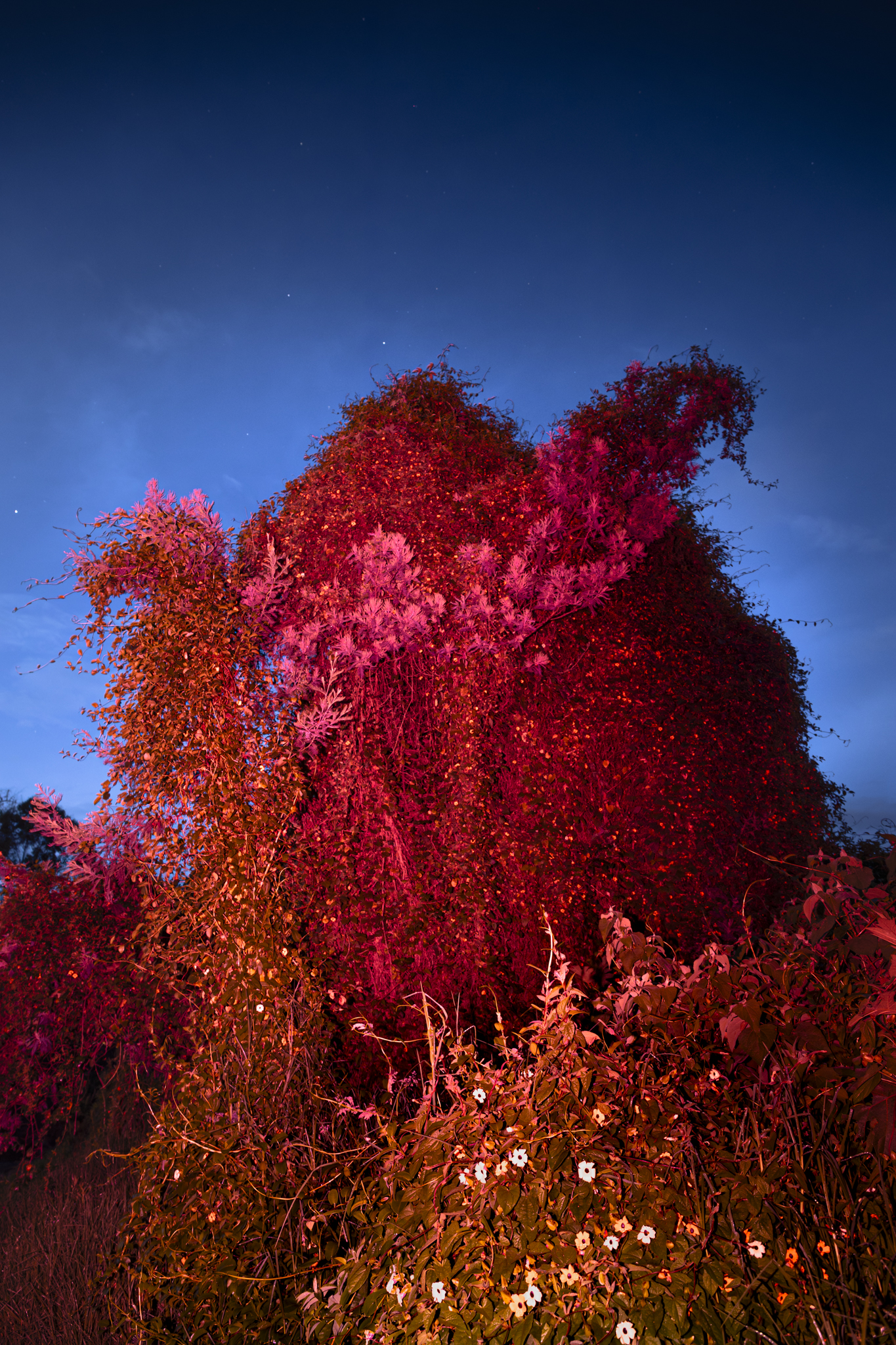
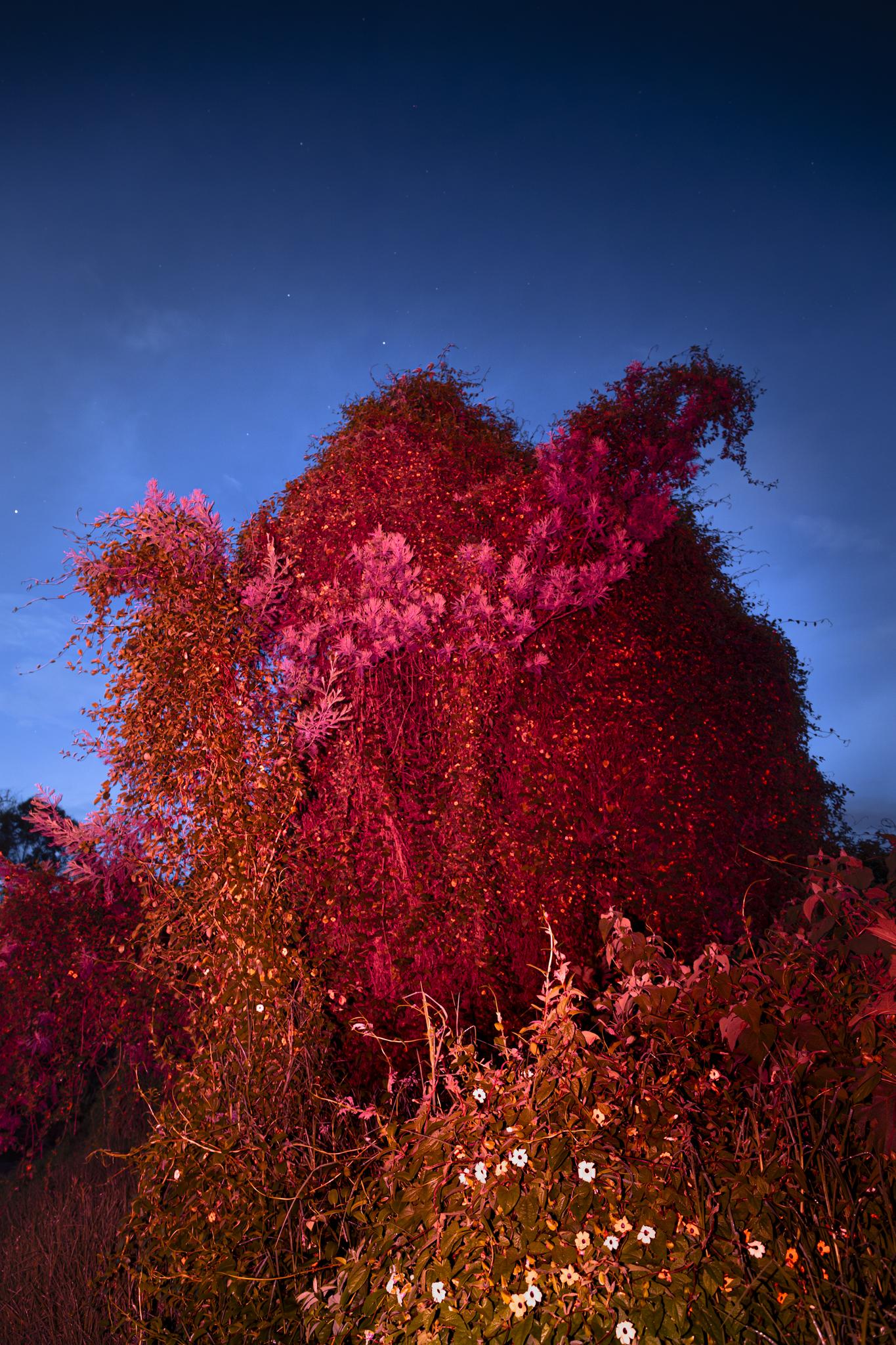
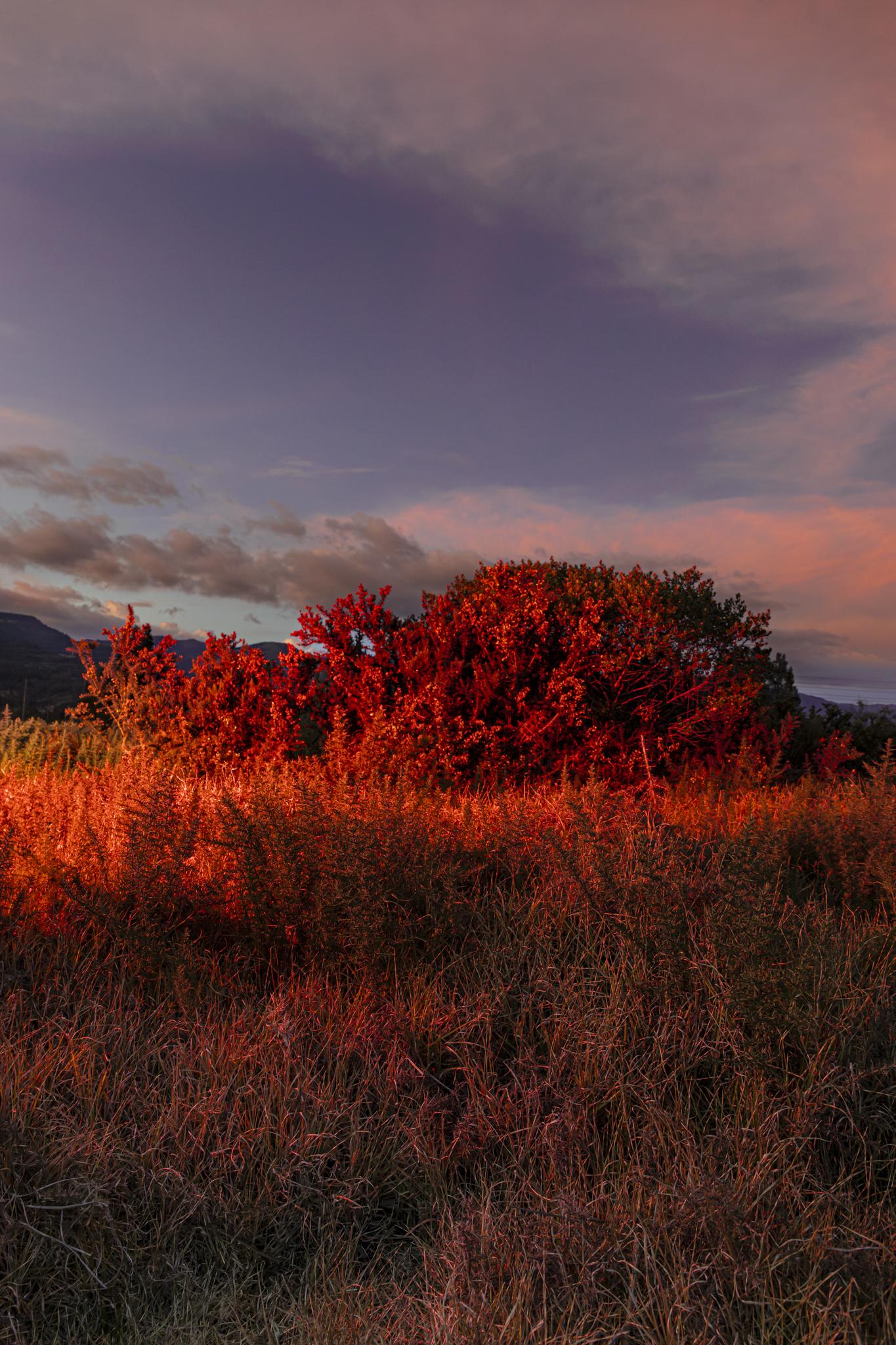
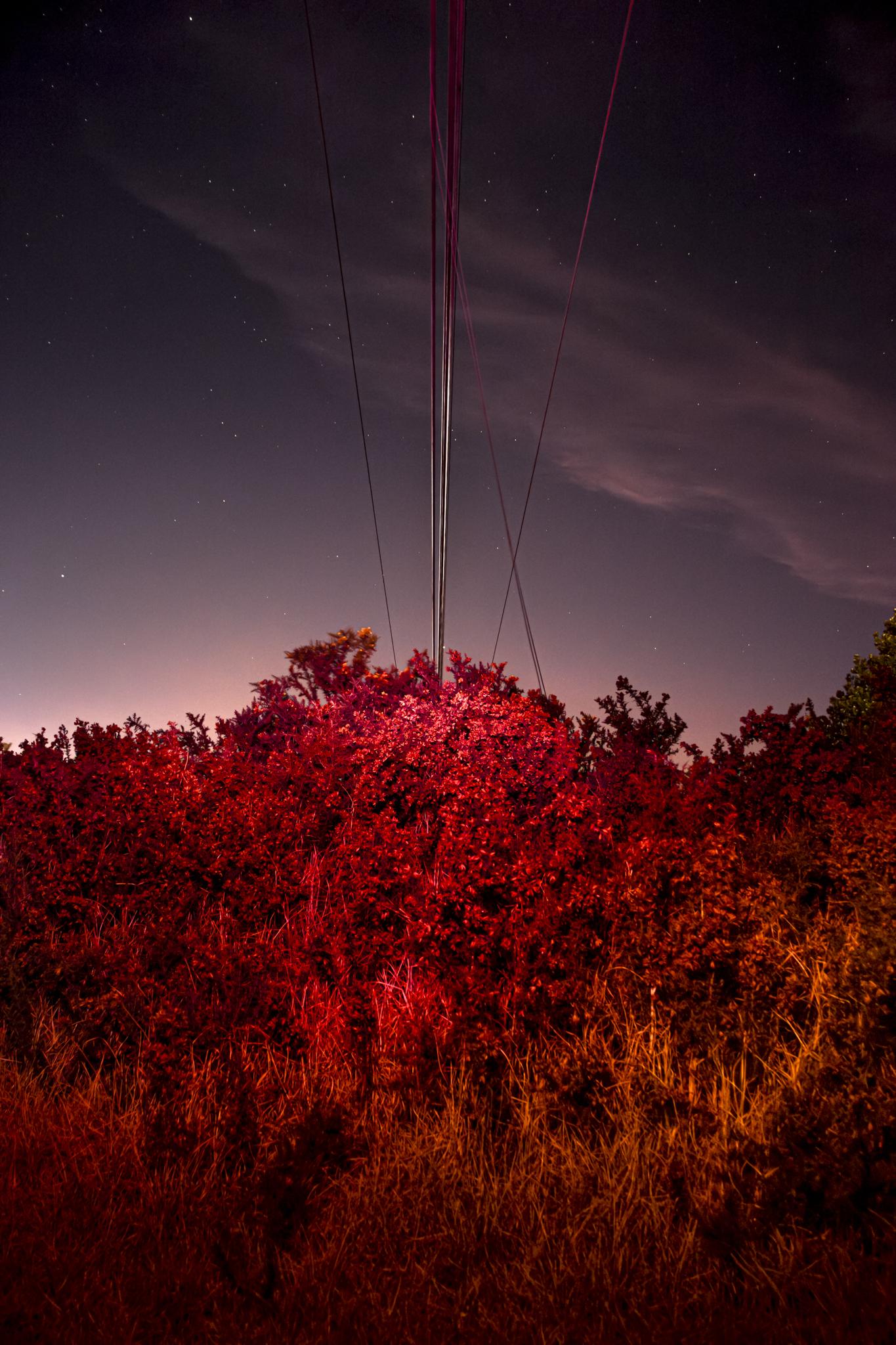
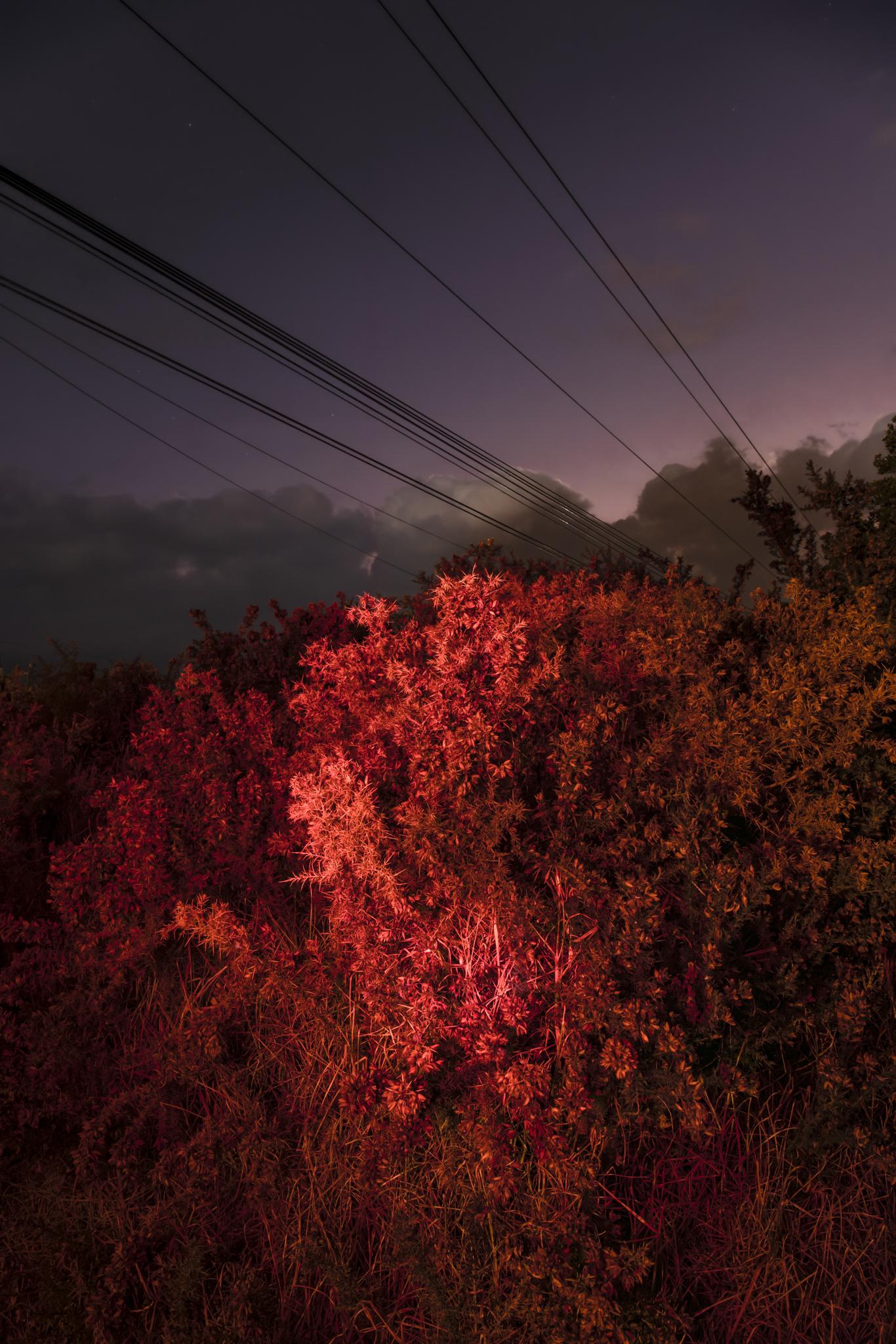
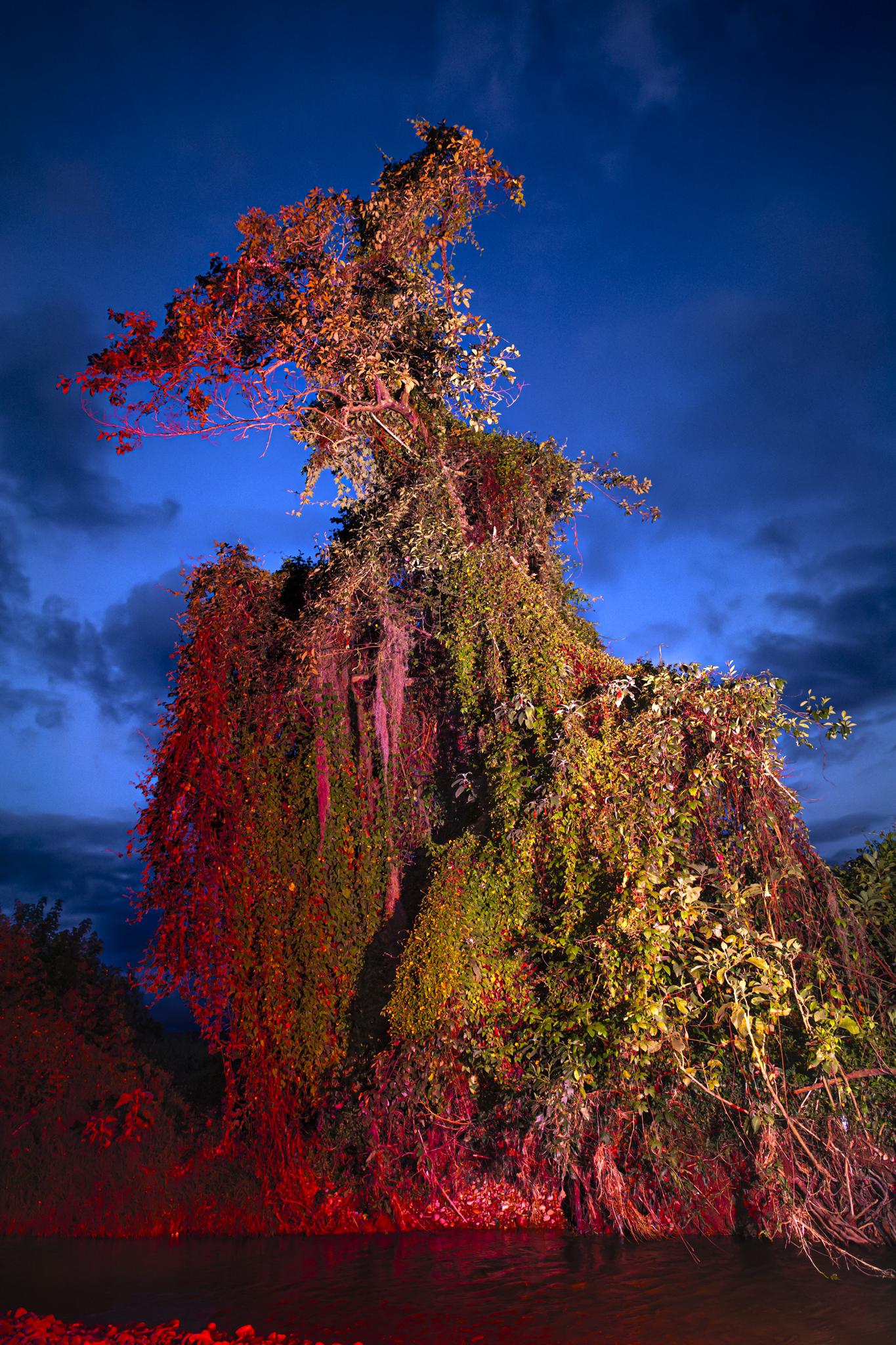
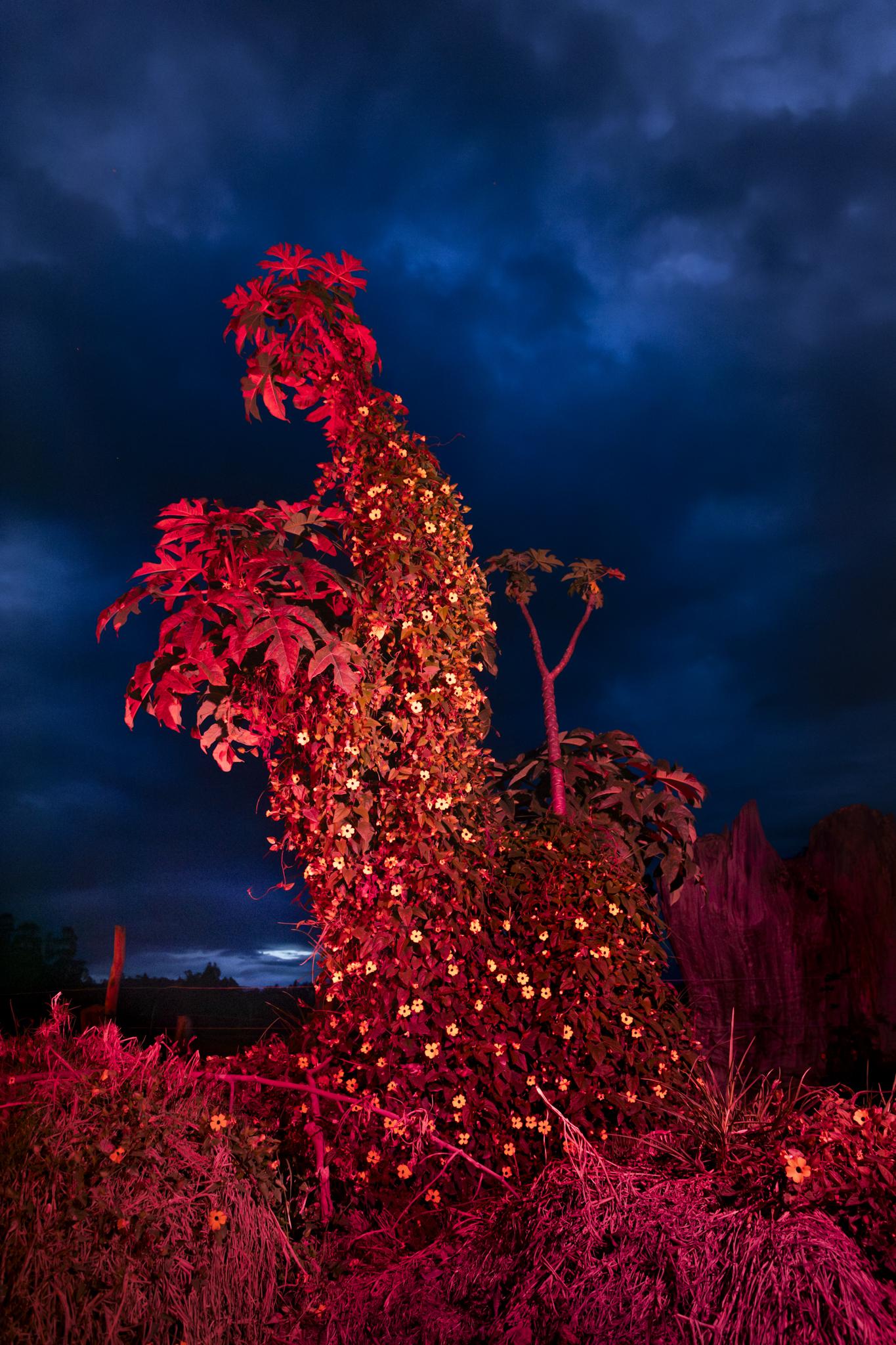
Present in plain sight within the territory, yet hidden and unnoticed, two plants are spreading and threatening the diversity of Colombian ecosystems. The photographer explains, ‘introduced by human whim, these monsters are spreading, leaving destruction in their wake.’ The first is an African vine, popularly known as black-eyed Susan or ‘ojo de poeta’ (Thunbergia alata), which was introduced in the 1880s for ornamental purposes. The other is the gorse (Ulex europaeus), a shrub introduced in the 1950s with the ill-conceived belief that it could control erosion and serve as ‘a living fence’ due to its dense, thorny nature. Despite their captivating beauty, these two plants are now freely suffocating native species, spreading their deadly charm and irreversibly transforming and homogenising the landscape. Through this project, the photographer partially illuminated these plants with red light at sunset, night-time and dawn, to create and reveal monstrous forms that depict the dual facets of beauty and chaos presented by these plants. ‘These images serve as a visual representation of human impact and actions that must change today if we want to protect our ecosystems.’
Biography
Originally from Boyacá, Colombia, Julián Espejo Salamanca is a photographer and industrial designer whose work blends visual aesthetics with deep conceptual reflection through editorial photography, conceptual portraiture, and landscape.Contrast and color allow him to portray the dualities of his territory, exploring the relationships between the beautiful and the not-so-beautiful. His goal is to generate dialogues about contemporary challenges and the human impact on the natural environment.
Reflections of an Invader
Through these photographs, the photographer ‘wanted to unveil the violent nature of these plants, lighting it with a red light and generating pareidolias that resemble its monstrous potential.’
© Julián Ernesto Espejo Salamanca, Colombia, Shortlist, Latin America Professional Award, 2025 Sony World Photography Awards
Reflections of an Invader
Gorse (Ulex europaeus) was introduced to Colombia in the 1950s as a ‘living fence,’ due to its thorny and impenetrable nature.
© Julián Ernesto Espejo Salamanca, Colombia, Shortlist, Latin America Professional Award, 2025 Sony World Photography Awards
Reflections of an Invader
Gorse was planted to protect aqueducts, farms and telecommunications towers from theft, as well as to combat erosion in areas affected by poor agricultural and livestock practices.
© Julián Ernesto Espejo Salamanca, Colombia, Shortlist, Latin America Professional Award, 2025 Sony World Photography Awards
Reflections of an Invader
Gorse releases large amounts of phosphates into the soil of the páramo (Andean ecosystems) and high-altitude forests, negatively impacting and suffocating native plants, such as frailejones, which are essential for the water cycle.
© Julián Ernesto Espejo Salamanca, Colombia, Shortlist, Latin America Professional Award, 2025 Sony World Photography Awards
Reflections of an Invader
The photographer explains that the ‘black-eyed Susan (Thunbergia Alata) was introduced to Colombia in the late 19th century, as an ornamental plant, aligned with the colonial concept of the English garden. However, today it is an invasive species that impacts the local ecosystem.’
© Julián Ernesto Espejo Salamanca, Colombia, Shortlist, Latin America Professional Award, 2025 Sony World Photography Awards
Reflections of an Invader
With its expansive coverage and vivid orange flowers, black-eyed Susan climbs over native vegetation, blocking its access to sunlight and leading to its eventual suffocation.
© Julián Ernesto Espejo Salamanca, Colombia, Shortlist, Latin America Professional Award, 2025 Sony World Photography Awards