

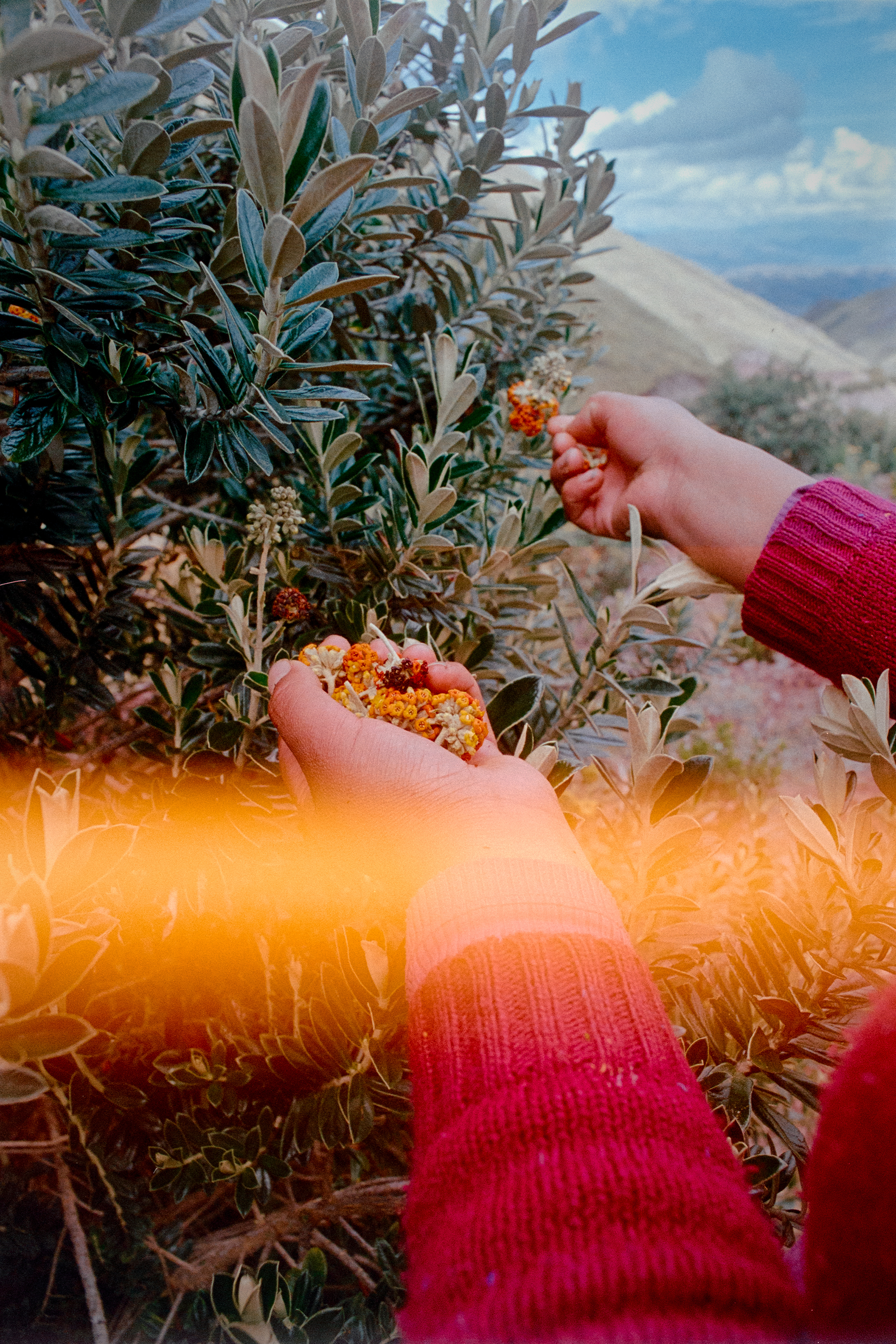
Series description
Alquimia Textil is a collaborative project undertaken by Nicolás Garrido Huguet and researcher and fashion designer María Lucía Muñoz , which showcases the natural dyeing techniques practiced by the artisans of Pumaqwasin in Chinchero, Cusco, Peru. The project aims to bring visibility to, and help preserve, these ancestral dyeing practices, which demand many hours of meticulous work that is often underestimated within the textile sector. Industrial methods are close to displacing these traditional dyeing processes completely, while climate change threatens the plants that are crucial to these practices. These photographs feature three dye types: qolle (Buddleja coriacea), a shrub with yellow-producing flowers; ch’illka (Baccharis sp.), a shrub whose leaves and stems yield ochre and green hues; and cochineal (Dactylopius coccus), an Andean insect producing reds, carmines and purples in a broad color spectrum.
Biography
I am a Peruvian photographer born in 1993. My work exists at the intersection of documentary, fine art, and fashion photography, blending elements of each to create unique narratives. While my approach draws from these different genres, my main focus remains on humanity in all its aspects and our relationship with the environment.
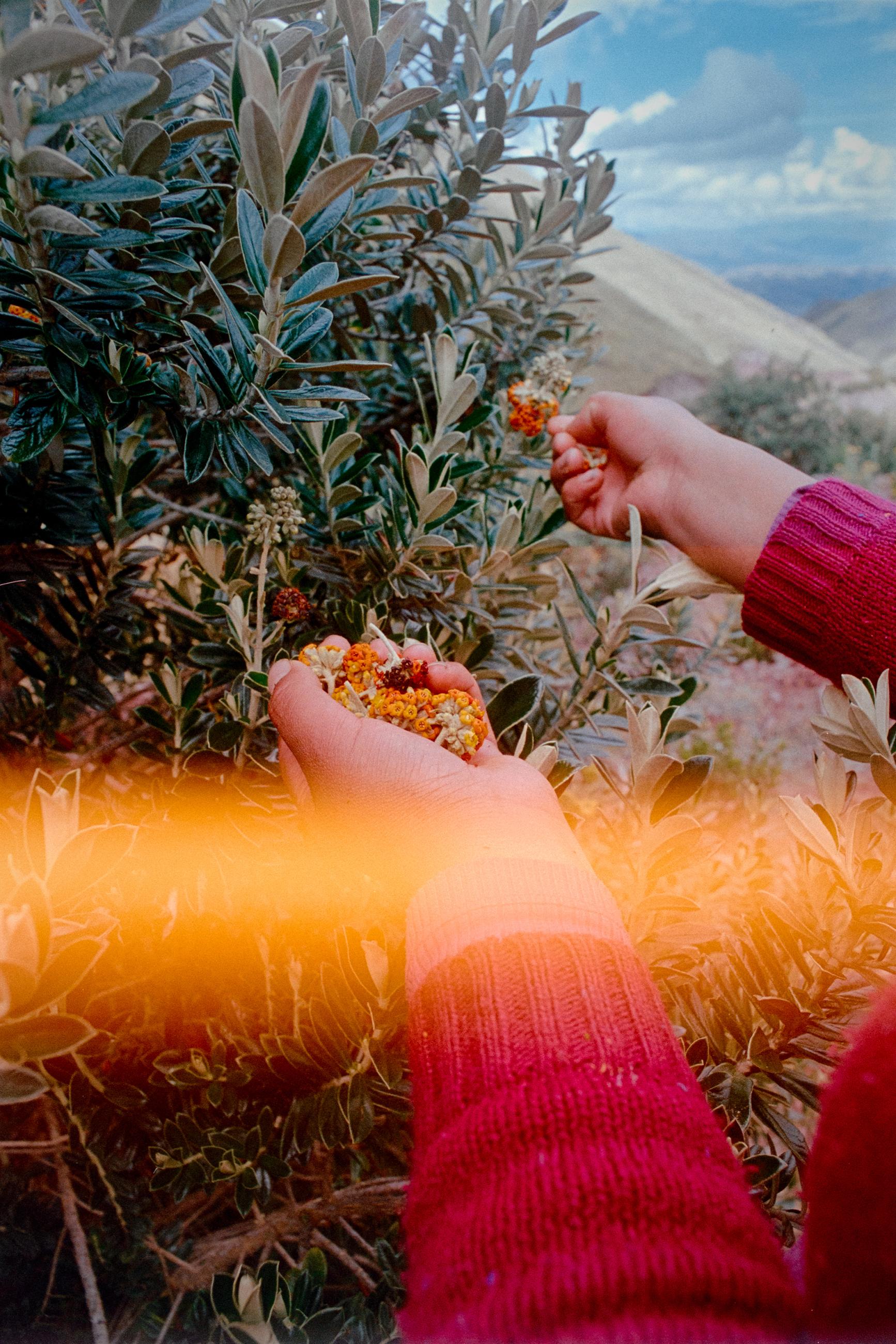
Qolle Hands
Harvesting qolle 4,500 metres above sea level. Without their prior knowledge, the two analogue cameras the photographer had borrowed to photograph this dyeing route had light leaks, which serendipitously aligned with the artisanal quality of natural dyes.
© Nicolás Garrido Huguet, Peru, 1st Place, Professional competition, Environment, 2025 Sony World Photography Awards

Physical Qolle
A Van Dyke brown photogram on cotton fabric.
© Nicolás Garrido Huguet, Peru, 1st Place, Professional competition, Environment, 2025 Sony World Photography Awards
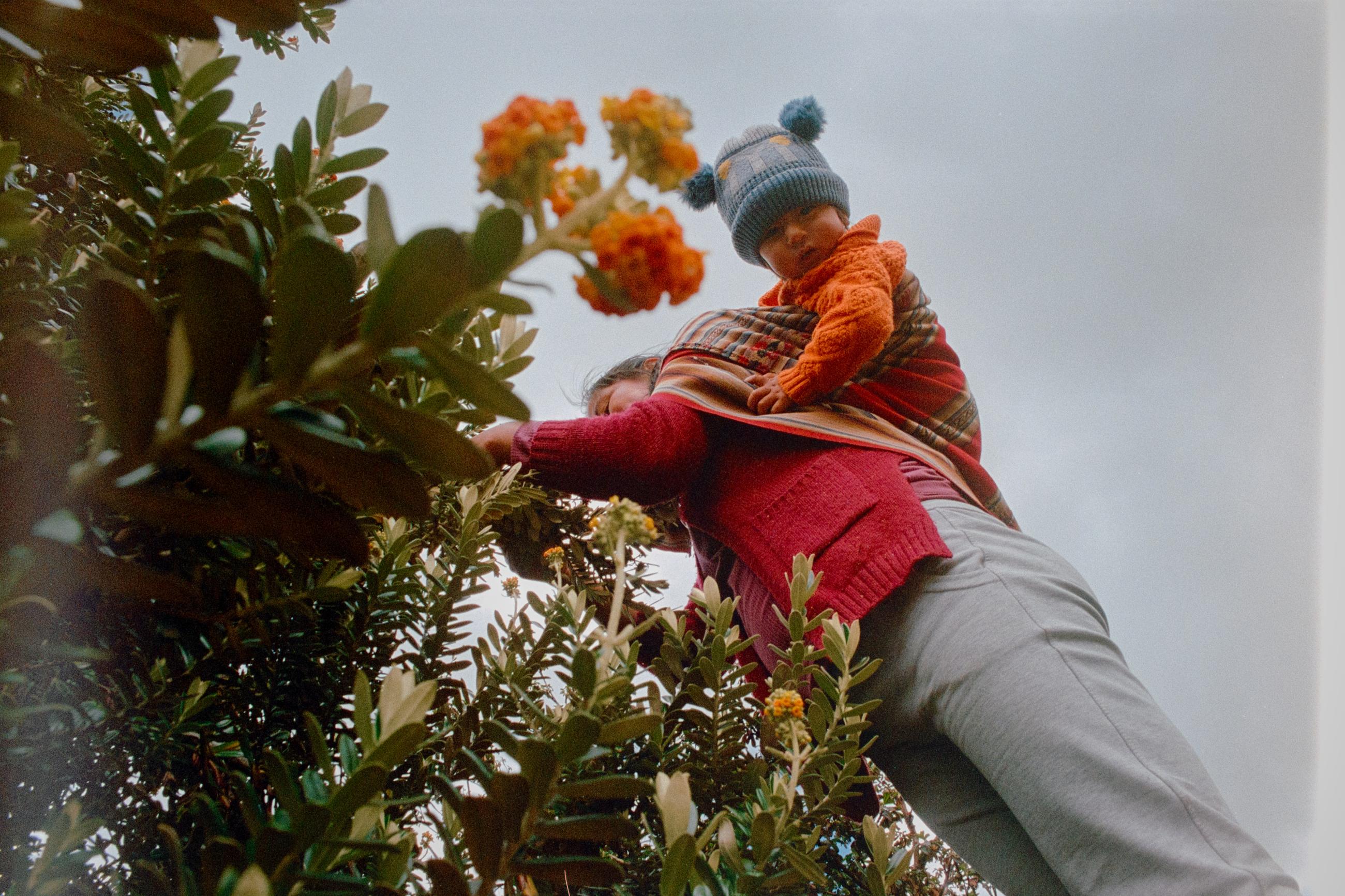
Harvesting Qolle with Jacob
Harvesting qolle with Liz and her son, Jacob. Due to shifting weather patterns, the community postponed the harvest by a month, as the flowers took longer to bloom.
© Nicolás Garrido Huguet, Peru, 1st Place, Professional competition, Environment, 2025 Sony World Photography Awards
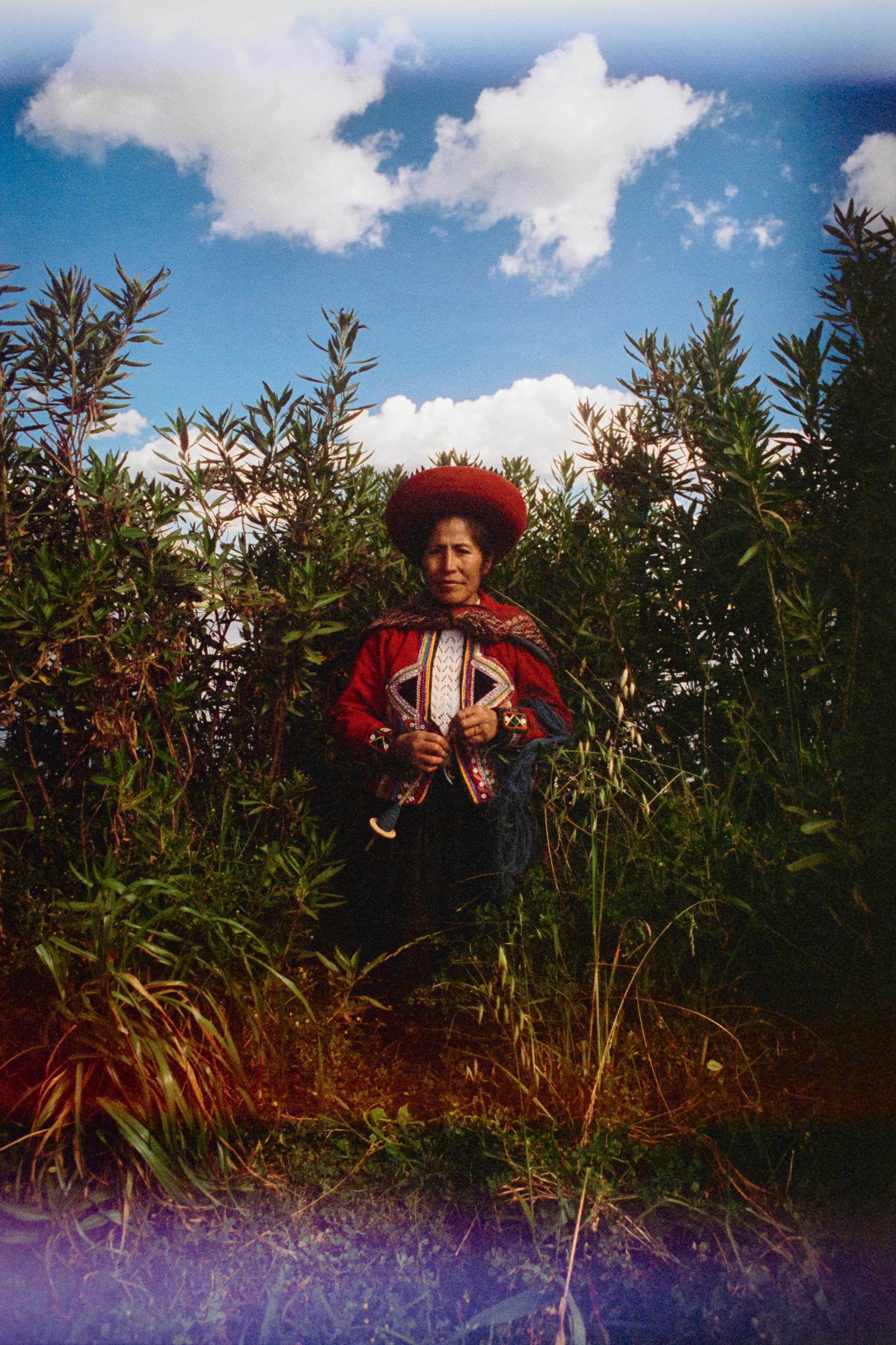
Braulia Between Ch´illka
Portrait of Braulia Puma, dressed in traditional Andean clothing, among ch’illka bushes. Braulia founded and leads Pumaqwasin, a cooperative of seven women who preserve traditional textile processes, recovering knowledge lost over generations. Focused on sustainability, they minimise their environmental impact and practice equality, sharing responsibilities fairly or sending representatives to ensure tasks are completed collectively.
© Nicolás Garrido Huguet, Peru, 1st Place, Professional competition, Environment, 2025 Sony World Photography Awards
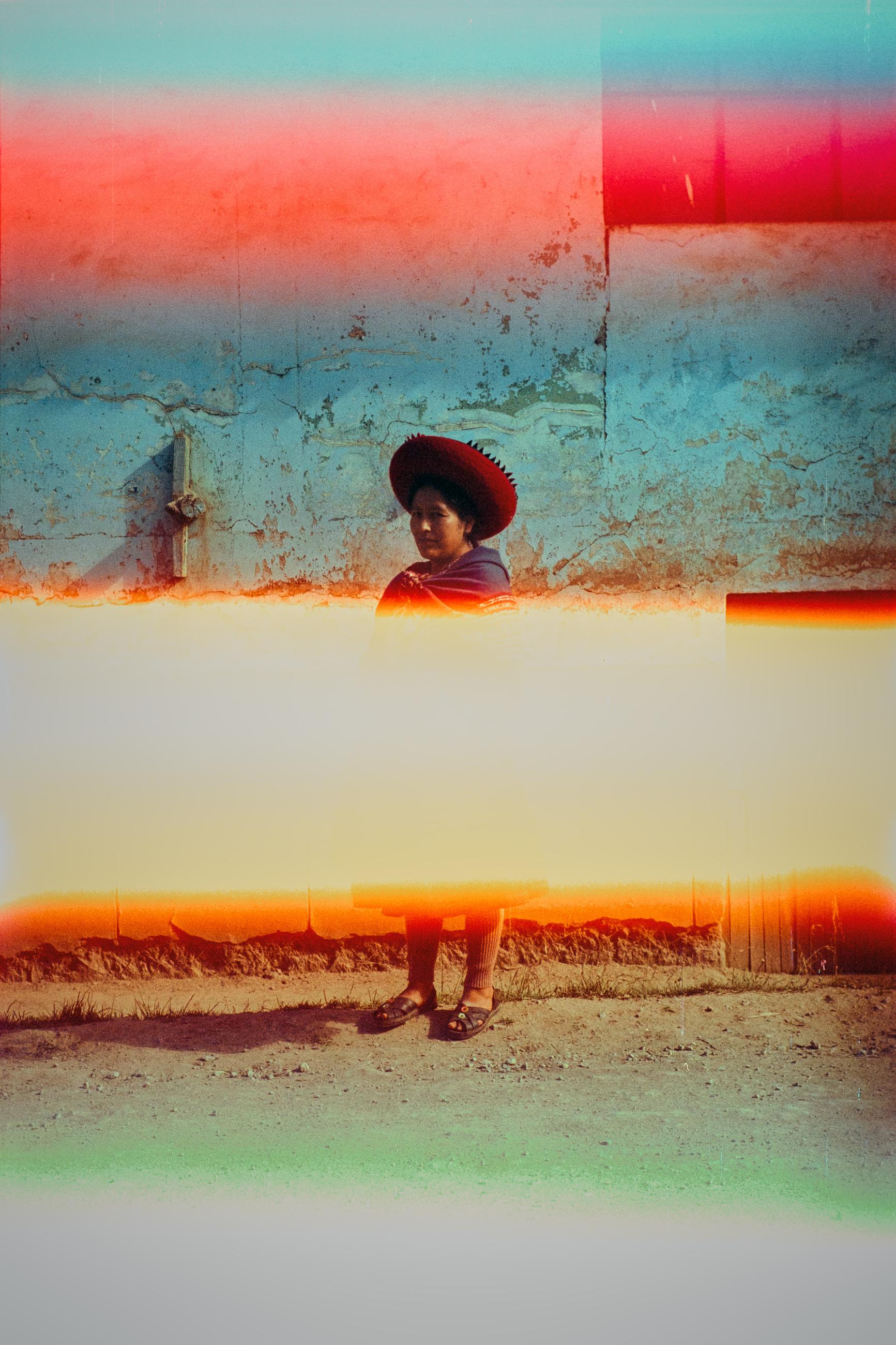
Ruth in Front of Her Home
Portrait of Ruth, one of the seven Pumaqwasin artisans. Just as natural dyeing has unpredictable outcomes, shaped by harvest quality or firewood temperature, so analogue photography never guarantees uniform results. Both processes embrace the beauty of variation, capturing the nuances of organic, imperfect artistry.
© Nicolás Garrido Huguet, Peru, 1st Place, Professional competition, Environment, 2025 Sony World Photography Awards
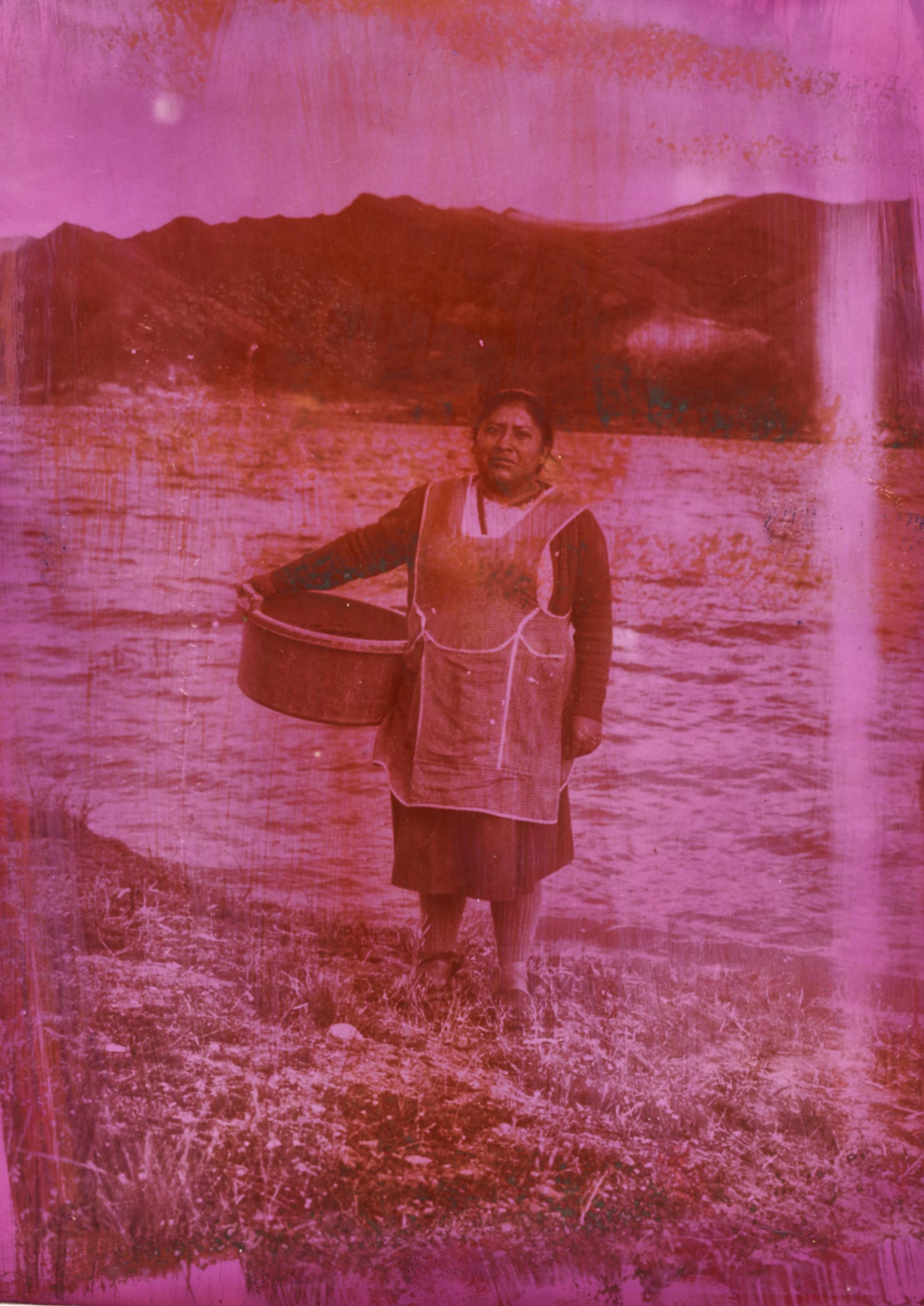
Nilda in Cochineal
A portrait of Nilda, one of the seven Pumaqwasin textile artisans, printed as a Van Dyke brown print on Ilford photographic paper dyed in cochineal.
© Nicolás Garrido Huguet, Peru, 1st Place, Professional competition, Environment, 2025 Sony World Photography Awards
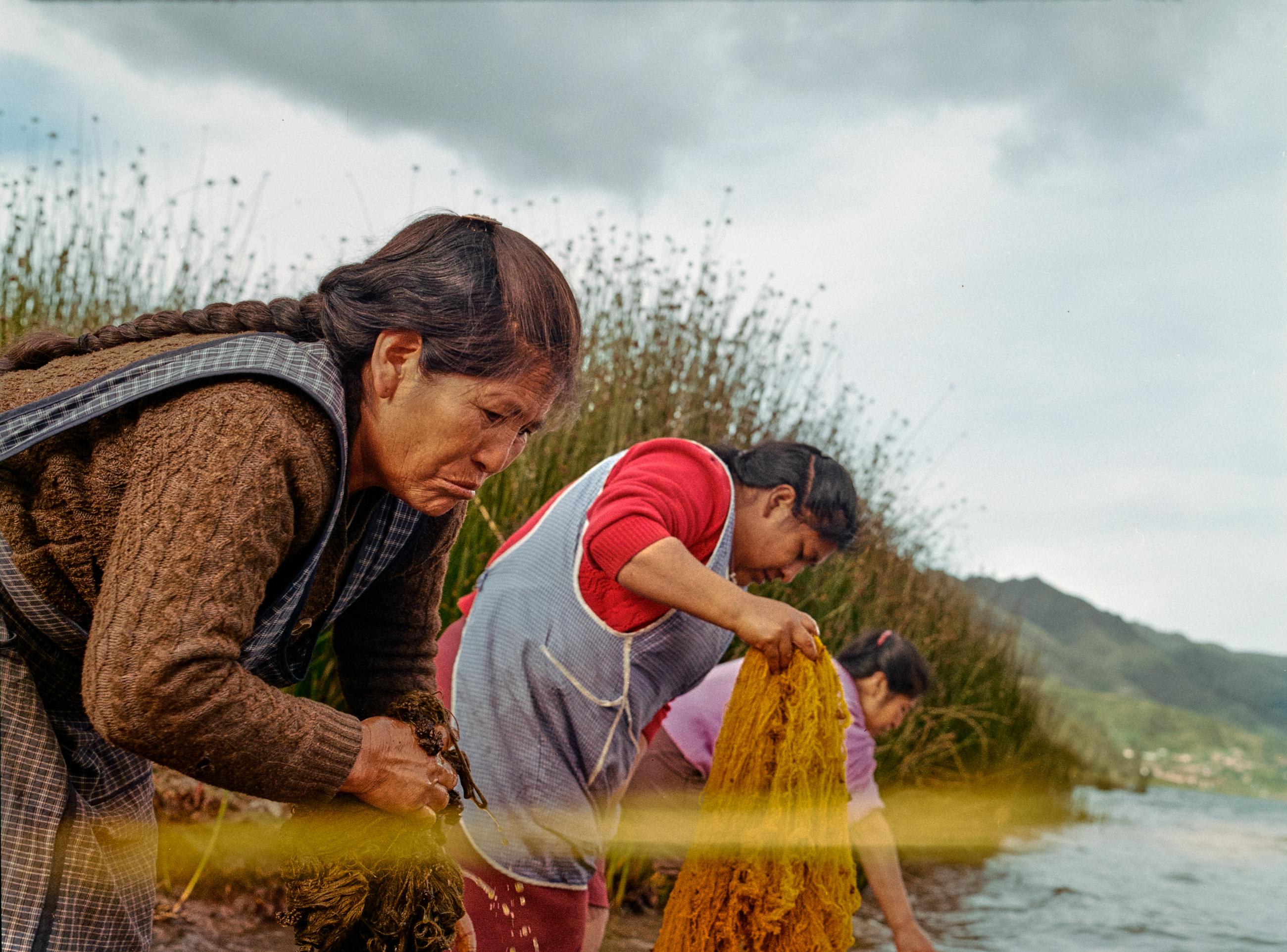
Washing Fibres
Dionisia, Nilda, and Braulia washing the recently dyed fibres in the lake. A unique aspect of natural dyes is their harmony with the ecosystem; chemical dyes would release toxic substances into the lake, but natural dyes integrate seamlessly with the environment, preserving its balance.
© Nicolás Garrido Huguet, Peru, 1st Place, Professional competition, Environment, 2025 Sony World Photography Awards
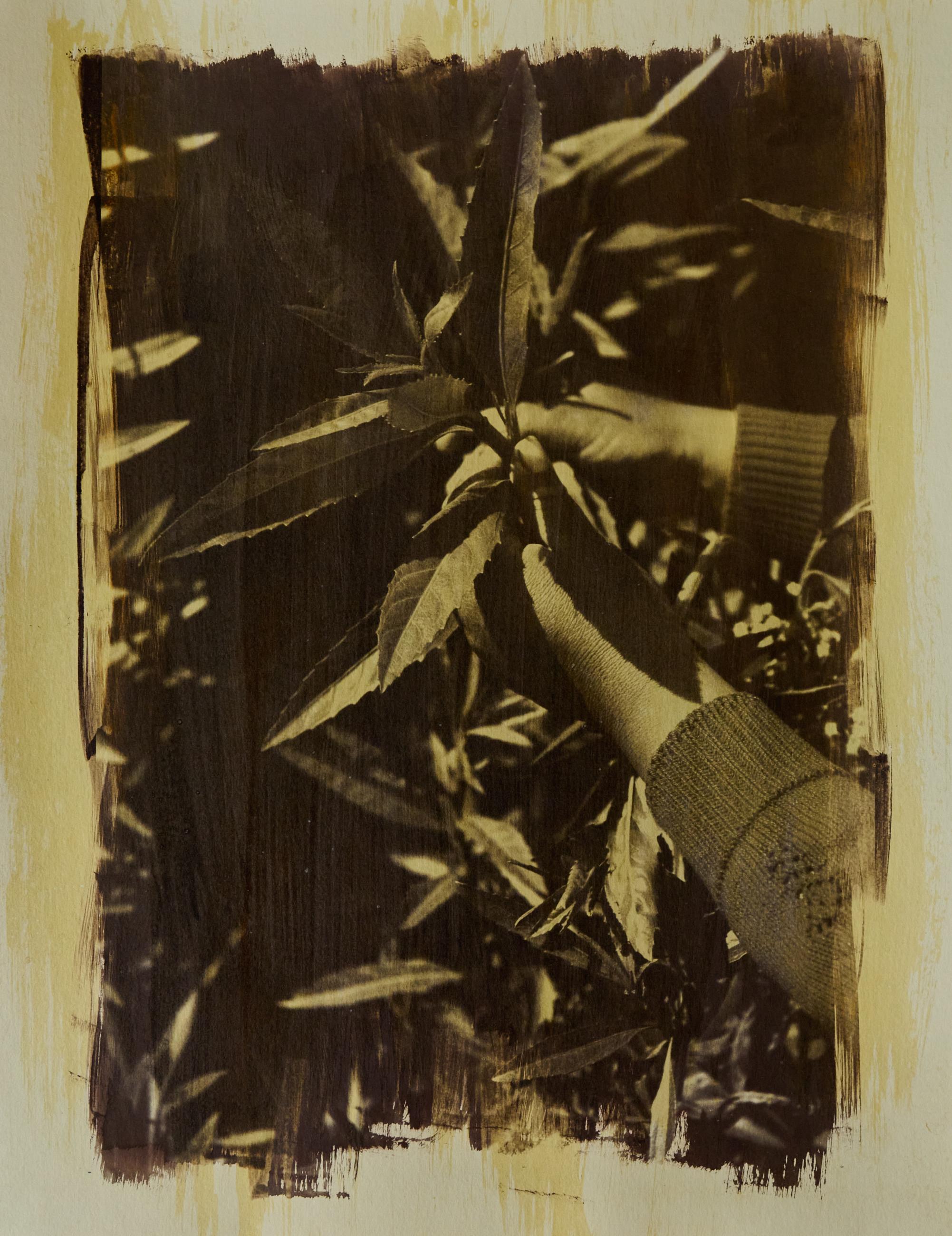
Ch´illka Leaves
A Van Dyke brown print showing hands picking ch´illka leaves. Before applying the Van Dyke process, the Hahnemühle bamboo paper was dyed in ch´illka. This technique introduced spontaneous effects, giving nature an active role in shaping the photographic image.
© Nicolás Garrido Huguet, Peru, 1st Place, Professional competition, Environment, 2025 Sony World Photography Awards