

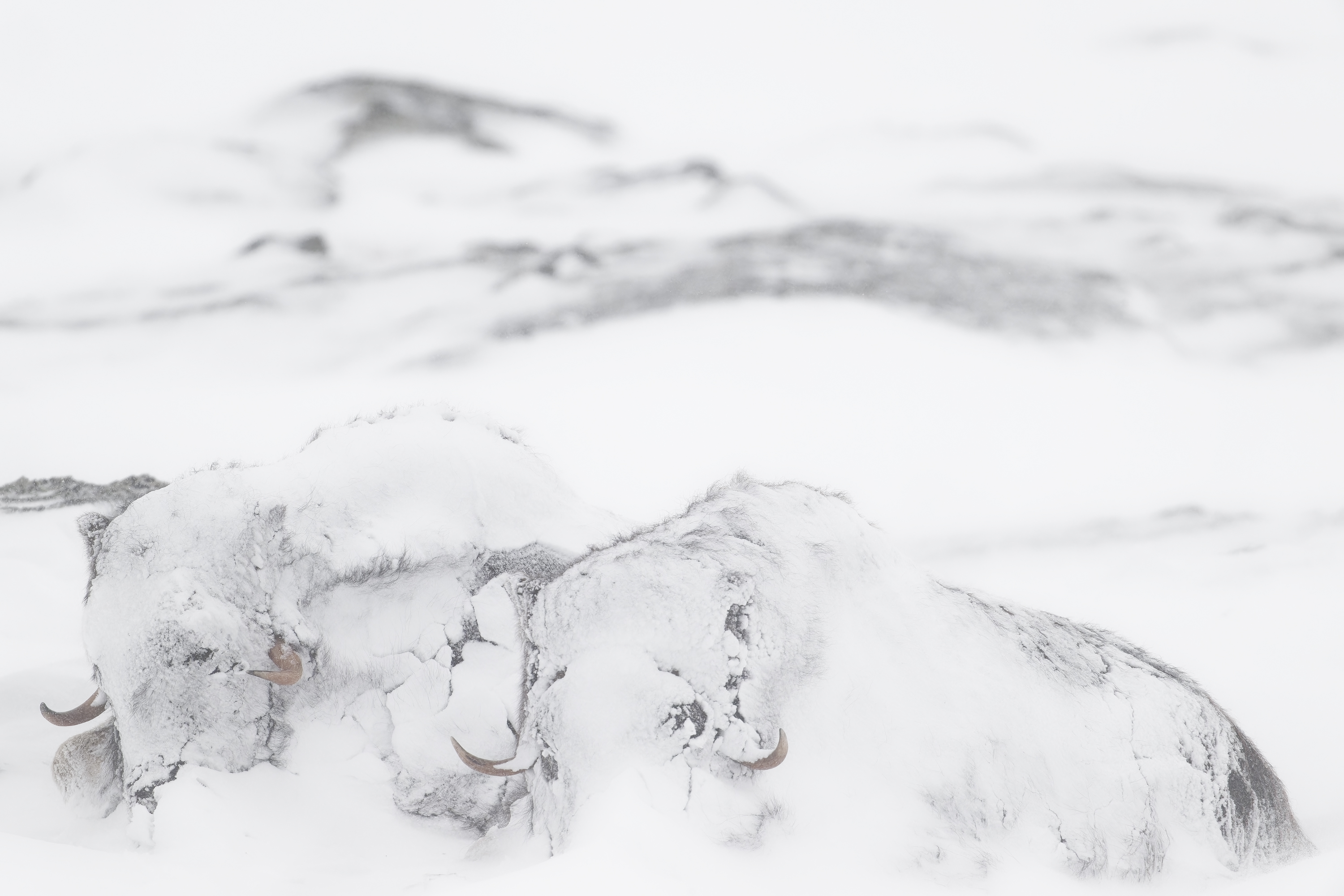
Series description
The musk ox has the exceptional ability to thrive in the most extreme winter weather conditions. It is this strong resilience to the cold that places this magnificent animal among the rare survivors of the last ice age. For several years, Pascal Beaudenon has been observing musk ox during the long winter months in the Dovrefjell-Suundalsfjella National Park in Norway, where it was reintroduced in the middle of the 20th century with specimens coming from Greenland. This series was taken on the plateau of the Høgsnita massif and shows the behaviour of musk ox during a harsh winter storm, as they attempt to save energy, preserve their body heat and protect themselves and their young calves – gathered at the centre of the group – from the strong wind. The musk ox is a critical link in the ecosystem in which it evolves: throughout our contemporary history, it has been a source of food for the Arctic territories indigenous populations who also used its fleece for warm clothing and tools. Today, climate change and global warming are a major concern for the musk ox, with temperature variations and rainy springs and summers causing multiple problems.
Biography
Before dedicating myself to wildlife photography, I worked as a photojournalist in Beirut (Lebanon) from 1989 to 2002 for Sipa Press agency.
In 2002, I decided to end my career as a photojournalist to turn to nature photography and, in 2005, published « The Other Lebanon ». This is when I became interested in wildlife.
I am currently deep in Norway observing the behavior of the emblematic musk ox.
My passion, emotion and commitment to wildlife have only grown throughout these years.
Untitled
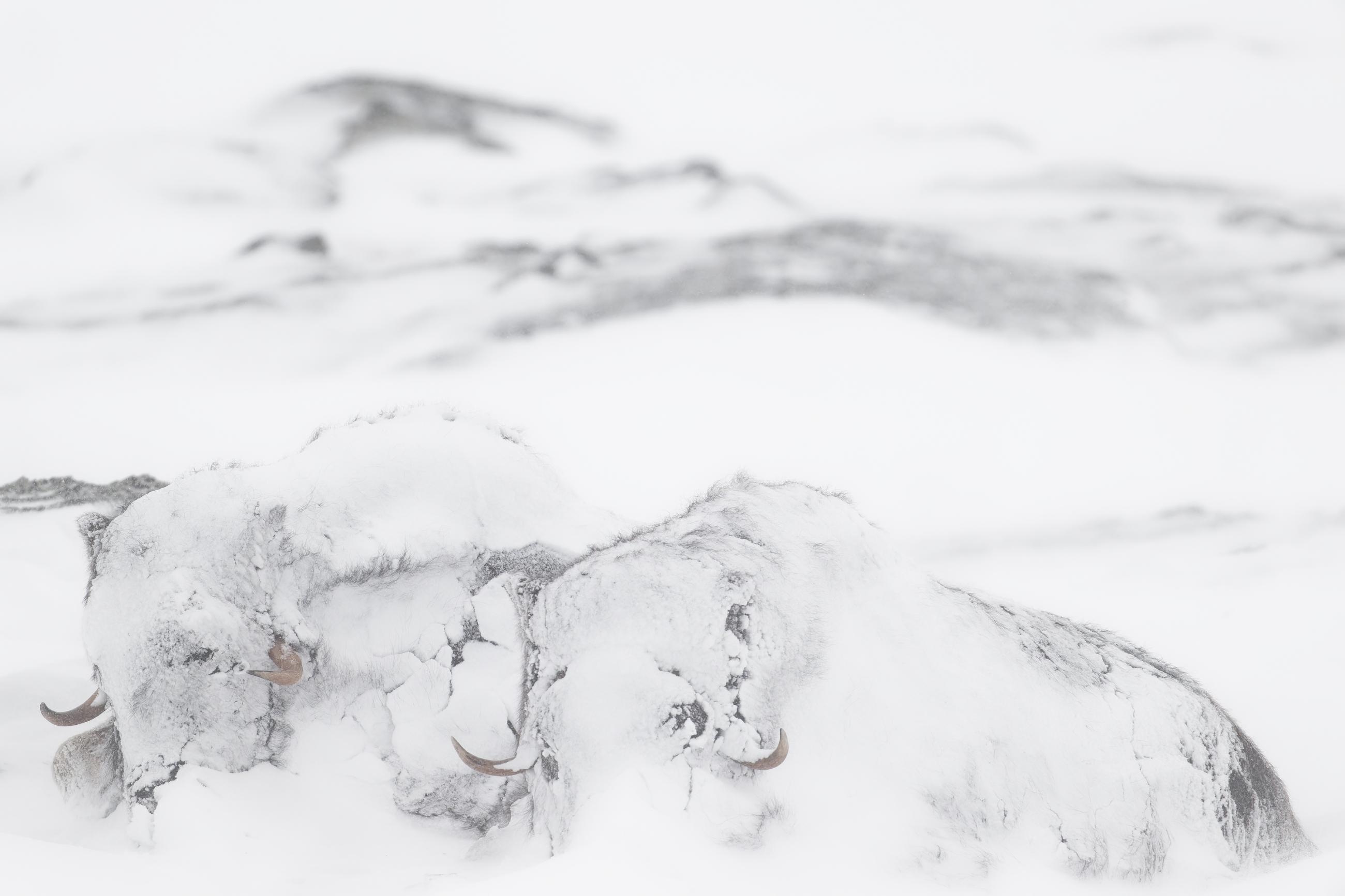
The photographer quietly approached this herd of musk ox at the first light of day. The low visibility worked in his favour, preventing them from seeing him intruding into their territory. Here, two adult females from the group are seen in the middle of a winter nap.
© Pascal Beaudenon, France, 2nd Place, Professional competition, Wildlife & Nature, 2025 Sony World Photography Awards
Untitled
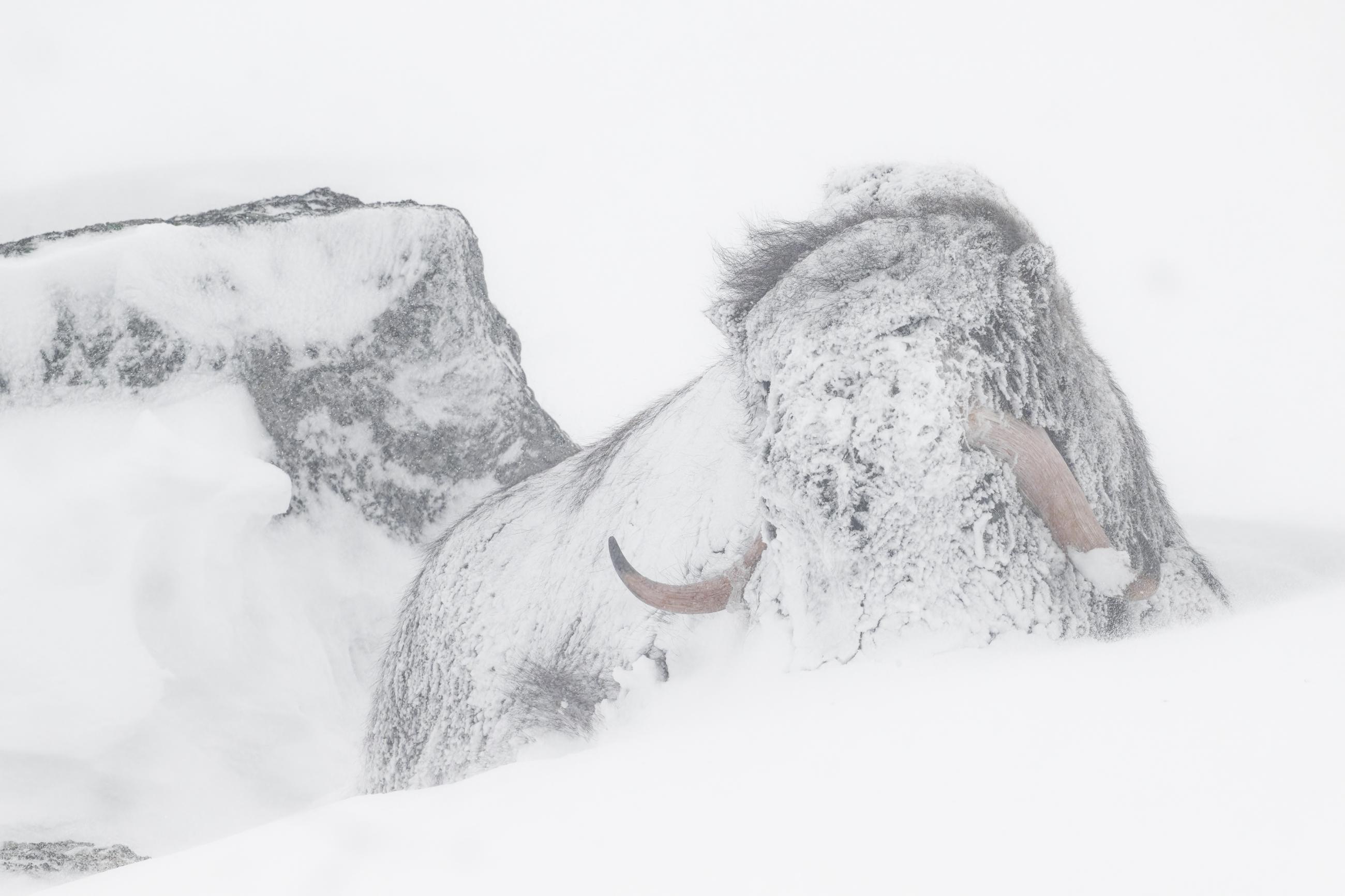
During a winter storm, Beaudenon protected himself as best he could behind large rocks, while keeping an eye on the group. This photograph shows an adult female musk ox.
© Pascal Beaudenon, France, 2nd Place, Professional competition, Wildlife & Nature, 2025 Sony World Photography Awards
Untitled
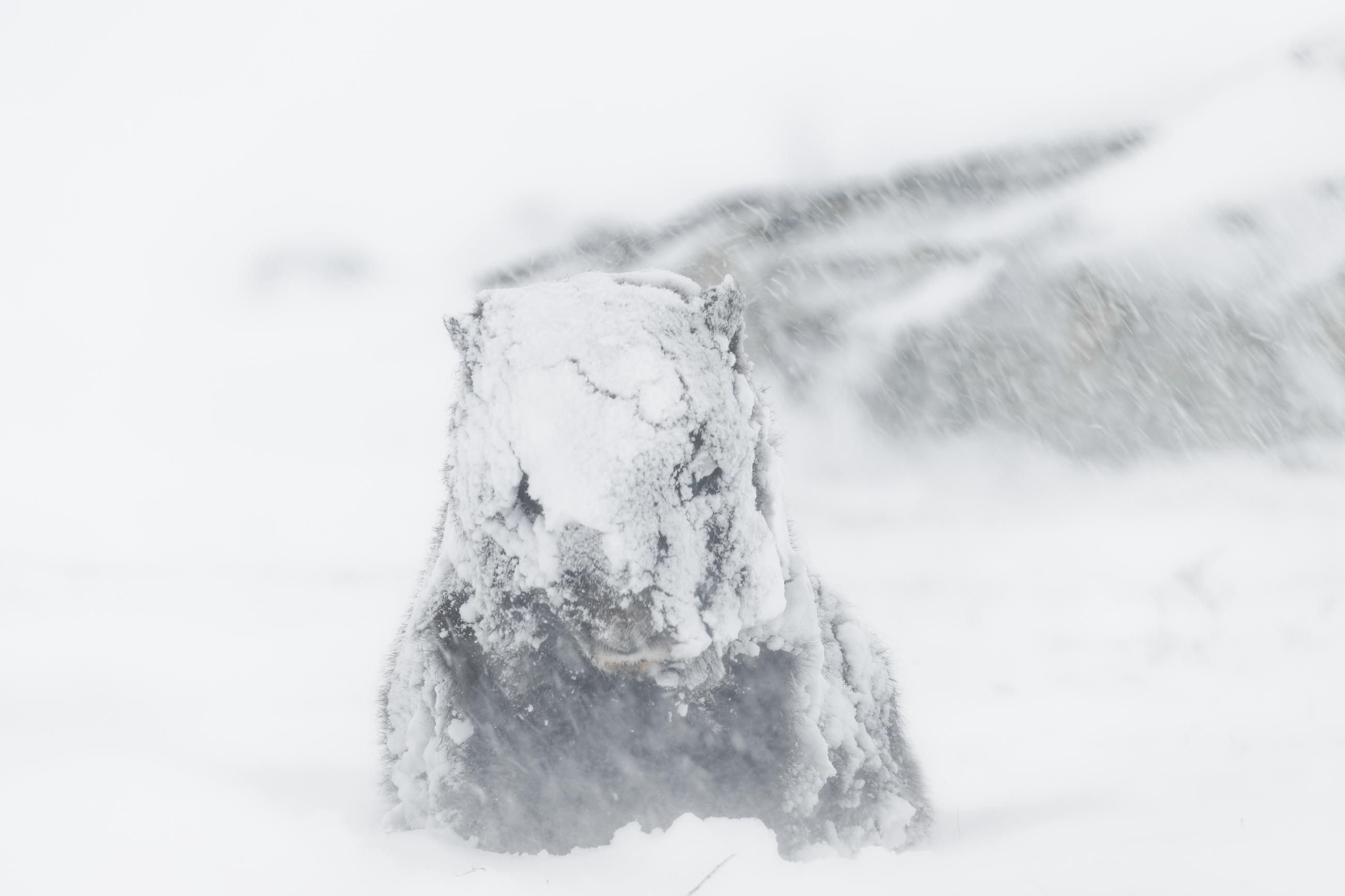
On this particular occasion, Beaudenon saw this juvenile on its own, away from the group. Although surprising, the wind was not blowing violently, so the adults were less worried. It also appeared that the youngster was unwell, and when an animal is sick it stays away from the herd. The survival of musk ox calves varies from year to year.
© Pascal Beaudenon, France, 2nd Place, Professional competition, Wildlife & Nature, 2025 Sony World Photography Awards
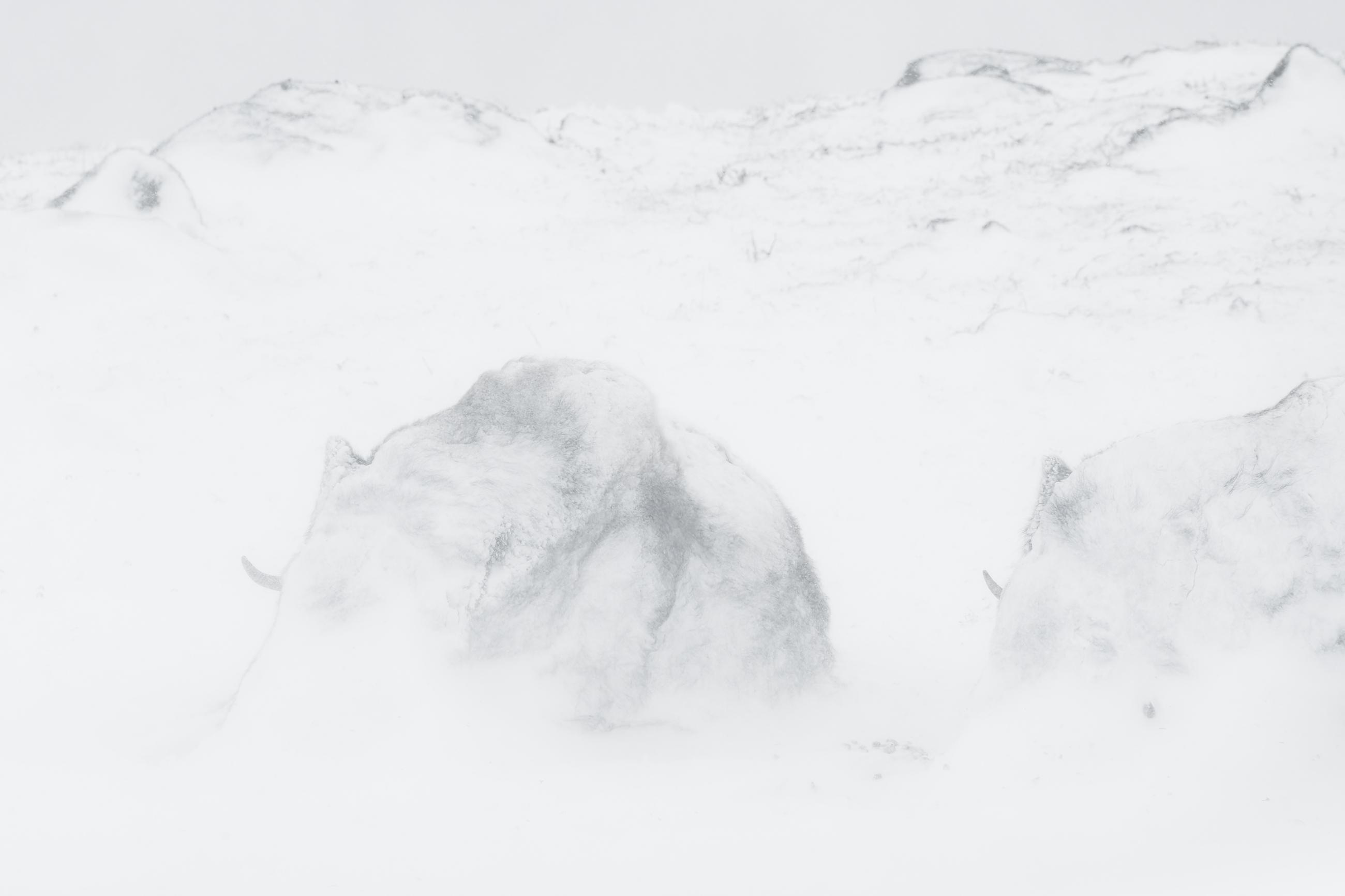
Untitled
After several hours spent grazing on lichens and sedge roots, musk ox will not hesitate to lie down and let the worst of the storm pass. Their apparent relaxation is surprising, a natural world in total synergy. Here, two young musk ox, old enough to withstand bad weather, had moved away from the group.
© Pascal Beaudenon, France, 2nd Place, Professional competition, Wildlife & Nature, 2025 Sony World Photography Awards
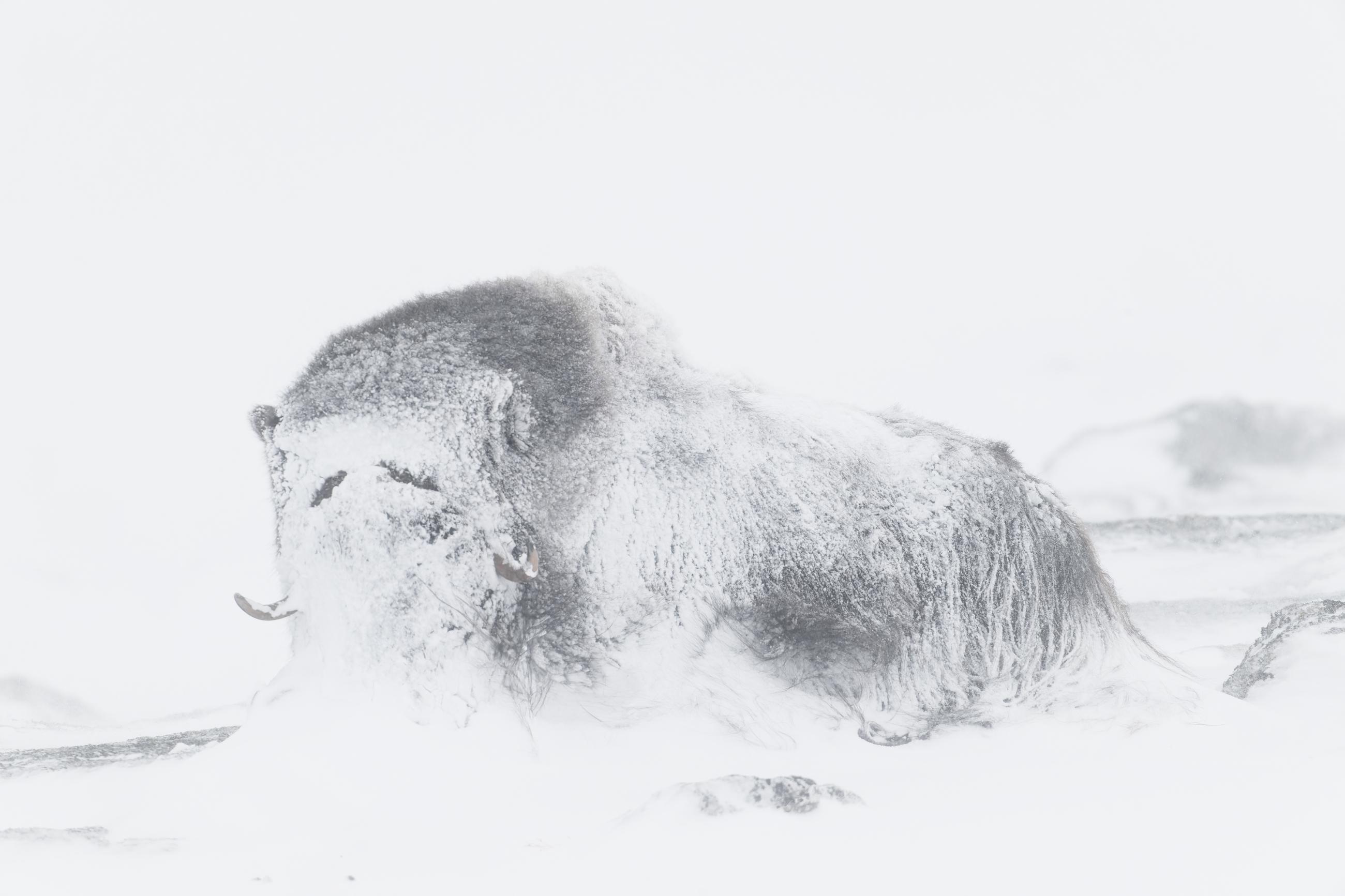
Untitled
Musk ox are in their element in the heart of the sub-arctic winter, appearing quite relaxed in the freezing conditions. In this photograph, an adult female rests serenely as the storm rages around her.
© Pascal Beaudenon, France, 2nd Place, Professional competition, Wildlife & Nature, 2025 Sony World Photography Awards
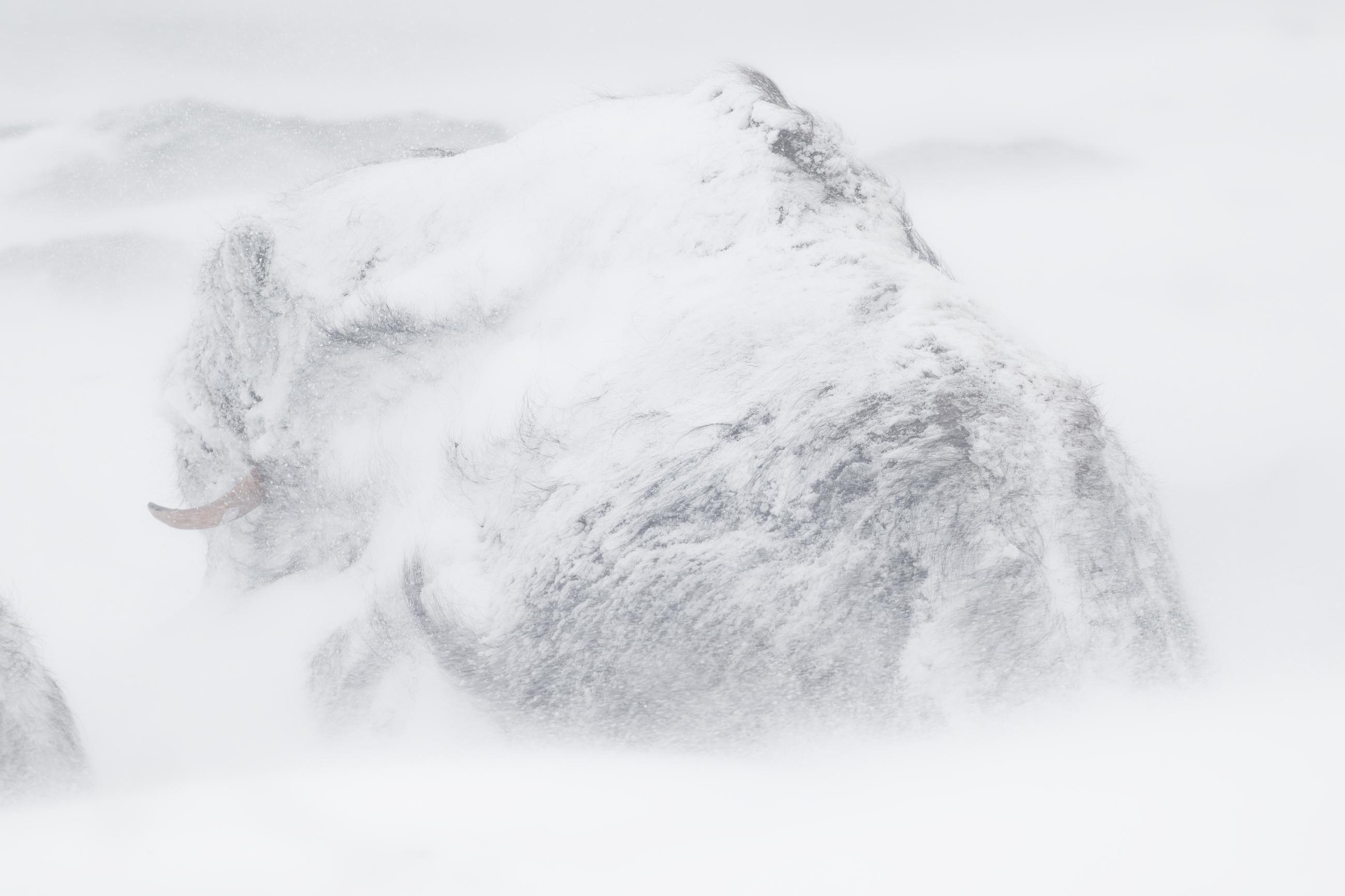
Untitled
An adult female turns her back to the wind, to better protect herself from a winter storm in Norway’s Dovrefjell-Sunndalsfjella National Park.
© Pascal Beaudenon, France, 2nd Place, Professional competition, Wildlife & Nature, 2025 Sony World Photography Awards
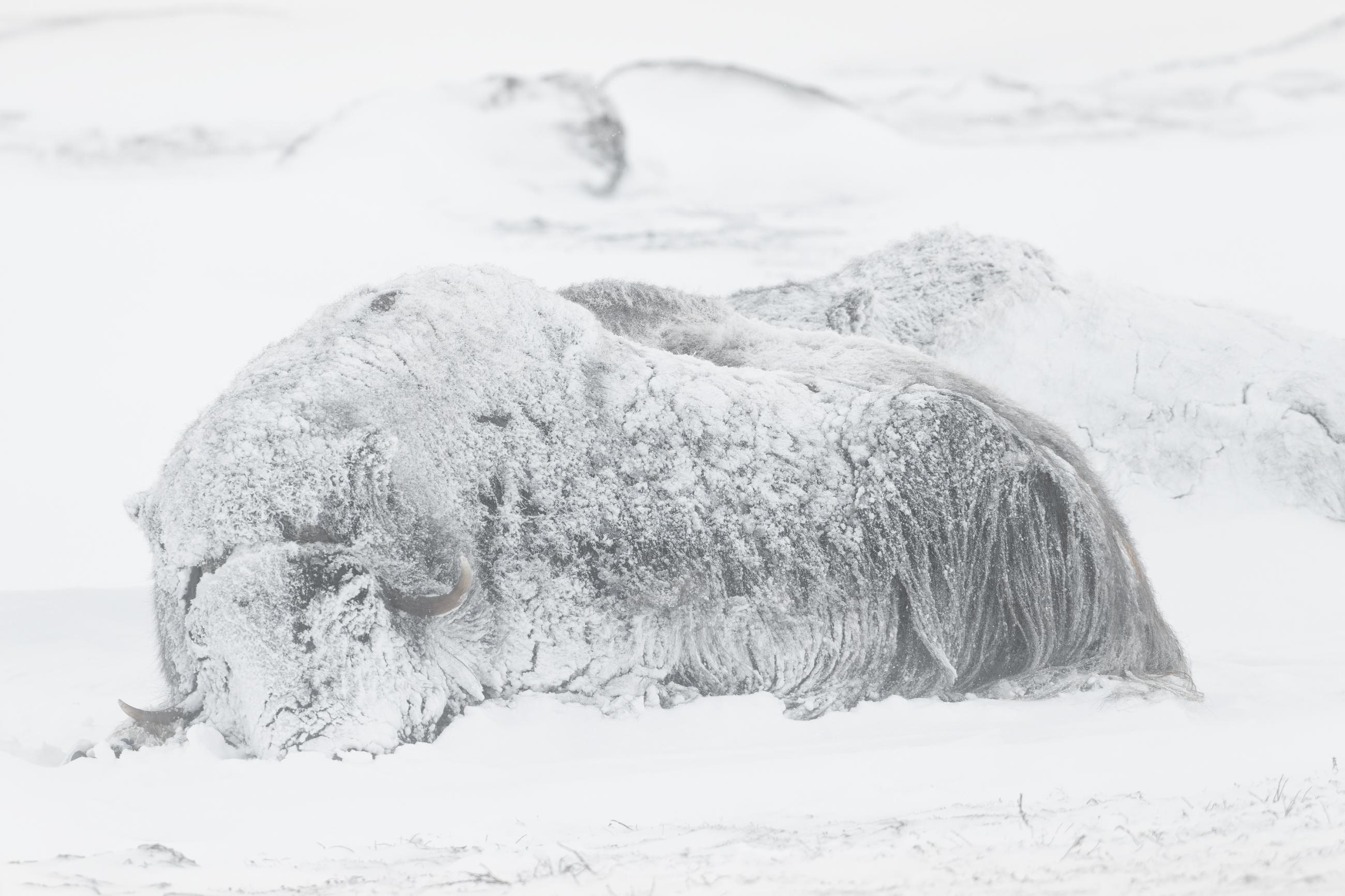
Untitled
Despite the wind-driven snow stinging his face, Beaudenon managed to photograph this adult female musk ox.
© Pascal Beaudenon, France, 2nd Place, Professional competition, Wildlife & Nature, 2025 Sony World Photography Awards
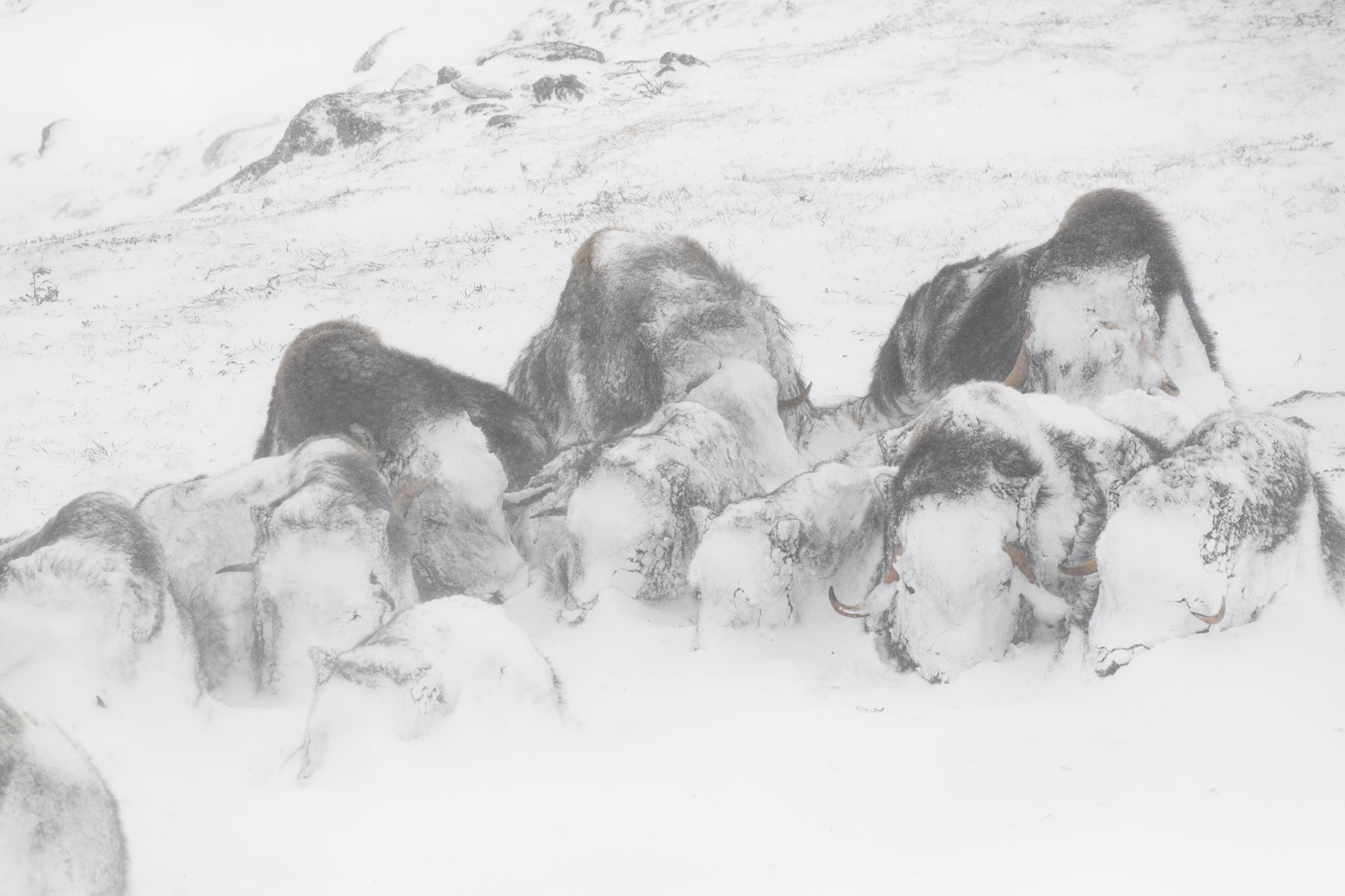
Untitled
This group of adult females positioned itself at the back of the herd to protect the youngest calves grouped together – seen in the centre – from the freezing wind.
© Pascal Beaudenon, France, 2nd Place, Professional competition, Wildlife & Nature, 2025 Sony World Photography Awards