

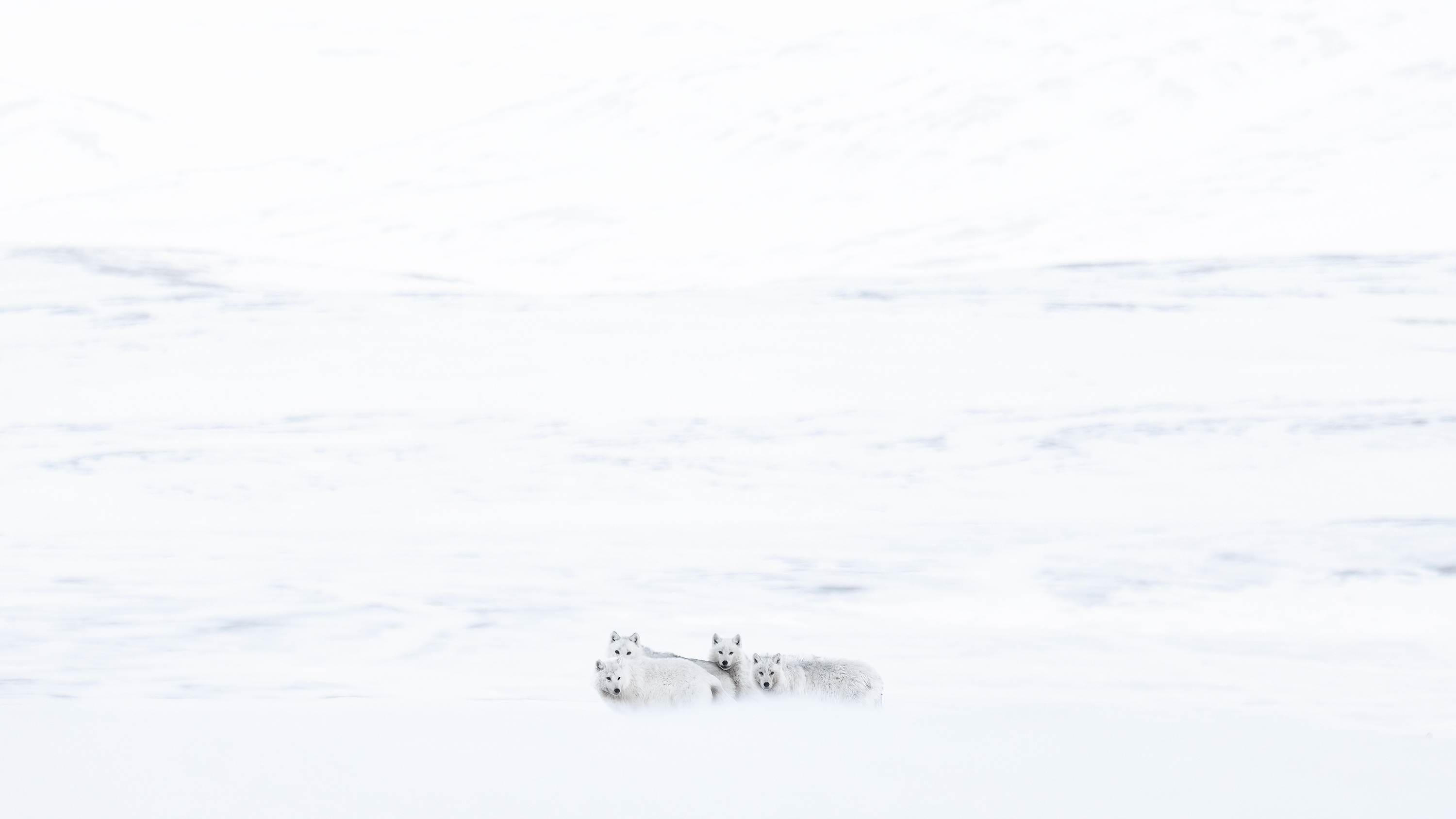
Series description
Arctic wolves are extremely difficult to see in the wild. They are found on a few very remote islands of the high Canadian Arctic, and possibly on northern Greenland, with an estimated 200 wolves living on the Canadian island of Ellesmere. The lucky few who have observed Arctic wolves in the remote northern parts of Ellesmere Island have noted how playful and unafraid of humans they are. Unlike other wolves, which have to deal with human encroachment, Arctic wolves have no intrinsic distrust of people, as they have never been hunted or persecuted. Yet as playful as they are, these wolves are still wild, as Amit Eshel discovered when the pack he was photographing came across a herd of musk ox, providing him with an unfiltered version of nature in its wildest form.
Biography
Growing up in a small and quiet place, wildlife has always been a main source of interest and curiosity since my early childhood.
Nature was my playground, spending days looking for wildlife in the fields and forests next to my home, scribbling animals in my notebooks and day dreaming about encounters in the wild with them while sitting in the classroom.
After graduation I decided to try and combine my two biggest passions - animals and art, into a professional career.
Ghosts of the Arctic
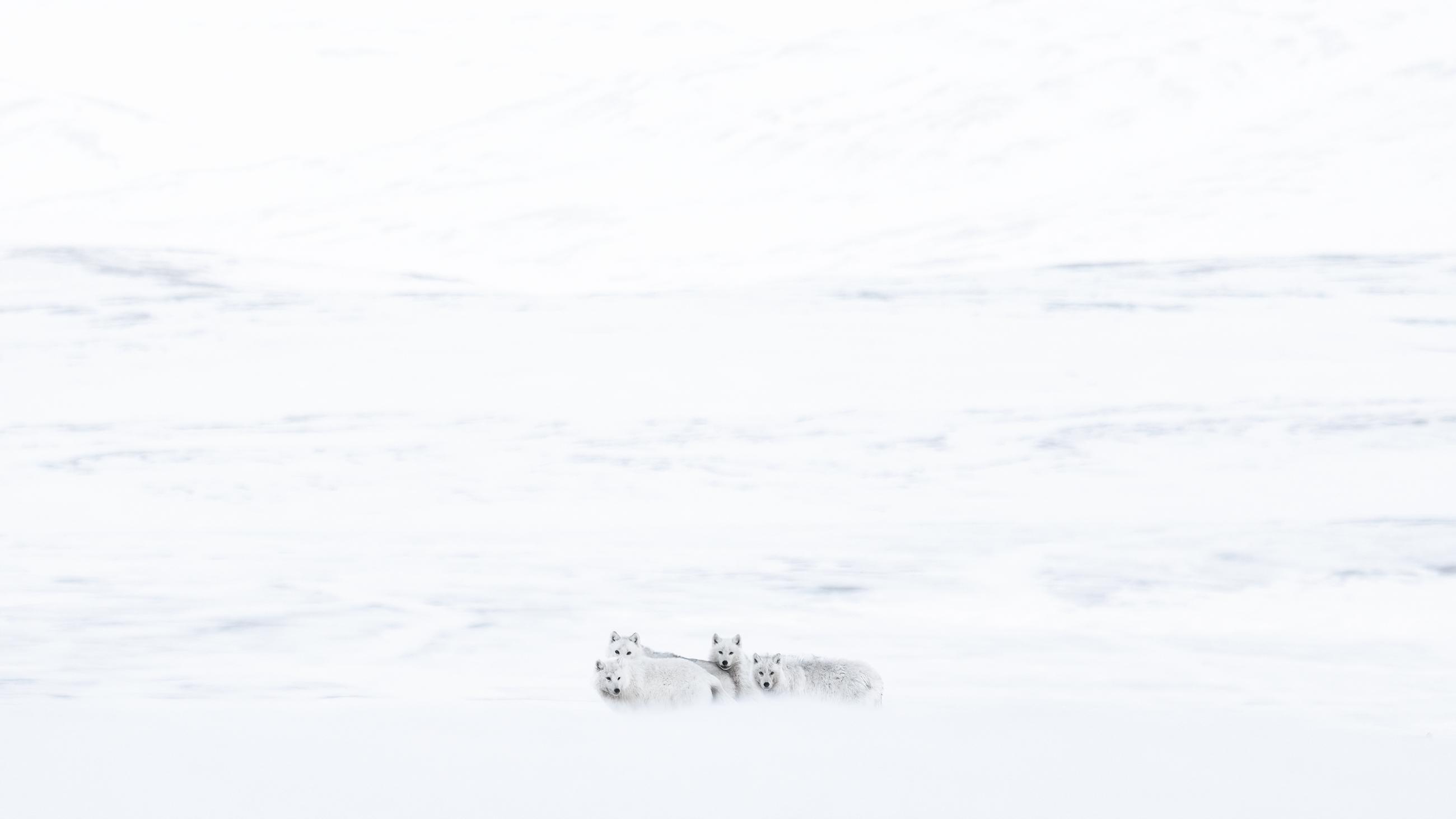
Arctic wolves bonding under the beautiful soft Arctic light. This moment was captured just after the sun set behind the horizon for the last time during spring. From the following day the sun stayed above the horizon 24 hours a day until late summer.
© Amit Eshel, Israel, Shortlist, Professional competition, Wildlife & Nature, 2025 Sony World Photography Awards
Territory Patrol
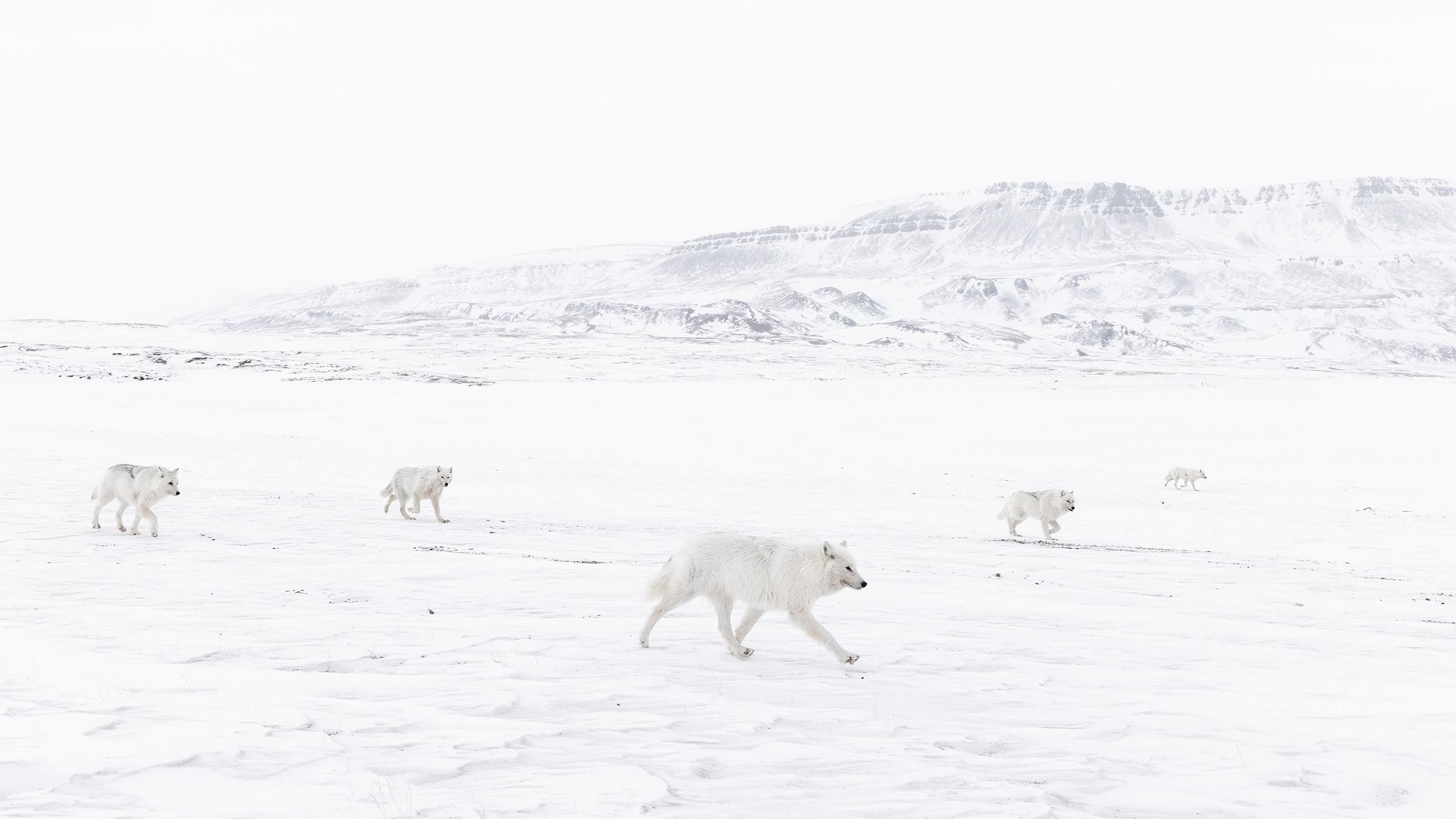
Arctic wolves roam constantly in search of food, and it’s not unusual for them to travel 50 km or more in a day on Ellesmere Island. Eshel’s group had been following this pack for hours across the frozen landscape, when its demeanour suddenly changed. The pack’s pace increased and it spread across the frozen tundra, led by the alpha pair. Eshel rode alongside them on the back seat of a snowmobile, capturing this image using a wideangle lens while they were on the move. A couple of minutes later it became clear that they found what they were looking for – a herd of musk ox.
© Amit Eshel, Israel, Shortlist, Professional competition, Wildlife & Nature, 2025 Sony World Photography Awards
Trust
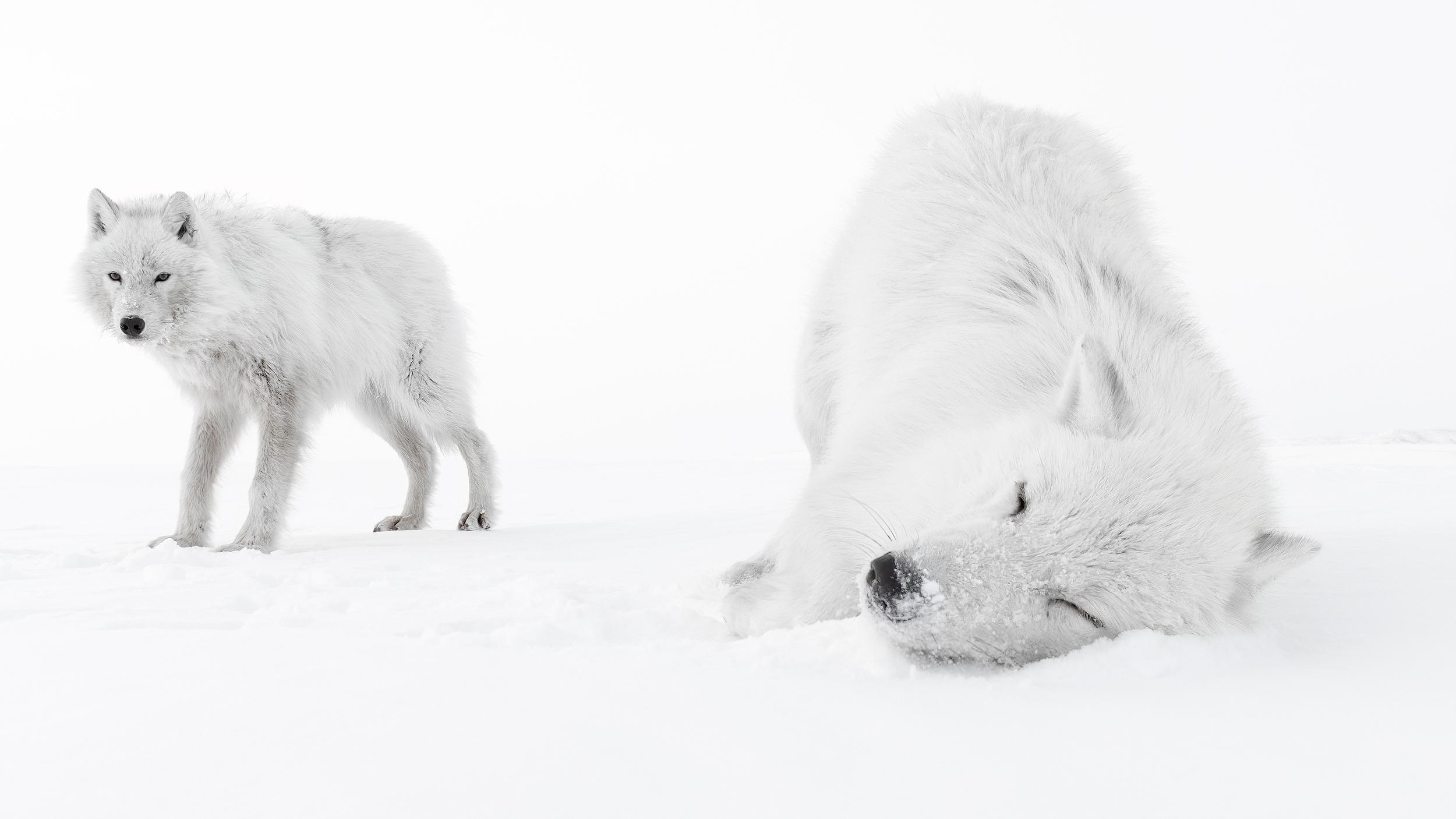
This young female wolf was the most curious and confident of the pack and approached the photographer very closely. To his surprise and delight she started ‘play bowing’, a canine behaviour where a wolf lowers the front part of its torso while keeping the hind part upright; this behaviour is used to invite chase and play from another wolf. She seemed to be so comfortable in the photographer’s presence that she was inviting him to play with her, as if she were a dog.
© Amit Eshel, Israel, Shortlist, Professional competition, Wildlife & Nature, 2025 Sony World Photography Awards
Ancient rivals
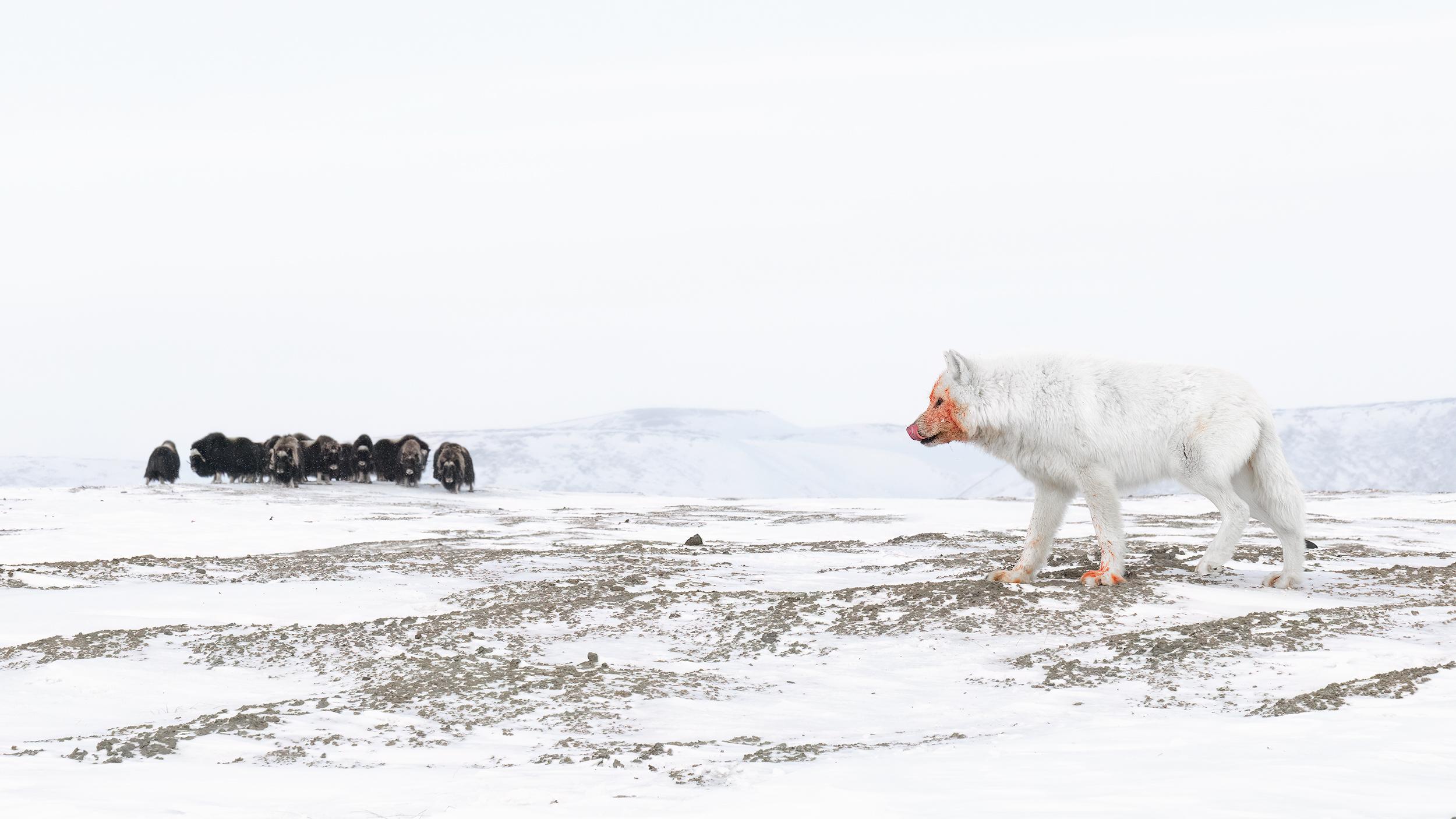
The face of this Arctic wolf bears witness to events that happened just a few moments earlier. In the distance, a musk ox herd is standing in a protective circle around its young calves with the adults’ formidable horns facing outwards, towards its attackers. While this is often an effective defence against predators, the wolf pack still managed to chase down the herd and, during the panic that ensued, to snatch a couple of young calves that were lagging behind.
It wasn’t a meal that could feed the entire pack for long, but they decided against trying to break the formidable musk ox defence formation.
© Amit Eshel, Israel, Shortlist, Professional competition, Wildlife & Nature, 2025 Sony World Photography Awards
Struggle for share
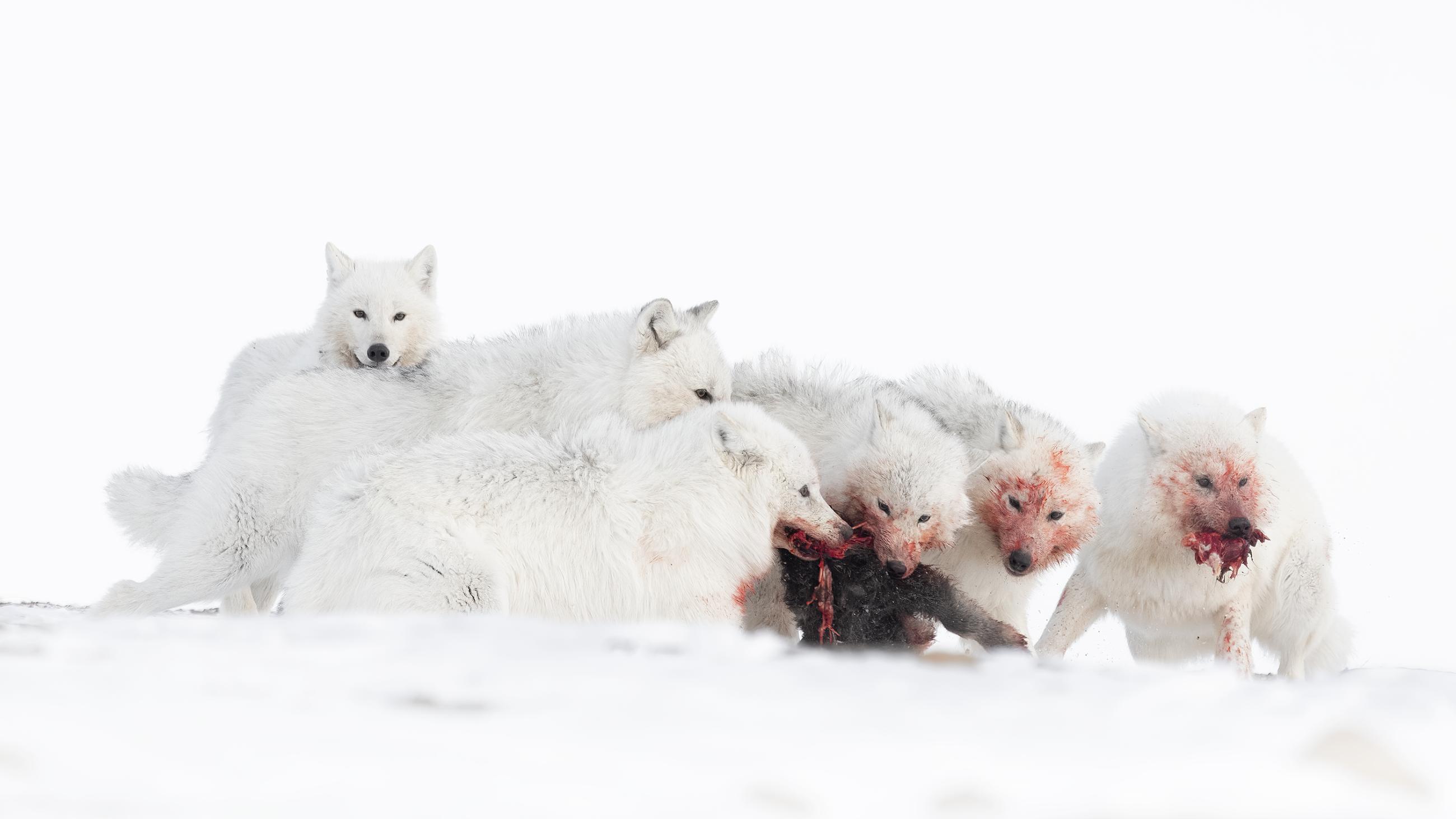
It was not an easy scene to watch as the wolves tore a musk ox calf to pieces while it was still alive.
Concentrating on photography served as a buffer between Eshel and this unfiltered version of nature in its wildest form.
The wolves' fight for scraps is determined by the pack's hierarchy; the leaders eat first while those of a lower rank sometimes get nothing.
© Amit Eshel, Israel, Shortlist, Professional competition, Wildlife & Nature, 2025 Sony World Photography Awards
Red Makeup
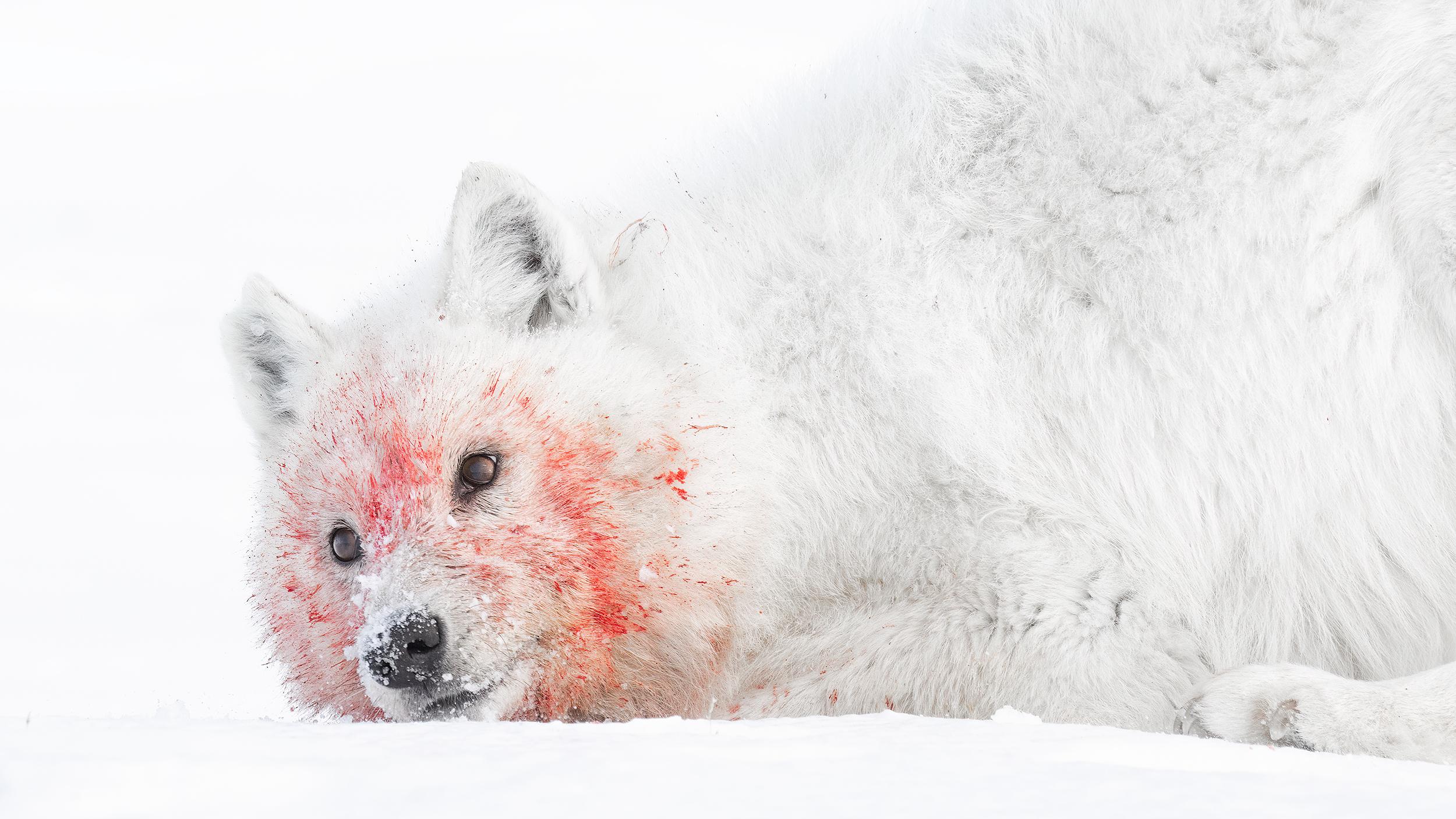
An Arctic wolf photographed minutes after his pack finished devouring three newborn musk ox calves. He looked at the photographer with the most innocent and intelligent expression, in stark contrast to the blood that covered his face and the ferocity of his actions just a few moments earlier.
© Amit Eshel, Israel, Shortlist, Professional competition, Wildlife & Nature, 2025 Sony World Photography Awards