

Back to Documentary Projects
Documentary Projects Shortlist
The Iraqi Crisis on Captagon and Synthetic Drugs
Alfredo Bosco
Series description
Drug trafficking within and through Iraq has escalated in recent years. Drug sales and distribution have predominantly occurred in impoverished areas of the main cities and the southern regions, prompting stringent measures by the Iraqi authorities to curtail their proliferation. This emergency is caused primarily by the traffic of two synthetic drugs: captagon and crystal meth. The first is produced in Syria, and the country now makes billions of dollars from the production and trafficking of captagon, while Iraqi authorities claim that crystal meth is coming from laboratories in Iran. According to the UN Office on Drugs and Crime (UNODC) in 2024 14,000 drug suspects were arrested across the country; meth seizures increased almost sixfold between 2019 and 2023; and captagon seizures reportedly tripled between 2022 and 2023.
Biography
Alfredo Bosco, a Tuscan born freelance photographer living in Milan is a graduate of the John Kaverdash School of Photography, founder of Ronin, a platform which branches out into personal and collective projects.
He has covered stories in Italy, Ukraine, the Middle East, Haiti and Central Asia.
Social issues, geopolitical crises and criminality are the main focus of his work.
Untitled
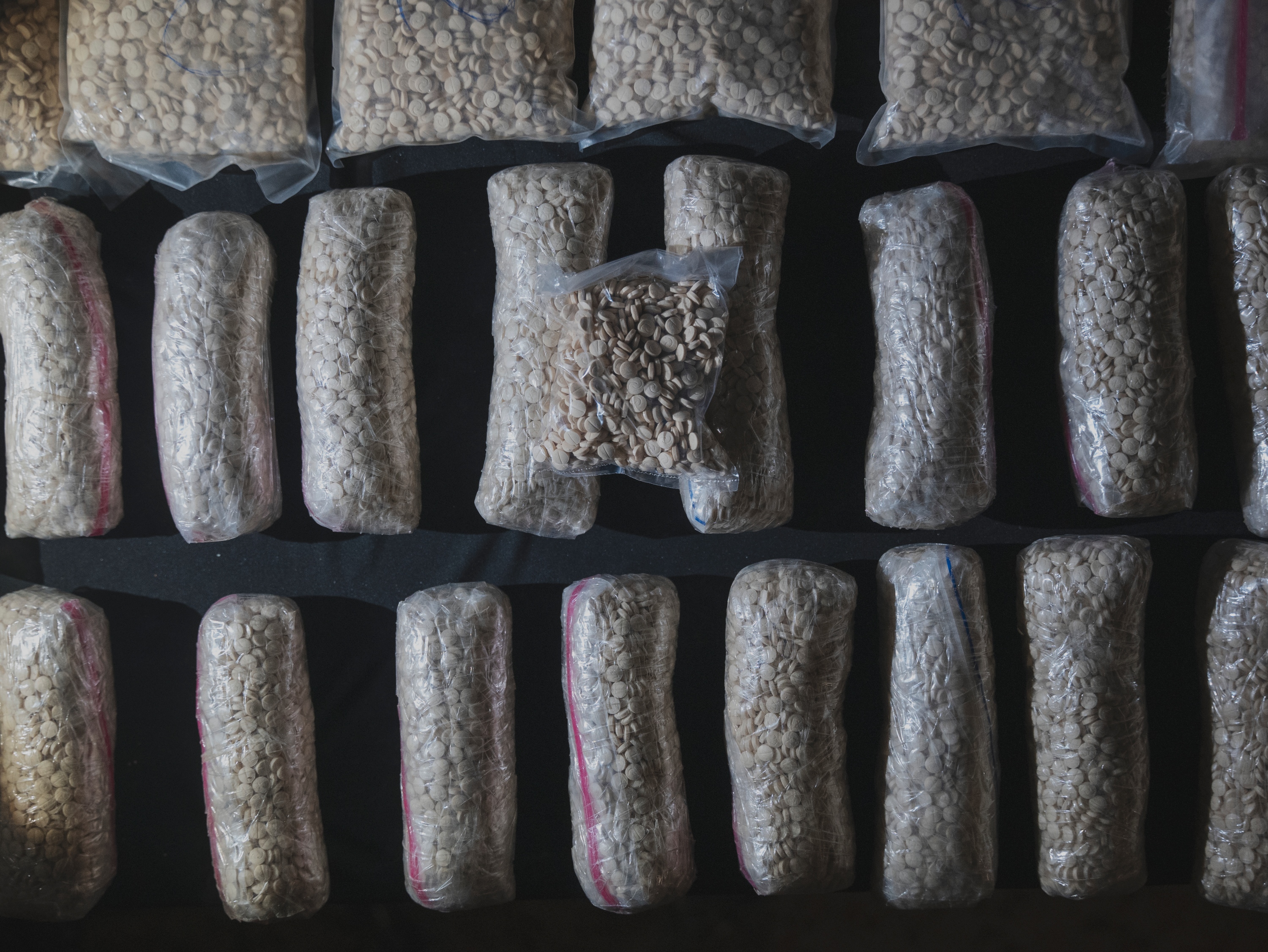
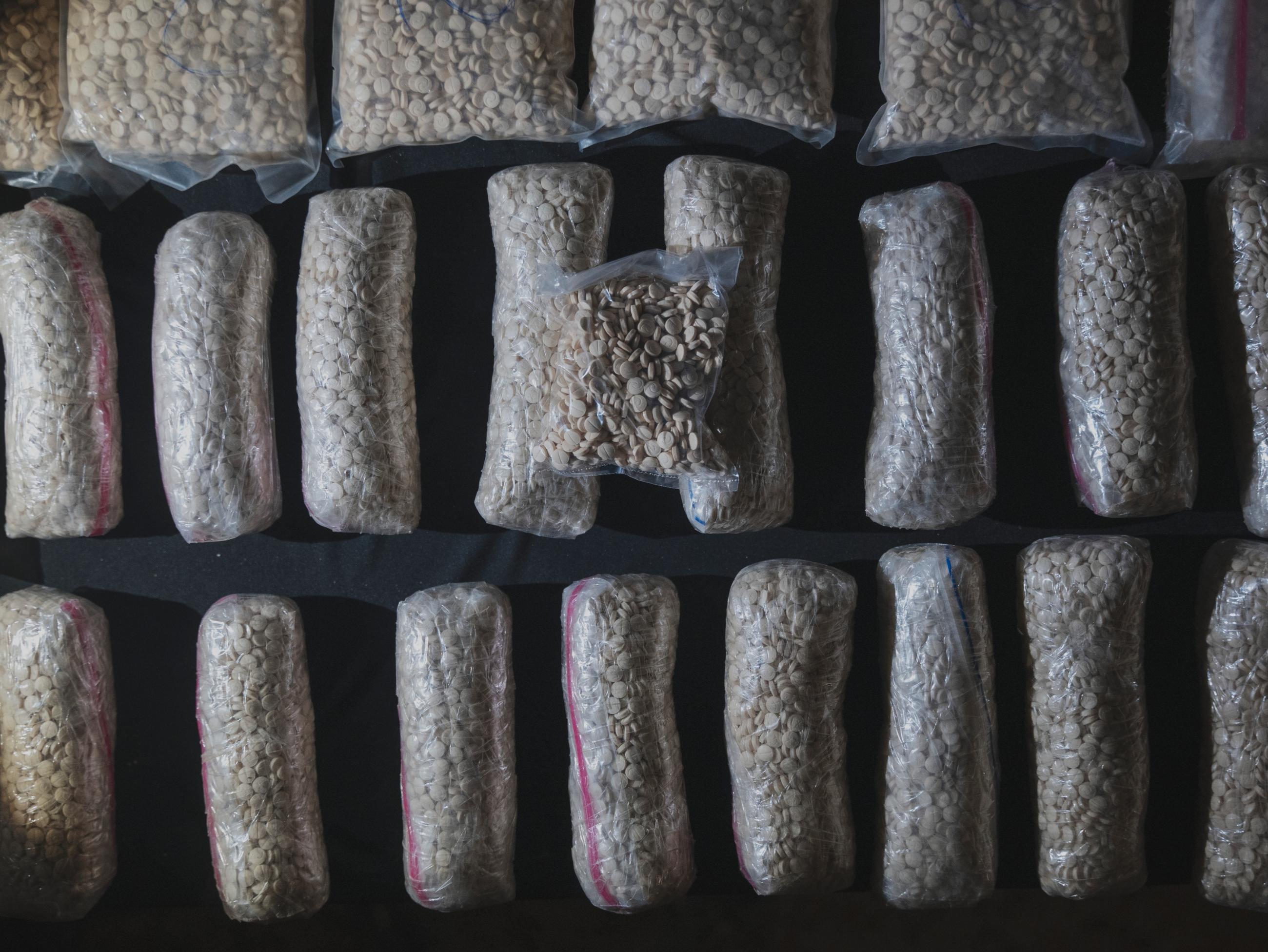
Seven days prior to this photograph being taken, the YPG police in Syria had seized 100,409 captagon pills (weighing 18kg) hidden inside a truck. In Syria, the value of a single pill is 0.50 US dollars. The main work of the YPG police department is patrolling the cities and using information provided by citizens who can tell them where captagon can be found. Some civilians ask for money for their assistance.
Al Hasakah, Syria.
© Alfredo Bosco, Italy, Shortlist, Professional competition, Documentary Projects, 2025 Sony World Photography Awards
Untitled
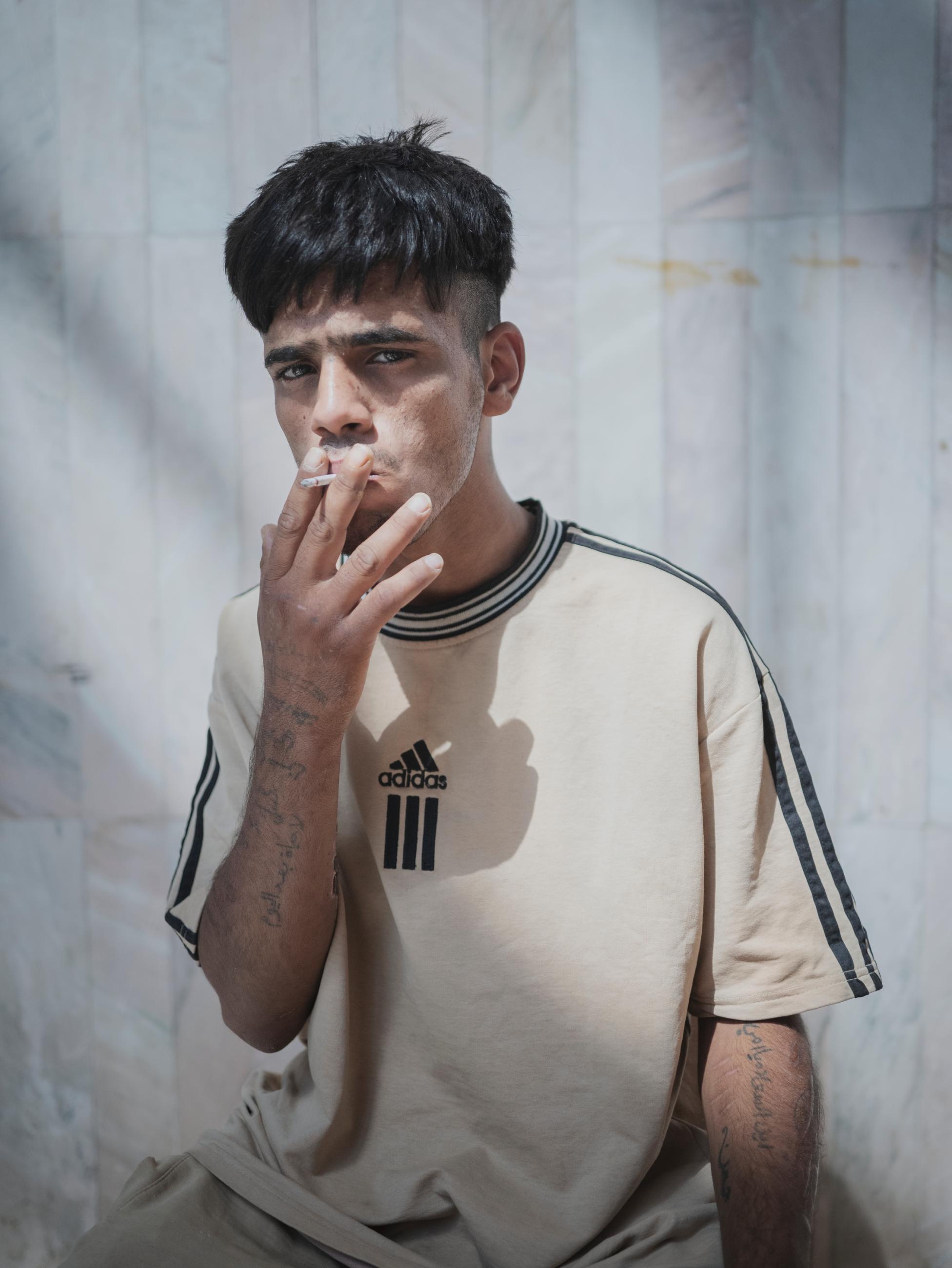
Hasuin (25) is from Karbala. He started therapy at Al-Ataa hospital, having been in prison for two years, where he had started to smoke crystal meth. Hasuin was forced to enter rehab, even though he doesn’t think it is necessary for him. His body is covered with scars made by him because of his dependency on meth.
Al Hasakah, Syria.
© Alfredo Bosco, Italy, Shortlist, Professional competition, Documentary Projects, 2025 Sony World Photography Awards
Untitled
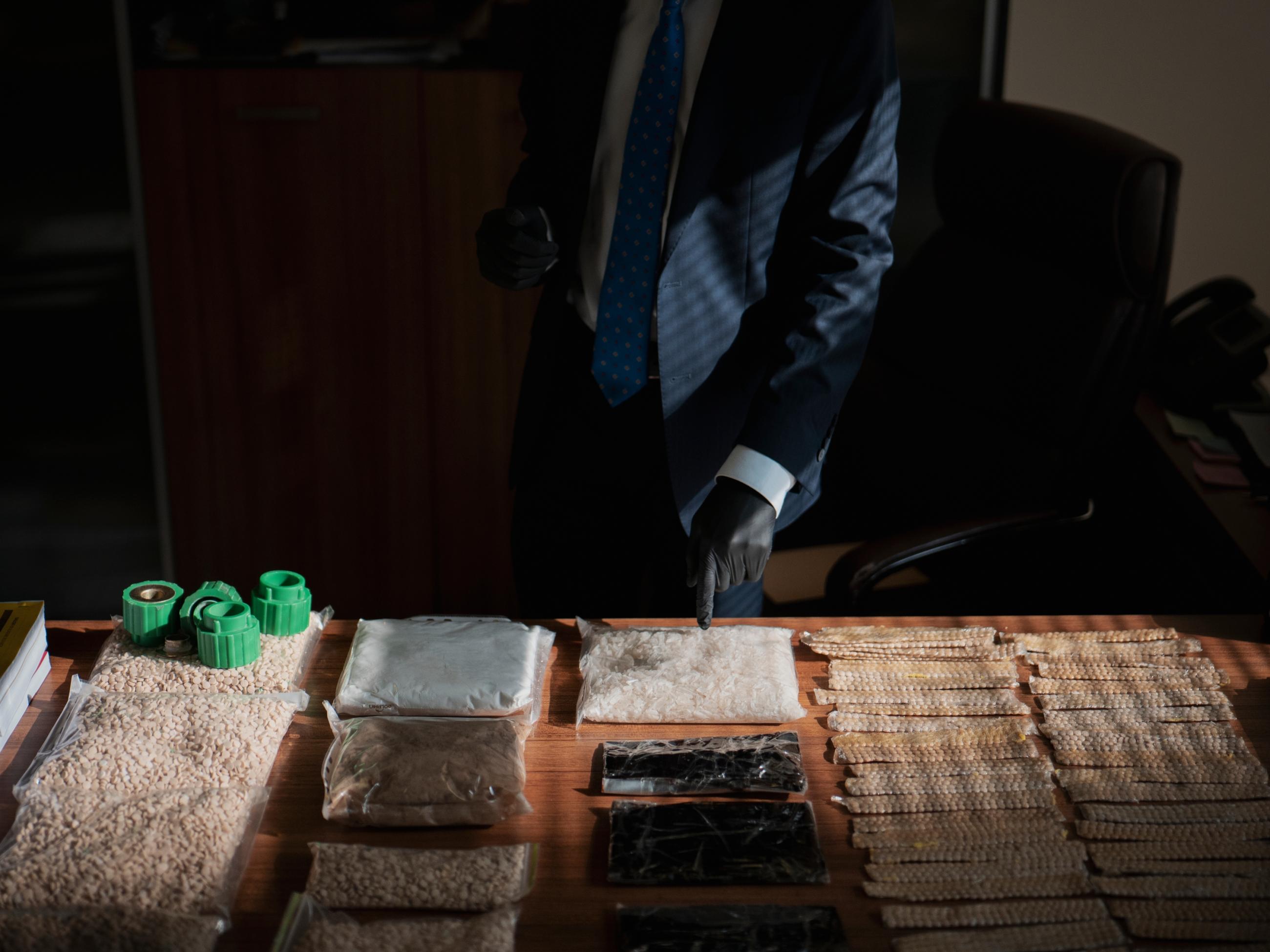
Drugs seized in Kurdistan territory. Besides captagon, the drug trade in northern Iraq is varied: cocaine, heroin and crystal meth. In recent years, Kurdistan has become a major crossroads for narco-trafficking in the Middle East.
Erbil, Iraq.
© Alfredo Bosco, Italy, Shortlist, Professional competition, Documentary Projects, 2025 Sony World Photography Awards
Untitled
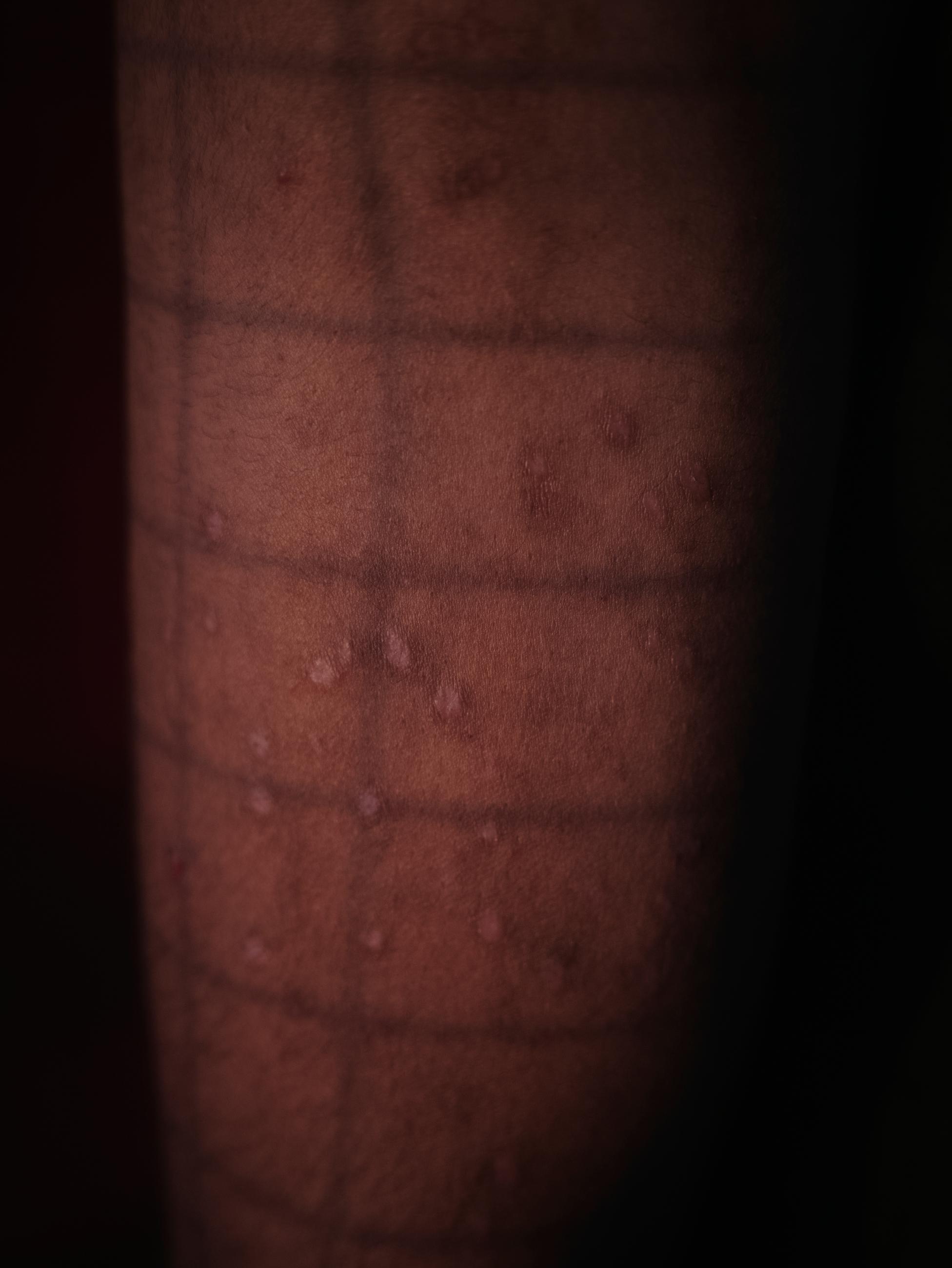
The arm of a patient in the rehab centre at Al-Ataa hospital. The consumption of crystal meth has visible consequences on the body of users. One of the most obvious is sores that are caused by meth users picking or scratching at their skin, usually on their face and arms.
Baghdad, Iraq.
© Alfredo Bosco, Italy, Shortlist, Professional competition, Documentary Projects, 2025 Sony World Photography Awards
Untitled
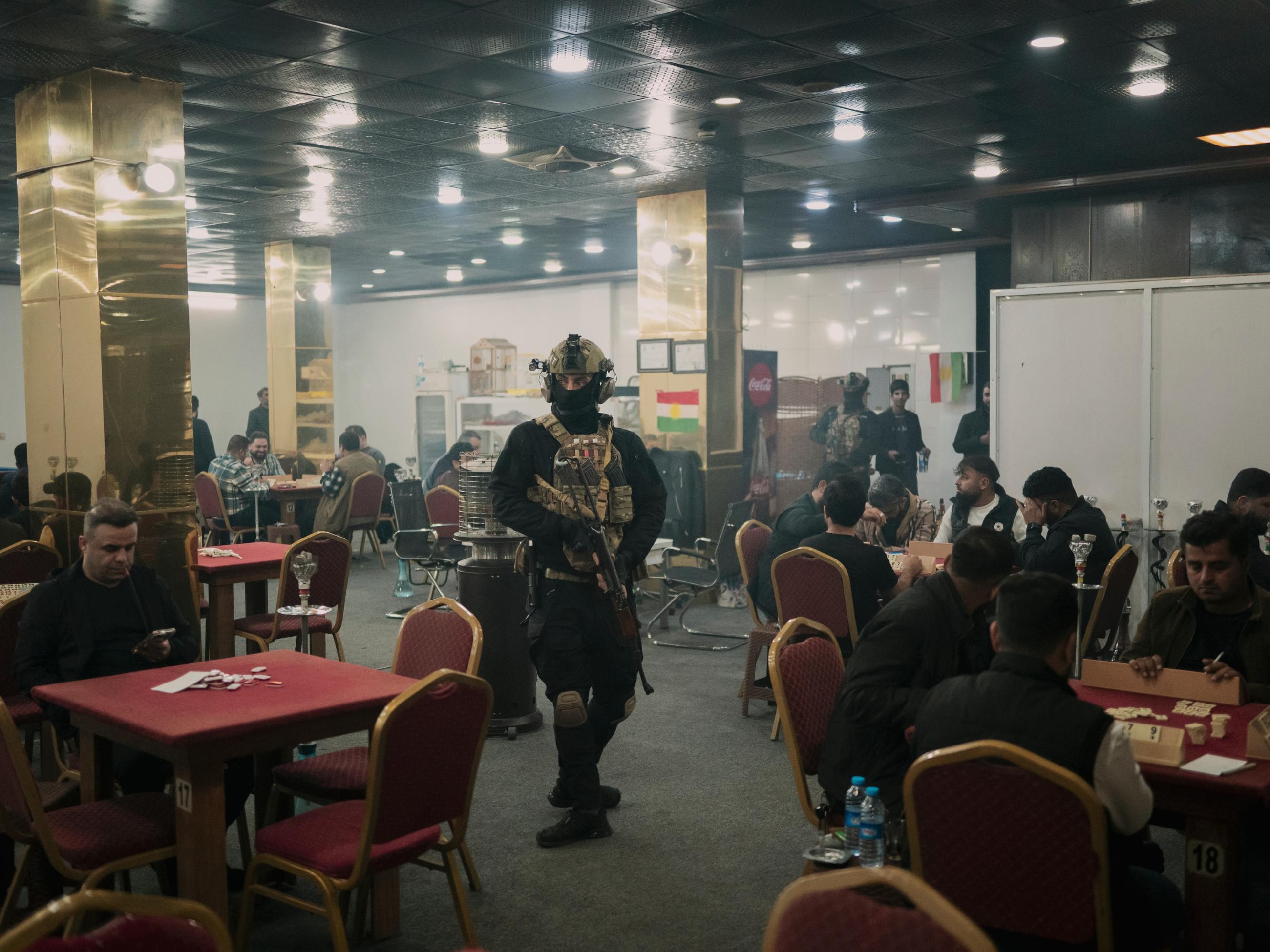
A Kurdistan anti-drug operations team on patrol in the city of Erbil. Per a UNODC report, ‘Iraq appears to be at the nexus of regional trafficking routes for both methamphetamine and “captagon,”and becoming a critical juncture in the complex trafficking dynamics observed in the Near and Middle East region.’ The region’s anti-narcotics forces successfully confiscated more than 10 million captagon tablets in a 12-month period.
Erbil, Iraq.
© Alfredo Bosco, Italy, Shortlist, Professional competition, Documentary Projects, 2025 Sony World Photography Awards
Untitled
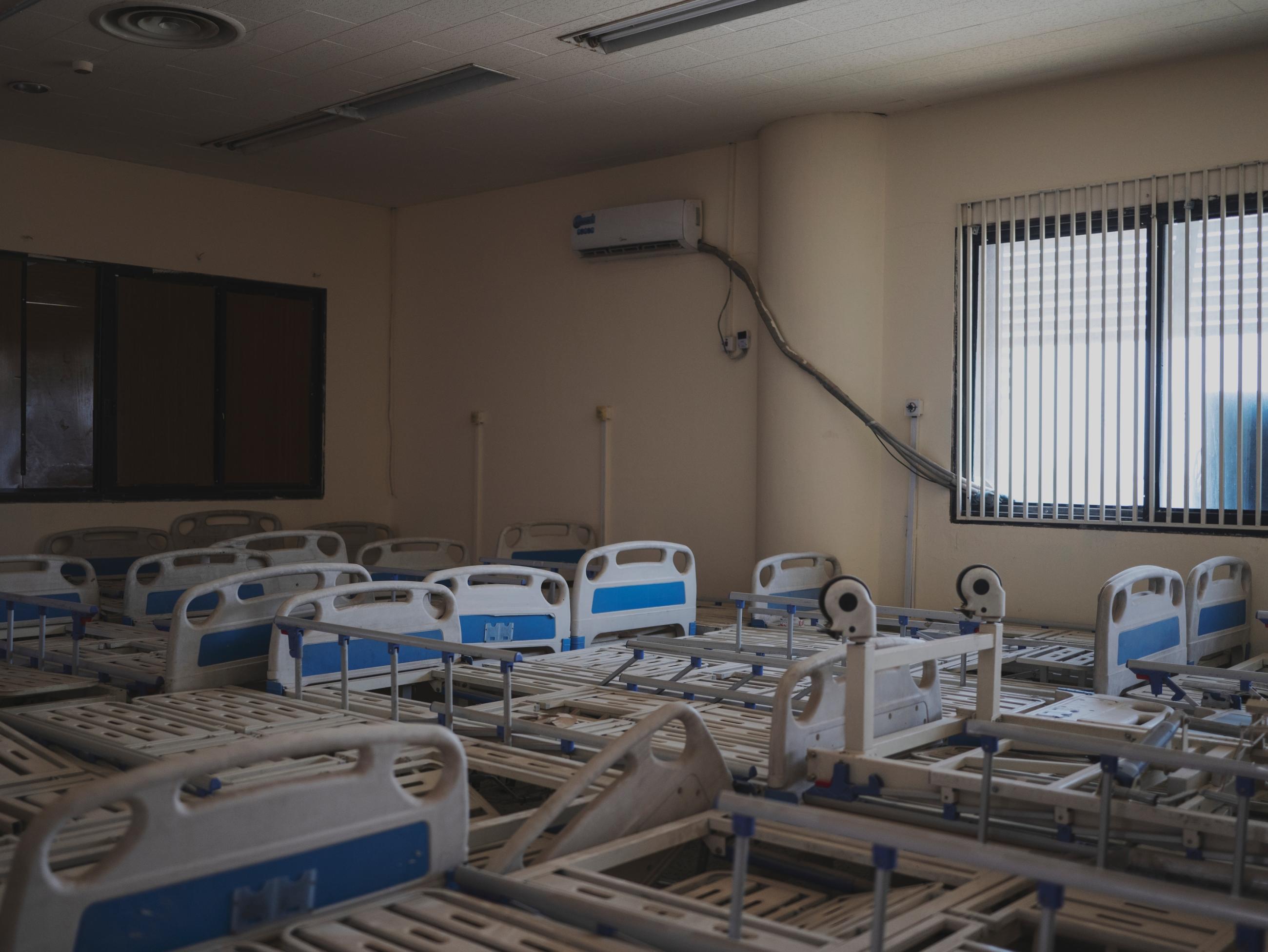
Al-Ataa rehab hospital in Sadr City. The hospital is managed by the Shi'ite militia of Saraya al Salam, led by Moqtada al-Sadr. A former Covid centre, the rehab centre only has one floor for patients, but the plan is to open another two floors so the hospital can accommodate up to 220 patients.
Baghdad, Iraq.
© Alfredo Bosco, Italy, Shortlist, Professional competition, Documentary Projects, 2025 Sony World Photography Awards
Untitled
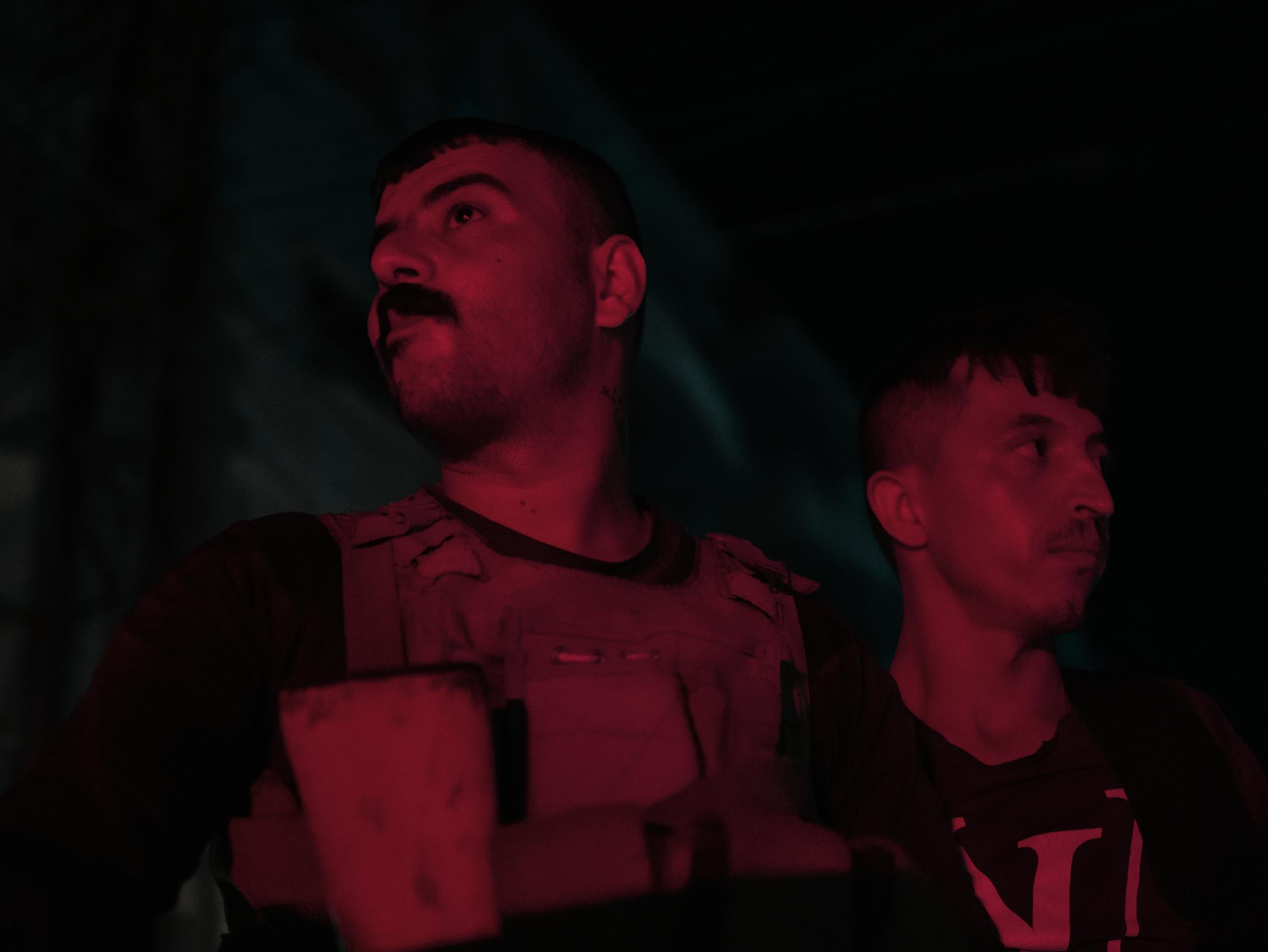
The YPG police department in Qamishli on night patrol. Due to increased drug trafficking, the police forces search and investigate day and night to find dealers and traffickers. These operations are coordinated with special YPG forces.
Qamishli, Syria.
© Alfredo Bosco, Italy, Shortlist, Professional competition, Documentary Projects, 2025 Sony World Photography Awards
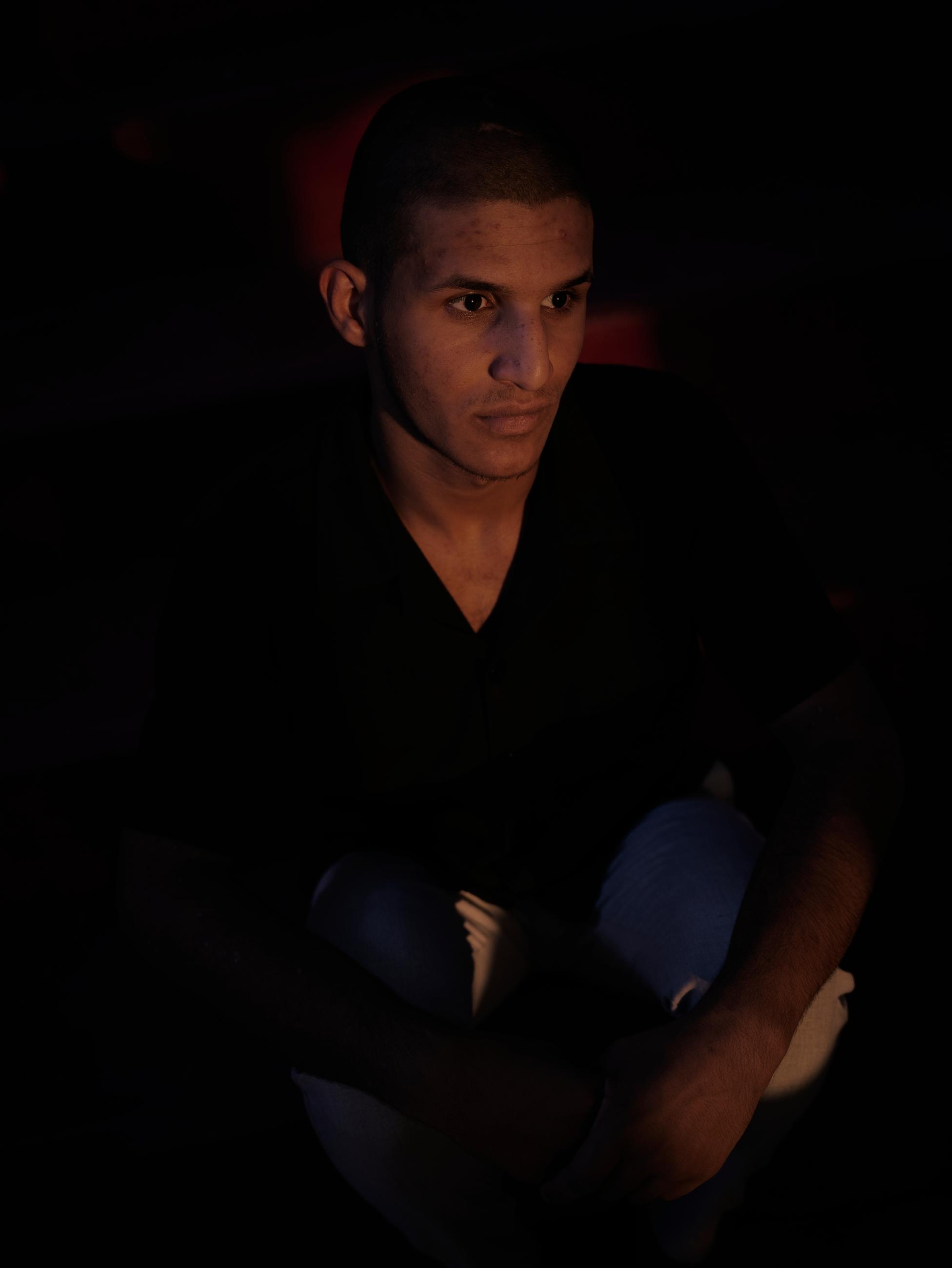
Untitled
Zo Al Faqar (18) had been addicted to crystal meth for five years before he started his stay at Al-Ataa hospital. He decided to go into rehabilitation himself when he noticed all the scars and spots on his arms. He used to smoke around 3g of crystal meth per day.
Baghdad, Iraq.
© Alfredo Bosco, Italy, Shortlist, Professional competition, Documentary Projects, 2025 Sony World Photography Awards