
Series description
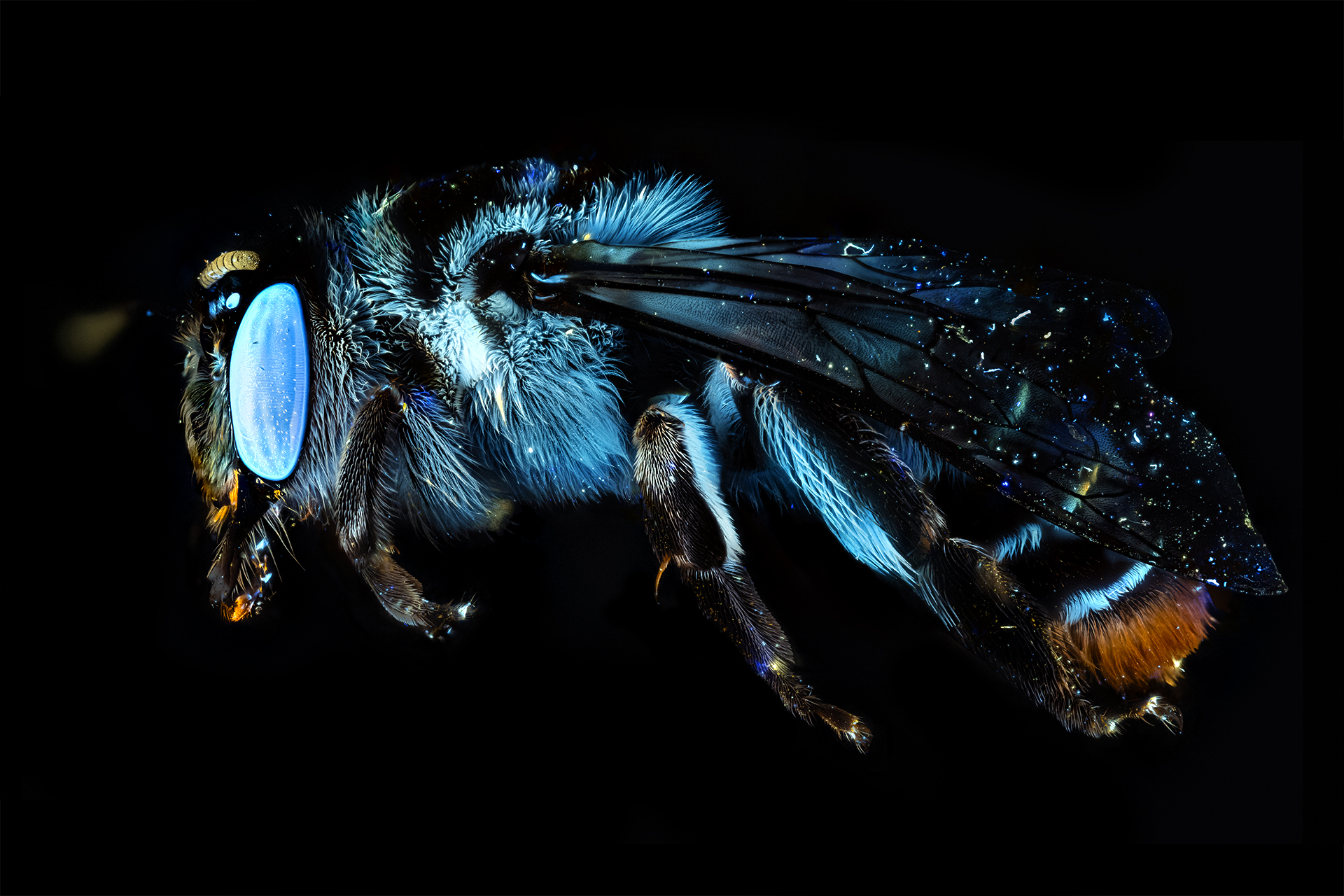
James Wylie believes in challenging people’s perceptions of the natural world, one species at a time. With True Blue, viewers are invited to see the world through the eyes of insects. Due to their unique ability to see UV (ultraviolet) light, their world is entirely different from our own. Naturally occurring biofluorescence in arthropods under UV light allows us a glimpse into their reality, and this series focuses on ten species from a single Western Australian genus of native bee: Ctenocolletes. Although these local bees are often disregarded, much of Western Australia’s unique ecology would be diminished without them. Seen under UV light they represent the beautiful, invisible variations between closely related species and the world they experience.
Biography
Wylie believes in challenging our perceptions of the natural world. He's inspired by theories about the nature of reality and how our senses have evolved to inform us about our environment. He believes this environment dictates our behaviour, and should we want to learn more and operate in interest of planet Earth, then we should seek a greater sensory experience. Wylie wants us to explore, connect and wonder within nature, providing us representations of other species' realities to do this.
Ctenocolletes Albomarginatus
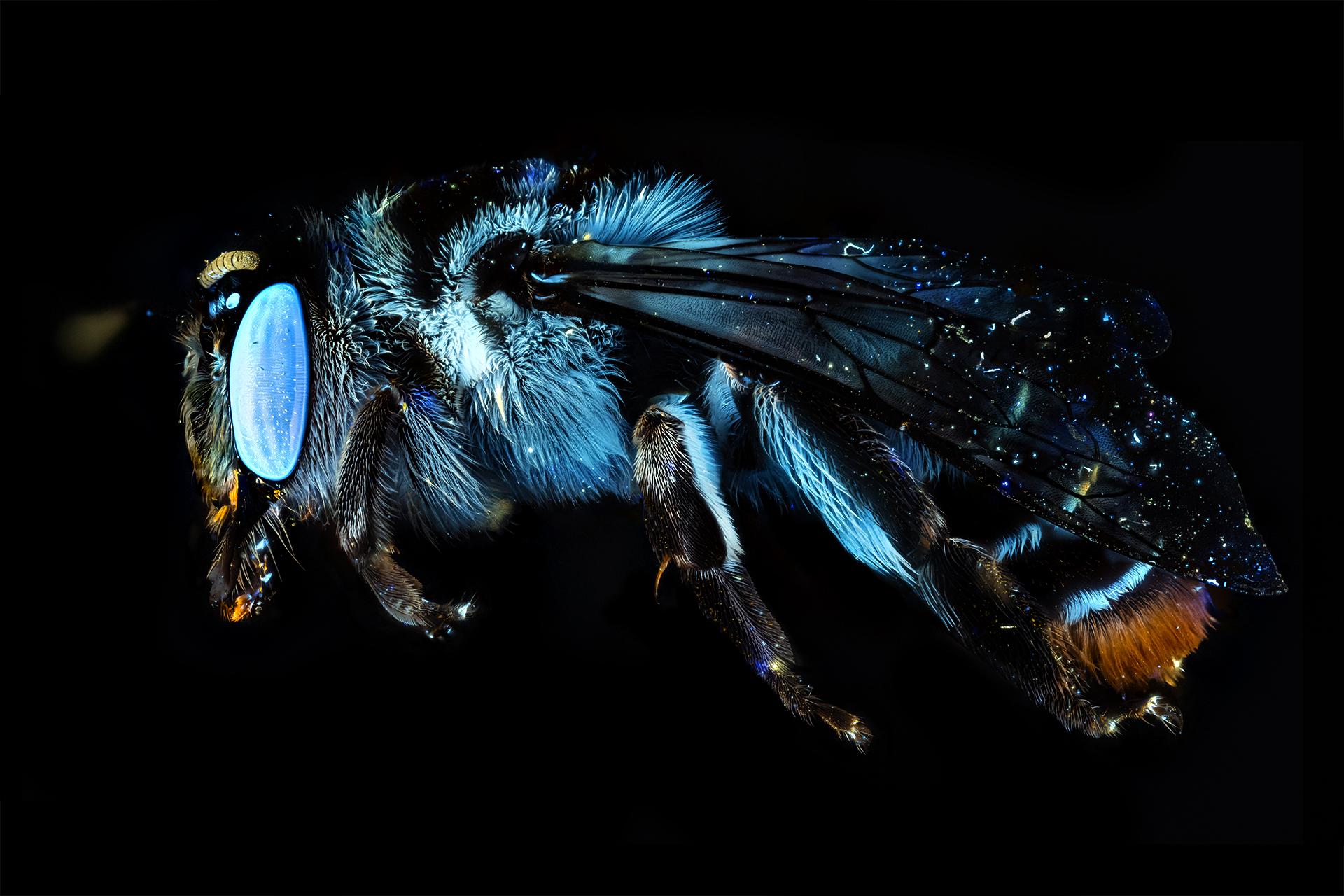
To our eyes, Ctenocolletes albomarginatus is a black, orange and white bee, but under UV light they are so much more. Bright biofluorescent blue fur, called setae, covers its body, and what we see as white in daylight glows blue under UV torchlight. This species represents the stark contrast between our reality and theirs.
© James Wylie, United Kingdom, Shortlist, Professional competition, Wildlife & Nature, 2025 Sony World Photography Awards
Ctenocolletes Centralis
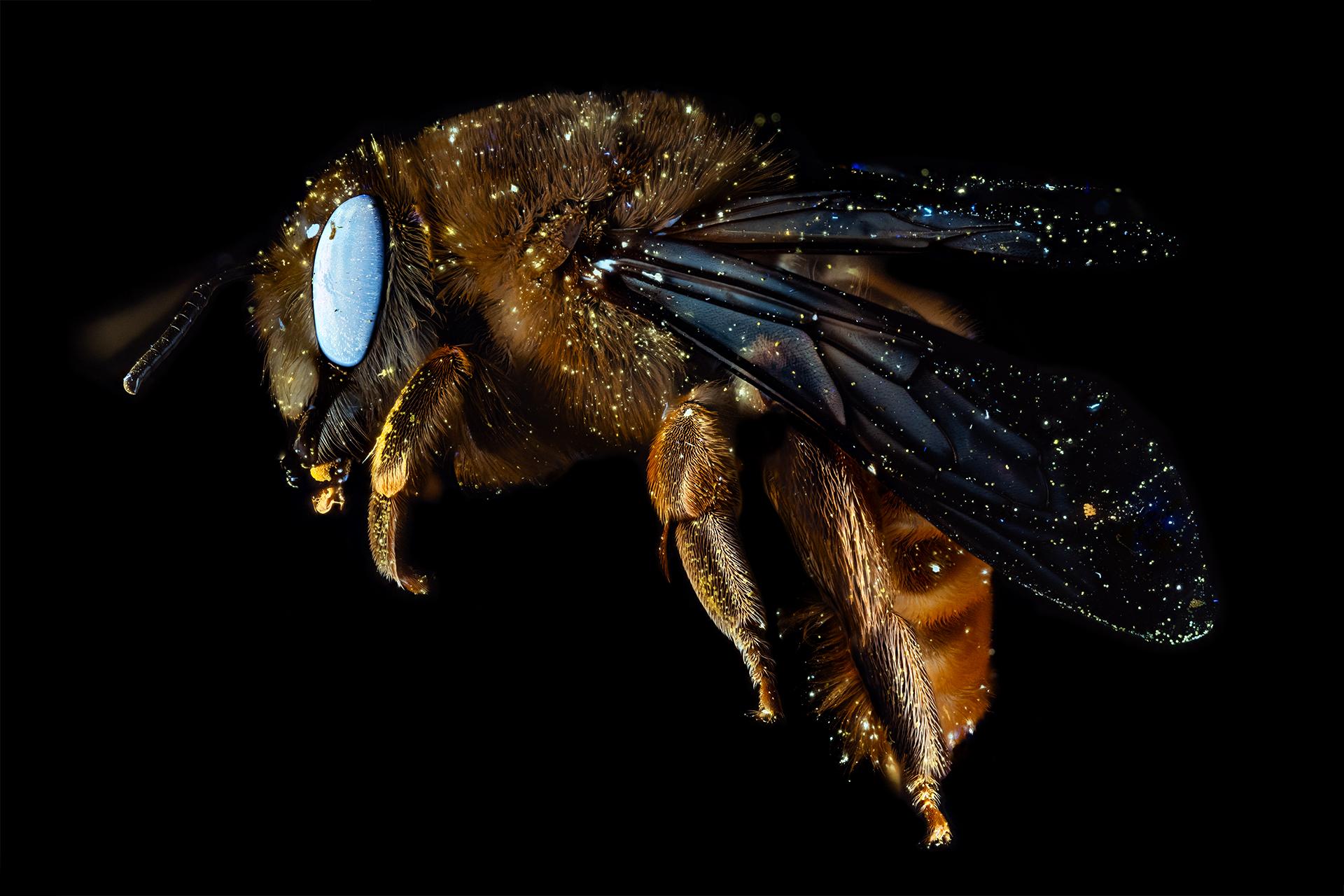
It can be more than just the bee that biofluoresces. This largely non-fluorescent native species, Ctenocolletes centralis, reveals the contrasting bright biofluorescence of pollen. We know that bees pick up pollen when they visit flowers, but what does the pollen look like to them? Sparkling all over this bee’s body like glitter, these specks of pollen allow us a glimpse into its experience.
© James Wylie, United Kingdom, Shortlist, Professional competition, Wildlife & Nature, 2025 Sony World Photography Awards
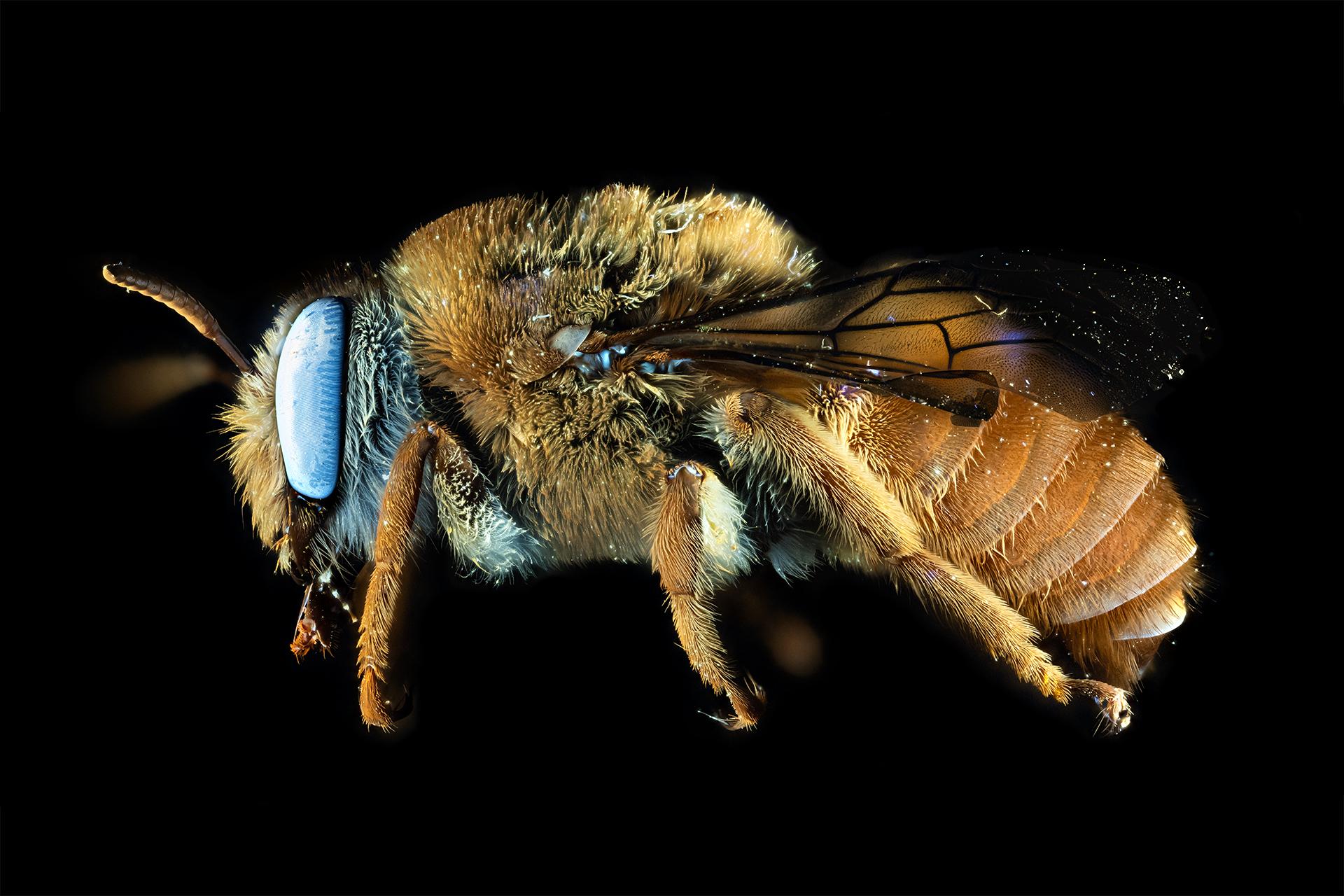
Ctenocolletes Fulvescens
Sometimes, the difference isn’t as stark between what we see and what the bees see. Ctenocolletes fulvescens highlights how special it is when you do find biofluorescence, as not every insect has it. It's especially fascinating when closely related species react so differently. Although it doesn't look like there are many similarities between C. albomarginatus and C. fulvescens under UV light, they are as closely related as two bees can be.
© James Wylie, United Kingdom, Shortlist, Professional competition, Wildlife & Nature, 2025 Sony World Photography Awards
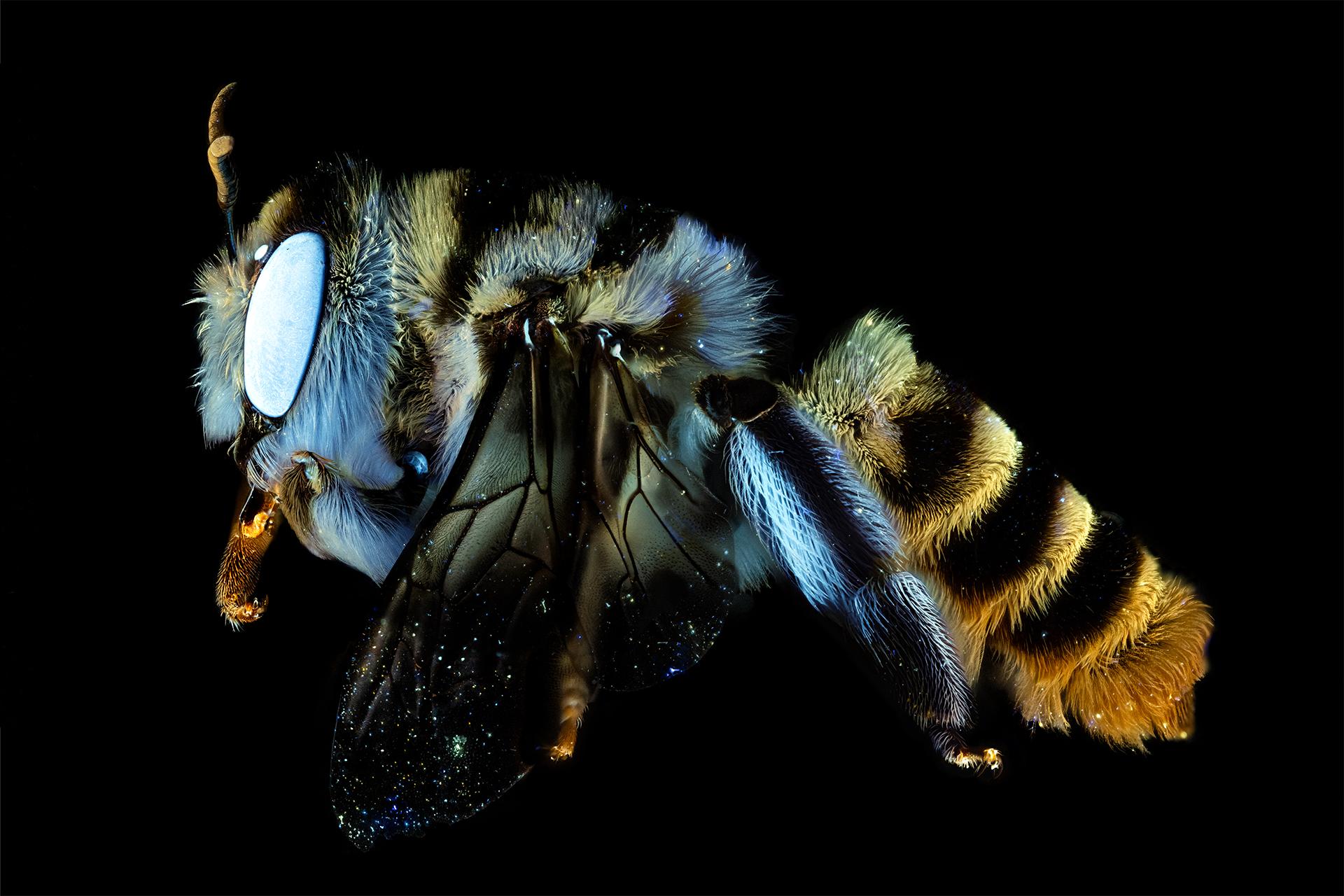
Ctenocolletes Nicholsoni
Pollen pellets are collected by specialist hairs called pollen pockets. These hairs are utilised every day by a native bee; they're thicker and have many smaller hairs branching from them to pick up the fine amount of pollen that the bee combs onto them. They're exemplified by Ctenocolletes nicholsoni, which adopts an especially bright blue biofluorescence. This demonstrates just how structurally different and uniquely evolved these native bees are.
© James Wylie, United Kingdom, Shortlist, Professional competition, Wildlife & Nature, 2025 Sony World Photography Awards
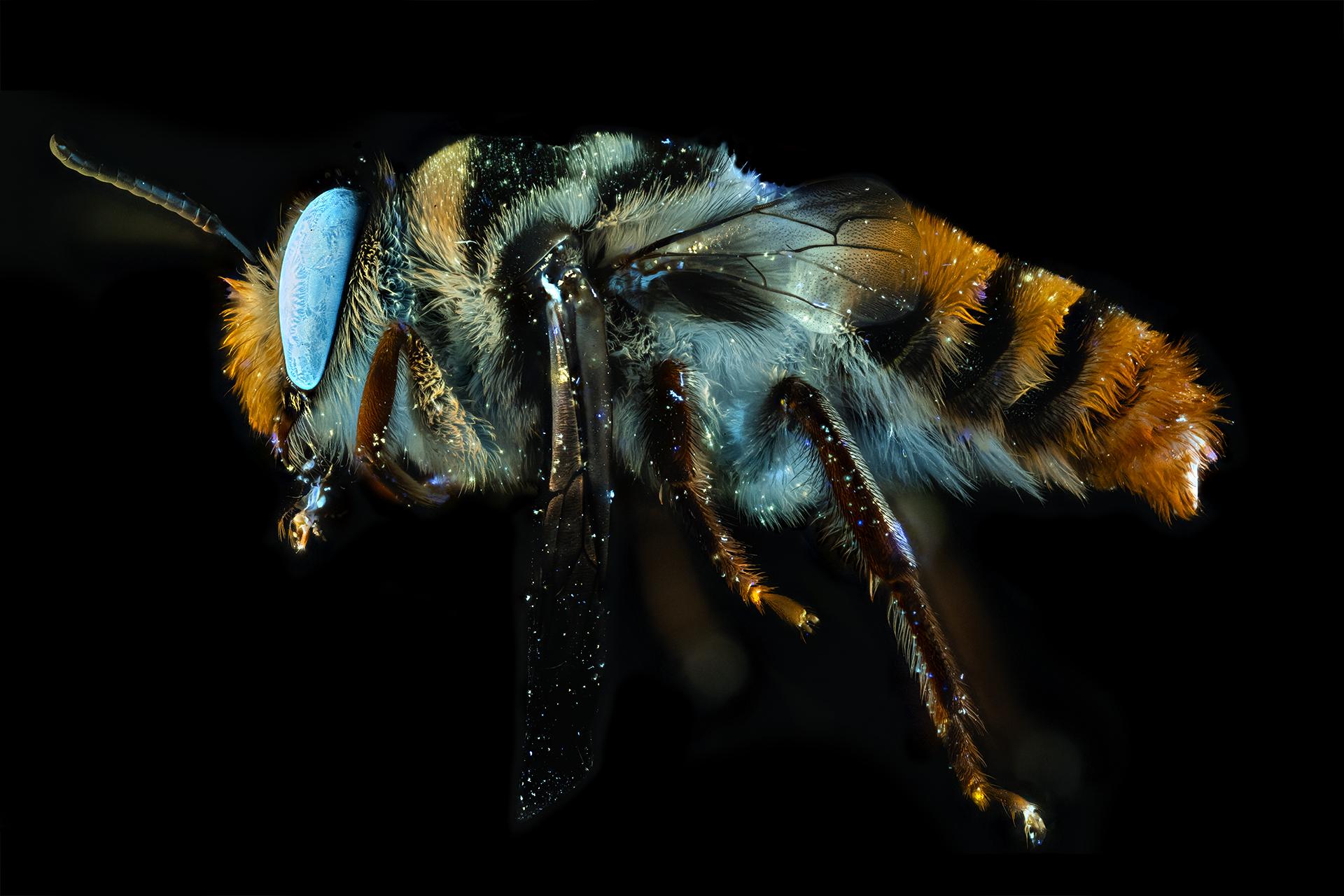
Ctenocolletes Rufescens
Biofluorescence is nuanced – sometimes it's difficult to know when it truly begins and ends. Ctenocolletes rufescens is multicoloured, with hues of cyan and green within the marbled blues and oranges that it produces under UV lighting. This serves as a metaphor of this pollinator’s reality and our understanding of it – although there is some overlap between what we see and what they see, some of nature's best-kept secrets hide in the ultraviolet, invisible to the human eye.
© James Wylie, United Kingdom, Shortlist, Professional competition, Wildlife & Nature, 2025 Sony World Photography Awards
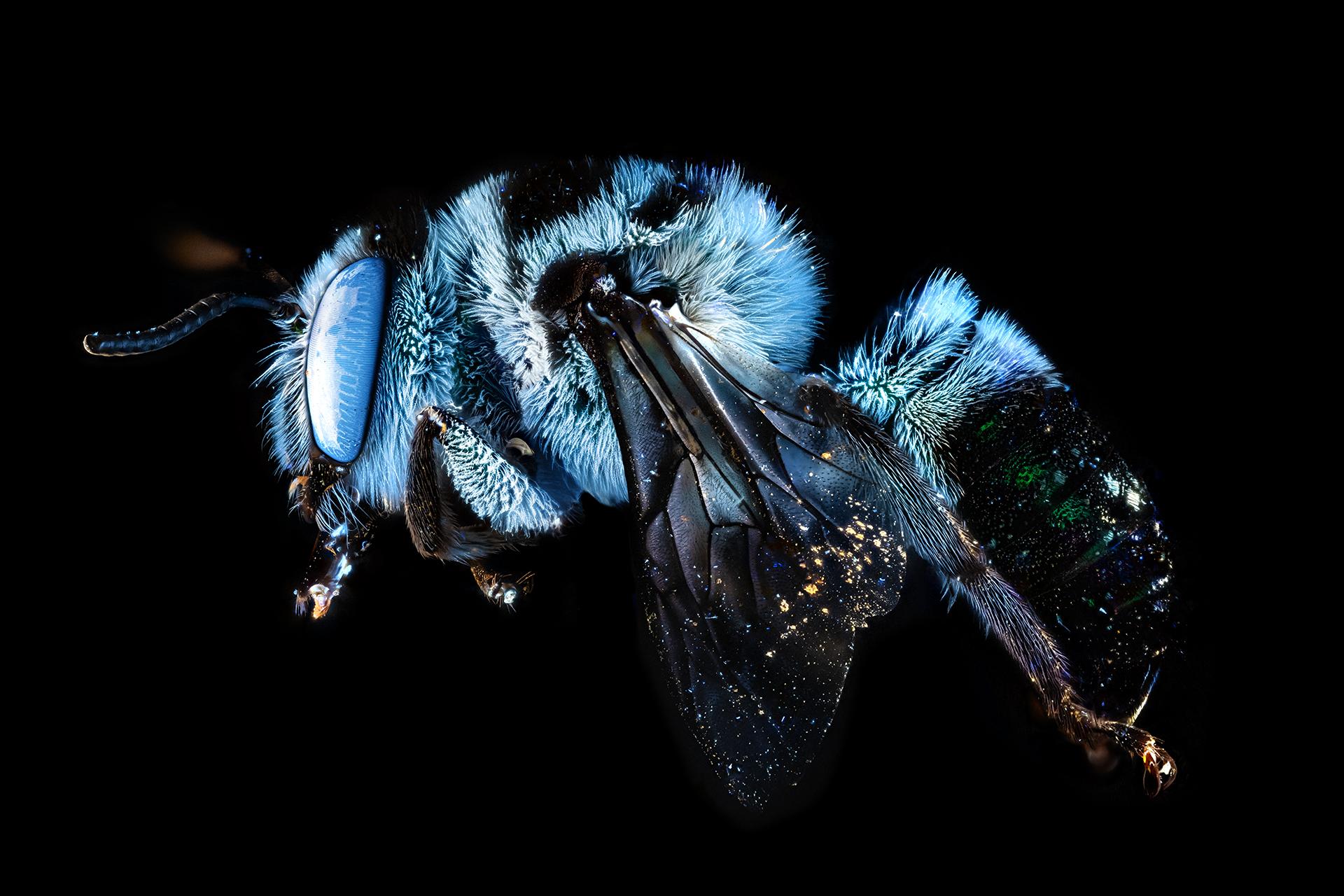
Ctenocolletes Smaragdinus
To the human eye, Ctenocolletes smaragdinus is green, but under a UV light 90 per cent of that colour disappears, due to the structure of the bee's exoskeleton. With such short wavelengths of light, green largely can't reflect out of this structure, leaving patches entirely void of colour that our eyes can detect.
© James Wylie, United Kingdom, Shortlist, Professional competition, Wildlife & Nature, 2025 Sony World Photography Awards
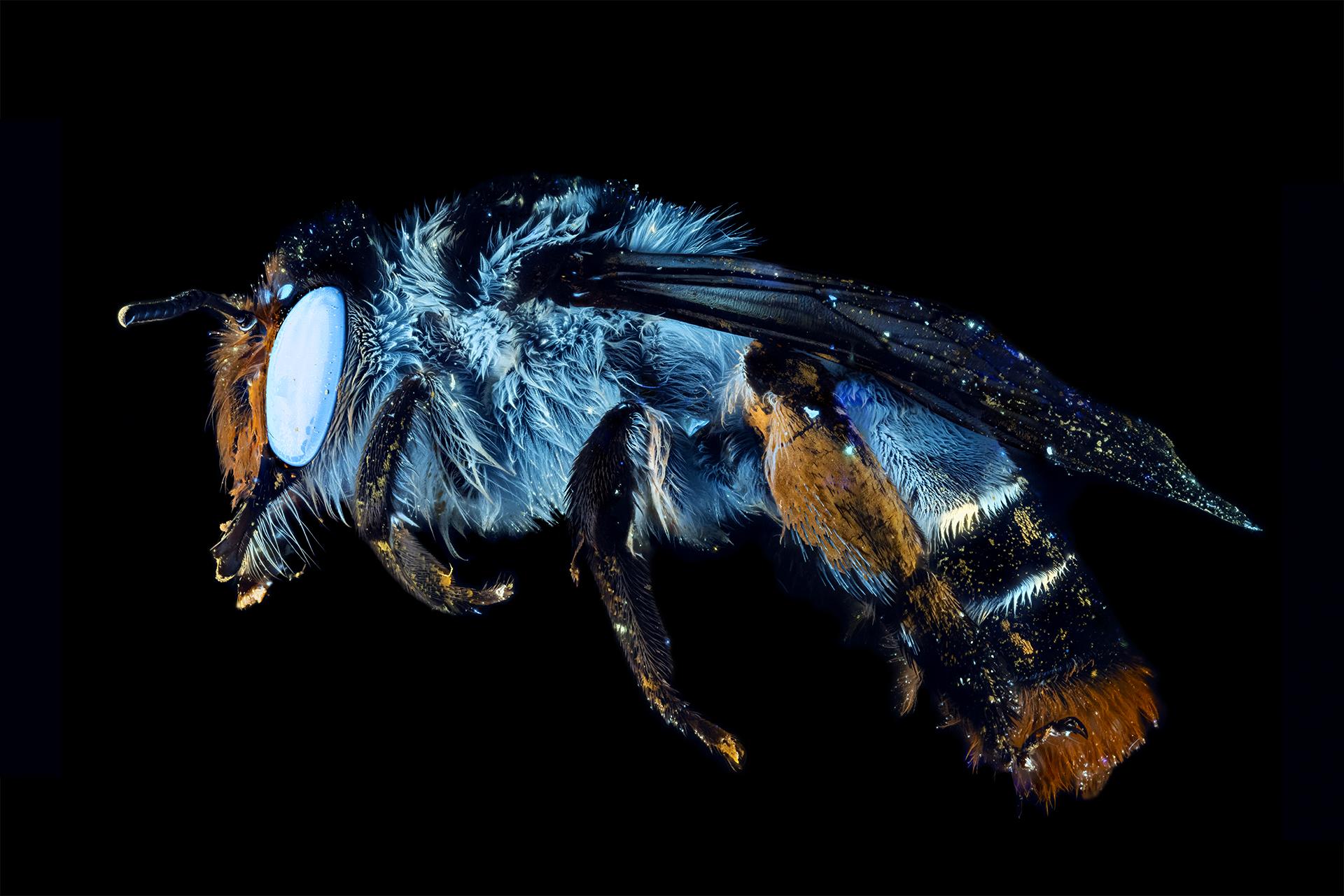
Ctenocolletes Tricolor
We may think we know what a bee is, but we're discovering something new about the natural world every day and our understanding of bees is changing. Lesser-known Australian native bees such as Ctenocolletes tricolor are leading us into a bigger, brighter world where there is so much more to explore.
© James Wylie, United Kingdom, Shortlist, Professional competition, Wildlife & Nature, 2025 Sony World Photography Awards