

Back to 2026
Latin America Professional Award Shortlist
Haka Pei: The Risk of Tradition
Benjamin Villela
Series description
Haka Pei is a unique ancestral ritual from Rapa Nui, in which athletes launch themselves down the steep slope of Maunga Pu’i on banana trunks, reaching extreme speeds with no protection. More than a spectacle, it is a test of bravery, balance and spiritual connection to the land. The descent honours ancient traditions, celebrating the relationship between body, territory and identity in one of Polynesia’s most striking cultural expressions. This is a family sport held during the annual Tapati Rapa Nui festival, and is not about winning, but about celebrating community and ancestors.
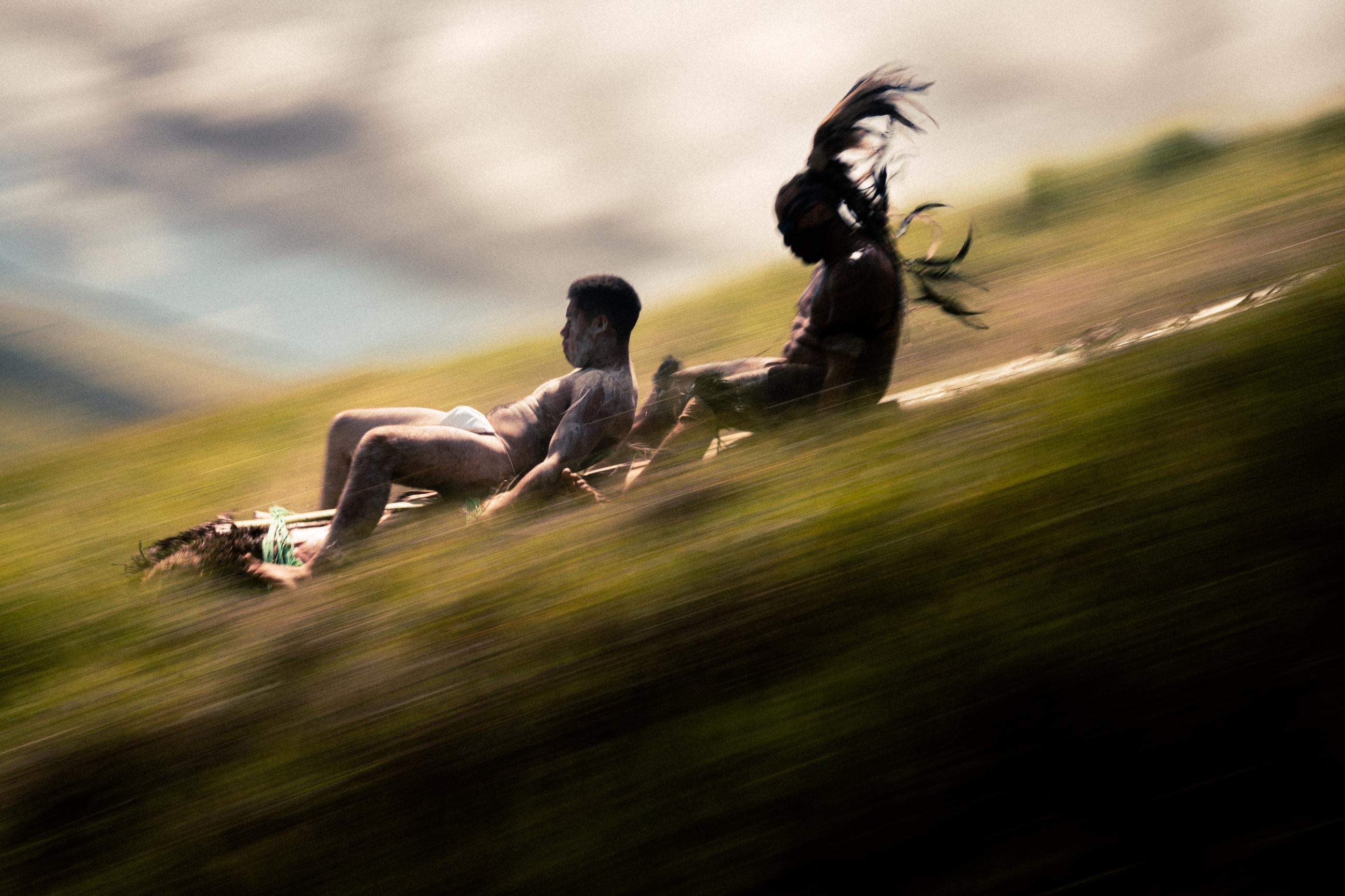
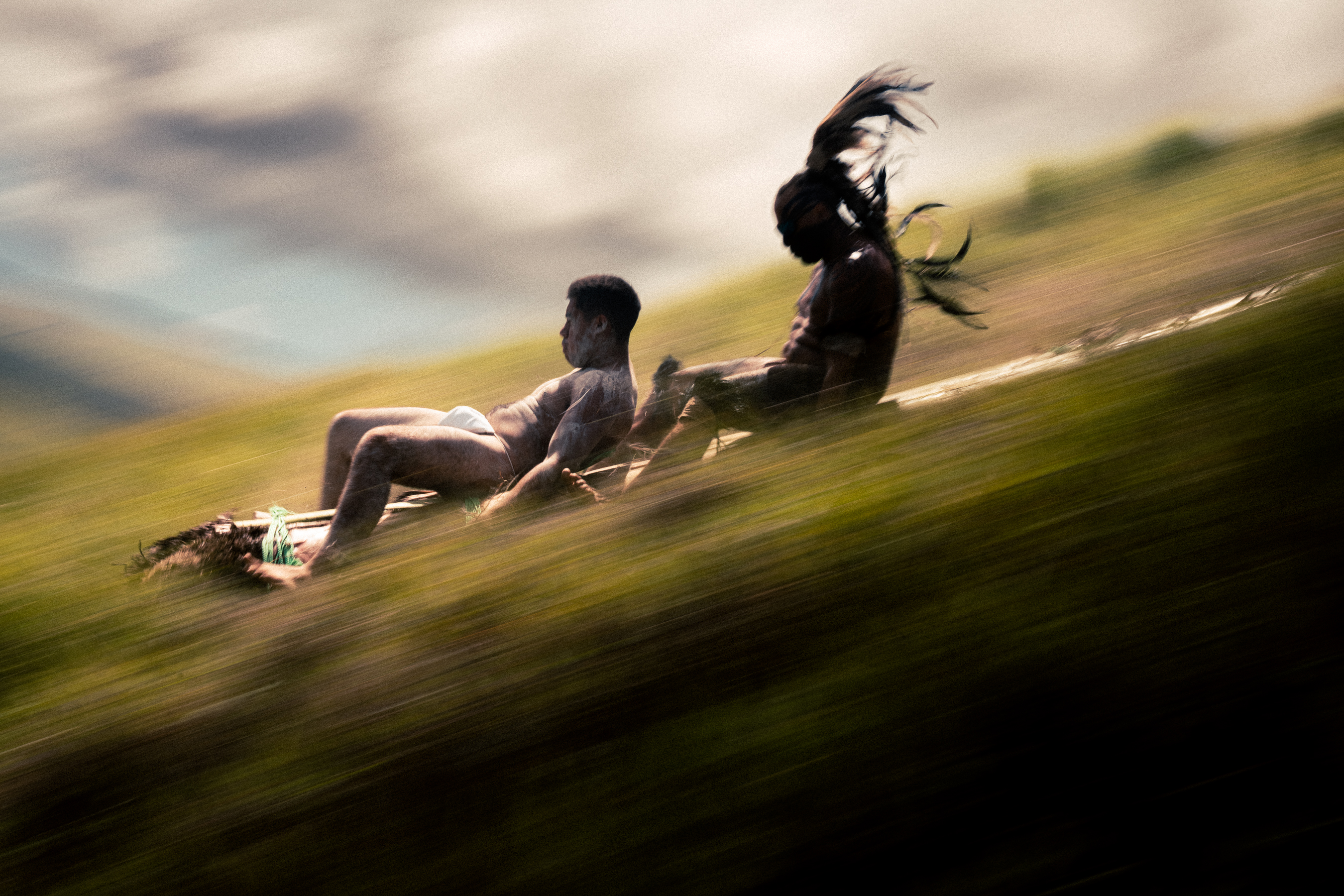
Two competitors (Rapa o Miru Pakarati in white, Tavo Mata te Pari in black) mounted on banana trees (huris) ride down Maunga Pu’i at speed. They are wearing ancestral Rapa Nui dress to honour their tupuna (ancestors).
© Benjamin Villela, Chile, Shortlist, Latin America Professional Award, 2026 Sony World Photography Awards
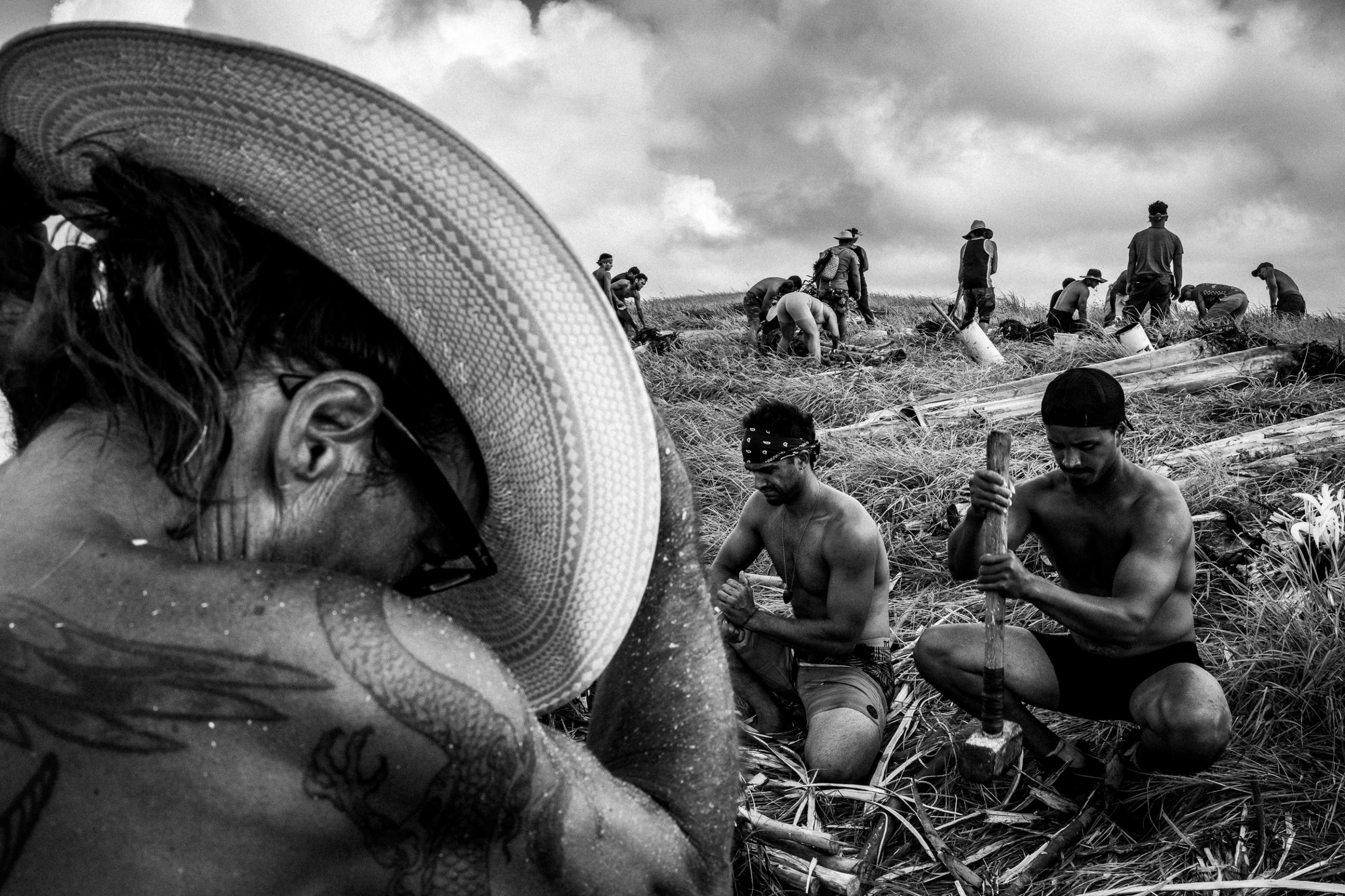
Early in the morning, competitors prepare their banana trees for the competition. This is a long process, with the final preparations made a few hours before launch. The competitors work together as a family — the competition isn't about winning, but about respect and preservation.
© Benjamin Villela, Chile, Shortlist, Latin America Professional Award, 2026 Sony World Photography Awards
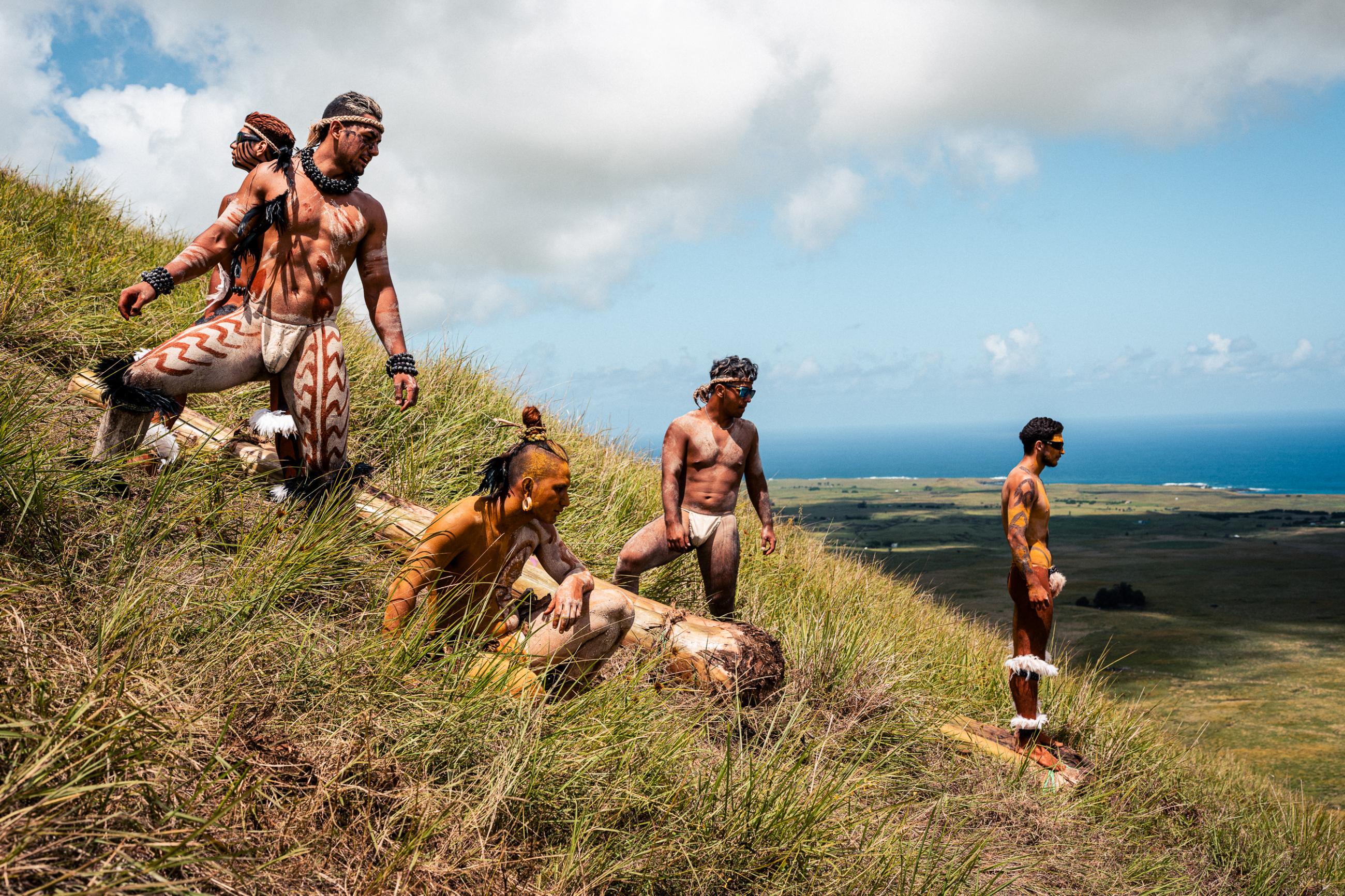
On the slopes of Maunga Pu’i, Rapa Nui athletes prepare for Haka Pei, standing between tradition and danger, their bodies painted with ancestral patterns. They gather with quiet focus before launching down the hill on banana trunks. This moment captures courage, ritual and the pulse of an ancient Polynesian culture.
© Benjamin Villela, Chile, Shortlist, Latin America Professional Award, 2026 Sony World Photography Awards
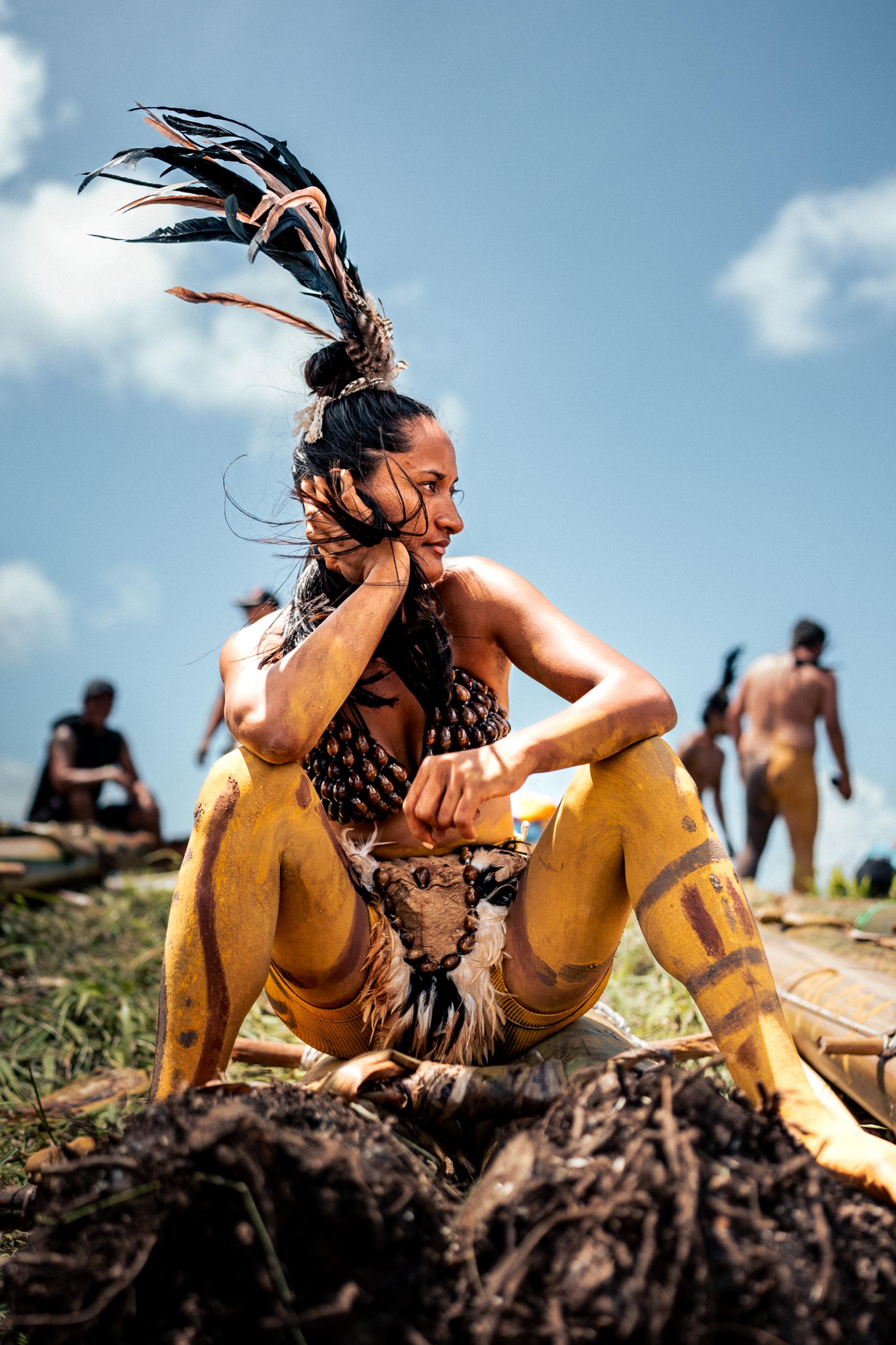
Nani Tuki Pont, a former Tapati Queen of Rapa Nui, rests before the Haka Pei. Painted in traditional colours, she embodies the growing inclusion of women in this once exclusively male ritual. As a mother, she passes these traditions on to her children, carrying forward the cultural heritage that shapes the island’s identity.
© Benjamin Villela, Chile, Shortlist, Latin America Professional Award, 2026 Sony World Photography Awards
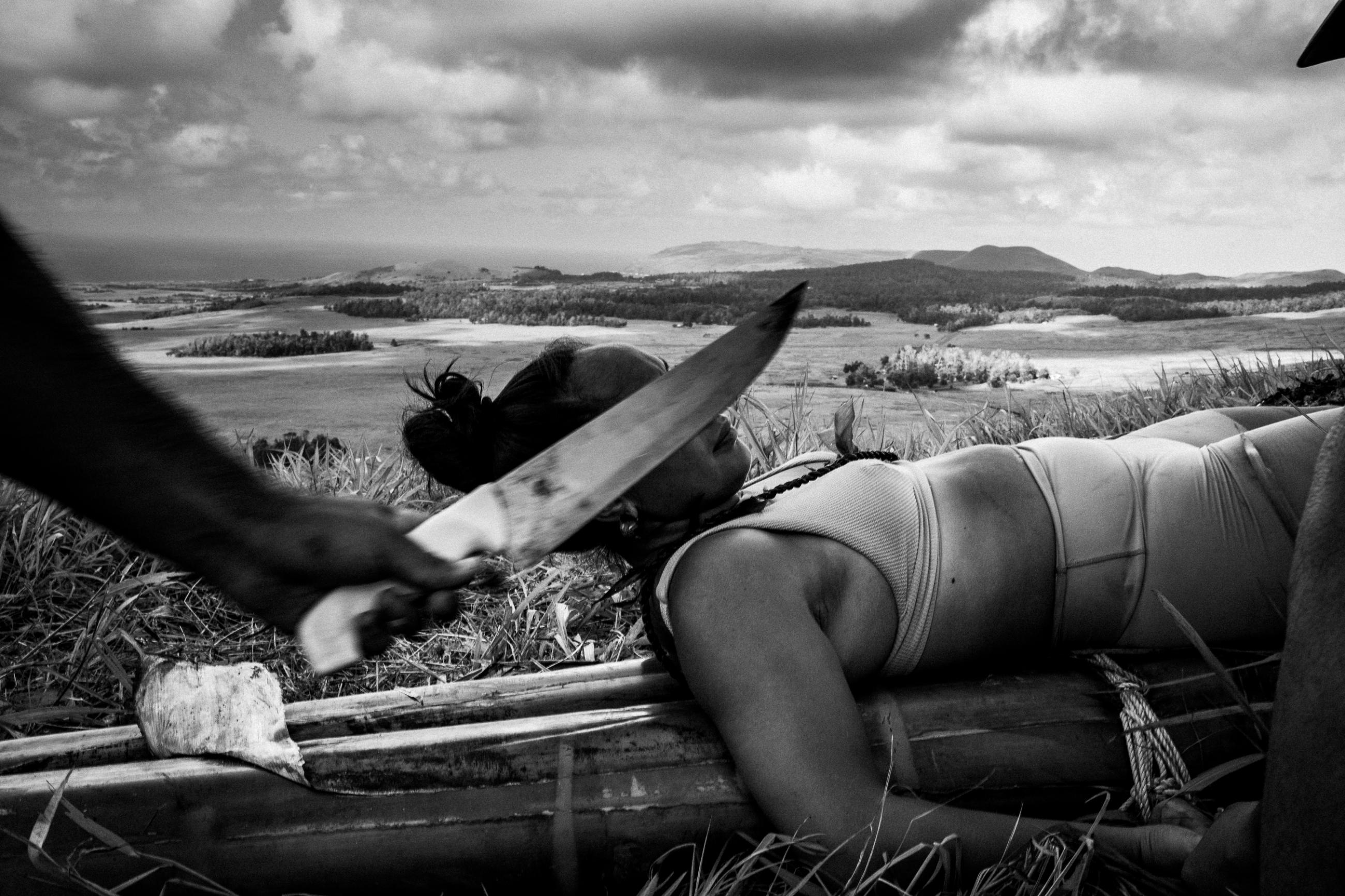
Nehe Nehe Pakomio, a former Tapati Queen, prepares her banana sled before the Haka Pei descent. A knife cuts through the frame like a warning, symbolising the danger of the ritual. As she readies herself on the hillside we see the tension between beauty, risk and the extremity of this ancestral sport.
© Benjamin Villela, Chile, Shortlist, Latin America Professional Award, 2026 Sony World Photography Awards
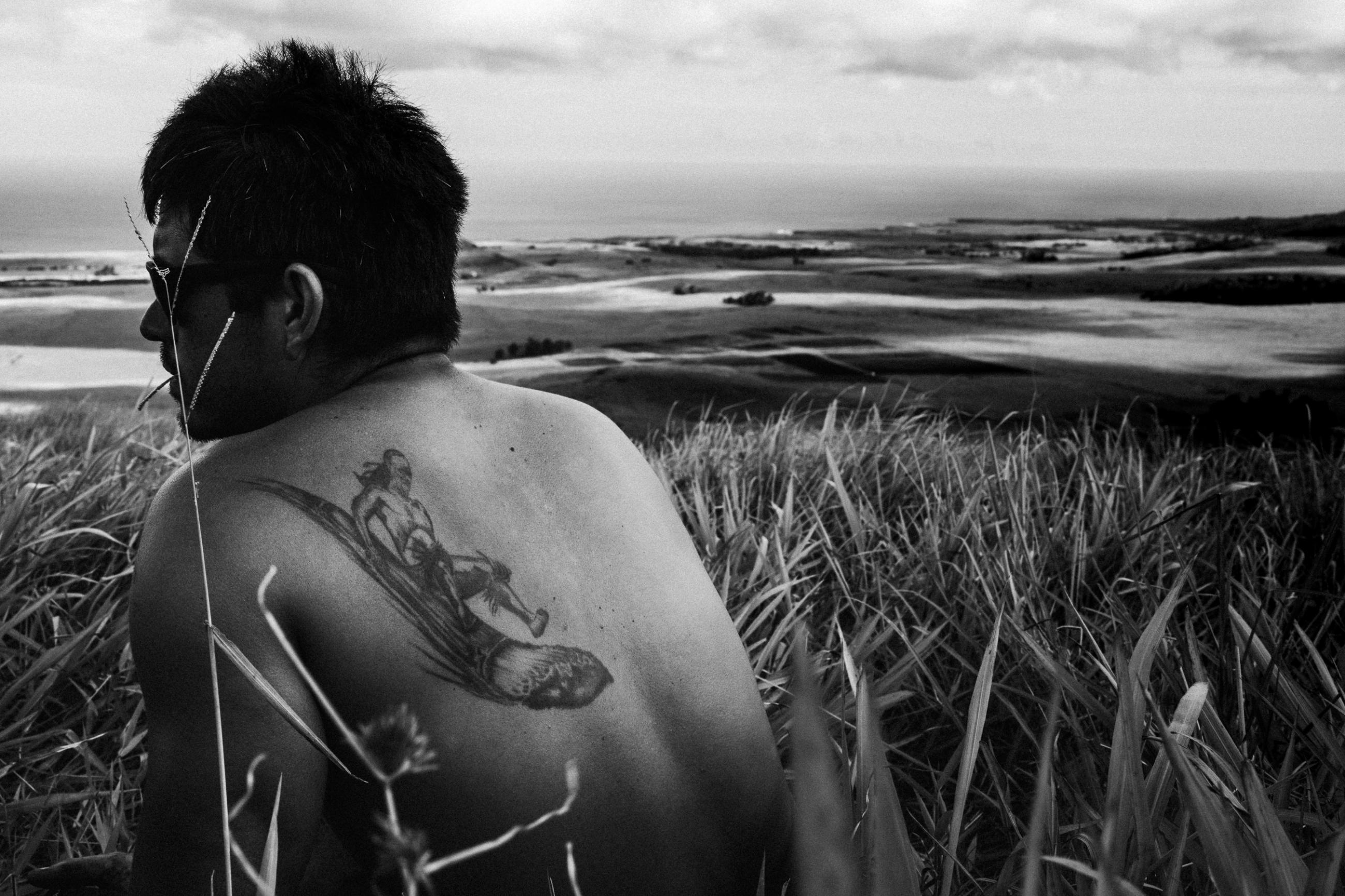
The tattoo on Koro Pate’s back honours his father, Uri Pate, and reflects the deep connection with Haka Pei in their family. Now guiding the event on the hillside, Koro becomes a bridge between generations, embodying the living legacy of his father.
© Benjamin Villela, Chile, Shortlist, Latin America Professional Award, 2026 Sony World Photography Awards
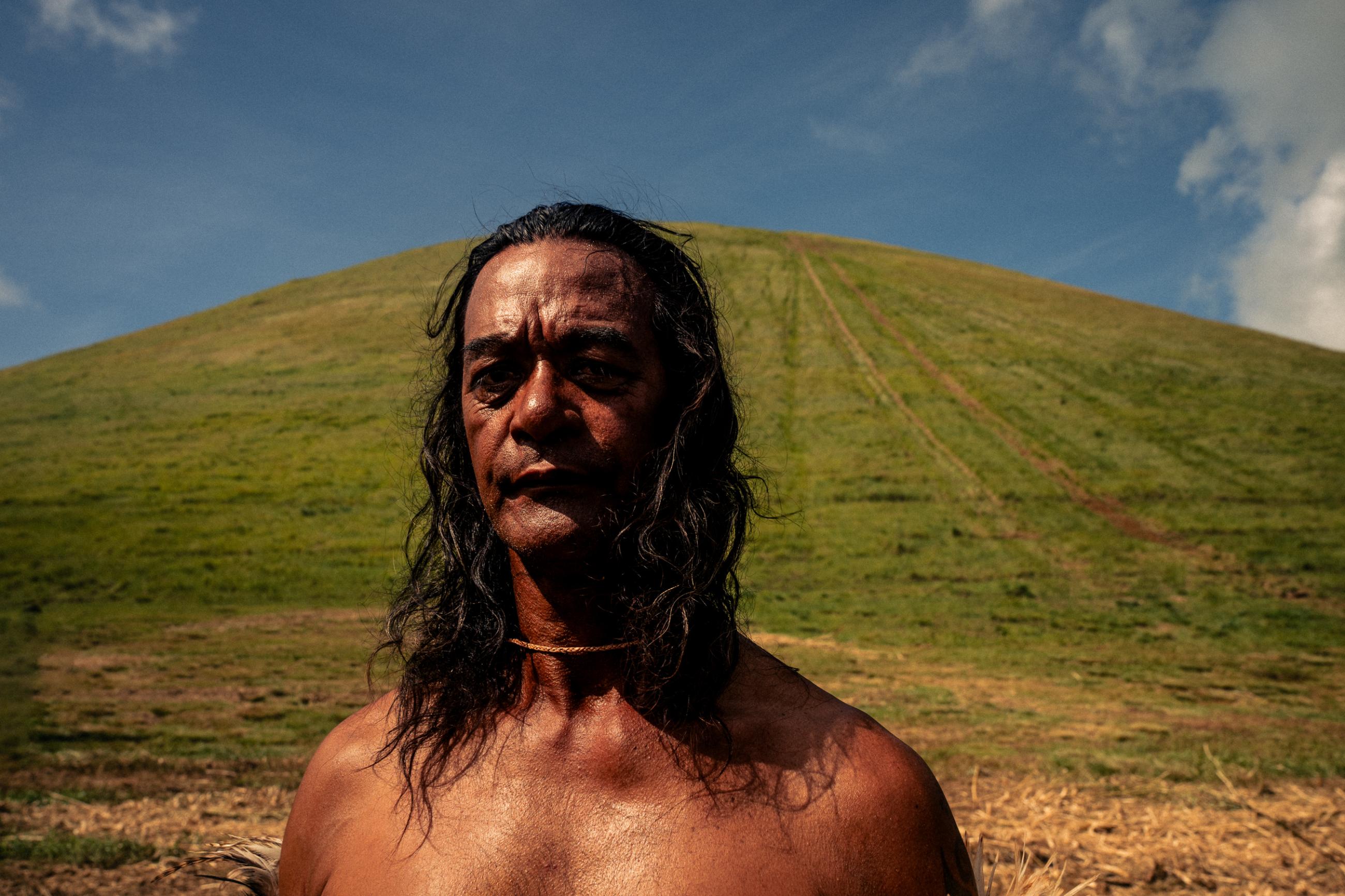
A portrait of Uri Pate, father of Koro Pate. Uri is the most celebrated living Haka Pei competitor and now helps protect the sport. Known for his many victories, he survived a near-fatal accident during a descent, rolling down the mountain at high speed and suffering multiple fractures that left lasting injuries.
© Benjamin Villela, Chile, Shortlist, Latin America Professional Award, 2026 Sony World Photography Awards
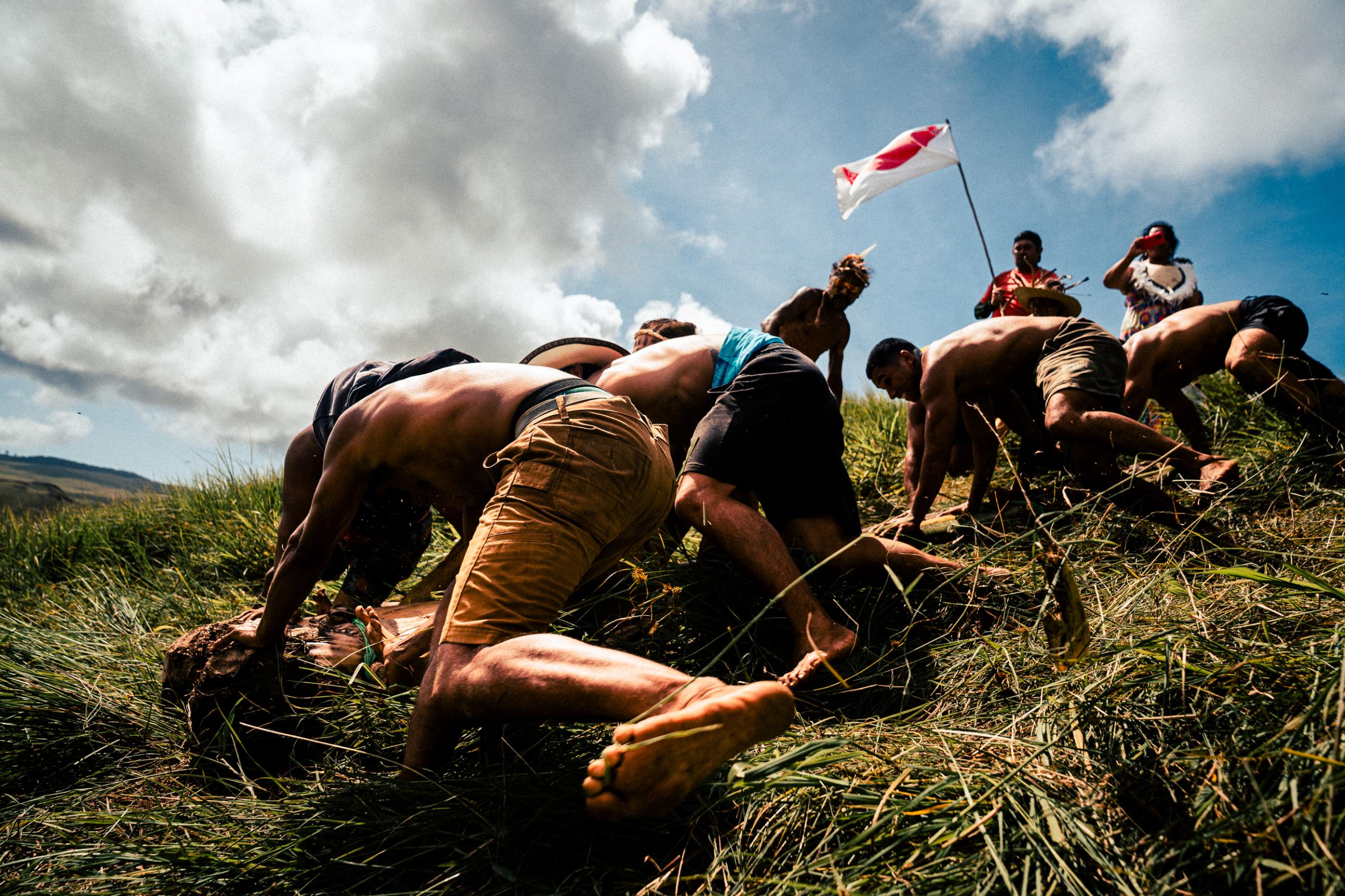
A barefoot community gathers on the hillside, pushing a heavy banana sled down the steep slope while shouting ‘Oheho!’ — their ancestral cry of strength. The scene captures the collective effort and raw energy that drives Haka Pei tradition.
© Benjamin Villela, Chile, Shortlist, Latin America Professional Award, 2026 Sony World Photography Awards