

Back to Wildlife & Nature
Wildlife & Nature 2nd Place
Capybaras at the Forefront of the Dispute and Resistance in Buenos Aires
Anita Pouchard Serra
Series description
Nordelta is one of the best-known private developments in Buenos Aires, Argentina. It was built on a wetland, an ecosystem in which the land is covered by water, which is the main factor controlling plant and animal life. In recent years, the development’s 45,000 upper-class residents have seen numerous capybaras enter the neighbourhood. Social media has been flooded with videos and photographs of the area’s original inhabitants in swimming pools, crossing the street, or, more tragically, run over or trapped in drains or sewers. In a little over three years, the capybara population tripled to 1,000, leading the Buenos Aires government to approve population control plans that include selective sterilisation and contraception. At the same time, the presence of capybaras has divided the community, with neighbours arguing for and against the capybaras; for the rights of nature and against uncontrolled urban growth on natural land.
Biography
Anita Pouchard Serra is a Buenos Aires-based photojournalist, exploring themes of identity, migration, territory and women’s rights. Her work has been exhibited internationally, awarded and supported by the Open Society Foundation, Pulitzer Center and the International Women’s Media Foundation.
Untitled
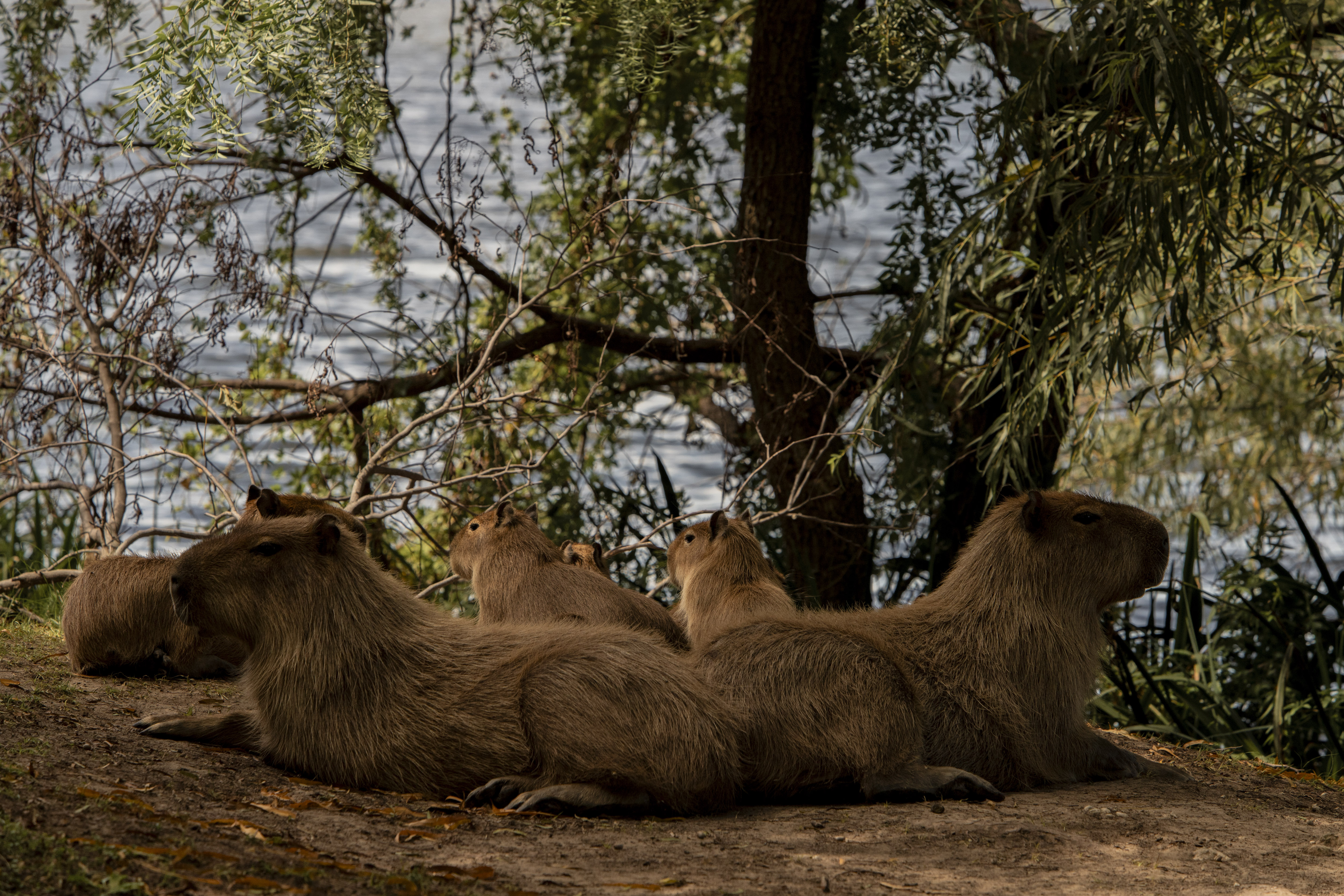
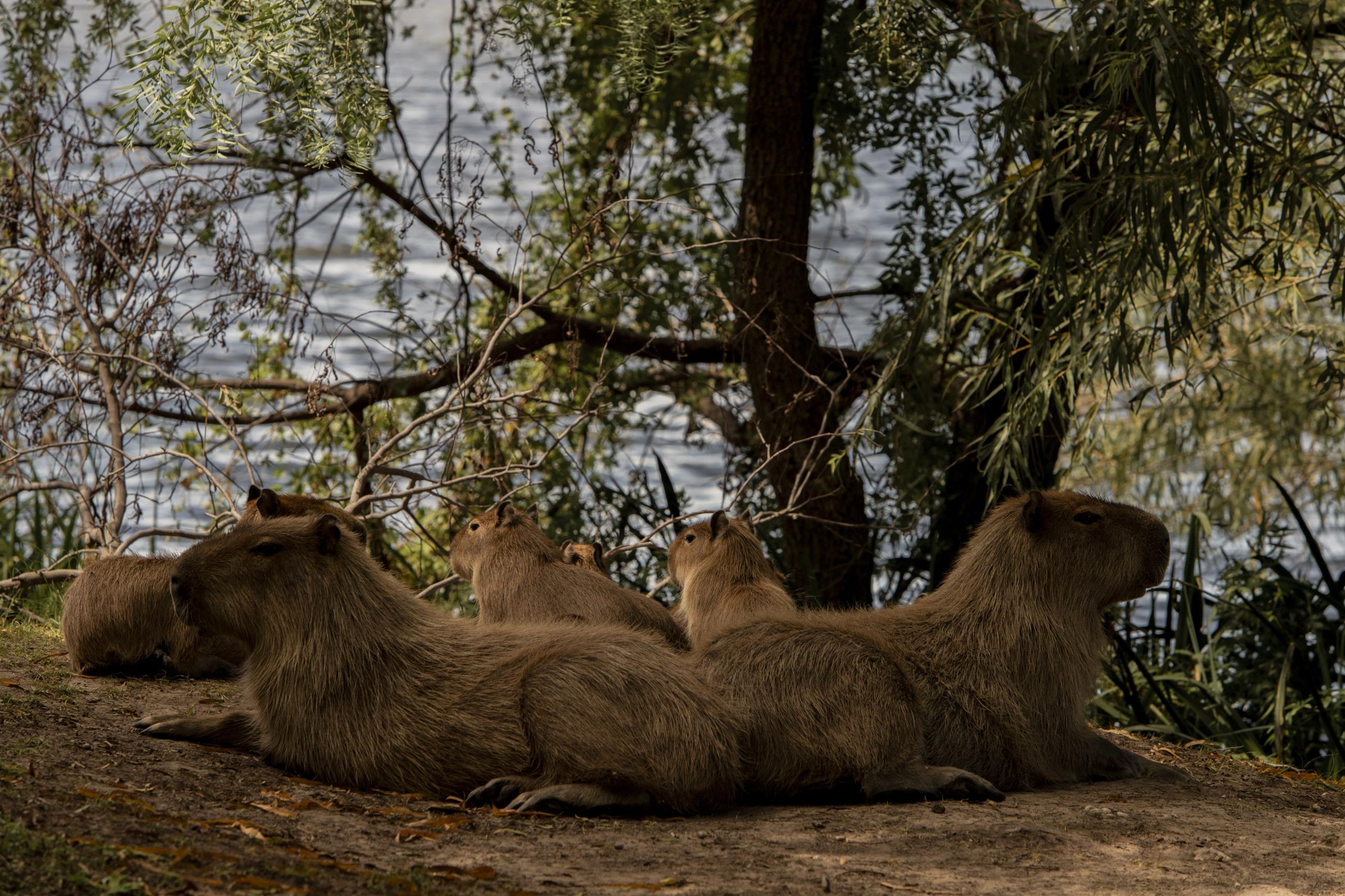
A family of capybaras near a lake in a gated community in the private city of Nordelta in Buenos Aires. The capybaras live and move in groups, caring collectively for their young.
© Anita Pouchard Serra, Argentina, 2nd Place, Professional Competition, Wildlife & Nature, 2026 Sony World Photography Awards
Untitled
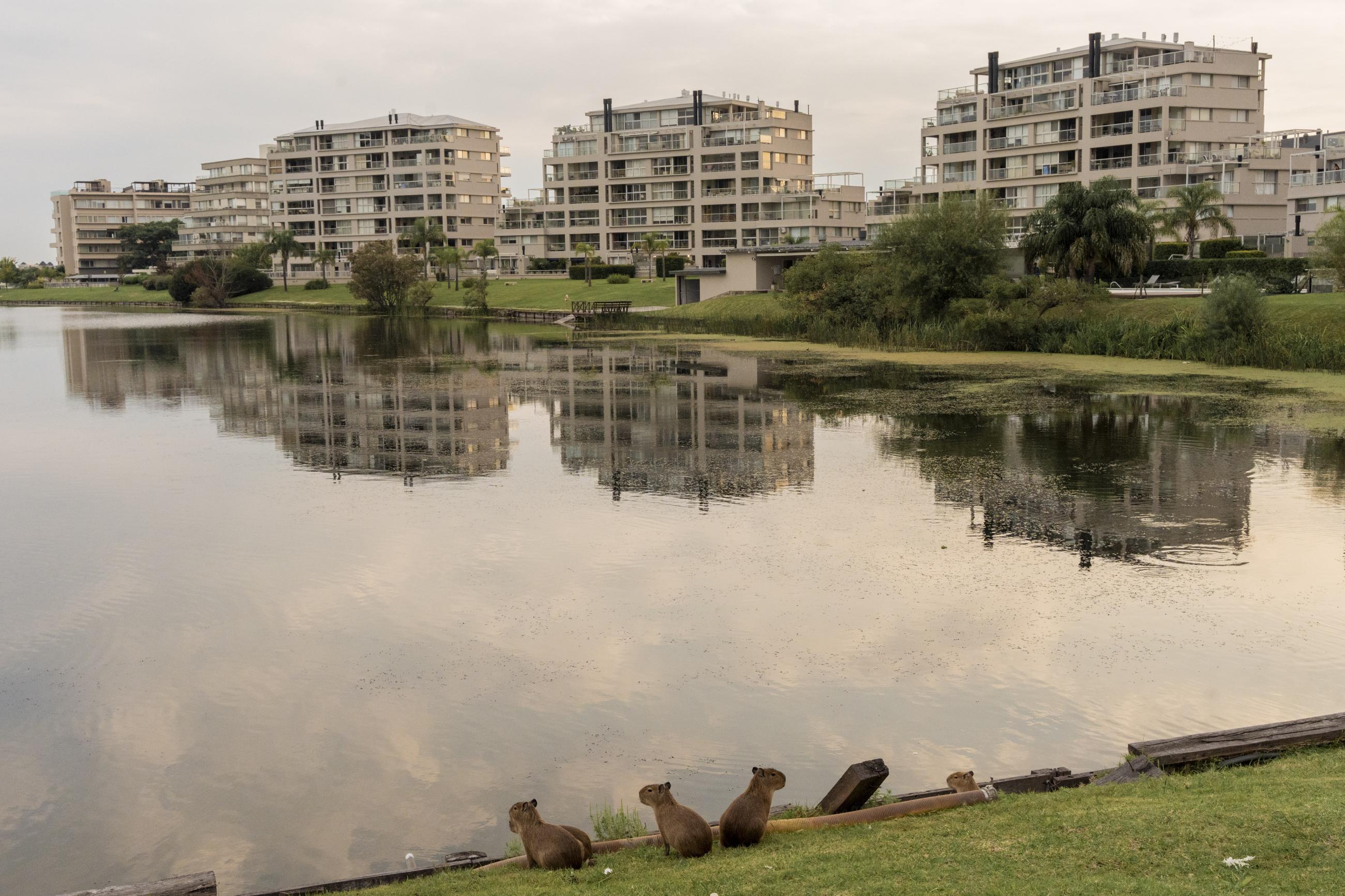
Capybara breeding near an artificial lake in a residential area of Nordelta. One of the problems with artificial lakes is the difficulty capybaras have in climbing out of the water onto the shore, due to the lack of mud for them to grip on to.
© Anita Pouchard Serra, Argentina, 2nd Place, Professional Competition, Wildlife & Nature, 2026 Sony World Photography Awards
Untitled
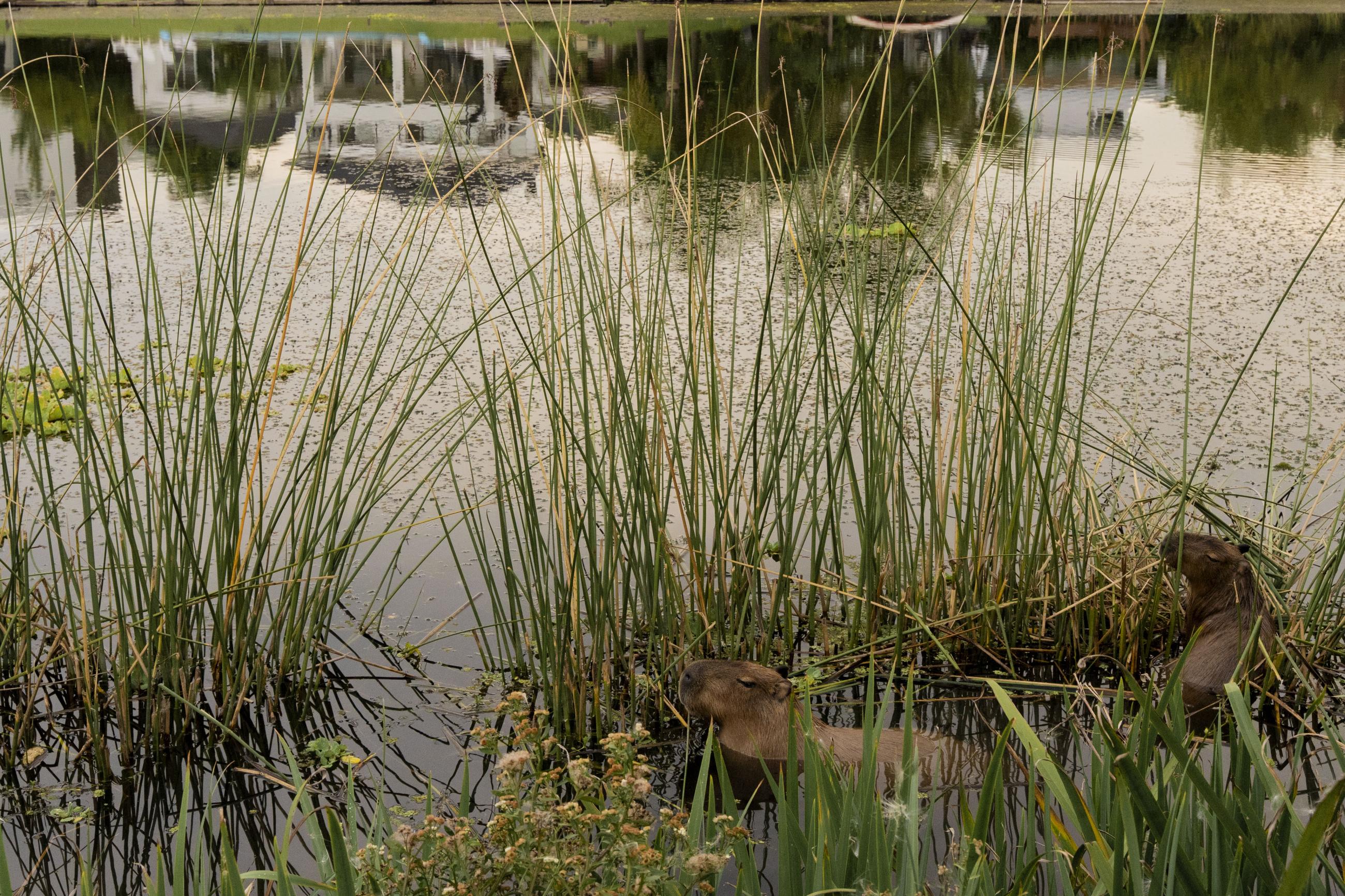
Capybaras in one of the artificial lakes in Nordelta. The gated community’s environment is conducive to nature, but also deceptive. There are many human artifacts that prevent the capybaras from leading a normal life, such as the concrete at the bottom of the lakes and a lack of easy access.
© Anita Pouchard Serra, Argentina, 2nd Place, Professional Competition, Wildlife & Nature, 2026 Sony World Photography Awards
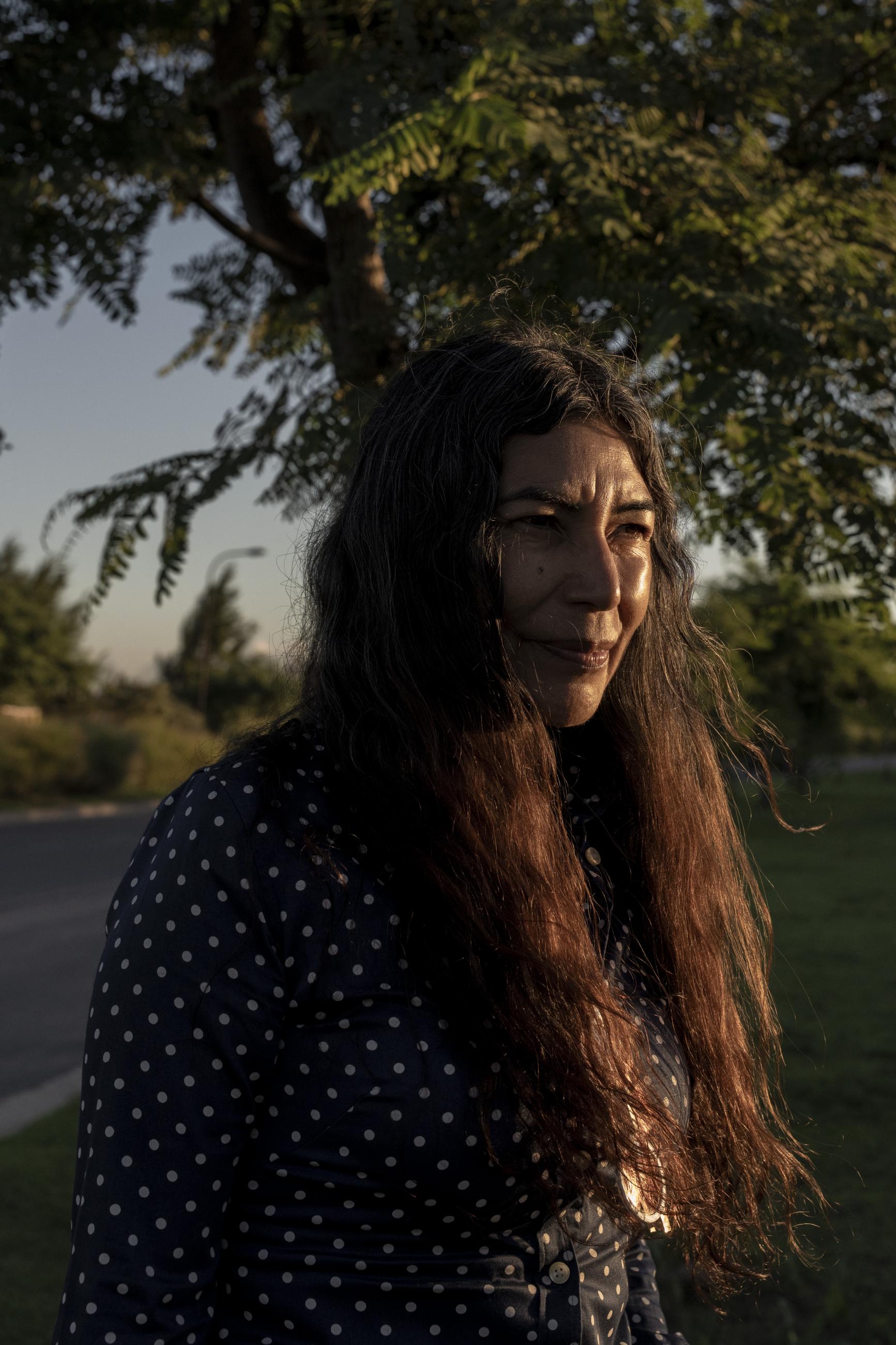
Untitled
‘We are the voice of the capybaras. I think their cuteness is a strategy of the species itself to survive,’ she says. The subject is part of a group pushing for a capybara nature reserve; she explains that the capybara population is only increasing in the area because real estate developers destroyed the animals' natural habitat, forcing them to leave the forest and move to the suburbs.
© Anita Pouchard Serra, Argentina, 2nd Place, Professional Competition, Wildlife & Nature, 2026 Sony World Photography Awards

Untitled
The neighbourhood community uses a WhatsApp group to send alerts when a capybara is injured, trapped or in trouble. There is also an overnight veterinary service where the animals can be taken if needed.
© Anita Pouchard Serra, Argentina, 2nd Place, Professional Competition, Wildlife & Nature, 2026 Sony World Photography Awards
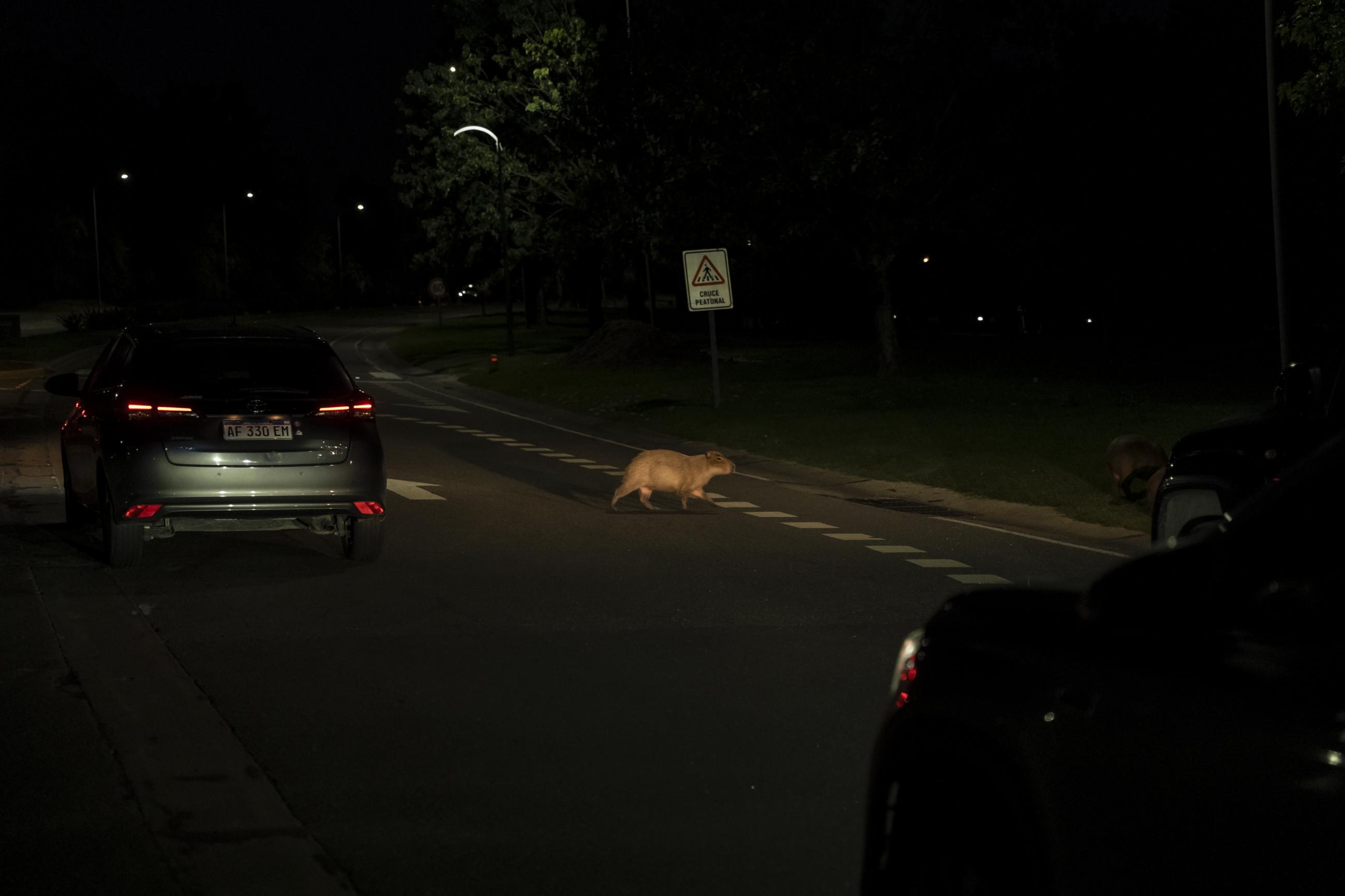
Untitled
Capybaras attempting to cross the road at night are the leading cause of car accidents in the neighbourhood, and the main cause of death for capybaras.
© Anita Pouchard Serra, Argentina, 2nd Place, Professional Competition, Wildlife & Nature, 2026 Sony World Photography Awards
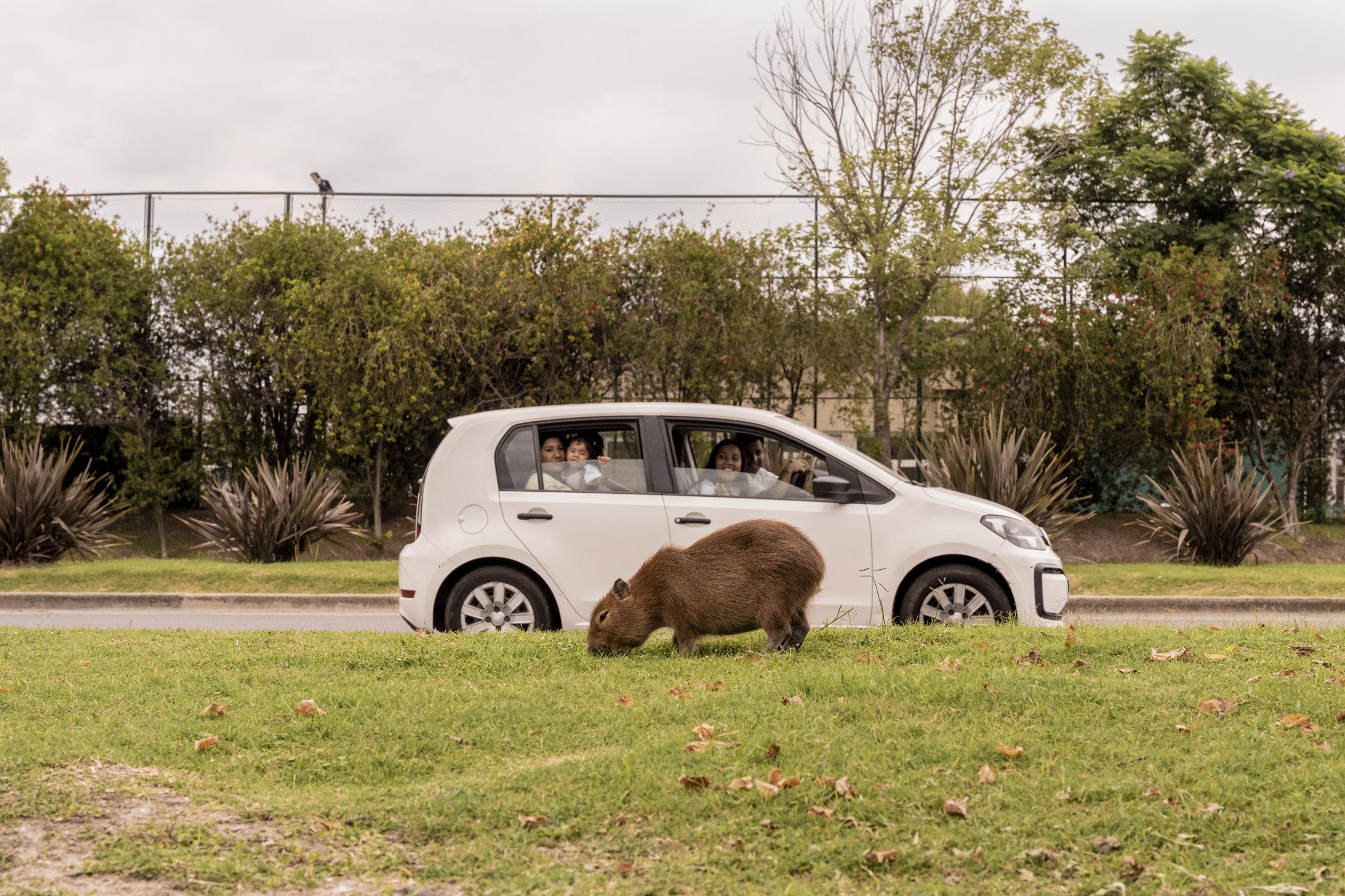
Untitled
Passengers in a car watch a capybara eating grass by the side of a road running through the private city. The animals attract attention, and many people stop during the day to take photographs of them.
© Anita Pouchard Serra, Argentina, 2nd Place, Professional Competition, Wildlife & Nature, 2026 Sony World Photography Awards
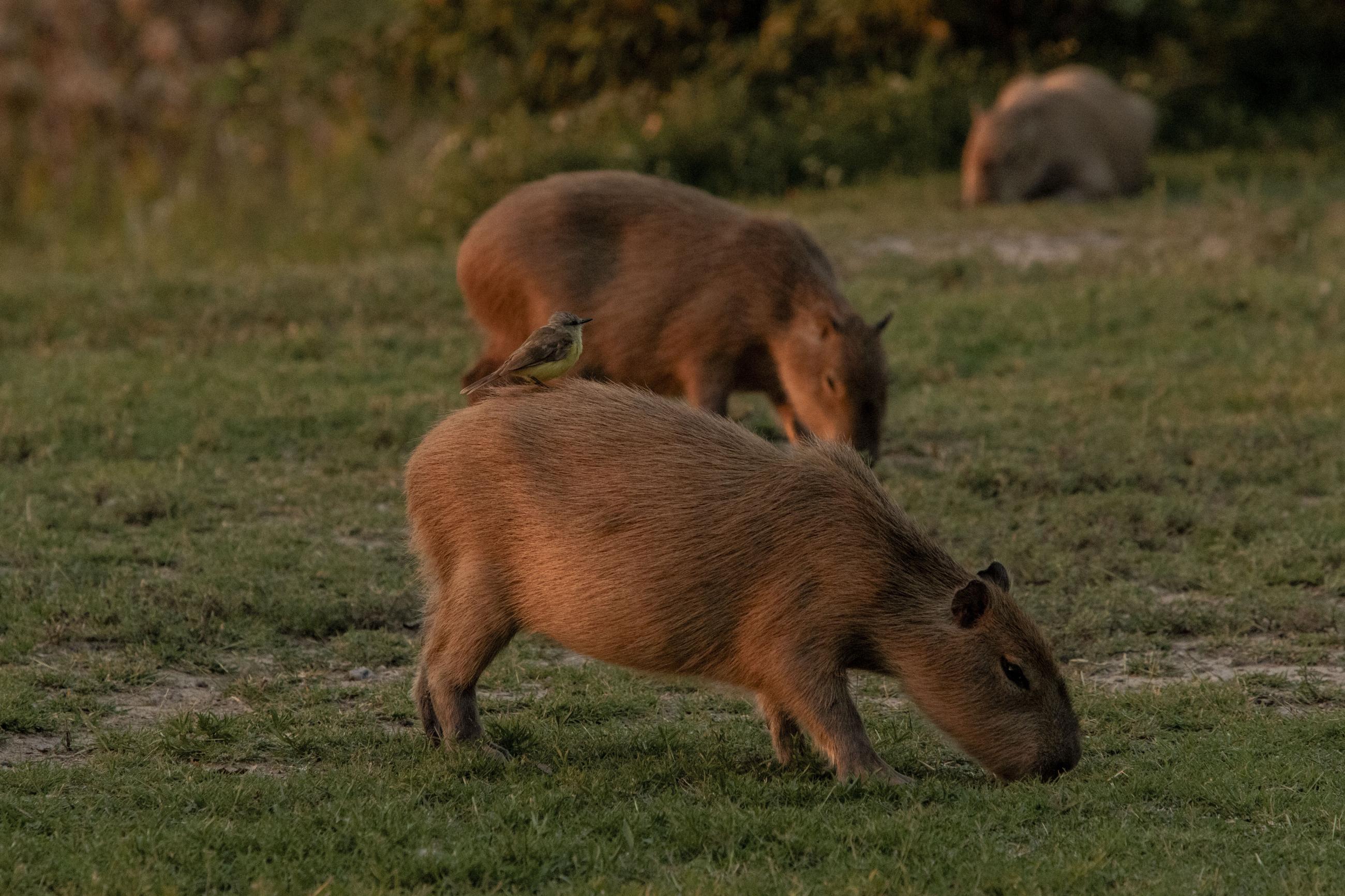
Untitled
A bird rests on a capybara while it eats grass near a road in Nordelta. The capybara’s co-existence with other animals is another source of controversy, with accusations that they attack dogs and cats. However, capybaras are only known to defend themselves when their young are threatened.
© Anita Pouchard Serra, Argentina, 2nd Place, Professional Competition, Wildlife & Nature, 2026 Sony World Photography Awards
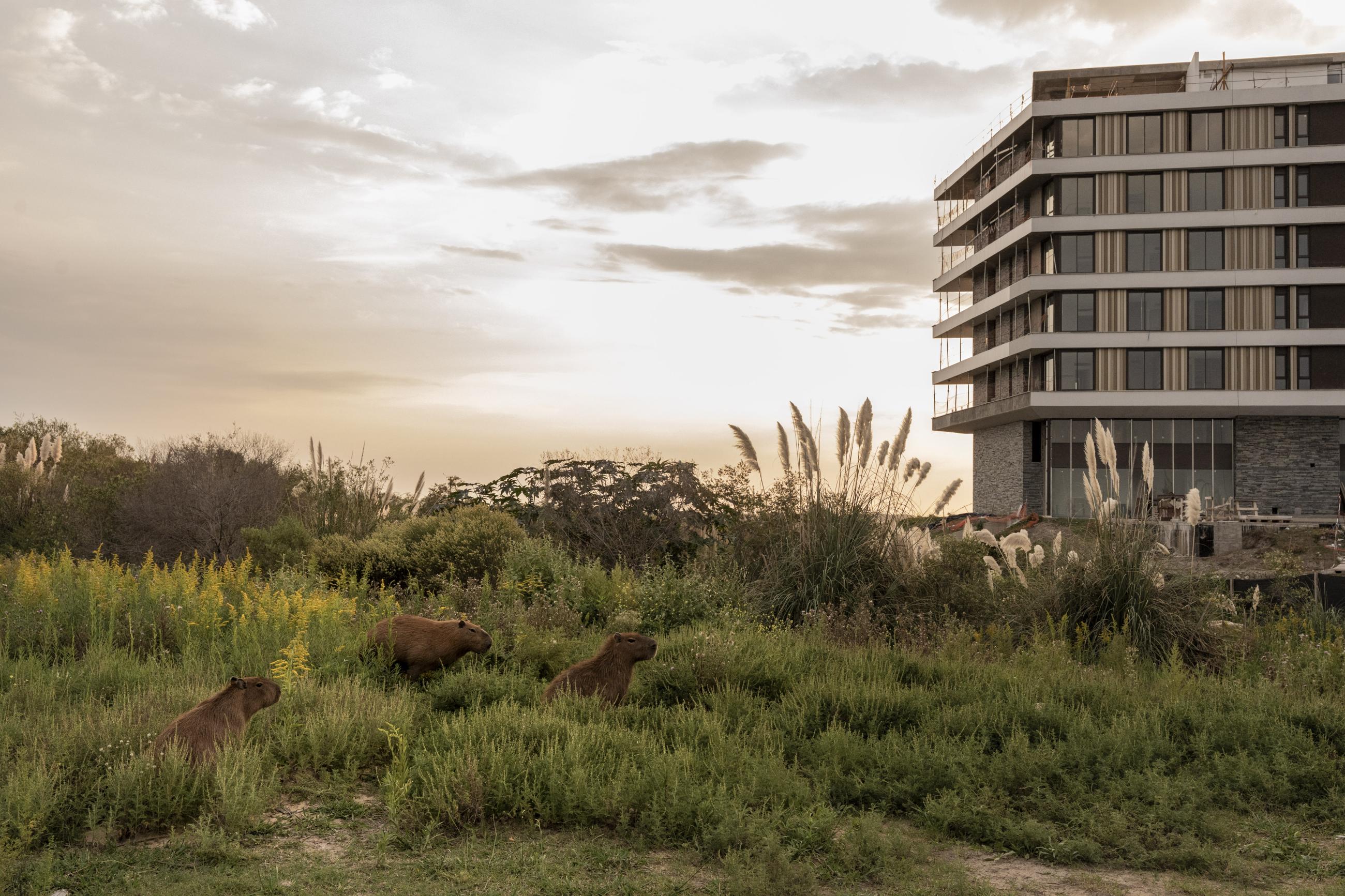
Untitled
Capybaras are territorial animals that live in groups. This group is grazing close to a construction site in Nordelta, where there is minimal human traffic.
© Anita Pouchard Serra, Argentina, 2nd Place, Professional Competition, Wildlife & Nature, 2026 Sony World Photography Awards