

Series description
This series was photographed inside the Natural History Collections of the Charles Darwin Foundation in Puerto Ayora, Galápagos. The photographer’s aim was to present natural history collections as a form of still life, where the preserved specimens illustrate conservation through a blend of science and illusion. By focusing on textures, structures and forms, he wanted to draw viewers into the quiet beauty of these specimens and spark curiosity about their scientific importance. This approach invites audiences to reflect on the role these collections play in understanding and protecting the biodiversity of Galápagos, and beyond.
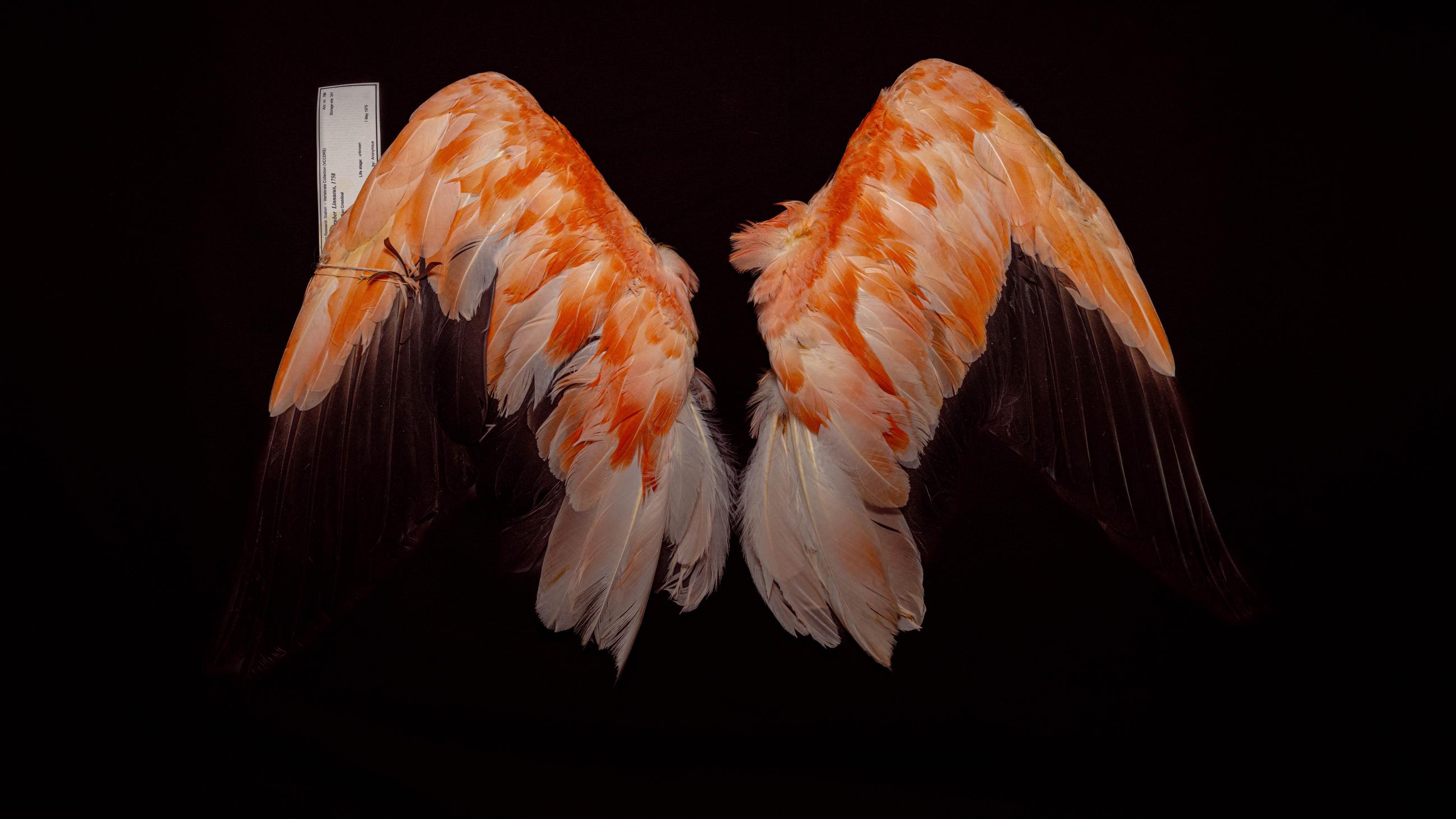
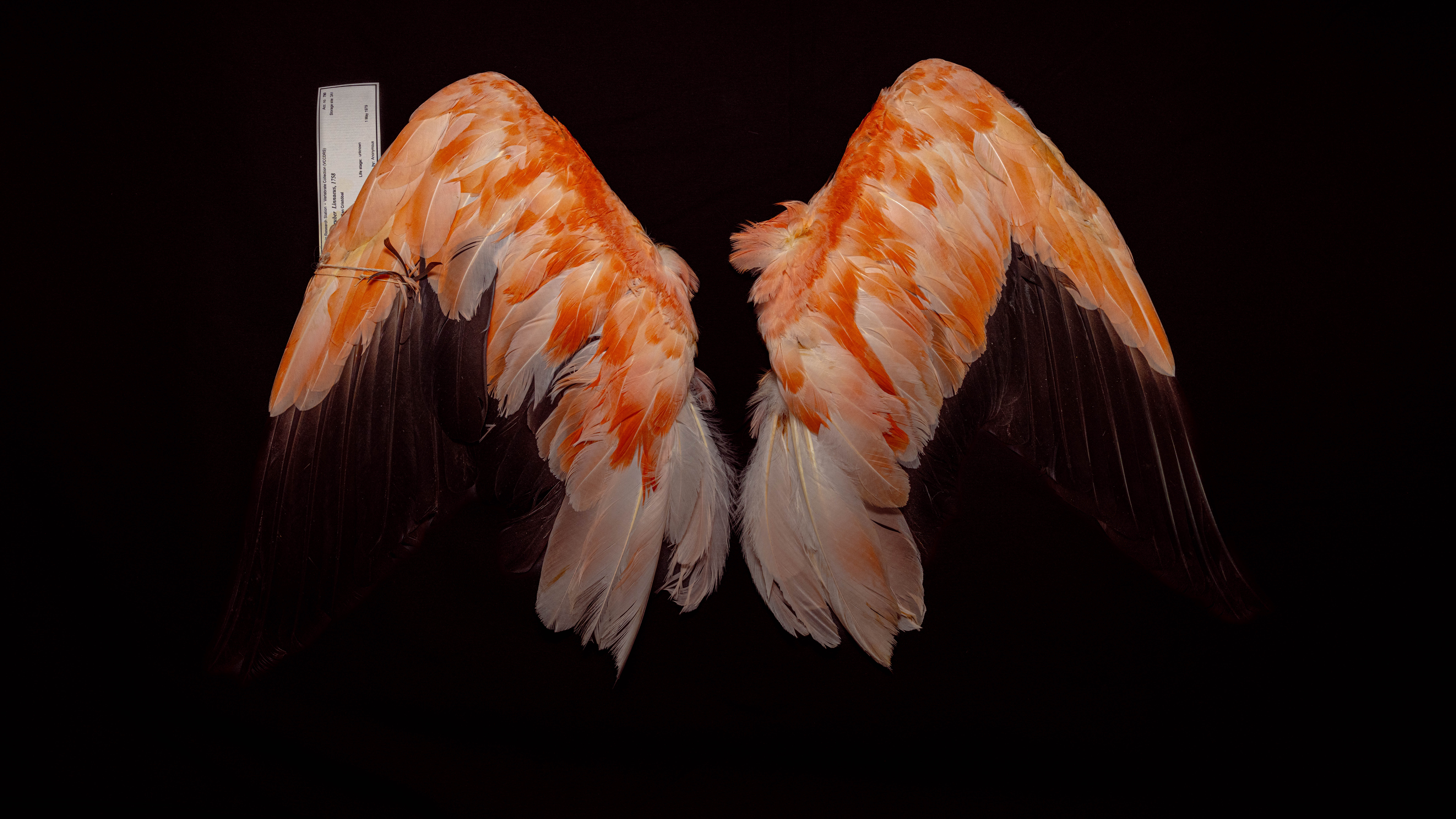
Pink Memory
This specimen of Galápagos flamingo wings rests in the vertebrate collections. These wings are collected to study the flamingo’s role as a keystone species within the archipelago’s ecosystems — knowledge that is essential for understanding environmental balance and local biodiversity. The collection also helps researchers assess population health, evolutionary processes and the species’ adaptation to its unique surroundings.
© Carlos Espinosa, Ecuador, Shortlist, Professional Competition, Still Life, 2026 Sony World Photography Awards
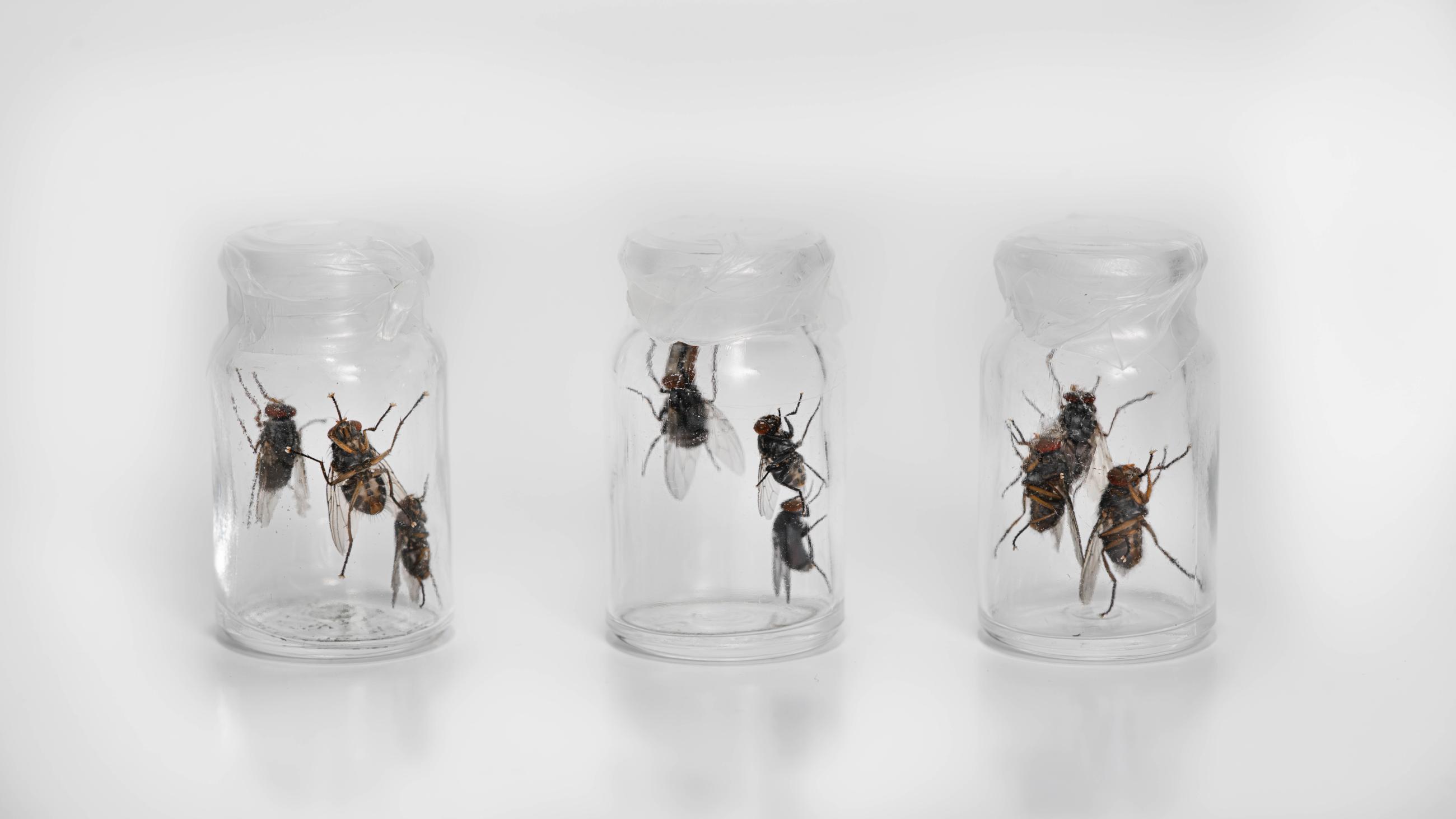
Under Containment
Three glass receptacles containing Philornis downsi, an invasive parasitic fly that poses a serious threat to native bird species in the Galápagos. These specimens represent both a scientific record and a warning. Displayed against a white background, the jars evoke a sense of clinical order and stillness, contrasting with the ecological disruption this species causes in the wild.
© Carlos Espinosa, Ecuador, Shortlist, Professional Competition, Still Life, 2026 Sony World Photography Awards
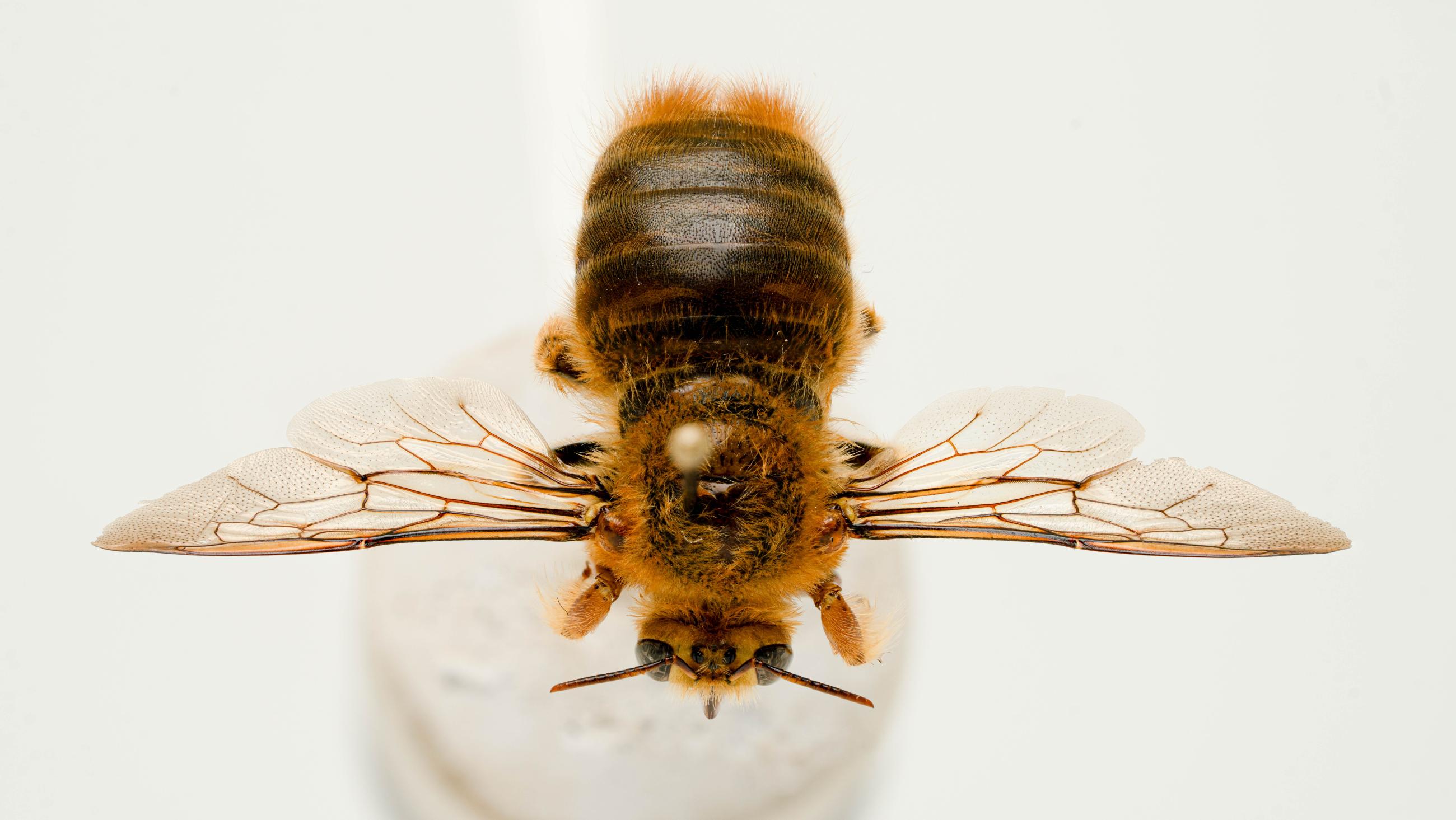
Golden Bee
The dorsal view of an endemic male Galápagos carpenter bee. The specimen is distinguished by its striking golden colouration, a key trait of the male, and its notably large size, which sets it apart from other native pollinators. Isolated from its natural environment, the bee becomes both a scientific record and a visual study of form, texture, and colour.
© Carlos Espinosa, Ecuador, Shortlist, Professional Competition, Still Life, 2026 Sony World Photography Awards
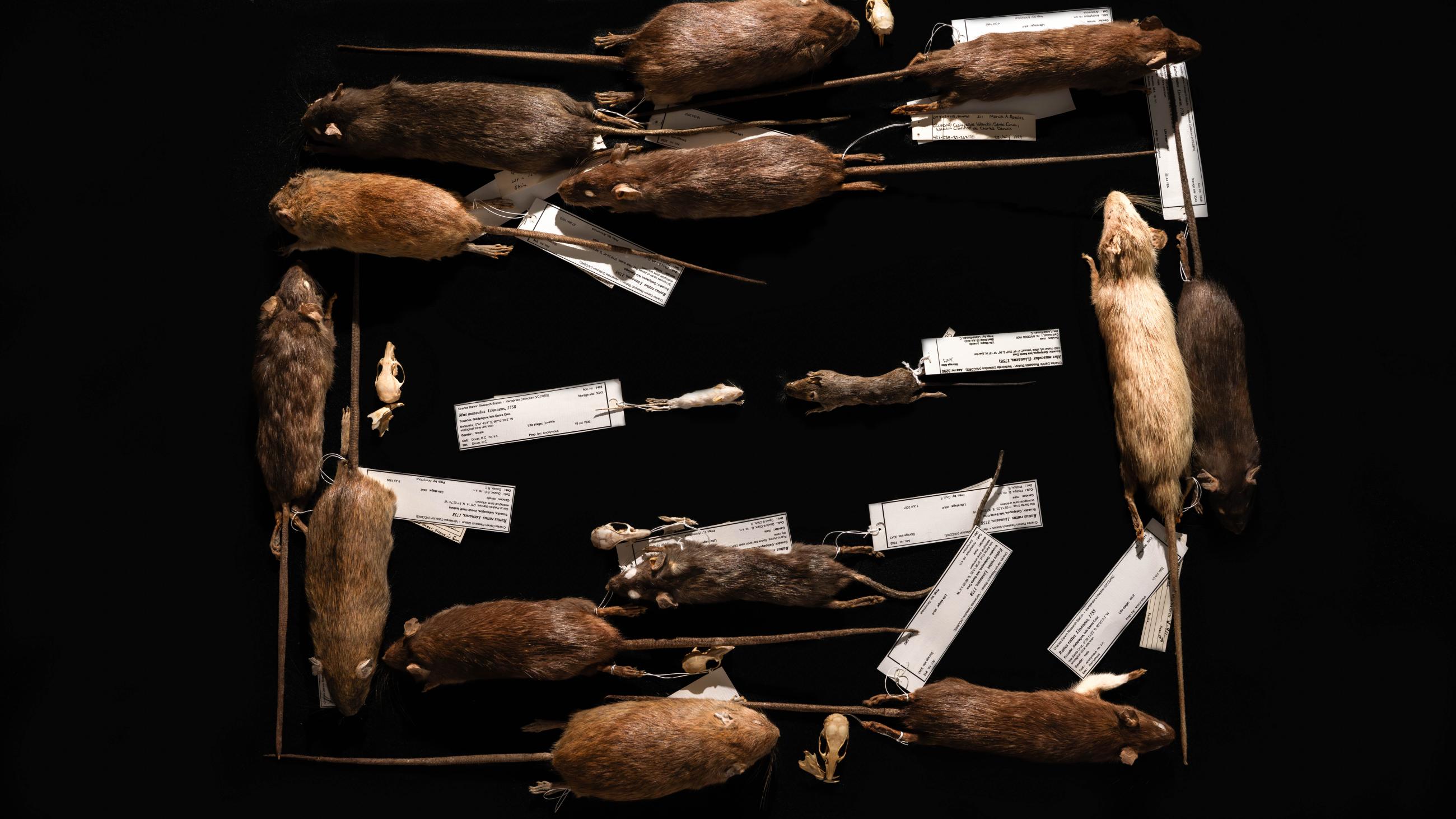
The Shape of a Rat
This image presents several endemic rodent species from the Galápagos, displayed together to highlight their diversity in size, shape and structure. Small skulls placed nearby reveal anatomical differences often hidden beneath fur. Beyond their aesthetic presence, these rodents represent adaptive radiation, scientific documentation and the importance of collections as living archives of evolution.
© Carlos Espinosa, Ecuador, Shortlist, Professional Competition, Still Life, 2026 Sony World Photography Awards
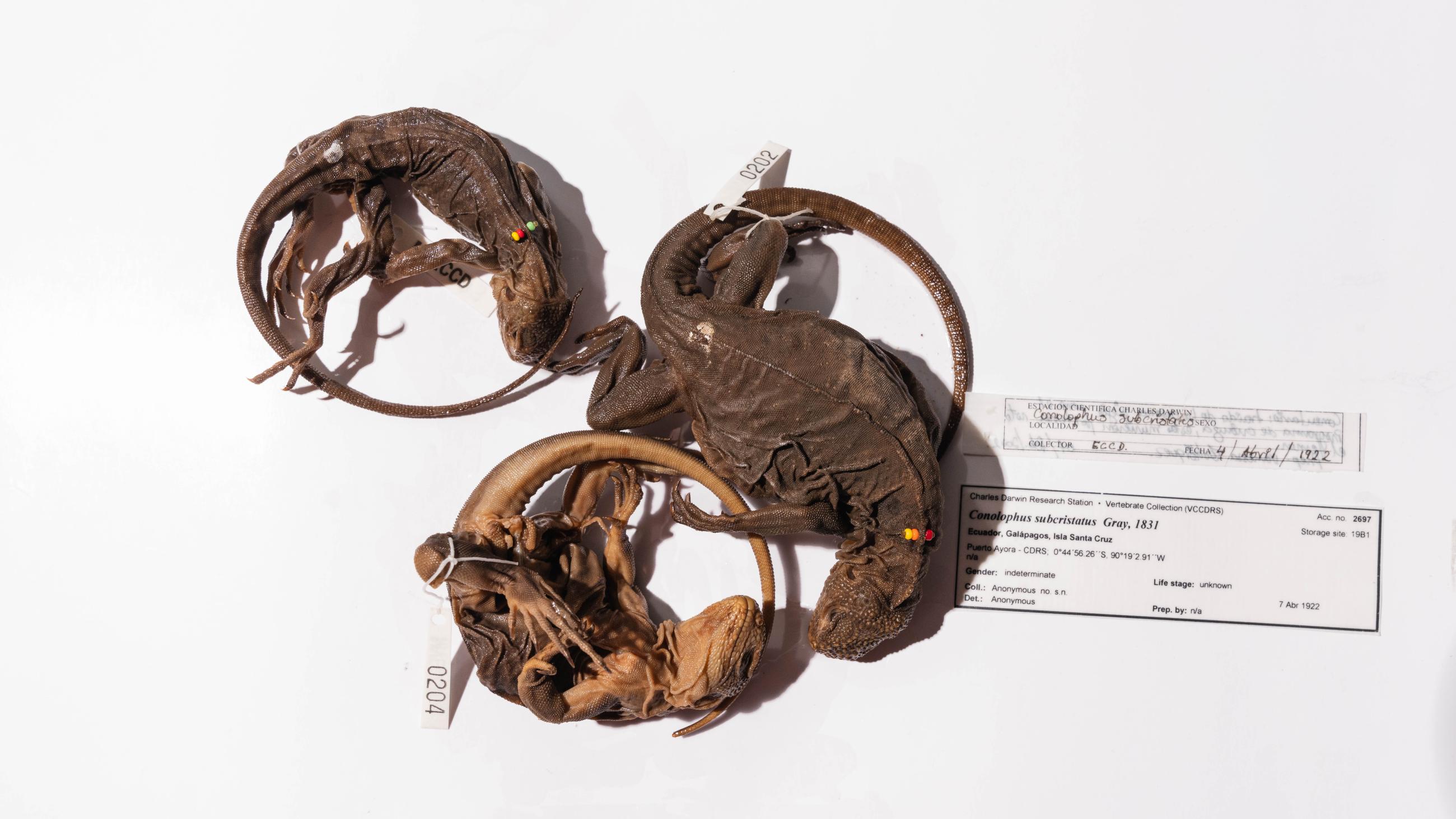
First Records
These three Galápagos land iguanas are the oldest specimens preserved in the Natural History Collections. Originally stored in alcohol — as is common for reptiles — these specimens adopt a naturally retracted posture once removed from their jars; a silent trace of the preservation process itself. The image highlights the passage of time, the evolution of scientific practice and the importance of early collections in shaping our understanding of Galápagos biodiversity.
© Carlos Espinosa, Ecuador, Shortlist, Professional Competition, Still Life, 2026 Sony World Photography Awards