The Sound of Ice: How a Concert Pianist Became a Two-Time Sony World Photography Awards Shortlistee

You've been shortlisted twice in the Sony World Photography Awards Professional competition (now Series), in 2024 and 2026. Tell us about your projects in your own words.
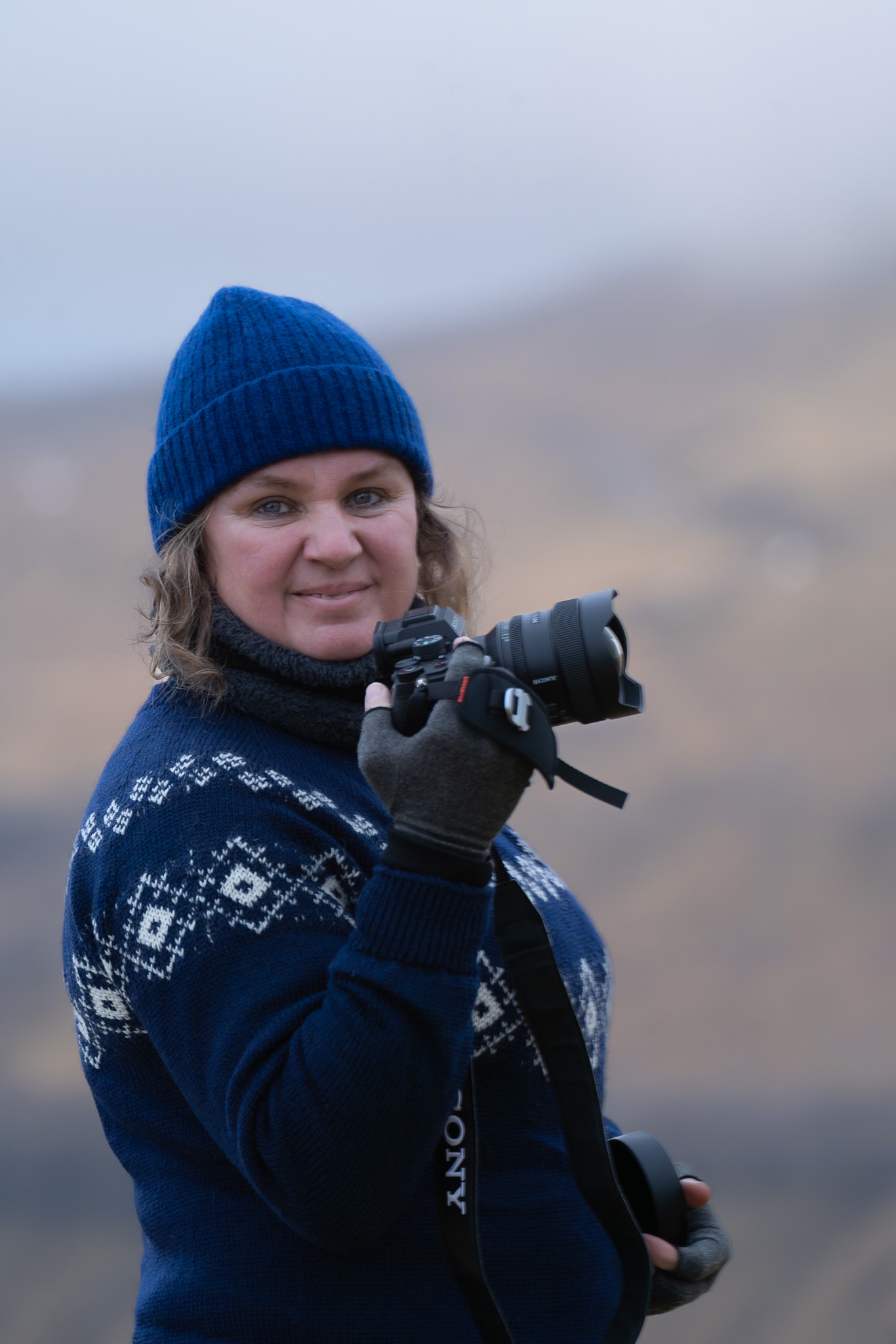
My first shortlist in 2024 was what I jokingly call beginner's luck – although it turned out to change the direction of my life completely.
Before photography, I was working as a concert pianist, and I still teach piano at a professional level in Sweden. After a serious injury left me facing the possibility that I might never play again, I found myself in a huge artistic vacuum. Music had always been my way of expressing myself, and I realised how important it was for me to keep creating, even if I had to find a completely different way of doing it.
I had always been deeply drawn to visual art. I also have a very strong visual memory, which helped me learn enormously complex piano repertoire. In many ways, I have always experienced the world visually.
I bought my first camera, enrolled in an online university photography course and started exploring this new artistic language. During that first year, I photographed almost everything. When I submitted my work to the Sony World Photography Awards in 2024, it was actually the first photography competition I had ever entered. I submitted projects in several professional categories.
Then, suddenly came an email telling me I had been shortlisted in the Architecture and Design category. I remember crying for an hour. I simply couldn't believe it.
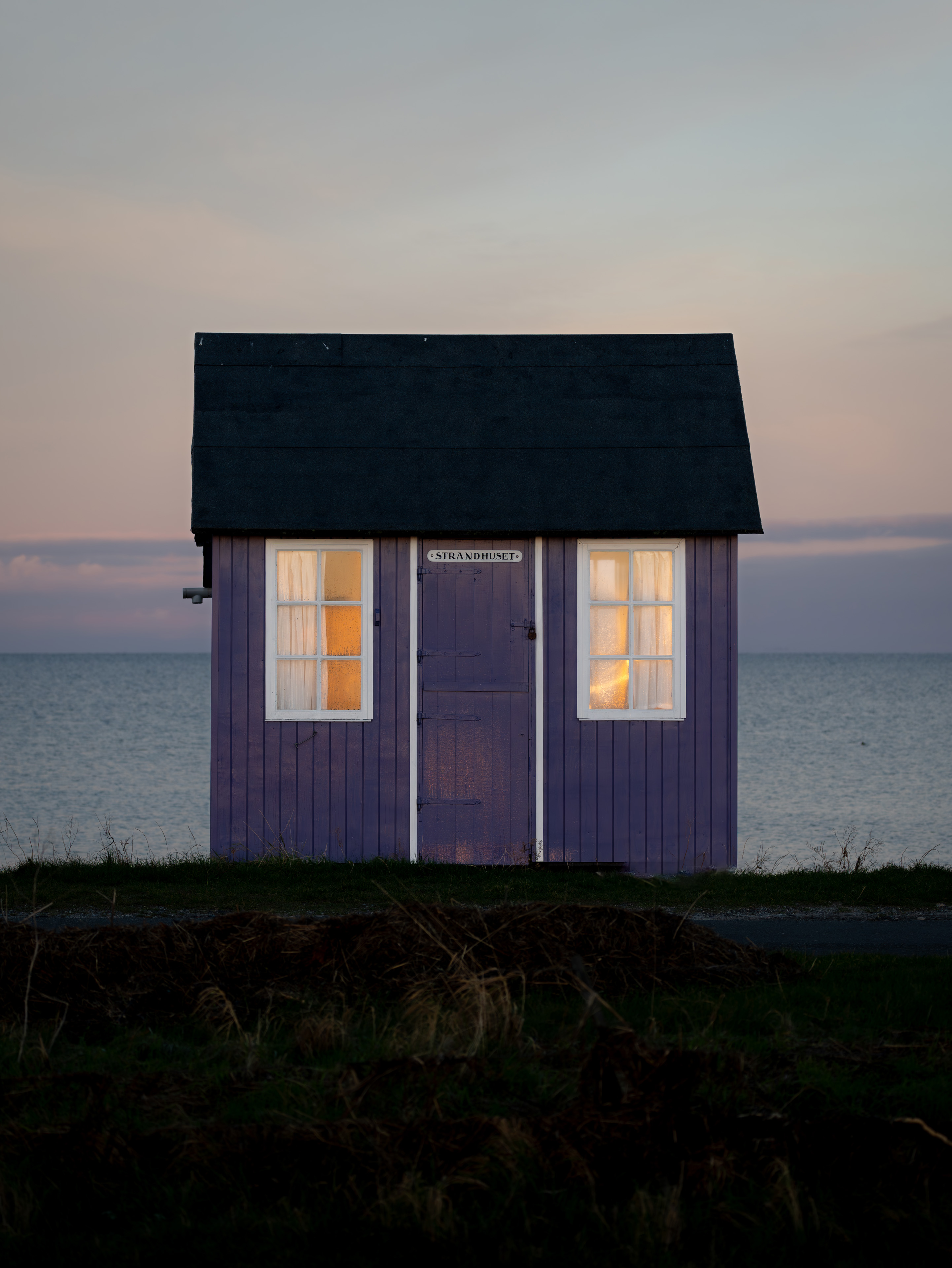
The series featured small houses in Denmark, photographed during the first moments of sunrise. For just a few minutes, the light created the illusion that the houses themselves were glowing. I remember running from one house to another with my Sony camera and 100–400mm lens, trying to capture this extraordinary light before it disappeared. I managed to take only five photographs.
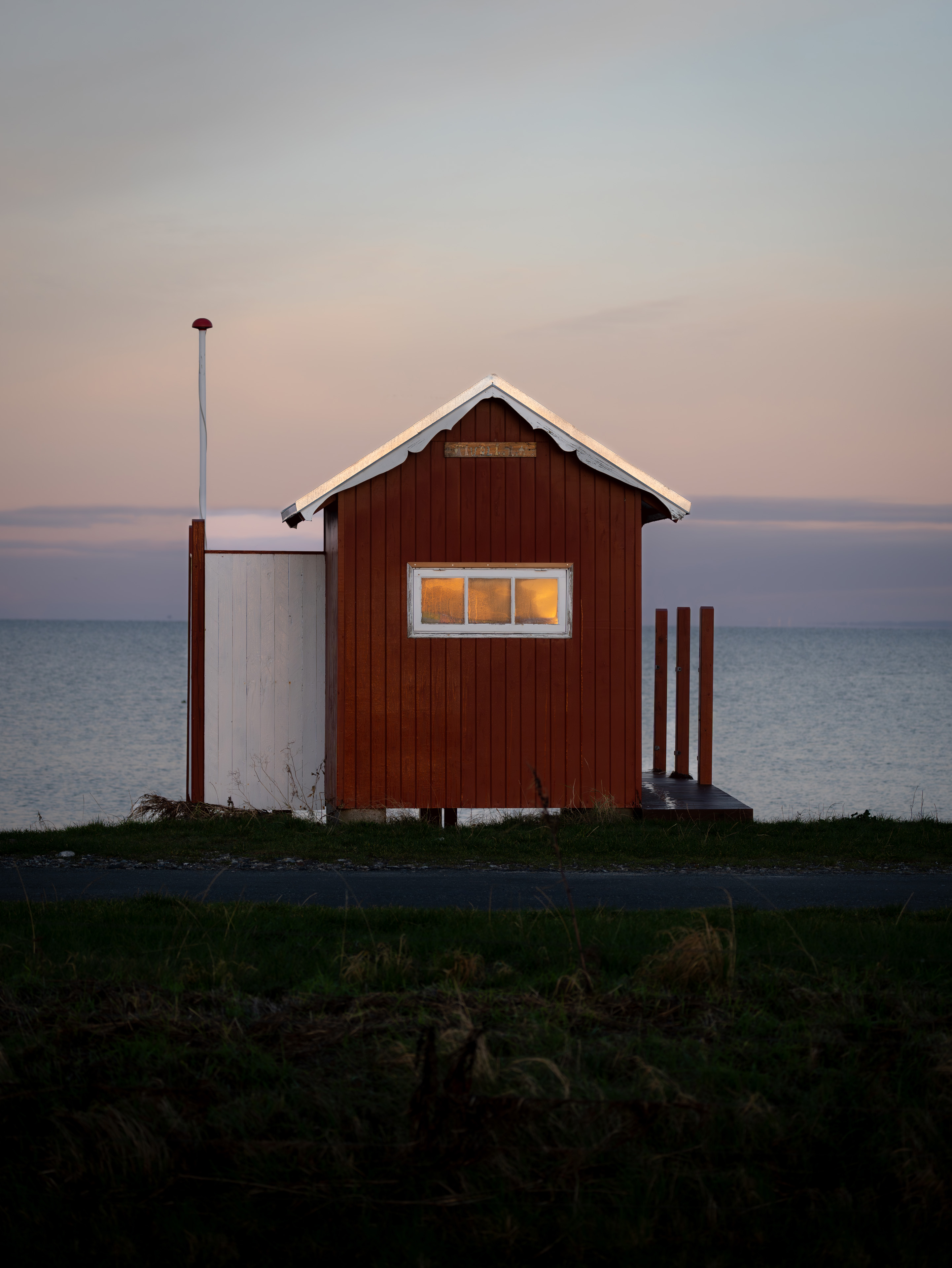
I struggled with the editing for weeks, trying all sorts of different approaches before eventually deciding to leave the photographs almost exactly as they came out of the camera, without any colour grading. We were travelling in our campervan with the family at the time, and I suspect they had heard quite enough about those little houses and my endless editing dilemmas!
That first recognition gave me an incredible motivation to continue. I gradually moved towards landscape and aerial photography, becoming increasingly fascinated by Iceland. What began as a photographic interest developed into a much deeper connection with the country. I have visited so many times that I have lost count, spent two summers exploring it in our campervan and flown my drone for thousands of kilometres across its extraordinary landscapes. I honestly feel very much at home there.
The story behind my 2026 shortlisted series, 2D – Frozen World, began during a trip to Iceland in late October 2025. I had originally gone there to photograph the Northern Lights, but while checking the road conditions, I noticed something quite unusual: some of the Highland F-roads were still open, much later in the season than normal.
These roads are generally only accessible during summer. Driving them requires considerable experience, a proper 4x4 vehicle and good knowledge of Icelandic conditions. Having explored Iceland extensively over the years, I knew the roads well and had the right vehicle. After checking the weather, road conditions and speaking with the rangers, I decided to take the opportunity to explore the Highlands in this unusual season.
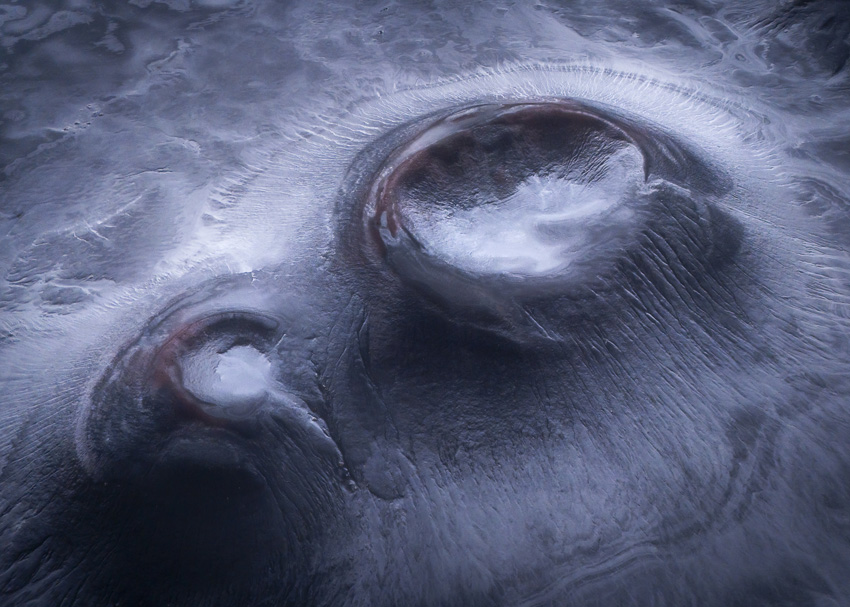
I drove into Landmannalaugar via F208 from the north. I was the only car in the entire area. There was nobody else around.
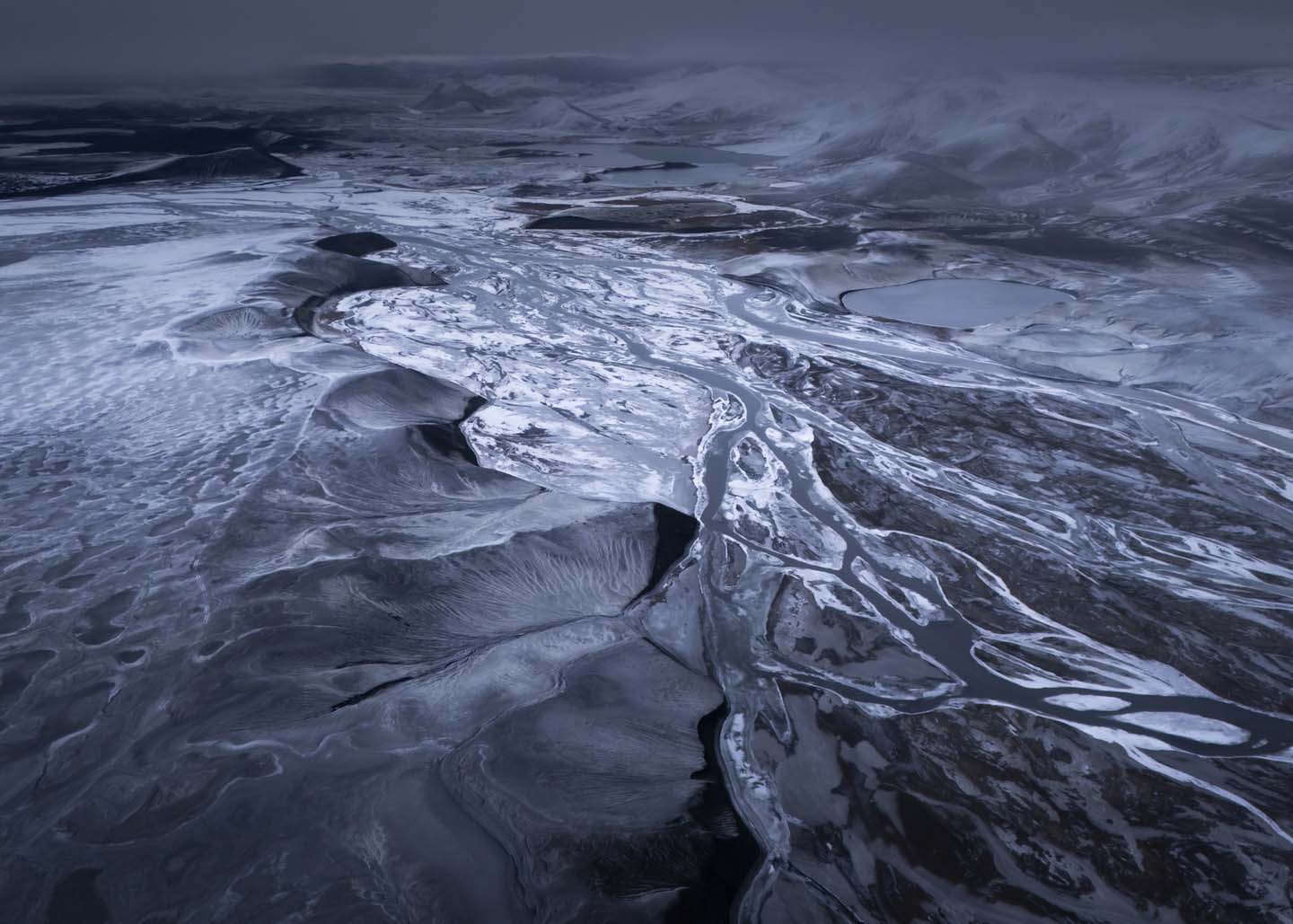
The landscape took my breath away. There was no snow yet, but the ground was covered in an incredibly thin layer of ice on the black volcanic sand. Suddenly, the landscape looked almost two-dimensional. When I took my drone up, I remember actually screaming with happiness. From above, it looked like another planet. I had never seen anything like it in Iceland, or anywhere else.
I immediately realised how extraordinary these conditions were. The landscape was completely frozen, but the snow had not yet arrived. I spent hours photographing until darkness fell. It was getting a little scary to drive back in the dark, so I decided to stay overnight. The campsite was closed, but the forecast looked promising, and after speaking with the rangers, we agreed it was safer to stay than to attempt the drive back that night.
When I woke up at six the following morning, I could hardly believe what I saw. Everything was white. Snow had arrived much earlier than forecast, and the landscape had completely transformed overnight. It was almost the opposite of what I had photographed the day before. The delicate textures and patterns had disappeared beneath a blanket of snow. It had become a completely different, almost featureless world.
Getting out was a little challenging, and I even needed some assistance, as visibility was so poor that it was difficult to distinguish the road from the surrounding landscape. But I made it out safely.
The photographs I had taken the previous day already felt like something I had never seen before. Being shortlisted again in 2026, this time in the Landscape category, with photographs from a country I feel such a strong connection to, was an incredible feeling. It was particularly special because photography had become such an important part of my life. It made me feel that I was truly finding my own artistic direction.
What impact has being recognised in the Sony World Photography Awards had on your practice and career?
Being recognised by the Sony World Photography Awards has been an enormous inspiration for me. It gave me the confidence and motivation to take photography even more seriously, to keep developing my own artistic voice and to explore new ways of expressing the natural world through my lens and my perspective.
Interestingly, I have also noticed that becoming so deeply involved in another art form has made me a better musician. Photography has opened up new ways of thinking creatively, and I think that has found its way back into my music as well. The two art forms influence each other much more than I ever expected.
Since being shortlisted, I have had the opportunity to exhibit my work internationally in several countries, which has been incredibly rewarding. It has also encouraged me to think bigger about where my photography could take me.
I would particularly love to see my complete 2D – Frozen World series from Iceland exhibited internationally. It is a very special body of work for me, and I feel there is still so much more I would love to share with audiences through it.
How has your style developed since entering the Awards back in 2024?
I think the biggest change is that I have gradually become a landscape photographer, but increasingly drawn towards abstract interpretations of nature.
The more I photograph, the more I realise how much there is still to explore. I find myself looking beyond the obvious landscapes and becoming fascinated by smaller, more intimate details: unusual patterns, textures, shapes and colours that are often overlooked or simply go unnoticed.
Aerial photography has completely changed the way I see the world. It allows me to discover perspectives that are almost impossible to recognise from the ground. Sometimes I feel as if I am photographing another planet, when in fact I am simply revealing another planet within our own.
I believe nature is the greatest artist of all. It creates the most extraordinary compositions, colours and patterns without even trying. I want to keep exploring and discovering these hidden worlds, and showing people what is already there but what they might never have noticed.
What have you been up to since? Are you working on anything exciting?
One of the most exciting things I have been working on is a series of projects called Soundscapes, where I bring together my two artistic worlds: photography and music.
The series currently consists of two projects, one exploring Icelandic rivers and the other volcanic landscapes. For the volcanic project, I have photographed around 150 volcanic craters across Iceland. I wanted to explore whether photographs could be experienced in a similar way to music, and whether visual compositions could inspire musical interpretations.
I have released two books as part of these projects, structuring the photographs like piano sonatas, with four movements. Each movement is a visual composition that becomes the starting point for a musical interpretation.
We have also developed a live installation where a pianist improvises in front of an audience, using the photographs as inspiration to create music in real time. As a pianist myself, this project is particularly close to my heart. I am fortunate to be working with an exceptional pianist who has a remarkable ability to improvise in this classical style. We hope to develop the concept further and bring it to more audiences.
I have also recently travelled to Australia for the first time, where I became fascinated by the natural patterns of the ocean and salt lakes. I even had the opportunity to fly in a small aircraft without doors for the first time, which opened up a completely new perspective for aerial photography.
I returned with some photographs from a very special island that I am considering developing into a new series.
I also feel that Iceland will continue to be a very important part of my work. After spending so much time exploring the country, I have developed a deep knowledge of its landscapes and photographic possibilities. I would love to combine my photography with exploration even further, including scouting unusual locations and developing photographic adventures for other photographers who want to experience Iceland from a different perspective.
I feel that I am only at the beginning of exploring the possibilities of combining photography, music and adventure. There are still so many places, perspectives and stories I want to discover.
What makes a great photograph?
For me, a great photograph is one that tells a story and makes you stop and look twice. It doesn't necessarily have to show something spectacular. Sometimes it is an unusual perspective, a particular combination of colours, extraordinary conditions or a tiny detail that completely changes how you see a subject.
I love photographs that reveal something unexpected, something you might never have noticed otherwise. Originality is very important to me. I want to show nature in a way that makes people curious, perhaps even question what they are looking at.
Ultimately, I think a great photograph should make you feel something, stay in your mind and leave you wanting to look a little closer.
Follow Julia Mustonen-Dahlkvist on Instagram